
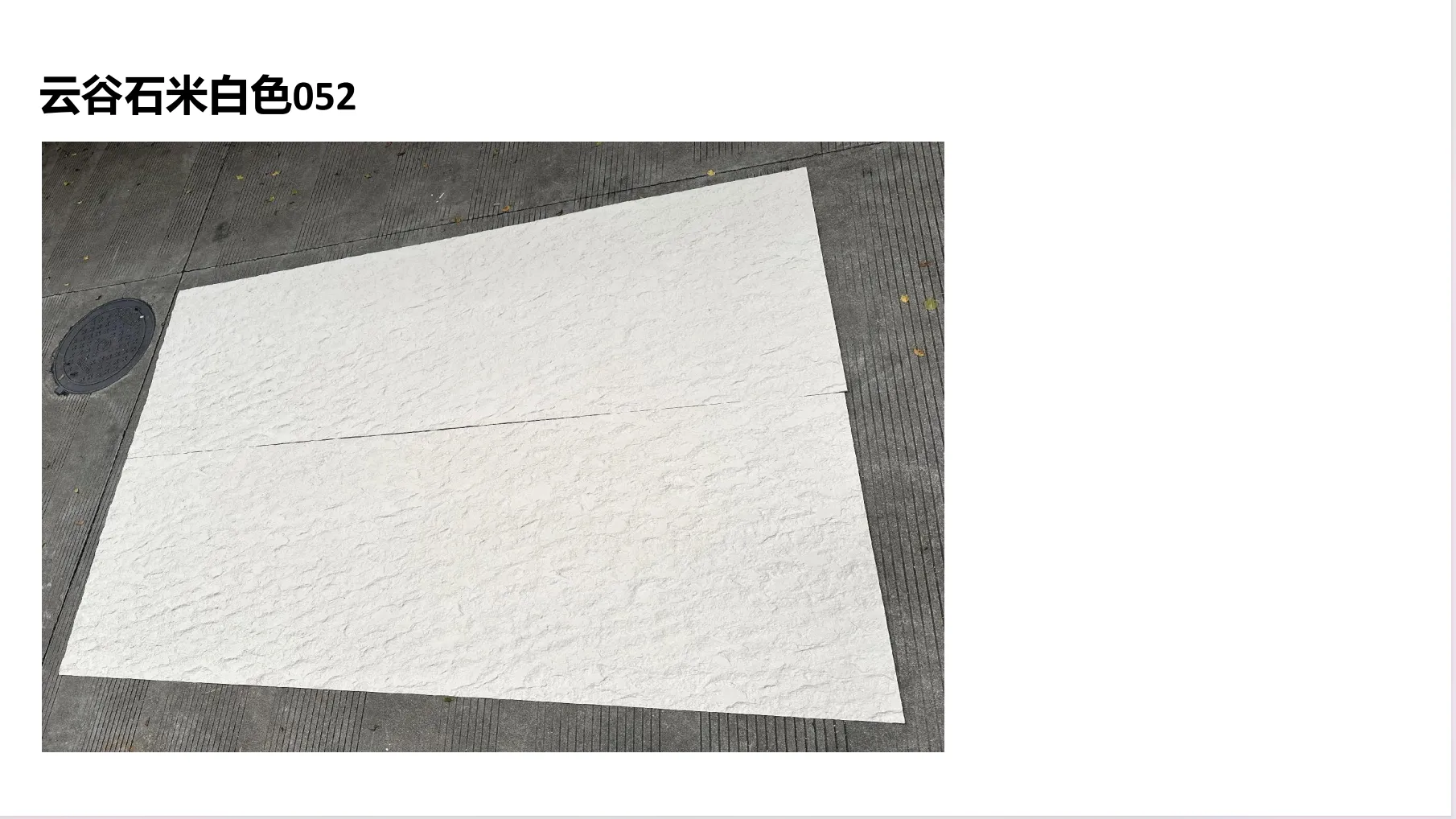
Walking through a bustling airport terminal, your eyes dart from departure boards to coffee shops, but have you ever paused to really look at the walls? The surfaces that surround you—smooth, textured, cool to the touch—aren't just there to fill space. They're silent workhorses, designed to withstand millions of footsteps, constant sunlight, and the occasional coffee spill, all while making you feel something: calm, inspired, connected to the place you're in. That's the magic of good material design, and today, we're diving into one standout player in this world: Cloud Stone . But we won't stop there—we'll explore how it stacks up against other heavyweights like fair-faced concrete , MCM flexible stone , and even the starry allure of travertine (starry blue) in crafting spaces that work as hard as the travelers who pass through them.
Airports aren't just buildings—they're cities in miniature. Think about it: a major hub might see 100,000 passengers a day. That's 100,000 pairs of shoes scuffing floors, 100,000 hands brushing walls, 100,000 people breathing in the air and leaving behind a trail of dust, dirt, and the occasional mishap. So when architects choose materials for these spaces, they're not just picking pretty colors—they're solving a puzzle with stakes as high as the terminal's ceiling.
First, there's durability. A material that chips, stains, or fades after a few months is useless here. Then there's maintenance: with 24/7 operations, cleaning crews need surfaces that wipe clean quickly, without harsh chemicals. Aesthetics matter too—airports are gateways to cities, and their design should reflect local culture or a sense of global connection. And let's not forget sustainability: in an era of eco-conscious travel, materials that reduce carbon footprints (think recycled content, energy-efficient production) are non-negotiable. It's a tall order, but some materials rise to the challenge better than others.
Enter Cloud Stone. At first glance, it might blend into the background, but that's part of its charm. Unlike flashy marbles that demand attention, Cloud Stone has a subtlety that grows on you. Its surface mimics the soft, layered look of sedimentary rock, with veining that feels like clouds drifting across a gray sky—hence the name. But don't let the gentle appearance fool you. This material is tough. We're talking scratch-resistant, stain-proof, and easy to clean tough.
Imagine a parent rushing to catch a flight, their toddler's sticky handprint smearing across a Cloud Stone wall—with a quick wipe of a damp cloth, it's gone, no trace left behind. That's the kind of reliability airports crave. Its secret? A composite core mixed with natural stone aggregates, compressed under high pressure to create a dense, non-porous surface. This density also helps with sound absorption: in noisy terminals, Cloud Stone walls act like a buffer, softening the din of announcements and chatter. Passengers often comment on how "calming" a Cloud Stone-lined gate area feels, even during peak hours.
Sustainability is another feather in its cap. Many Cloud Stone manufacturers use recycled stone dust and water-based sealants, cutting down on waste and harmful emissions. And because it's so durable, it rarely needs replacement—unlike paint or wallpaper, which might peel or fade after a year. For airports aiming for LEED certification or carbon-neutral goals, Cloud Stone checks a lot of boxes.
Cloud Stone is impressive, but it's not the only option. Let's put it head-to-head with four other popular materials in airport design to see how it measures up.
| Material | Durability (1-5) | Aesthetic Appeal | Sustainability | Maintenance | Best For |
|---|---|---|---|---|---|
| Cloud Stone | 4.5 | Subtle, cloud-like veining; warm neutral tones | High (recycled aggregates, low emissions) | Easy (wipe clean, stain-resistant) | Concourse walls, gate areas, lounges |
| Fair-Faced Concrete | 5 | Raw, industrial; gray/white with visible formwork lines | Medium (high embodied carbon, but long lifespan) | Moderate (prone to dust; needs sealing) | Floors, structural columns, exterior facades |
| MCM Flexible Stone | 4 | Versatile; mimics natural stone, wood, or metal | High (lightweight, reduces transport emissions) | Easy (water-resistant, scratch-proof) | Curved walls, accent panels, ceiling features |
| Travertine (Starry Blue) | 3 | Iridescent flecks; bold blue base with "starry" sparkle | Medium (natural stone, but porous; requires sealing) | High (porous; stains easily; needs regular sealing) | Accent walls, VIP lounges, art installations |
| Foamed Aluminium Alloy Board (Vintage Silver) | 3.5 | Metallic, retro sheen; lightweight and modern | Medium (recyclable, but energy-heavy production) | Moderate (prone to dents; fingerprints show easily) | Signage, ceiling panels, decorative accents |
Fair-faced concrete is the minimalist's dream—raw, industrial, and unapologetically honest. It's the material of warehouses turned lofts, of modern art museums, and yes, of many airport terminals. Its strength is unmatched: it can handle heavy foot traffic, resist fire, and last for decades with minimal upkeep. But while its durability is top-notch (those industrial vibes come with industrial strength), it can feel cold. Walk through a terminal lined with nothing but fair-faced concrete, and you might start to feel like you're in a bunker, not a gateway to the world. Cloud Stone, by contrast, adds warmth without sacrificing that industrial resilience.
MCM flexible stone is a newer kid on the block, and it's making waves for a reason. "MCM" stands for Modified Composite Material, and "flexible" is the key word here. Unlike rigid stone slabs, MCM flexible stone can bend and curve, opening up design possibilities that were once impossible. Want a terminal wall that swoops like a wave instead of standing straight? MCM can do that. It's also lightweight, which cuts down on construction time and costs. But flexibility sometimes comes with trade-offs. While it's durable, it might not hold up as well as Cloud Stone in high-impact areas—say, near security checkpoints where luggage is frequently dropped or dragged. For low-traffic accent walls, though, MCM's versatility shines.
Now, let's talk about the drama queen of the group: travertine (starry blue). This isn't your average travertine. The "starry" part comes from tiny, iridescent flecks embedded in the stone that catch the light, turning a plain wall into a night sky. It's stunning—there's no denying that. A terminal VIP lounge lined with starry blue travertine feels like stepping into a luxury hotel, not an airport. But beauty has a price. Travertine is porous, which means it stains easily. A spilled soda on travertine (starry blue) could seep in, leaving a permanent mark. And while those starry flecks are eye-catching, they might be too busy for large terminal spaces, where calm is key. Cloud Stone, with its understated elegance, avoids that sensory overload.
Foamed aluminium alloy boards, like the vintage silver variety, bring a metallic edge to the mix. They're lightweight, which is a huge plus for construction—less stress on the building's structure. And that vintage silver finish? It adds a touch of retro cool, like something out of a mid-century modern airport. But metal dents. A stray luggage cart colliding with a foamed aluminium wall could leave a noticeable ding, whereas Cloud Stone would likely shrug it off. Plus, metal conducts heat and cold, which might make terminal spaces feel drafty in winter or overly warm in summer—another point for Cloud Stone's temperature-neutral properties.
Let's take a trip to SkyHarbor International, a mid-sized airport in the American Southwest. When SkyHarbor decided to renovate its aging Terminal C, architects faced a dilemma: how to modernize the space without losing its 1960s desert-inspired charm, all while upgrading to materials that could handle the terminal's 80,000 daily passengers. Enter Cloud Stone.
The design team chose Cloud Stone for the main concourse walls, pairing it with warm terracotta accents and cactus-inspired lighting fixtures. The Cloud Stone's soft gray veining echoed the desert sky, while its durability checked the practical boxes. Six months after the renovation, here's what they found:
Perhaps the most unexpected win? Social media. Travelers began sharing photos of the Cloud Stone walls, using hashtags like #SkyHarborWalls and #AirportDesignGoals. Local news even ran a story on "the most Instagrammable airport walls in the West." For an airport struggling with post-pandemic passenger numbers, this free publicity was a boon.
Cloud Stone isn't just for main concourses. It shines in smaller, high-traffic spaces too. Take airport restrooms: traditionally a headache for maintenance, with grout lines that harbor mold and tile that chips. SkyHarbor used Cloud Stone slabs for restroom walls and countertops, eliminating grout entirely. Now, cleaning crews spend 40% less time on restroom upkeep, and complaints about "dirty" facilities have dropped to near-zero.
Luggage claim areas are another sweet spot. Baggage carts, suitcases, and hurried travelers make this zone a war zone for materials. Cloud Stone's scratch resistance has kept luggage claim walls looking new, even after a year of heavy use. And in VIP lounges, where luxury meets durability, Cloud Stone adds a touch of understated elegance—pair it with leather seating and marble accents, and you've got a space that feels both exclusive and practical.
Airports are evolving. They're no longer just places to catch flights—they're destinations in themselves, with shopping, dining, and even art installations. As they transform, the materials that clothe these spaces become more important than ever. They're not just functional; they're part of the passenger experience.
Cloud Stone, with its blend of durability, beauty, and sustainability, is leading the charge. It's a material that works as hard as the travelers who pass through airports, quietly supporting the chaos of travel while adding a touch of calm and beauty. And while it may not have the flash of travertine (starry blue) or the industrial cool of fair-faced concrete, it has something better: balance. In a world of extremes, balance is what makes a space feel like home—even if home is 30,000 feet in the air.
So the next time you're rushing through an airport, take a moment to look at the walls. If they're smooth, subtly veined, and feel surprisingly warm to the touch, chances are you're looking at Cloud Stone. And now, you'll know the story behind that quiet, hardworking surface—one that's making travel a little easier, one passenger (and one sticky handprint) at a time.
Recommend Products












