
Bridging timeless beauty and modern resilience in architectural design
There's a moment we've all experienced: stepping into a room with aged wooden beams, where the air smells of pine and the walls bear the soft, irregular grooves of decades of use. It feels like home—warm, lived-in, and deeply human. For centuries, wood has been the heartbeat of architecture, cherished for its organic grain, tactile warmth, and the quiet story it tells of nature's artistry. But here's the catch: that same wooden beam, if left unprotected, will warp in the rain, fade in the sun, and demand endless maintenance to keep its charm. And as much as we love natural stone, with its rugged elegance, it's heavy, brittle, and often unforgiving in harsh climates. So, what if we could keep that soul-stirring beauty—those ancient wood grains, those starry stone patterns—without sacrificing the strength modern buildings demand? Enter MCM, where aesthetics and durability don't just coexist; they dance.
Walk through a 17th-century cottage in the English countryside, or a traditional Japanese machiya, and you'll feel it immediately: wood connects us to something primal. Its patterns aren't just lines—they're memories of growth, of seasons passing, of trees reaching for the sky. Architects and designers have long chased that magic, using wood for floors that creak with character, ceilings that feel like a hug, and furniture that ages like fine wine. But here's the hard truth: real wood is a diva. It scratches if you drop a book, swells if it rains, and fades if the sun hits it too hard. Worse, sourcing old-growth wood for that "ancient" look often comes with a heavy environmental cost, leaving us torn between preserving beauty and preserving forests.
And it's not just wood. Natural stone, like the travertine quarried in Italy for millennia, has its own set of challenges. Its porous surface stains easily, its weight strains building foundations, and a single crack can ruin an entire slab. Even concrete, beloved for its industrial chic, can crack under pressure, leaving walls looking worn long before their time. We've been stuck in this loop: choose beauty and sacrifice longevity, or choose durability and lose the warmth that makes spaces feel alive. Until now.
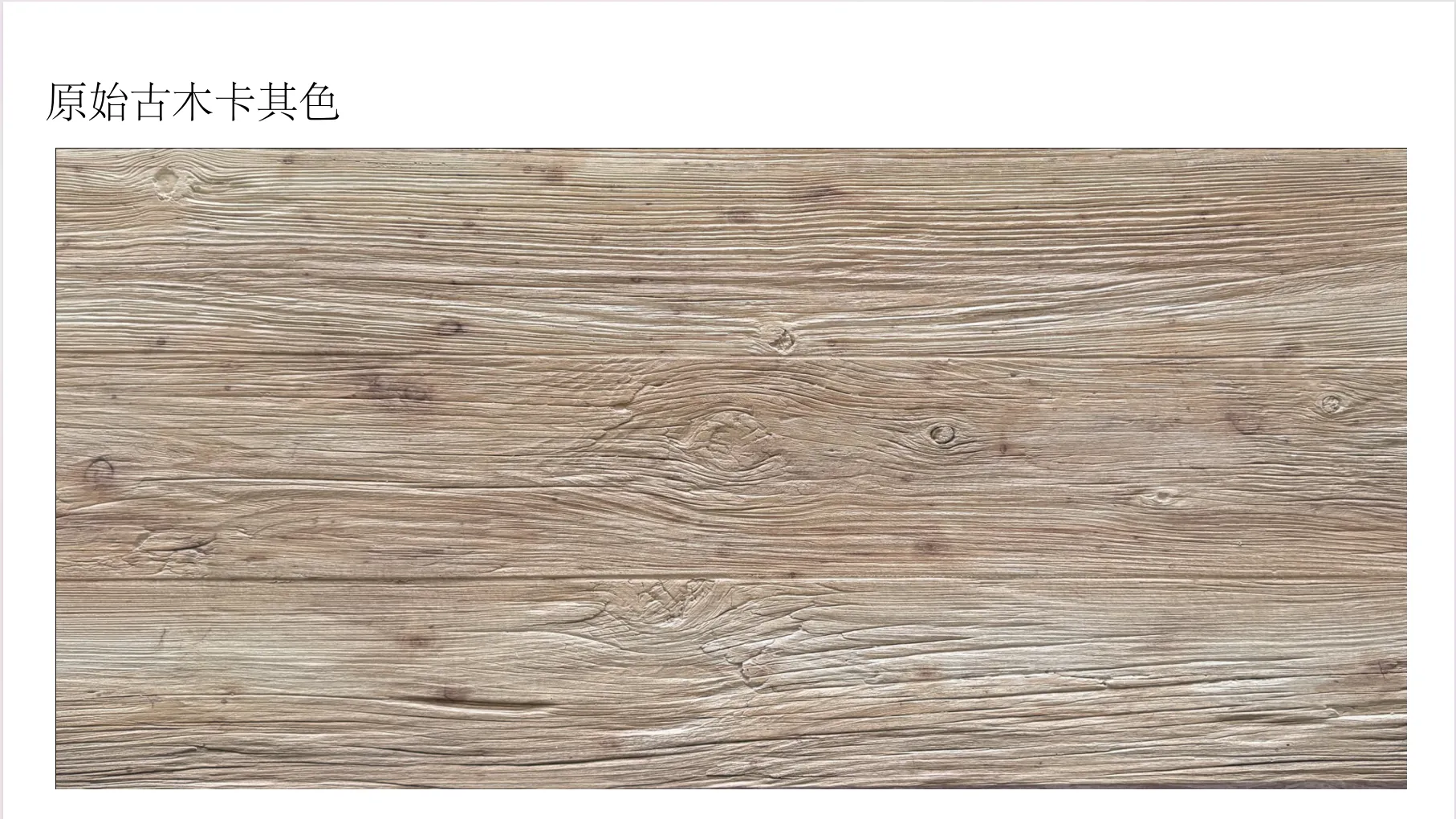
MCM doesn't just replicate beauty—it reinvents it. Take wood grain board , for example. Run your hand over its surface, and you'll swear it's real oak or teak. The grain rises and falls like a forest floor, with the same knots and whorls that make natural wood so captivating. But lean in closer: there are no splinters, no unevenness, no hint of the vulnerability that plagues real timber. MCM's wood grain board is engineered to mimic the exact texture of ancient wood—right down to the way light catches its ridges—without a single tree being cut down. It's sustainability with soul, and designers are falling for it: imagine a restaurant wall clad in this material, where the "wood" feels warm enough for a family dinner but tough enough to handle spills, scuffs, and the chaos of a busy kitchen.
Then there's travertine (starry green) —a material that feels like nature and art colliding. Picture a slab of stone where the classic travertine pores are filled with tiny, iridescent flecks, like someone scattered stardust across a deep green canvas. It's bold yet serene, perfect for a hotel lobby accent wall or a home backsplash that turns morning coffee into a moment of quiet wonder. Unlike traditional travertine, which needs constant sealing to avoid stains, MCM's starry green travertine is non-porous and stain-resistant. That means red wine spills wipe away with a cloth, and sunlight won't fade its celestial glow. It's the kind of material that makes you stop and stare—not just because it's beautiful, but because it feels impossible that something so striking could also be so practical.
MCM's magic lies in its ability to borrow from the past while adding a modern twist. It doesn't just copy ancient wood or stone; it elevates them. The wood grain board isn't just "like" old wood—it's old wood with a superpower. The starry green travertine isn't just stone—it's stone that refuses to age. And that's just the beginning.
Let's talk about the elephant in the room: durability. What good is beauty if it fades after a year? MCM doesn't just look tough—it is tough, and it starts with MCM flexible stone . Traditional natural stone is heavy—so heavy that installing it often requires reinforcing walls or floors. MCM flexible stone, by contrast, is lightweight enough to be installed on drywall with basic tools, yet it's impact-resistant enough to withstand a stray soccer ball (or a clumsy delivery person). It's also weatherproof: rain, snow, UV rays—none of them stand a chance. Imagine a beach house with an exterior clad in MCM flexible stone, where saltwater and sand bounce off it like it's nothing, and it still looks as fresh as the day it was installed. That's the MCM promise.
Then there's fair-faced concrete —the material that proves industrial chic can be surprisingly resilient. Traditional concrete cracks, stains, and fades, but MCM's take on it is a game-changer. It retains that raw, unpolished look—all gray tones and subtle texture— but it's reinforced to resist cracking, even in freezing temperatures. It's also stain-resistant, so that spilled smoothie or muddy boot print won't leave a permanent mark. For designers who love the minimalist, "less is more" vibe, this is a dream: a material that looks effortlessly cool but works harder than it lets on.
And let's not forget foamed aluminium alloy board . With its sleek metallic sheen, it adds a touch of modern luxury to any space—think restaurant exteriors that glow at night or office lobbies that feel both industrial and refined. But unlike traditional metal cladding, which dents easily and rusts over time, MCM's foamed aluminium is lightweight (so it won't weigh down buildings), corrosion-resistant (perfect for coastal areas), and surprisingly flexible. It bends without breaking, making it ideal for curved walls or avant-garde architectural designs. It's the kind of material that says, "I'm here to make a statement—and I'm not leaving anytime soon."
Still not convinced that MCM can have it all? Let's break it down. The table below compares traditional building materials with their MCM counterparts, showing how MCM doesn't just match beauty—it outperforms in durability, ease of use, and sustainability.
| Feature | Traditional Wood | MCM Wood Grain Board | Natural Travertine | MCM Travertine (Starry Green) | Traditional Concrete | MCM Fair-Faced Concrete |
|---|---|---|---|---|---|---|
| Aesthetic Appeal | Warm, organic grain; ages with character | Identical to ancient wood grain; no fading or warping | Classic porous texture; natural earth tones | Starry, iridescent pattern; retains color permanently | Raw, industrial look; prone to staining | Same raw texture; stain-resistant and color-stable |
| Durability | Prone to warping, rot, and scratches | Waterproof, scratch-resistant, and UV-stable | Porous, stains easily, heavy and brittle | Non-porous, impact-resistant, lightweight | Cracks in cold weather; stains readily | Freeze-thaw resistant; no staining or cracking |
| Installation Ease | Requires skilled labor; heavy and unwieldy | Lightweight; can be cut with basic tools; DIY-friendly | Heavy; needs structural support; fragile during transport | Lightweight; easy to cut and install; minimal waste | Messy mixing; prone to uneven curing | Prefabricated panels; quick, clean installation |
| Sustainability | Often requires old-growth trees; high maintenance | Recyclable materials; no deforestation; low upkeep | Quarrying damages ecosystems; high carbon footprint | Engineered with recycled content; low environmental impact | High cement usage; energy-intensive production | Reduced cement content; energy-efficient manufacturing |
Let's step into the shoes of Maria, an architect designing a boutique hotel in the mountains. She wants the lobby to feel like a cozy mountain cabin—warm wood, stone fireplaces, and a sense of history—but the hotel is perched on a slope with harsh winters and heavy rainfall. Traditional wood would warp in the moisture; natural stone would be too heavy for the foundation; concrete would crack in the freeze-thaw cycles. Then she discovers MCM.
For the walls, she chooses MCM wood grain board in a rich oak finish. It looks exactly like the reclaimed barn wood she fell in love with, but it's waterproof, so rain and snow won't damage it. The fireplace surround? MCM travertine (starry green), which adds a touch of luxury without the fear of soot stains. For the exterior cladding, she picks foamed aluminium alloy board in a soft silver—lightweight enough for the slope, corrosion-resistant against the rain, and stunning when the sun hits it. A year later, the hotel still looks brand-new. Guests run their hands over the "wood" walls and marvel at the "stone" fireplace, never guessing they're touching something engineered. Maria smiles, knowing she didn't have to choose between beauty and resilience. MCM gave her both.
MCM isn't just a building material—it's a philosophy. It says that we don't have to outgrow the things we love about the past to embrace the future. Whether it's the warmth of ancient wood grain, the celestial sparkle of starry green travertine, or the raw elegance of fair-faced concrete, MCM captures the essence of these materials and makes them stronger, smarter, and more sustainable. It's for the designer who wants a restaurant that feels like a family home but handles a crowd, for the homeowner who dreams of a stone accent wall without the upkeep, for the architect who refuses to compromise on beauty or durability.
In the end, architecture is about more than walls and roofs—it's about creating spaces that make us feel alive. With MCM, we can build those spaces to last, ensuring that the beauty we love today will still take our breath away tomorrow. Ancient wood aesthetics and modern durability? They don't just meet here. They thrive.
Recommend Products












