
Blending timeless aesthetics with uncompromising safety—how MCM technology redefines what's possible in architectural design
Walk into any high-end boutique hotel, modern office lobby, or luxury residence today, and there's a good chance you'll be greeted by the warm embrace of wood cladding. Not just any wood—we're talking about the kind that looks like it was hewn from century-old forests, with deep grains, weathered knots, and a patina that tells a story of time. Ancient wood cladding has become the gold standard for designers aiming to infuse spaces with organic warmth, rustic charm, and a connection to nature that feels both grounding and timeless.
But here's the paradox: while traditional wood cladding delights the eye, it worries the mind—especially when it comes to fire safety. Wood, by its very nature, is combustible. In a world where building codes are tightening and safety standards are non-negotiable, specifying real wood for exterior or high-traffic interior cladding can feel like a risky trade-off. Architects and developers often find themselves caught between client demands for that "ancient wood look" and the legal obligation to protect occupants from fire hazards. It's a dilemma that has long called for a smarter solution.
If you've never heard of Modified Composite Material (MCM), prepare to meet your new design ally. MCM is a revolutionary building material that marries the best of natural aesthetics with cutting-edge engineering. At its core, MCM is a lightweight, flexible panel made by bonding layers of natural minerals (like stone or wood fibers) with high-performance polymers. The result? A product that looks and feels like the real thing—whether that "thing" is ancient wood, travertine, or concrete—but with supercharged durability and, crucially, fire resistance.
MCM flexible stone, in particular, has emerged as a game-changer for cladding applications. Unlike traditional stone, which is heavy and brittle, MCM panels are thin (often just 3-6mm thick), lightweight (8-12 kg/m²), and surprisingly flexible—they can even bend around curves without cracking. But the real star feature? Their inherent fire resistance. Thanks to their mineral-rich composition and polymer binding, MCM panels are designed to resist ignition, slow flame spread, and self-extinguish when the heat source is removed. This isn't just a marketing claim; most MCM products on the market today boast a Class A fire rating (per ASTM E84 or EN 13501 standards), the highest level of fire resistance for building materials.
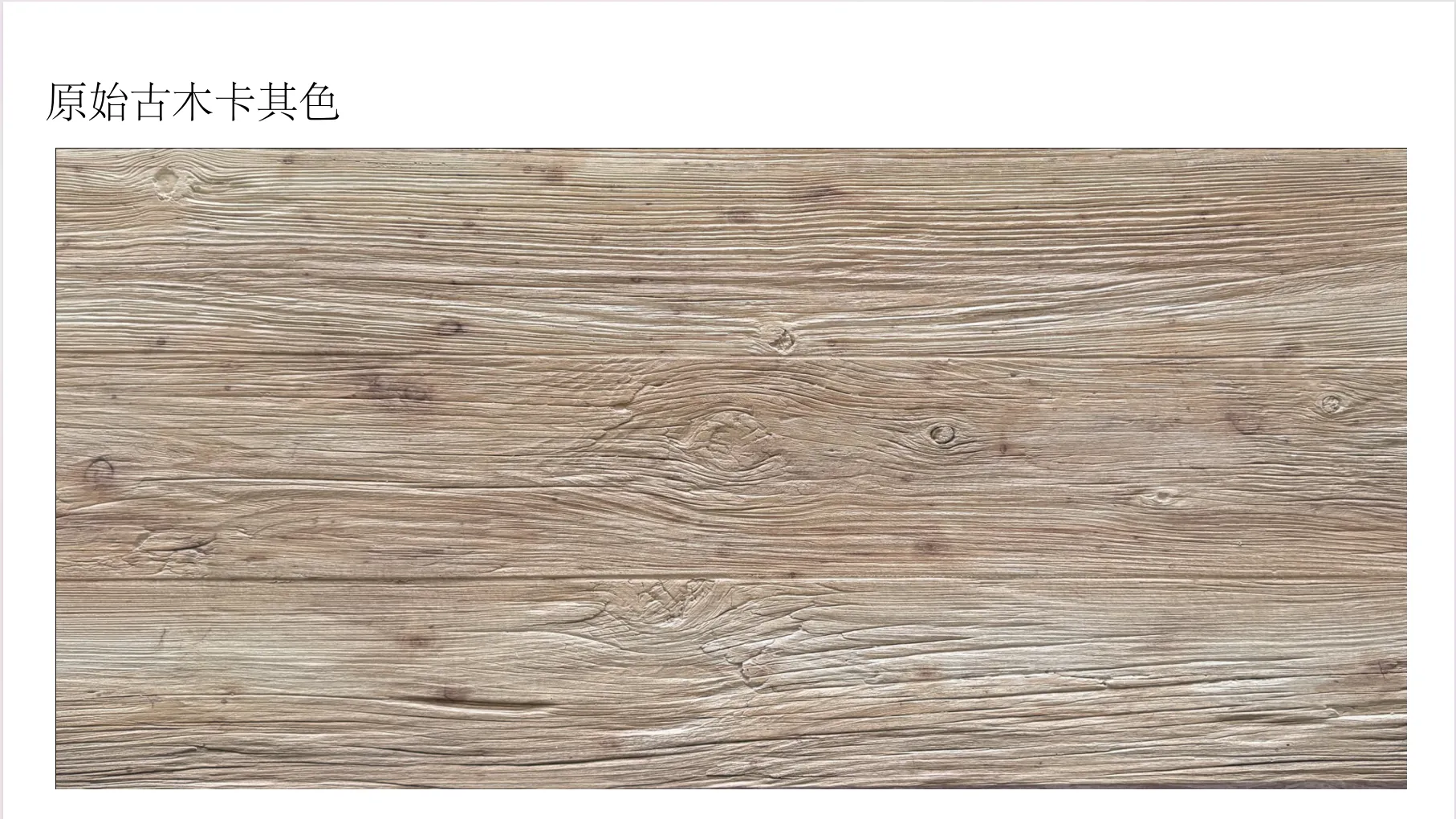
When we talk about "ancient wood" MCM panels, we're not talking about cheap vinyl wraps or flimsy laminates. These are precision-engineered products that capture the essence of reclaimed timber with stunning accuracy. Take, for example, the ancient wood series from leading MCM manufacturers. Each panel is crafted using 3D scanning technology to replicate the unique texture of aged wood—from the deep grooves of saw marks to the subtle color variations of sun-bleached oak or rain-worn pine. Run your hand over the surface, and you'll feel the same tactile warmth as real wood; step back, and the visual impact is indistinguishable from the genuine article.
But why stop at straight-up wood? Many designers are now pairing ancient wood MCM with complementary materials to create layered, dynamic spaces. The wood grain board MCM variant, for instance, offers a sleeker take on wood aesthetics—think smooth, linear grains in warm beiges and rich browns—that pairs beautifully with more industrial materials like fair-faced concrete MCM. Imagine a restaurant interior where walls alternate between rough-hewn "ancient wood" panels and raw, textured fair-faced concrete: the contrast is striking, yet the entire space feels cohesive, grounded, and infinitely inviting.
For projects that call for a softer, more organic palette, travertine (beige) MCM panels make an excellent accent. With their subtle veining and warm, earthy tones, these panels complement ancient wood cladding by adding depth and a touch of luxury—without overwhelming the space. It's a combination that works wonders in hospitality settings, where creating a sense of calm and sophistication is key.
Let's get technical for a moment—because when it comes to fire safety, numbers matter. MCM flexible stone panels are rigorously tested to meet some of the most stringent fire standards in the world. Take the ASTM E84 test, which measures flame spread and smoke development. A Class A rating (the highest possible) means the panel has a flame spread index (FSI) of 0-25 and a smoke developed index (SDI) of 0-450. Most ancient wood MCM panels not only meet this standard but exceed it, with FSIs often below 10. In practical terms, this means that in the event of a fire, the panels won't contribute fuel to the flames, and they'll emit minimal smoke—buying critical time for evacuation and reducing the risk of injury.
But fire resistance isn't just about withstanding flames; it's also about structural integrity. Unlike traditional wood, which can char and weaken quickly under heat, MCM panels maintain their shape and strength even at high temperatures. This is thanks to their mineral core, which doesn't burn or melt, and their polymer binders, which are designed to char slowly and form a protective barrier. For exterior cladding, this means reduced risk of fire spreading between floors or adjacent buildings—a feature that has made MCM a favorite in dense urban environments.
| MCM Product | Aesthetic Profile | Fire Rating (ASTM E84) | Key Benefits |
|---|---|---|---|
| Ancient Wood MCM | Replicated reclaimed wood with knots, saw marks, and weathered texture; available in oak, pine, walnut tones | Class A (FSI ≤ 25) | Lightweight (8-10 kg/m²), flexible, UV resistant, low maintenance |
| Wood Grain Board | Smooth, linear wood grain; warm beiges, browns, and greys | Class A (FSI ≤ 20) | Moisture resistant, easy to clean, ideal for high-traffic areas |
| Fair-Faced Concrete MCM | Raw, industrial concrete texture with fine aggregates; light to medium greys | Class A (FSI ≤ 15) | Thermal insulation properties, sound-dampening, high impact resistance |
| Travertine (Beige) MCM | Subtle veining, porous texture, warm beige tones | Class A (FSI ≤ 25) | Luxurious aesthetic, pairs well with wood and concrete, stain resistant |
One of the biggest advantages of MCM flexible stone is its ability to meet—or exceed—fire safety regulations worldwide. Whether you're working on a project in the U.S., Europe, the Middle East, or Asia, MCM panels are engineered to comply with local codes, giving architects and developers peace of mind. In the U.S., for example, most MCM cladding products meet the strict requirements of the International Building Code (IBC) for exterior wall assemblies, including NFPA 285 testing for multi-story buildings. In Europe, they adhere to EN 13501-1 standards, with many achieving the highest fire classification (A2-s1, d0), indicating low flammability, minimal smoke production, and no flaming droplets.
But compliance isn't just about fire ratings. MCM panels also excel in other key areas, such as durability and sustainability. Unlike traditional wood, which can warp, rot, or fade over time, MCM is resistant to moisture, pests, and UV radiation—meaning it will look as good in 20 years as it does on day one. And because MCM is made from natural minerals and recycled polymers, it has a lower environmental footprint than many traditional building materials, aligning with the growing demand for green construction practices.
If you're worried that working with MCM might be complicated, think again. Installing MCM panels is surprisingly straightforward, especially compared to traditional stone or wood cladding. Thanks to their lightweight nature, MCM panels can be installed using simple adhesive or mechanical fastening systems—no heavy lifting equipment required. This not only reduces installation time (and labor costs) but also minimizes disruption to the job site, a huge plus for renovation projects or busy urban developments.
Another advantage? MCM panels are incredibly versatile. They can be cut to size on-site using standard tools, making it easy to accommodate unique architectural features like curved walls, angled corners, or custom cutouts. And because they're flexible, they can adapt to minor structural movements without cracking—a critical feature in regions prone to earthquakes or temperature fluctuations.
For best results, it's important to work with experienced MCM installers who understand the material's properties. A reputable installer will ensure proper surface preparation, correct adhesive application, and precise alignment—all key to ensuring the longevity and performance of the cladding system. And with most manufacturers offering comprehensive warranties (often 15-20 years), you can rest easy knowing your investment is protected.
To see the power of ancient wood MCM in action, look no further than the recent renovation of The Millhouse, a boutique hotel in the heart of Portland, Oregon. The hotel's owners wanted to update the exterior cladding to reflect the property's history (it was originally a 19th-century flour mill) while ensuring compliance with modern fire codes. Traditional wood cladding was off the table due to local regulations, but the design team was determined to preserve the building's rustic charm.
The solution? Ancient wood MCM panels paired with fair-faced concrete MCM accents. The installation team used 3D-mapped "ancient wood" panels to replicate the look of the mill's original timber siding, complete with weathered knots and saw marks. The result is a facade that looks like it's been standing for over a century—but with the fire resistance of a modern Class A material. Guests and locals alike have praised the renovation, noting that the hotel now feels both timeless and safe, a rare combination in today's fast-paced world.
As architects and designers continue to push the boundaries of what's possible, materials like MCM flexible stone are proving that we don't have to choose between beauty and safety. Ancient wood cladding will always hold a special place in our hearts—and our designs—but with MCM, we can now enjoy that aesthetic without the risks. Whether you're working on a commercial high-rise, a residential development, or a small retail space, MCM offers a world of possibilities: warmth, texture, durability, and peace of mind, all wrapped into one innovative package.
So the next time you find yourself dreaming of an "ancient wood" interior or exterior, remember: with MCM flexible stone, that dream doesn't have to stay on the drawing board. It can be a reality—one that's as safe as it is stunning, as practical as it is beautiful, and as timeless as the wood it so masterfully replicates.
Recommend Products












