
Walk into any well-designed space—whether it's a cozy café with warm wooden walls or a sleek office wrapped in stone-like panels—and you'll notice something instantly: cladding isn't just about covering surfaces. It's about telling a story, balancing durability with beauty, and yes, keeping projects on track. For architects, contractors, and homeowners alike, one factor often rises above the rest when choosing cladding materials: installation time. In a world where deadlines loom and budgets tighten, the difference between a project finishing in weeks versus days can feel like night and day. Today, we're diving into the age-old debate reimagined: traditional wood cladding versus modern MCM (Modified Composite Material) solutions. Let's pull back the curtain on how these materials stack up when time is of the essence.
There's a reason traditional wood cladding has been beloved for centuries. The way sunlight filters through wood grain board , the subtle warmth of bamboo under, the rustic charm of bamboo mat board —these materials feel alive, like they've been plucked straight from nature and polished into something extraordinary. But that "natural" quality comes with a hidden cost: time. Ask any contractor who's wrestled with solid wood panels, and they'll likely sigh, then smile, recalling a project where beauty triumphed over efficiency—eventually.
Let's break down the process. Traditional wood cladding starts with sourcing: not just any wood, but lumber that's been kiln-dried to avoid warping, treated to resist rot, and graded for consistency. For specialty materials like bamboo mat board , this means waiting for shipments from sustainable forests, often with lead times of 2–3 weeks alone. Once the materials arrive, the real work begins. On-site, teams measure and remeasure, cutting each panel to fit wall contours, window frames, and architectural quirks. Unlike prefabricated options, wood rarely comes "ready to install"—even with precise measurements, a single plank might split during cutting, or a batch might have slight variations in thickness, forcing crews to adjust on the fly.
Then there's the prep work. Wood is porous, so it needs sealants, stains, or paint to withstand rain, UV rays, and pests. Many of these treatments require curing time—24 to 48 hours between coats—meaning the clock stops while the wood dries. "I once had a client who insisted on solid oak cladding for their mountain cabin," says Mike Torres, a Colorado-based contractor with 15 years of experience. "We budgeted a week for installation, but the oak needed two rounds of waterproofing. Between rain delays and curing, we ended up taking 12 days. The client loved the result, but the extra time ate into their landscaping budget."
Maintenance prep adds another layer. Even with treatments, traditional wood cladding needs ongoing care—think annual power washing, touch-up stains, or replacing warped boards. While this doesn't factor into initial installation time, it's a reminder that "time cost" isn't just about the build phase; it's about the long game. For projects where speed is critical—a restaurant opening before tourist season, a retail store launching a grand opening—traditional wood can feel like a beautiful but stubborn partner.
Enter MCM: Modified Composite Materials that blend the best of nature and technology. If traditional wood is a handwritten letter, MCM is a precision-engineered email—still personal, but faster, more consistent, and built for the modern world. Take MCM flexible stone and MCM project board series , for example. These aren't your average panels. They're crafted in factories, combining natural minerals (like stone or wood fibers) with polymers to create lightweight, durable sheets that mimic the look of traditional materials—without the hassle.
So, what makes MCM installation so much faster? Let's start with the basics: precision . Unlike wood, MCM panels are factory-cut to exact measurements. Need a 4x8 ft panel with a custom groove pattern? It arrives at the job site ready to go, no on-site sawing required. This alone slashes hours off the timeline. "With traditional wood, we'd spend half a day just cutting panels to fit a wall with windows," Torres explains. "With MCM project boards, we unload the truck, carry the panels up with two people (they're that light!), and start installing within an hour."
Installation itself is a breeze, too. Many MCM systems use interlocking edges or peel-and-stick adhesives, eliminating the need for nails, screws, or complicated fasteners. MCM flexible stone takes it a step further: its flexibility lets it conform to curved surfaces—think rounded pillars or arched doorways—without cracking. Traditional wood? You'd need to steam-bend planks or carve custom pieces, adding days to the process. And since MCM is pre-finished, there's no waiting for stains or sealants to dry. The panels arrive in colors like "lunar peak silvery" or "travertine (starry blue)," ready to shine the moment they're mounted.
Durability also plays into time savings. MCM resists moisture, mold, and fading, so there's no need for pre-installation treatments or post-installation sealing. "We did a beachfront café last year with MCM flexible stone in 'travertine (starry red),'" Torres recalls. "The client was worried about saltwater damage, but the panels just needed a quick rinse after storms. No sanding, no re-sealing—time we'd have spent on maintenance went into finishing the project early."
| Installation Phase | Traditional Wood Cladding (e.g., Bamboo Mat Board) | MCM Cladding (e.g., MCM Project Board Series) |
|---|---|---|
| Material Sourcing & Delivery | 2–3 weeks (due to seasoning, treatment, and shipping delays) | 3–5 days (factory-direct, pre-stocked inventory) |
| On-Site Preparation | 1–2 days (cutting, sanding, sealing prep) | 0–1 day (minimal cutting; panels arrive ready-to-install) |
| Installation Labor | 5–7 days (per 1,000 sq ft; requires precise fitting, nailing, sealing) | 1–2 days (per 1,000 sq ft; adhesive or interlocking systems) |
| Finishing (Sealing/Staining) | 2–3 days (curing time for treatments) | 0 days (pre-finished surfaces; no on-site finishing needed) |
| Total Timeline (Small Project: 500 sq ft) | 2–3 weeks | 3–5 days |
The table above tells the story: for a 500 sq ft project, MCM cuts installation time by more than 70%. That's not just a convenience—it's a game-changer for tight deadlines. Imagine a retail store aiming to open before the holiday rush, or a hotel needing to refresh its exterior before peak season. With MCM, what once took a month can now be wrapped up in a week, freeing up crews to focus on other tasks and clients to start enjoying their space sooner.
Speed is great, but MCM's appeal goes deeper. Let's talk about consistency . Traditional wood can vary in color, grain, and strength—even within the same batch. A plank that looks perfect in the warehouse might warp in the sun, forcing crews to swap it out mid-project. MCM? Every panel is identical. "We did a hospital renovation with fair-faced concrete MCM panels," says Sarah Lin, an architect in Chicago. "The client needed a uniform, sterile look, and MCM delivered. No knots, no discoloration—just 10,000 sq ft of consistent beauty, installed in half the time we'd budgeted for brick."
Lightweight is another hidden advantage. MCM panels weigh 70–80% less than solid stone or wood, making them easier to transport, lift, and install. On a high-rise project, this means fewer workers, smaller equipment, and less risk of on-site injuries. "We used to need a crane for stone panels," Torres laughs. "Now, two guys can carry MCM panels up a ladder. It's like comparing a suitcase to a backpack."
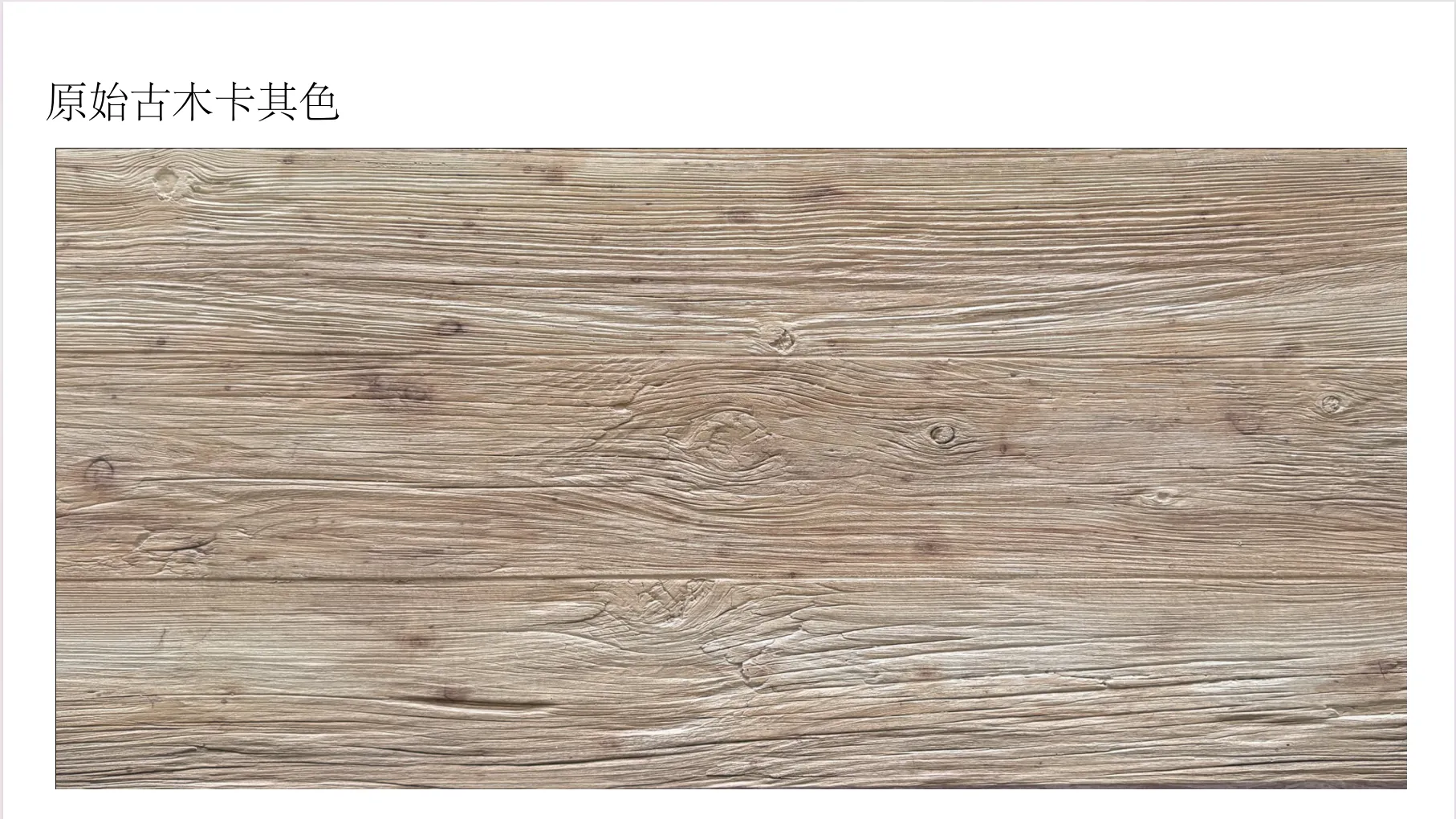
And let's not forget versatility . MCM isn't limited to stone looks. Want the warmth of wood without the upkeep? Wood grain board MCM mimics oak, pine, or teak—complete with realistic knots and grains—without the risk of rot. Need something industrial? Fair-faced concrete MCM offers that raw, modern aesthetic, minus the heavy pouring and curing times of real concrete. It's like having a Swiss Army knife of cladding materials, all under one (fast) roof.
Does this mean traditional wood cladding is obsolete? Hardly. There are projects where the "time cost" is part of the charm. Think heritage restorations, where matching 100-year-old wooden siding requires hand-carved details and time-honored techniques. Or luxury homes where clients crave the authenticity of solid teak, even if it means waiting an extra week. "I had a client who insisted on reclaimed barn wood for their cabin," Lin says. "We spent three weeks sourcing, cleaning, and installing it—but when they walked in and said, 'It feels like home,' that's when you remember why traditional materials matter."
Bamboo mat board, too, has its place in sustainable, eco-conscious projects. While it's faster than solid wood, it still requires more on-site prep than MCM. For clients who prioritize "handmade" stories or local sourcing, traditional methods offer a narrative that MCM—for all its innovation—can't replicate. It's a trade-off: time for soul, speed for sentiment.
At the end of the day, the choice between MCM and traditional wood cladding isn't about "better" or "worse"—it's about fit . For commercial projects, tight deadlines, or large-scale installations, MCM (especially MCM flexible stone and MCM project board series ) is a no-brainer. It's fast, consistent, and built to last, letting teams deliver stunning results without sacrificing schedules.
For smaller, passion-driven projects where time is secondary to storytelling, traditional wood (or bamboo mat board) remains a timeless choice. It's a reminder that some things in design—like the smell of fresh-cut wood or the texture of hand-laid planks—are worth savoring, even if they take a little longer.
As cladding technology evolves, one thing is clear: MCM isn't replacing tradition—it's expanding the toolbox. It lets us have our cake and eat it too: the beauty of natural materials, the speed of modern engineering, and the freedom to focus on what matters most: creating spaces that inspire, without watching the clock.
So, whether you're wrapping a skyscraper in MCM project board series or restoring a cottage with reclaimed wood, remember: great design isn't about rushing or waiting—it's about choosing the right partner for the journey. And these days, that partner might just come with a factory warranty and a much shorter timeline.
Recommend Products












