
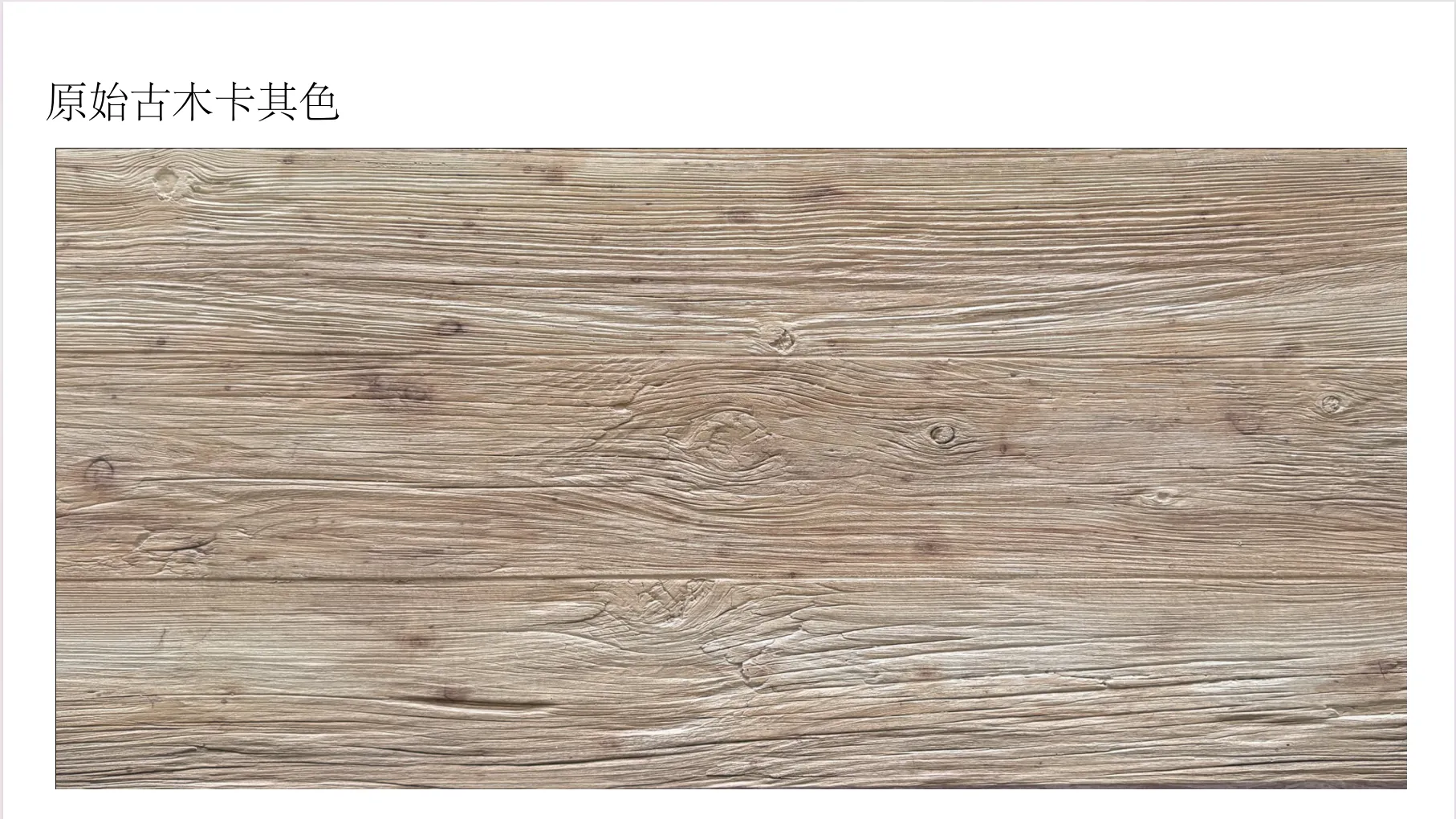
There's something almost magical about ancient wood. It's not just a material—it's a storyteller. Run your hand along a weathered wooden beam in a 17th-century cottage, and you'll feel the grooves carved by time: the faint scratches from decades of use, the subtle discoloration where rain once seeped through a cracked window, the warm, honeyed tones that deepen near the knots like secrets held close. For designers and homeowners alike, that kind of character is irreplaceable. But here's the catch: real ancient wood is rare, fragile, and often unsustainable to source. Enter MCM's custom pigment technology—a modern solution that doesn't just replicate the look of ancient wood, but captures its soul. Let's dive into how this innovation is bridging the gap between history and modern design, one carefully crafted hue at a time.
Why do we keep coming back to ancient wood? It's more than aesthetics. Wood, especially old wood, has a way of grounding us. In a world of sleek glass and cold steel, it's a reminder of nature's patience. Think about the floorboards in a historic inn—each plank has a unique pattern of grain, a spectrum of browns that shift from amber to chestnut to near-black, all deepened by years of foot traffic and polish. Or the beams in a mountain cabin, their edges softened by wind and sun, their color mellowed to a warm, inviting glow. These aren't just "colors"—they're emotions. They whisper of gatherings, of quiet mornings, of lives lived fully.
But here's the challenge: real ancient wood is a finite resource. Old-growth forests are protected, and reclaimed wood often comes with hidden costs—pests, rot, or uneven quality that makes it hard to use in large-scale projects. Even when you can find it, it fades. Sunlight bleaches the tones, moisture warps the texture, and suddenly that "ancient" charm starts to look tired. Designers have long sought a way to hold onto that warmth without the drawbacks, and that's where MCM's custom pigment technology steps in.
Nature is messy—and that's part of its beauty. Ancient wood doesn't come in a single "oak" or "walnut" shade. It's a patchwork of hues, influenced by soil, sunlight, age, and even the tree's own growth patterns. A single beam might have streaks of red from iron in the soil, golden highlights where the sun hit hardest, and dark, almost purple undertones in the heartwood. Replicating that complexity isn't just about mixing paint; it's about capturing the depth of color—the way light plays on the surface, the subtle variations that make each piece unique.
Traditional wood stains or synthetic finishes often fall flat. They're too uniform, too "perfect." A stain might mimic the general color of ancient wood, but it lacks the nuance—the way the pigment settles into the grain, the slight discoloration around knots, the gradual fading that feels organic rather than artificial. And when paired with other materials—stone, metal, concrete—these one-note finishes can clash, failing to evoke the cohesive, timeless feel designers crave.
MCM didn't set out to "copy" ancient wood. They set out to translate it—using technology to preserve its essence while solving its practical flaws. Their custom pigment process starts not in a lab, but in the field. Teams of color specialists travel to historic sites, old barns, and reclaimed wood yards, collecting samples of ancient wood with the most compelling color stories. These samples are then analyzed in MCM's labs, where spectrometers map every shade variation, and microscopes study how pigment settles into the wood's pores and grain.
The next step is crafting the pigments themselves. Unlike off-the-shelf stains, MCM's pigments are custom-blended for each project, using a base of eco-friendly, UV-resistant dyes and binders. What makes this technology stand out is its focus on layered color . Instead of applying a single pigment, MCM's process builds up tones—first a base shade to mimic the wood's overall hue, then subtle highlights and lowlights to replicate the effects of aging and sunlight. Finally, a topcoat with tiny, translucent particles adds depth, making the color shift slightly depending on the light, just like real wood.
But it's not just about looks. These pigments are engineered to last. MCM tests each blend for durability, exposing samples to extreme temperatures, humidity, and UV radiation to ensure they won't fade, crack, or peel. The result? A finish that captures the warmth and character of ancient wood, but with the resilience of modern materials.
MCM's custom pigment technology isn't limited to wood. It's a versatile system that enhances a range of materials, each bringing its own texture and personality to the "ancient wood" aesthetic. Let's explore a few standout options that designers are using to create spaces with old-world charm and new-world durability:
At the center of MCM's ancient wood color matching is wood grain board —a engineered material that mimics the texture and grain of real wood, but with a surface primed for custom pigments. The board itself is made from recycled wood fibers and a eco-friendly resin, giving it the structural stability real wood lacks. What makes it special, though, is how it takes pigment. The grain pattern—deep grooves, subtle knots, and swirling lines—acts like a canvas, allowing MCM's layered pigments to settle into the "pores" and "growth rings," creating the same depth you'd find in a centuries-old plank. Designers love it for feature walls, flooring, and cabinetry, where its warm, variegated color becomes the room's focal point.
Stone and wood have always been natural partners, and travertine (vintage gold) is no exception. This stone, with its soft, porous surface and warm golden undertones, pairs beautifully with MCM's ancient wood pigments. The vintage gold finish—achieved through MCM's custom coloring process—has subtle hints of amber and bronze, mirroring the way ancient wood darkens and enriches over time. Use it as a backsplash in a kitchen with wood grain board cabinets, or as a flooring border to frame a wood grain board floor. The contrast of smooth stone and textured wood grain creates a space that feels both grounded and elegant.
For designers wanting to add a touch of glamour to the ancient wood palette, foamed aluminium alloy board (vintage gold) is a game-changer. This lightweight, durable metal has a matte, brushed finish that MCM tints with a "vintage gold" pigment—warm, not brash, with hints of copper that complement the red and amber tones in wood grain board. It's perfect for accent pieces: a fireplace surround, a decorative panel behind a bed, or even cabinet hardware. The metal's cool texture balances the warmth of the wood grain, adding visual interest without overwhelming the space.
Of course, none of this would be possible without the original muse: ancient wood itself. MCM's color specialists study centuries-old wood samples to understand how color evolves—how sapwood lightens, how heartwood darkens, how exposure to rain and sun creates those unique "watermark" patterns. This deep dive into nature ensures that even their most innovative materials still feel authentic. In some cases, MCM even incorporates small, reclaimed wood chips into their wood grain board, adding tiny specks of real ancient wood that catch the light and tell a tangible story of the past.
| Feature | Traditional Ancient Wood | MCM Wood Grain Board with Custom Pigments |
|---|---|---|
| Color Consistency | Highly variable (unique per plank, but hard to match in large projects) | Custom-blended for uniform yet nuanced color; matches across entire project |
| Durability | Prone to warping, rotting, and insect damage; fades quickly in sunlight | Resistant to moisture, pests, and UV rays; retains color for decades |
| Sustainability | Often sourced from endangered forests or reclaimed wood (limited supply) | Made from recycled materials; no deforestation; low-VOC pigments |
| Maintenance | Requires regular sealing, sanding, and refinishing | Wipe-clean surface; no sealing or refinishing needed |
| Cost | High (rare, labor-intensive to source and install) | Mid-range (affordable, easy to install, long lifespan reduces long-term costs) |
From cozy homes to grand commercial spaces, MCM's ancient wood color matching is transforming how we design. Here are a few ways designers are using these materials to create memorable environments:
In homes, wood grain board is a favorite for living room feature walls, where its rich, variegated color becomes a backdrop for family photos and heirlooms. Pair it with travertine (vintage gold) flooring, and you've got a space that feels both elegant and lived-in. Kitchens are another hotspot—cabinet doors made from wood grain board with custom "ancient oak" pigments add warmth, while their durable surface stands up to spills and heat. Even bathrooms are getting in on the trend: wood grain board shower walls, sealed with MCM's water-resistant topcoat, bring a spa-like, cabin-in-the-woods vibe without the risk of water damage.
Restaurants and boutique hotels are using MCM's materials to craft narratives. Imagine a farm-to-table eatery with wood grain board ceilings (custom-colored to mimic old barn wood) and foamed aluminium alloy board (vintage gold) light fixtures. The combination evokes a rustic, countryside charm, but with the durability to handle daily use. Heritage-themed hotels are also fans—using travertine (vintage gold) and wood grain board in lobbies to transport guests to a bygone era, without the upkeep costs of real antique materials.
Perhaps most meaningful is MCM's work in heritage restoration. When historic buildings need repairs, replacing original wood with new planks can disrupt the structure's visual harmony. MCM's custom pigments allow restorers to color-match new wood grain board to the existing ancient wood, ensuring the building retains its historic character while gaining modern strength. It's a way to honor the past without sacrificing the future.
MCM's ancient wood color matching is just the beginning. As technology advances, the possibilities for custom color are expanding. One exciting development is the use of AI: MCM is experimenting with machine learning algorithms that analyze thousands of ancient wood samples to predict color variations, allowing for even more precise, nuanced blends. Another area of focus is sustainability—researchers are developing pigments made from natural, plant-based dyes, reducing the environmental impact even further.
Designers are also pushing boundaries by mixing materials in unexpected ways. Imagine a wall panel that combines wood grain board, travertine (vintage gold), and foamed aluminium alloy board (vintage gold)—each with custom pigments that complement one another, creating a texture-rich surface that tells a layered story of history and innovation. The future isn't just about matching ancient wood; it's about reimagining it.
Ancient wood isn't just a material. It's a feeling—a connection to the past, a celebration of nature's artistry, and a reminder that beauty takes time. MCM's custom pigment technology doesn't replace that feeling; it preserves it, making it accessible to more people, in more spaces, for longer. Whether it's through wood grain board that mimics a 200-year-old oak, travertine (vintage gold) that glows like sunlit honey, or foamed aluminium alloy board that adds a touch of timeless glamour, MCM is proving that the charm of ancient wood doesn't have to stay in the past.
In a world that often prioritizes speed and uniformity, there's something deeply human about craving the imperfect, the weathered, the lived-in . MCM's technology lets us have both: the warmth of history, and the reliability of modern design. It's not just about color matching—it's about matching the emotion of ancient wood, one custom pigment at a time.
Recommend Products












