
Picture a typical afternoon in Riyadh—suddenly, the sky darkens, and a wall of sand roars in, carrying grains that pelt buildings like tiny bullets. For architects and builders in Saudi Arabia, these sandstorms aren't just a nuisance; they're a relentless adversary. Traditional exterior materials—wood that warps, stone that cracks, paint that peels—simply can't keep up. But what if there was a way to build exteriors that don't just survive the desert's fury, but thrive in it? Enter MCM's Ancient Wood Exteriors line—a collection of materials designed to blend timeless beauty with the toughness needed to stand up to Saudi Arabia's harshest conditions.
Sandstorms in Saudi Arabia aren't gentle. They bring winds up to 70 km/h, carrying abrasive silica grains that scratch surfaces, strip paint, and erode even the sturdiest stone. Add scorching temperatures (often exceeding 45°C in summer) and sudden humidity drops, and you've got a recipe for material disaster. Wooden facades, once warm and inviting, dry out and crack within years. Natural stone, heavy and rigid, succumbs to thermal expansion, developing gaps that let sand and moisture seep in. Even concrete, lauded for durability, can spall under constant abrasion, leaving buildings looking worn before their time.
"We used to joke that in Riyadh, a building's exterior needs a 'sandstorm makeover' every five years," says Lama Al-Mansoori, an architect specializing in sustainable design in Jeddah. "Clients wanted buildings that felt rooted in our culture—warm, natural, timeless—but traditional materials just couldn't deliver that longevity. It was a constant trade-off between beauty and resilience."
MCM (Modern Composite Materials) didn't just set out to create durable exteriors—they wanted to craft materials that belong in the Saudi landscape. The Ancient Wood Exteriors line draws inspiration from the region's architectural heritage: the earthy tones of mud-brick forts, the warm grains of date palm wood, the weathered textures of desert stone. But beneath that traditional aesthetic lies cutting-edge engineering, tailored to outsmart sandstorms.
At the heart of this innovation is a focus on three key traits: flexibility to withstand thermal stress, abrasion resistance to repel sand, and low maintenance to reduce long-term upkeep. Let's dive into the stars of the collection—and how they're changing the game for Saudi builders.
Each material in the Ancient Wood Exteriors line brings something unique to the table, but they all share one mission: to let buildings age gracefully, even in the desert's harshest embrace. Here's a closer look at the standouts:
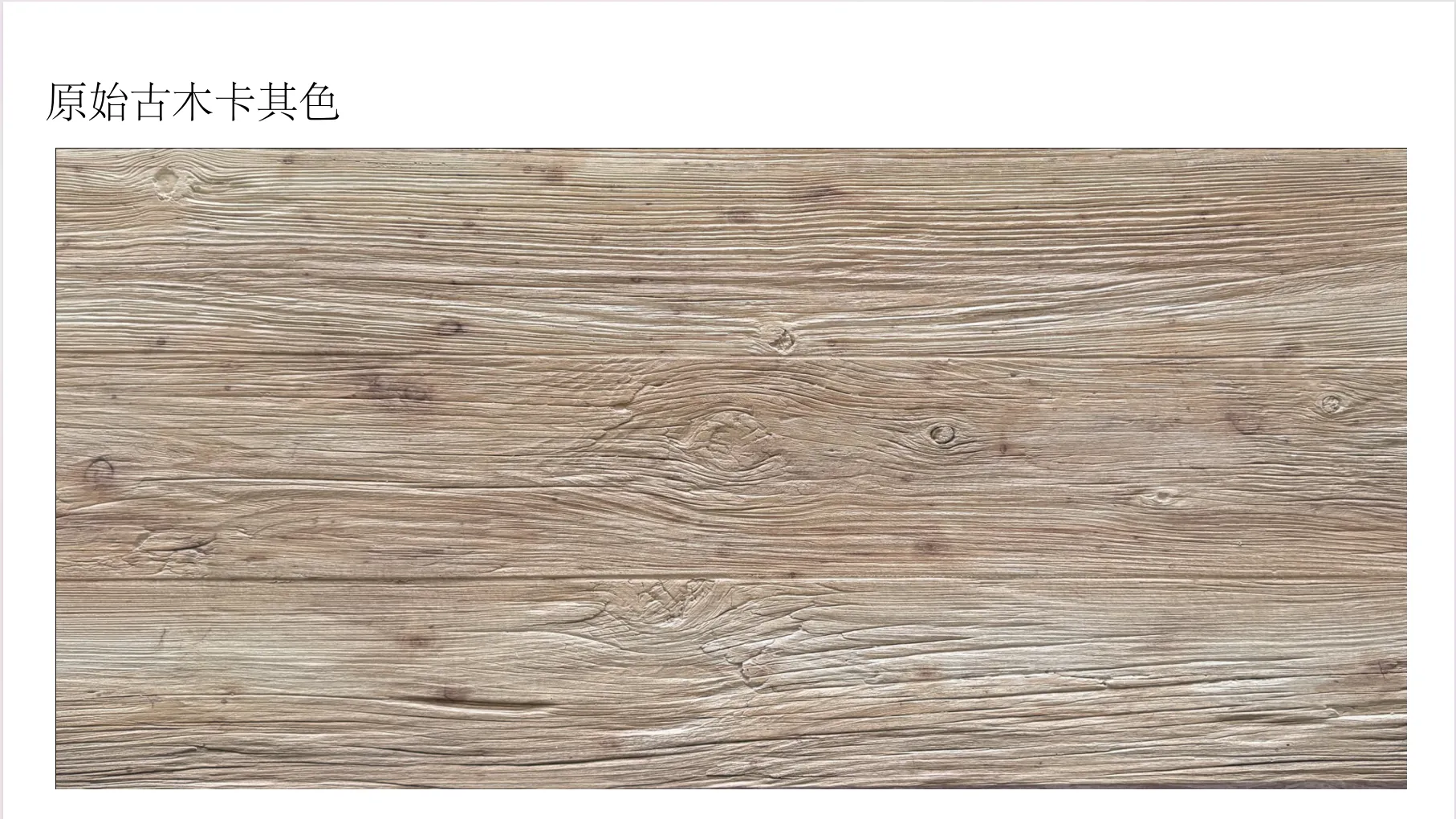
Walk up to a building clad in MCM's wood concrete board, and your first thought might be, "That's real wood." Run a hand over its surface, though, and you'll feel the difference: a subtle grit that hints at its concrete core. This hybrid material blends recycled wood fibers with high-performance concrete, creating a facade that looks like weathered oak but acts like a tank.
What makes it sandstorm-ready? For starters, its density. The wood fibers are encapsulated in a concrete matrix, leaving no porous gaps for sand to wedge into. During a storm, grains slide off the surface rather than embedding themselves, preventing the "sandpaper effect" that wears down traditional wood. And unlike solid wood, it doesn't shrink or swell with Saudi's extreme temperature swings—meaning no cracks, no warping, and no need for yearly refinishing.
"We used the light grey wood concrete board on a villa in Al Khobar last year," says Al-Mansoori. "After the first major sandstorm, the owner called panicking, thinking the exterior was ruined. I went over, hosed it down, and it looked brand new. The sand hadn't scratched it—just sat on top, easy to wash off. He was stunned."
Rammed earth has been used in Saudi architecture for centuries—think of the mud-brick walls of old Najdi forts, built to withstand heat and sand. MCM's rammed earth board takes that ancient wisdom and supercharges it. Instead of raw mud, they use a blend of stabilized soil, fiberglass, and a polymer binder, pressed into panels that capture the warm, variegated tones of traditional rammed earth (khaki, terracotta, soft browns) but with 10x the strength.
Sandstorms are no match for this material. Its surface is naturally abrasive-resistant, thanks to the compressed soil particles that form a hard, dense shell. And because it "breathes"—allowing moisture to escape—it resists the humidity spikes that can cause other materials to blister. Best of all, its earthy color palette blends seamlessly with the Saudi desert, making buildings feel like they've grown from the landscape rather than being dropped onto it.
If rammed earth is the "traditionalist" of the lineup, MCM flexible stone is the "shape-shifter." Designed to mimic natural stone—think the soft veining of travertine or the rugged texture of granite—this material is thin (just 4-6mm thick) and surprisingly bendable, making it ideal for curved facades or intricate architectural details that would crack rigid stone.
But don't let its flexibility fool you. MCM flexible stone is reinforced with fiberglass mesh, giving it the tensile strength to withstand sandstorm winds without tearing. Its secret weapon? A proprietary coating that acts like a force field: sand grains hit the surface, absorb impact, and bounce off, leaving no scratches. And unlike natural stone, it's lightweight—reducing structural load on buildings and cutting installation time by up to 40%.
Travertine has long been a favorite in Saudi architecture for its creamy hues and organic veining, but natural travertine is porous—a death sentence in a sandstorm. Sand and dust clog its pores, turning bright beige surfaces into dull, gritty messes that require constant cleaning. MCM's travertine panels solve this by replicating the stone's aesthetic with a non-porous composite core, sealed with a UV-resistant layer that keeps the color vibrant even under the relentless Saudi sun.
"We used MCM's travertine (beige) on a hotel in Madinah, and guests often ask if it's real stone," says Khalid Al-Jaber, a project manager at a Riyadh-based construction firm. "When we tell them it's a composite, they're shocked—until we show them the maintenance log. No power washing, no sealing, no patching. Just an occasional hose-down, and it still looks like it did on day one."
| Material | Key Traits for Sandstorm Resistance | Aesthetic Vibe | Maintenance Needs |
|---|---|---|---|
| Wood Concrete Board (Light Grey) | Dense surface repels sand; no warping in heat/cold | Warm, rustic wood grain; modern industrial feel | Occasional hose-down; no refinishing needed |
| Rammed Earth Board (Khaki) | Compressed soil resists abrasion; breathable to prevent moisture damage | Earthy, organic, with subtle color variations | Low—just rinse off surface dust |
| MCM Flexible Stone | Fiberglass reinforcement withstands wind; non-porous coating repels sand | Mimics natural stone (travertine, granite) with precise veining | Minimal—no sealing or patching required |
| Travertine (Beige) | Non-porous core prevents sand clogging; UV-resistant layer preserves color | Classic, elegant, with soft beige tones and organic veining | Occasional cleaning with mild soap and water |
In 2023, the Al Hamra Tower, a 12-story commercial building in north Riyadh, faced a dilemma: its original aluminum cladding was showing signs of wear after just three years, with sand-induced scratches marring its once-sleek surface. The owners wanted a replacement that would last, but they also craved a warmer, more inviting look that would stand out in Riyadh's modern skyline.
Enter MCM's Ancient Wood Exteriors. The design team opted for a mix: wood concrete board (light grey) for the main facade, accented with rammed earth board (khaki) on the lower levels and travertine (beige) around the entrance. The result? A building that feels both contemporary and rooted in Saudi heritage.
Six months later, Riyadh was hit by one of the worst sandstorms in recent memory, with winds reaching 80 km/h. When the dust settled, the Al Hamra Tower's new exterior was unscathed. "We expected at least some scuffing, but there wasn't a mark," says Al-Jaber, who oversaw the project. "The wood concrete board had shed all the sand, the rammed earth looked richer—like it had absorbed the storm's character—and the travertine was still glowing. The owners were so impressed, they're already planning to use MCM on their next project."
What truly sets MCM's Ancient Wood Exteriors apart isn't just their resistance to sandstorms—it's how they connect buildings to Saudi Arabia's cultural and natural landscape. The wood concrete board nods to the region's historic use of palm wood; the rammed earth echoes the mud-brick traditions of the Najd; the travertine evokes the limestone plateaus of the Hijaz. These materials don't just protect buildings—they give them soul.
"In Saudi, we don't just build structures—we build legacies," says Al-Mansoori. "A building should tell a story of where it is, and who we are. MCM's materials let us do that without sacrificing durability. Finally, we don't have to choose between a building that lasts and a building that matters."
As Saudi Arabia continues to grow—with mega-projects like NEOM and the Red Sea Development pushing the boundaries of design—the demand for exteriors that can keep up is only increasing. MCM's Ancient Wood Exteriors line isn't just a solution for today's sandstorms; it's a blueprint for tomorrow's desert-proof buildings—materials that honor tradition, embrace innovation, and stand tall, no matter what the sky throws at them.
So the next time you're in Riyadh, Jeddah, or Al Khobar, take a closer look at the buildings around you. Chances are, the ones that look warm, weathered, and utterly unphased by the desert? They're probably wearing MCM's Ancient Wood Exteriors. And in a land where sandstorms are a fact of life, that's the highest compliment a building can get.
Recommend Products












