
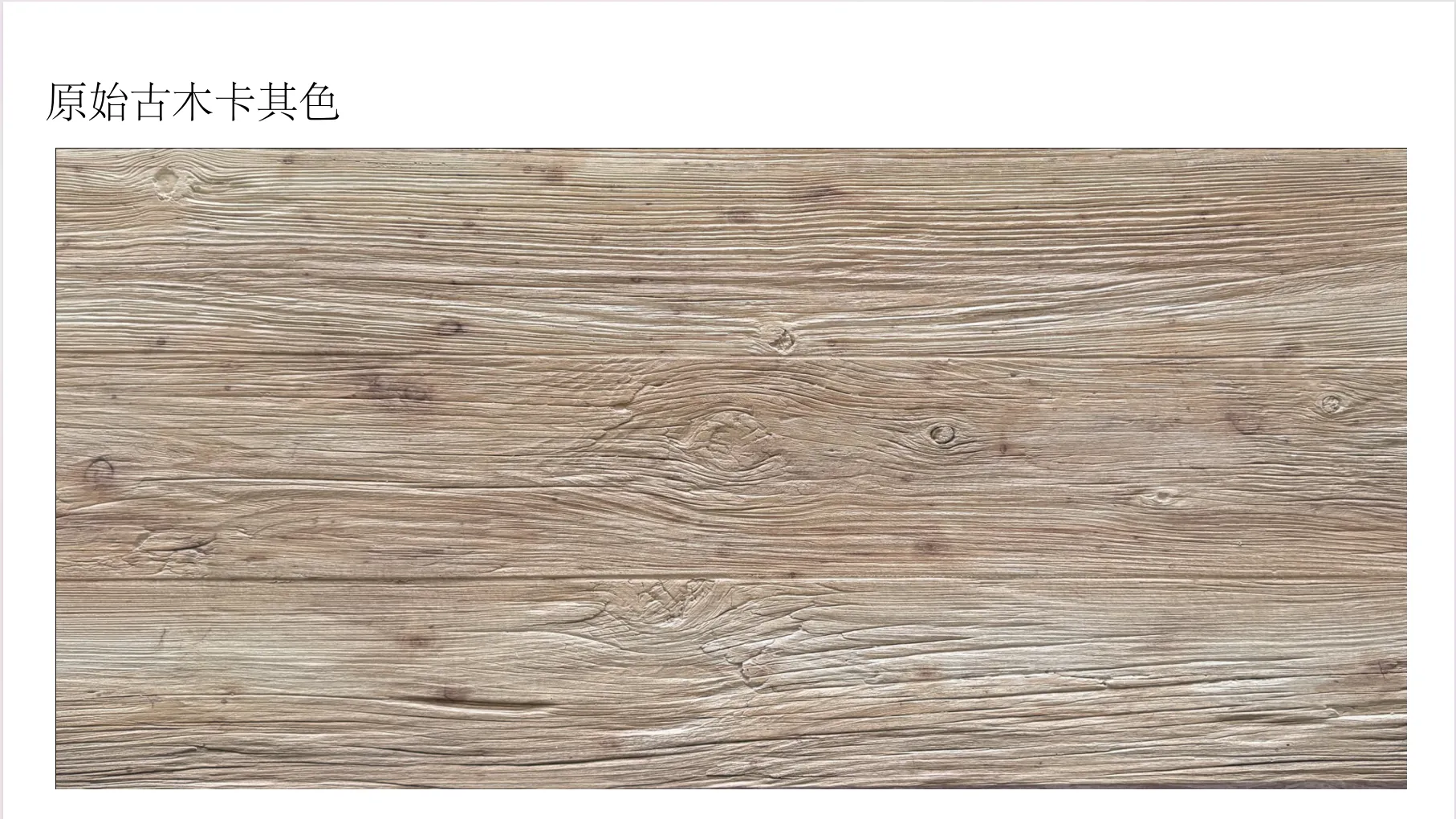
Walk into any modern boutique hotel, trendy restaurant, or upscale office building today, and you'll likely notice a design trend that feels both timeless and fresh: the warm, weathered look of ancient wood. There's something inherently comforting about those rich grains, the subtle cracks that tell a story, the earthy tones that ground a space. But here's the thing about design trends—they often collide with one of architecture's most non-negotiable priorities: safety. When that "ancient wood" aesthetic is achieved with materials that can't stand up to fire, the result isn't just a design flaw; it's a risk to lives and livelihoods.
This is where Modified Composite Material (MCM) steps in. You might have heard the term thrown around in construction circles, but what exactly is MCM, and how does it bridge the gap between that coveted rustic charm and the strict fire safety codes that govern buildings worldwide? Let's dive in. We'll explore why fire ratings matter more than ever, how MCM products—from flexible stone panels to 3D-printed architectural elements—are engineered to meet global standards, and why choosing compliant materials doesn't mean sacrificing an ounce of style.
Fire safety in construction isn't just about following rules; it's about protecting what matters. Think about the last time you stayed in a hotel. Did you notice the ceiling panels? The wall cladding? Probably not—until you stop to realize those materials are silently working to slow the spread of fire, contain smoke, and give you time to escape if the worst happens. According to the National Fire Protection Association (NFPA), U.S. fire departments responded to an average of 3,340 structure fires in hotels and motels each year between 2015 and 2019, resulting in 15 deaths, 120 injuries, and $118 million in property damage annually. Many of these incidents trace back to substandard building materials—products that looked the part but failed when tested under real-world conditions.
Now, imagine swapping those risky materials with ones that mimic the look of ancient wood, weathered stone, or aged metal but are built from the ground up to resist fire. That's the promise of MCM. But to trust that promise, we need to understand the language of fire ratings—the codes and standards that turn vague claims into verifiable facts.
If you've ever glanced at a building material's spec sheet, you've probably seen terms like "Class A," "EN 13501-1," or "ASTM E84." These aren't just random acronyms—they're the result of rigorous testing designed to measure how a material behaves when exposed to fire. Let's break down the most common ones you'll encounter:
Developed by ASTM International, the E84 test (also known as the Steiner Tunnel Test) is one of the most widely recognized methods for evaluating how quickly fire spreads across a material's surface and how much smoke it produces. During the test, a sample of the material is mounted in a 25-foot-long tunnel and exposed to a controlled flame. The result? A flame spread index (FSI) and a smoke developed index (SDI). Materials with an FSI of 0-25 are classified as Class A (the best), 26-75 as Class B, and 76-200 as Class C. For reference, untreated wood typically scores an FSI of 75-150—right on the cusp of Class B or C, depending on the species. Not exactly reassuring when lives are on the line.
Across the pond, the European standard EN 13501-1 takes a slightly different approach, classifying materials based on reaction to fire (how they ignite, spread flames, release heat) and, in some cases, resistance to fire (how long they maintain structural integrity). The most common ratings here are A1 (non-combustible), A2 (limited combustibility), B, C, D, E, and F (with F being the least resistant). For exterior cladding, many European countries require at least an A2 rating, especially for high-rise buildings—a bar that traditional wood products simply can't reach.
In China, the GB 8624 standard is equally stringent, with classifications ranging from A (non-combustible) to B3 (highly flammable). For public buildings like airports, hospitals, and shopping malls, an A rating is mandatory. This is where MCM truly shines, as many of its formulations are engineered to meet even the highest A1 or A2 grades under GB 8624—something we'll explore in detail later.
So, what makes MCM different? At its core, MCM is a blend of natural minerals, polymers, and reinforcing fibers—engineered to mimic the texture, color, and depth of traditional materials like wood, stone, or metal, but with enhanced performance properties. Think of it as nature's beauty, reimagined with modern science. Let's take a closer look at some key MCM product lines and how their composition contributes to fire resistance:
MCM flexible stone panels are a game-changer for architects craving the look of natural stone—say, the ethereal veining of travertine (starry green) or the rugged texture of gobi panels—but need something lightweight and easy to install. Unlike solid stone, which is heavy and brittle, flexible stone is made by bonding thin layers of natural stone particles with a polymer matrix. This matrix isn't just for flexibility; it's also fire-retardant. Many flexible stone products achieve an ASTM E84 Class A rating, with flame spread indices below 25 and smoke developed indices under 50—numbers that put them in the same league as concrete and metal.
MCM's 3D printing series takes design freedom to new heights. Imagine creating intricate, curved wall panels that look like they were carved from ancient wood, or geometric facades that mimic the texture of bamboo mat board—all without the fire risk of organic materials. These 3D-printed elements are often made with a base of foamed aluminium alloy (vintage silver or gold) or fair-faced concrete, both of which are inherently fire-resistant. Foamed aluminium, for example, has a melting point of over 600°C (1,112°F), making it highly resistant to heat, while fair-faced concrete (a staple in MCM's big slab board series) is non-combustible and slow to transfer heat.
MCM's big slab boards are designed for large-scale applications—think exterior cladding for commercial buildings or feature walls in airports. These panels, which can span up to 1.2m x 3.6m, are reinforced with high-strength fibers and mineral fillers that enhance their fire performance. Take the boulder slab (vintage black) or epoch stone variants: their composition includes Portland cement, silica sand, and glass fibers, all of which contribute to a non-combustible core. When tested to EN 13501-1, these big slabs often achieve an A2-s1, d0 rating—meaning they're of limited combustibility, produce little smoke (s1), and no flaming droplets (d0)—perfect for high-rise construction.
Talk is cheap; test results are concrete. To truly understand MCM's fire performance, let's look at how specific products measure up against global safety standards. Below is a comparison of some popular MCM products, their key features, and the fire ratings they've earned through independent testing.
Let's unpack that table for a second. Take the flexible stone in travertine (starry green)—a product that looks like it was quarried from a ancient mountain, yet achieves a Class A rating under ASTM E84. How? The secret is in the binder: MCM manufacturers use halogen-free, flame-retardant polymers that char when exposed to heat, forming a protective layer that slows combustion. Meanwhile, the foamed aluminium alloy board (vintage silver) isn't just about that sleek, industrial look; its closed-cell structure traps air, acting as an insulator and preventing the spread of flame. And fair-faced concrete? It's as straightforward as it gets—100% non-combustible, with a fire resistance rating that can exceed 2 hours in some configurations.
Lab tests are crucial, but nothing beats seeing MCM in action. Let's take a look at a real-world project: the Azure Heights Hotel in Dubai, a 22-story luxury resort that wanted to channel the warmth of ancient wood throughout its exterior and lobby. The design team initially considered solid teak panels for the facade, but Dubai's strict fire codes (which require exterior cladding to meet EN 13501-1 A2 rating) quickly nixed that idea. Enter MCM's wood grain board series—panels that mimic the look of weathered teak but are made with a core of fire-retardant MCM and a surface layer of natural wood particles bonded with flame-resistant resin.
During installation, the panels underwent on-site fire testing: a 30-minute exposure to an open flame, followed by a check for flame spread and smoke density. The result? Zero flame propagation, minimal smoke, and no structural damage to the panels. The hotel opened in 2023, and today, guests marvel at the "ancient wood" exterior without realizing they're standing in front of a material that's safer than concrete in a fire scenario.
Another example is the Beijing Innovation Center, a commercial complex featuring MCM's lunar peak silvery panels. These panels, which evoke the texture of moonlit stone, were chosen not just for their aesthetics but for their compliance with China's GB 8624 A1 rating. During a simulated fire test conducted by the China National Center for Quality Supervision and Test of Building Materials (CNBM), the panels withstood temperatures of 1,000°C (1,832°F) for over an hour, maintaining their structural integrity and preventing heat transfer to the interior. For a building housing tech startups and sensitive equipment, that kind of performance is priceless.
Curious about how MCM products earn those impressive ratings? Let's pull back the curtain on the testing process. Most MCM manufacturers partner with accredited labs like Underwriters Laboratories (UL), Intertek, or SGS to conduct third-party testing. For ASTM E84, the test involves mounting a 20-inch by 24-inch sample in a tunnel and exposing it to a flame from a gas burner. The lab measures how far the flame spreads along the sample (flame spread index) and how much smoke is produced (smoke developed index) over a 10-minute period. A Class A rating requires an FSI of 0-25 and SDI under 450.
For EN 13501-1, the testing is more comprehensive. The product undergoes a series of tests, including the ISO 5660 cone calorimeter (to measure heat release rate and smoke production), the ISO 11925-2 ignitability test, and the ISO 9239-1 radiant panel test (for flame spread). To achieve an A2 rating, the material must have a total heat release of less than 4 MJ/kg and a heat release rate peak under 200 kW/m². MCM's flexible stone and big slab boards consistently meet these thresholds, thanks to their mineral-rich composition.
As cities grow taller and building codes become stricter, the demand for materials that balance safety and style will only increase. MCM is already leading the charge, but what's next? Manufacturers are experimenting with new formulations, like adding graphene to MCM panels to enhance thermal conductivity (and thus fire resistance) or developing self-healing polymers that repair small cracks caused by heat. There's also a push for more sustainable fire retardants—moving away from halogen-based chemicals to bio-based alternatives that are better for the environment without compromising performance.
Another trend is the integration of smart technology. Imagine MCM panels embedded with sensors that detect heat or smoke and send alerts to building management systems before a fire even starts. Early prototypes are already in testing, and while they're not yet mainstream, they hint at a future where building materials do more than just resist fire—they actively prevent it.
At the end of the day, choosing MCM products for your next project isn't just about checking a box on a code sheet. It's about respecting the people who will live, work, and play in the spaces you design. It's about proving that you can have both the weathered charm of ancient wood and the peace of mind that comes with knowing your materials are built to protect. Whether you're specifying travertine (starry green) panels for a boutique hotel or foamed aluminium alloy boards for a corporate headquarters, MCM delivers on both fronts—beauty and safety, hand in hand.
So the next time you're poring over material samples, remember: fire ratings aren't just numbers. They're a promise. And with MCM, that promise is backed by science, tested by experts, and proven in the real world. Because when it comes to building, the best designs aren't just seen—they're felt. And the safest ones? They're the ones you never have to worry about.
Recommend Products












