
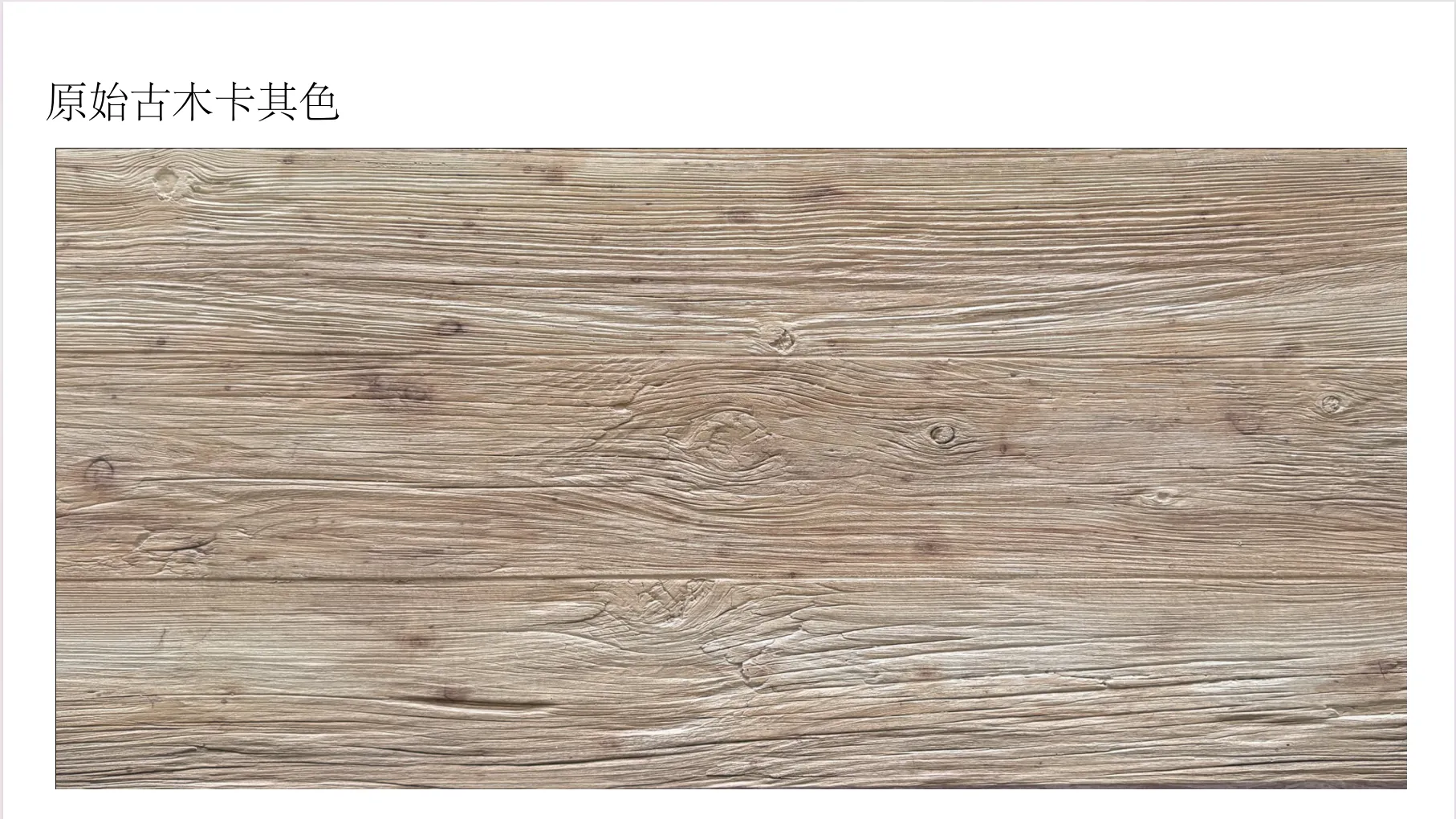
In the heart of Riyadh, where the desert sun dips low and gilds the skyline, a new cultural center rises—its facade a tapestry of warm, earthy tones that seem to ripple like sand dunes at dawn. Step closer, and you'll notice something unexpected: the surface, though sleek and modern, carries the soft, organic texture of aged wood, as if planks from a centuries-old Najdi fortress were reimagined for the 21st century. This isn't traditional timber, of course—Saudi Arabia's harsh climate, with its scorching summers and occasional sandstorms, demands something tougher. Instead, it's a product of innovation: the MCM big slab board series, a collection of modified composite materials designed to marry the soul of ancient craftsmanship with the resilience of modern engineering.
Across Saudi Arabia, from the historic lanes of Jeddah's Al-Balad district to the futuristic towers of NEOM, architects and designers are on a mission: to build spaces that honor the kingdom's rich heritage while embracing progress. Wood, with its deep roots in Saudi culture—from the wooden lintels of old mud-brick homes to the carved doors of traditional mosques—has long been a symbol of warmth and connection to the land. But wood alone can't withstand the demands of modern construction. Enter MCM (Modified Composite Material), a category of lightweight, durable panels that have quietly revolutionized how architects approach facades, interiors, and public spaces. In this article, we'll explore how the MCM big slab board series, particularly its wood-inspired designs, is becoming a cornerstone of Saudi projects, breathing new life into ancient motifs and proving that tradition and technology don't have to be rivals—they can be partners.
To understand why MCM has struck such a chord in Saudi Arabia, we first need to look back at the materials that shaped the kingdom's built environment. For centuries, Saudi architecture was a masterclass in adaptation: using what the land provided to create spaces that were both functional and beautiful. Mud brick, palm fronds, and local stone were the building blocks of villages and cities, each material chosen for its ability to insulate against the heat or stand firm against time. Wood, though less abundant, played a vital role in details—the ornate mashrabiyas (latticed windows) that filtered light and air, the heavy wooden doors etched with geometric patterns, the beams that supported roofs in mountainous regions like Asir.
"Wood in traditional Saudi design wasn't just about utility," says Lina Al-Mansoori, a Riyadh-based architect specializing in heritage preservation. "It was about storytelling. A door with a certain grain pattern might indicate the family that lived there; a beam carved with palm leaves could symbolize prosperity. When we design modern buildings, we want to keep that storytelling alive, but we can't rely on the same materials. Real wood warps in humidity, fades in the sun, and requires constant maintenance—especially in coastal cities like Jeddah, where salt air accelerates decay. Clients want the look and feel of those historic woods, but they need something that can last 50 years without losing its character."
This tension—between tradition and practicality—has led to a search for alternatives. For decades, concrete and steel dominated, offering durability but often feeling cold and impersonal. Then came natural stone, which added texture but was heavy, expensive, and limited in design flexibility. "We tried using marble and granite for a heritage museum project once," recalls Khalid Al-Zahrani, a project manager at a Riyadh construction firm. "The stone looked stunning, but transporting those large slabs to the site was a logistical nightmare. And when we installed them, the weight required reinforcing the building's structure, driving up costs. We needed something that could mimic the beauty of natural materials but with the lightness and adaptability of modern composites."
MCM, or Modified Composite Material, emerged in the early 2000s as a response to this very challenge. At its core, MCM is a sandwich of layers: a thin outer skin of natural minerals (like stone or ceramic) bonded to a lightweight core, often made of fiberglass or aluminum honeycomb. The result? Panels that are up to 80% lighter than natural stone, yet just as strong. For Saudi projects, this has been a game-changer. "Suddenly, we could create large, seamless facades without worrying about structural strain," Al-Zahrani explains. "And because the outer layer can be engineered to mimic any texture—wood, stone, even concrete—we weren't sacrificing aesthetics for practicality."
The MCM big slab board series takes this a step further. Unlike smaller MCM panels, which are often used for accents, these slabs come in sizes up to 1200x2400mm, allowing for fewer seams and a more cohesive look. Imagine a hotel lobby where the entire wall is clad in a single slab that looks like a slab of golden travertine, or a mosque's exterior where 3-meter-tall panels mimic the rough-hewn texture of ancient limestone—without the weight or installation headaches. "Big slabs create a sense of grandeur," says Al-Mansoori. "In Saudi culture, spaces are meant to inspire awe, whether it's a palace or a public square. MCM big slabs let us do that with materials that are easy to transport, quick to install, and kind to the budget."
But what truly sets the MCM big slab series apart is its design versatility—particularly when it comes to capturing the essence of wood. While other materials might offer a flat "wood-look" print, MCM panels use advanced 3D printing and texturing techniques to replicate not just the color of wood, but its depth. Run your hand over a wood grain board from the series, and you'll feel the subtle ridges of growth rings, the slight indentations where a branch once grew, the soft matte finish that catches the light like sun filtering through a date palm grove. "It's not just about looking like wood—it's about feeling like wood," says Hanaa Al-Sayed, a material scientist at a leading MCM manufacturer. "We study real wood samples, from old olive trees in Madinah to teak beams in Jeddah's historic homes, to map their texture at a microscopic level. Then we use that data to create molds that press those details into the MCM surface. The result is a material that triggers the same emotional response as natural wood, but with the durability to survive Saudi's climate."
Walk through the MCM design studio in Dammam, and you'll find shelves lined with inspiration: small blocks of weathered wood collected from old farms in Al-Qassim, photos of traditional wooden mashrabiyas, even samples of Najdi door carvings. "Our team of designers isn't just creating panels—they're preserving stories," says Al-Sayed. "When we set out to develop the wood grain board line, we didn't just Google 'wood textures.' We traveled to rural Saudi Arabia, talked to craftsmen who've worked with wood for generations, and documented the unique patterns that define our heritage."
One of the most popular designs in the series is the "Ancient Wood" pattern, which draws from the gnarled, silvery timber of acacia trees that grow in the Hijaz Mountains. These trees, some hundreds of years old, have trunks twisted by wind and sun, their bark peeling in thin, papery layers. The MCM version captures that weathered beauty: a mix of warm grays and soft browns, with subtle cracks and knots that look like they were carved by time itself. "We used a 3D printer to etch those cracks into the panel's surface," Al-Sayed explains. "Then we added a protective coating that mimics the way real wood fades slightly in sunlight—so over time, the panel will develop a patina, just like the original tree. It's alive, in a way."
Another standout is the "Bamboo Mat Board," inspired by the woven bamboo screens used in traditional Saudi homes to shield against sand. MCM's flexible stone technology allows the panel to be bent into gentle curves, creating a facade that ripples like a bamboo mat caught in the wind. "In Jeddah, we used this for a beachfront restaurant," Al-Zahrani recalls. "The panels wrap around the building's exterior, and when the sun sets, the shadows they cast look like the woven patterns of old. Diners tell us it feels like sitting in a traditional majlis, even though the building is brand new. That's the power of these designs—they connect people to their roots without being stuck in the past."
The "Historical Pathfinders Stone" is another nod to heritage, though it blends wood and stone motifs. This design features a base texture of rough stone (reminiscent of the ancient paths that crisscross the Arabian Peninsula) overlaid with delicate wood grain lines, symbolizing the travelers who once walked those paths, carrying stories and traditions. "We used this for a museum in Al-Ula, which sits near the ancient Nabatean ruins of Hegra," Al-Mansoori says. "The facade needed to honor the region's history, but also serve as a backdrop for modern art exhibits. The Historical Pathfinders Stone does both—it feels ancient and contemporary at the same time. Visitors often pause to touch it, as if trying to read the 'stories' in the grain."
To truly grasp the impact of MCM big slab in Saudi architecture, let's look at three recent projects where the material took center stage. These aren't just buildings—they're testaments to how MCM is reshaping the kingdom's skyline, one wood-inspired facade at a time.
The Al-Najah Cultural Center, opened in 2024 in north Riyadh, was designed to be a "bridge between generations." Its mission: to teach young Saudis about their heritage while providing a space for modern cultural events. For lead architect Youssef Al-Harbi, the facade was key to this mission. "I wanted visitors to feel like they were stepping into a place that respected the past, but wasn't trapped by it," he says.
Al-Harbi chose the MCM big slab board series for the center's exterior, specifically the "Ancient Wood" and "Lunar Peak Golden" designs. The lower half of the building features the Ancient Wood panels, their silvery-gray tones and deep grain mimicking the weathered acacia beams of old Najdi homes. Above, the Lunar Peak Golden slabs—with their smooth, metallic finish—rise like a modern crown, symbolizing progress. "The contrast is intentional," Al-Harbi explains. "Wood grounds us in history; gold looks to the future. And because both are MCM, we could install them in weeks, not months. The center opened on time, and the feedback has been incredible. Parents tell me their kids ask about the 'old wood' on the walls, which sparks conversations about our heritage."
Inside, the lobby uses the bamboo mat board panels for the ceiling, creating a wave-like effect that softens the space. "Acoustically, MCM is great too," Al-Harbi adds. "The panels absorb sound, so even when the lobby is full, it feels calm—like sitting under a palm tree, sheltered from the noise of the city."
On the Red Sea coast, the Al-Mansoori Resort wanted to blend luxury with local charm. "Tourists come to Yanbu for its beaches and its history," says resort manager Fatima Al-Mansoori. "We needed our buildings to feel like a retreat, not a generic hotel. Wood was the obvious choice for warmth, but with the saltwater and humidity, real wood would have rotted within years."
The solution? MCM big slabs in the "Travertine (Vintage Gold)" and "Wood Grain Board" designs. The resort's villas feature facades clad in the Wood Grain Board, their warm brown tones complementing the surrounding palm trees. "From the beach, they look like traditional wooden bungalows," Al-Mansoori laughs. "Guests are shocked when we tell them it's composite. They run their hands over the walls and say, 'But it feels like wood!' That's the magic of MCM."
The main restaurant, perched on a cliff overlooking the sea, uses Travertine (Vintage Gold) big slabs for its exterior. The panels, which mimic the golden hue of local sandstone, are paired with foamed aluminium alloy board (vintage silver) accents—another MCM innovation that adds a touch of modern elegance. "At sunset, the gold slabs glow like the desert at dusk," Al-Mansoori says. "It's become a spot for photos, but more importantly, it makes guests feel like they're part of the landscape, not just visiting it."
Libraries are meant to be timeless, and the King Abdullah Public Library in Dammam wanted a facade that would stand the test of time—both aesthetically and physically. "We needed something that could handle Dammam's sandstorms and high temperatures, but also felt inviting," says project architect Omar Al-Khaldi. "Libraries should feel like sanctuaries, and wood has that comforting quality. But again, real wood wasn't an option."
Al-Khaldi turned to the MCM big slab series, selecting the "Fair-Faced Concrete" and "Rammed Earth Board (Gradient B)" designs. The lower levels use Fair-Faced Concrete panels, which have the raw, industrial look of poured concrete but with the lightness of MCM. Above, the Rammed Earth Board panels transition from soft beige to warm terracotta, mimicking the gradient of a desert sunset. "But the real story is the interior," Al-Khaldi says. "The reading rooms feature wood grain board panels on the walls, arranged in a pattern that resembles the spines of old books. It's a subtle nod to the library's purpose, and it makes the space feel cozy—like curling up with a good book in a wooden cabin."
Since opening, the library has become a community hub, with visitors often commenting on how "welcoming" the environment feels. "That's the emotional impact of MCM," Al-Khaldi reflects. "It's not just a building material—it's a tool to create spaces that make people feel something."
Beyond its aesthetic appeal, MCM big slab offers a host of technical advantages that make it ideal for Saudi projects. Let's break them down:
Lightweight & Easy to Install: Weighing just 4-6 kg per square meter (compared to 20-30 kg for natural stone), MCM big slabs are easy to transport and handle. This reduces labor costs and speeds up construction—a critical factor in Saudi Arabia, where project timelines are often tight. "On the Al-Najah Cultural Center, we installed the entire facade in 10 days," Al-Zahrani says. "With natural stone, that would have taken a month, minimum."
Durable & Low-Maintenance: MCM is resistant to UV rays, moisture, and impact—perfect for Saudi Arabia's climate. Unlike wood, it won't warp, rot, or attract pests. And unlike natural stone, it doesn't require sealing or polishing. "We installed MCM panels on a school in Riyadh five years ago," Al-Sayed says. "Last month, we checked in, and they still look brand new. The headmaster told us they just hose them down occasionally to remove dust. That's it."
Flexible & Adaptable: MCM panels can be cut, bent, and shaped to fit any design. Need a curved facade? No problem. Want to create a 3D art installation on a building's exterior? MCM can handle it. "We used flexible stone MCM panels for a mosque's minaret in Mecca," Al-Mansoori recalls. "The panels curve gently as they rise, mimicking the shape of a palm frond. It's a bold design, and MCM made it possible without compromising structural integrity."
Cost-Effective: While MCM panels may have a higher upfront cost than basic concrete, they save money in the long run. Lower transportation costs, faster installation, and minimal maintenance add up to significant savings over a building's lifetime. "For the Al-Mansoori Resort, we calculated that using MCM instead of natural stone saved us 30% on the facade budget," Al-Mansoori says. "And we won't have to replace the panels for at least 25 years. It's an investment that pays off."
| Material | Weight (kg/m²) | Installation Time | Maintenance Needs | Climate Resistance | Design Versatility |
|---|---|---|---|---|---|
| MCM Big Slab | 4-6 | Fast (10-14 days for a mid-sized facade) | Low (occasional cleaning) | High (UV, moisture, impact resistant) | High (custom textures, colors, shapes) |
| Natural Stone | 20-30 | Slow (3-4 weeks for a mid-sized facade) | High (sealing, polishing every 2-3 years) | Medium (prone to fading, cracking in extreme heat) | Low (limited to natural patterns) |
| Real Wood | 8-12 | Medium (2-3 weeks for a mid-sized facade) | Very High (staining, sealing every 6 months) | Low (warps, rots, fades in humidity/sunlight) | Medium (natural grain, but limited durability) |
| Fair-Faced Concrete | 22-25 | Slow (4-5 weeks for a mid-sized facade) | Medium (sealing every 5 years) | High (but prone to staining) | Low (limited color/texture options) |
Saudi Arabia's Vision 2030 places a strong emphasis on sustainability, with goals to reduce carbon emissions and promote green building practices. MCM aligns with this vision in several ways. First, its lightweight nature reduces the need for heavy transportation, cutting down on fuel use and emissions. "Shipping a container of MCM panels uses a fraction of the fuel needed for natural stone," Al-Sayed notes. "That's a big win for the environment."
Second, MCM is often made with recycled materials. Many panels in the MCM big slab series use recycled stone dust or aluminum, diverting waste from landfills. "Our foamed aluminium alloy board (vintage silver) line, for example, contains 30% recycled aluminum," Al-Sayed explains. "It's a closed-loop process—scrap from manufacturing is melted down and reused, so nothing goes to waste."
Third, MCM's durability means less frequent replacement, reducing the demand for new materials over time. "A natural stone facade might need to be replaced every 15-20 years," Al-Zahrani says. "MCM can last 50 years or more. That's less mining, less quarrying, and less environmental impact in the long run."
Finally, MCM contributes to energy efficiency. Its insulating properties help keep buildings cool in summer and warm in winter, reducing the need for air conditioning and heating. "In Riyadh, where cooling costs can make up 60% of a building's energy use, that's a huge saving," Al-Mansoori adds. "MCM isn't just good for the planet—it's good for the bottom line, too."
As Saudi Arabia continues to grow and develop, the demand for materials that blend tradition and technology will only increase. MCM big slab, with its wood-inspired designs and technical advantages, is poised to play a starring role. "We're already seeing more requests for custom designs," Al-Sayed says. "Architects want panels that mimic specific local stones or wood types—like the date palm wood used in old madrasas, or the red sandstone of the Hijaz mountains. Our team is working on new textures and colors to meet those needs."
One exciting development is the integration of smart technology into MCM panels. Imagine a facade that changes color based on the time of day, or panels embedded with sensors that monitor air quality—all while still looking like ancient wood or stone. "The future isn't just about how materials look, but how they function," Al-Khaldi predicts. "MCM's composite structure makes it easy to add these features without sacrificing aesthetics."
But at the end of the day, the real power of MCM lies in its ability to connect people to their heritage. "Architecture isn't just about buildings—it's about identity," Al-Mansoori says. "When a child touches an MCM wood grain panel and asks, 'Is this from the olden days?,' we're doing our job. We're keeping stories alive, one facade at a time."
In the end, the MCM big slab board series is more than just a building material. It's a bridge between eras—a way to honor the craftsmen of the past while equipping the builders of the future. In Saudi Arabia, where the desert meets the sea and ancient traditions meet cutting-edge innovation, MCM has found its home. Whether it's the warm glow of a wood grain facade in Riyadh, the rippling bamboo mat ceiling of a Yanbu resort, or the gradient rammed earth panels of a Dammam library, these panels are telling a new story: that progress doesn't have to erase the past.
As we look to the future—of NEOM, of the Qiddiya entertainment city, of the countless schools, hospitals, and homes that will shape Saudi Arabia's next chapter—one thing is clear: MCM big slab will be there, quietly and beautifully, turning walls into narratives. And in doing so, it will help build not just buildings, but a legacy—one that feels as timeless as the ancient wood it so lovingly reimagines.
Recommend Products












