
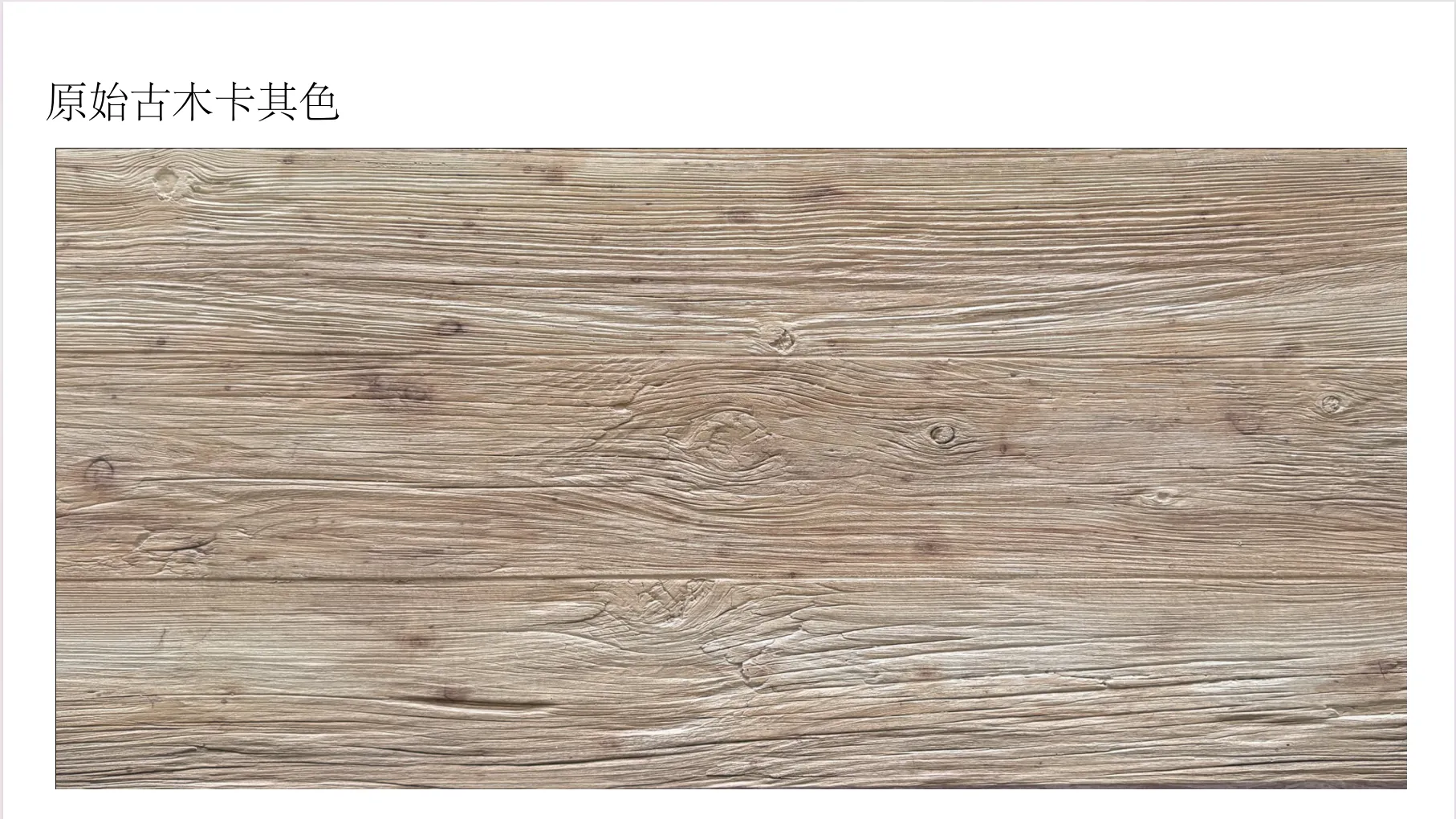
Before we pick sides, let's clarify what we mean by "ancient wood installation." It's not just about slapping on any wood-like material. It's about evoking the feeling of age—those subtle cracks, the uneven grain, the way light plays on surfaces that have seen decades (or centuries) of life. Think of it as design with memory: a kitchen backsplash that looks like it's been protecting hearths since the 1800s, or a restaurant wall that feels like it belongs in a mountain lodge from a black-and-white photograph.
To achieve this, builders and designers have traditionally turned to two paths: the tried-and-true traditional planks (solid wood, reclaimed timber) and the newer kid on the block, MCM panels (Modified Composite Material), which includes game-changers like MCM flexible stone and wood grain board . Let's break down what each brings to the table.
When most people hear "ancient wood," their minds jump to traditional planks. These are the solid slabs of oak, pine, teak, or reclaimed wood that have been the backbone of construction for centuries. There's a reason they've stood the test of time: they're authentic .
Reclaimed wood planks, in particular, are like history in tangible form. A single board might have once been part of a 19th-century factory floor, bearing nail holes from machinery long gone, or a barn door that weathered prairie storms. Run your hand over it, and you'll feel every knot, every dip, every unique imperfection that tells a story. For purists, this is irreplaceable. "There's a tactile magic to solid wood," says Maria, a historic preservationist who specializes in restoring colonial-era homes. "When you install reclaimed planks, you're not just adding a surface—you're adding a piece of the past. Clients can't get enough of that."
Solid wood planks also offer unmatched warmth. Their natural grain patterns—swirling, straight, or knotty—create visual interest that feels alive. In a living room, they absorb sound, making conversations feel cozier. In a bedroom, they soften harsh light, turning mornings into something gentle. And when sealed with natural oils, they develop a patina over time, growing more beautiful as the years pass.
But tradition comes with trade-offs. Let's start with weight: A single 2x6 solid oak plank can weigh 30 pounds or more. Installing them on a second floor? You'll need reinforced joists. On a wall? Heavy-duty fasteners are a must, and even then, there's a risk of sagging over time. "I once worked on a project where we tried to install 12-foot reclaimed pine planks on a ceiling," laughs Jake, a contractor with 15 years of experience. "We needed three people just to hold one in place. Never again."
Then there's durability—or lack thereof. Wood is organic, which means it reacts to its environment. In humid basements or coastal homes, planks can swell and warp. In dry climates, they shrink and crack. Spills? If you don't wipe them up immediately, you'll get water stains. Termites? A constant threat. And maintenance? Think annual sanding, staining, or sealing to keep them looking their best. For busy homeowners or commercial spaces like restaurants, that's a lot of upkeep.
Cost is another hurdle. High-quality reclaimed wood can run $15–$30 per square foot, and that's before installation. Add in the labor for acclimatizing the wood (yes, you have to let it sit in the space for weeks to adjust to humidity), cutting around obstacles, and fastening each plank individually, and the bill can skyrocket. "I had a client who fell in love with reclaimed teak for their kitchen," Maria recalls. "By the time we factored in delivery, treatment, and installation, it doubled their renovation budget. They loved the result, but it wasn't for everyone."
Enter MCM panels: Modified Composite Material that's changing the game for ancient wood installation. These aren't your average plastic imitations. MCM is a blend of minerals, polymers, and recycled materials, engineered to be flexible, lightweight, and tough as nails. And when it comes to mimicking ancient wood? Let's just say even experts do a double-take.
At first glance, you might mistake MCM flexible stone or wood grain board for the real thing. Manufacturers use advanced 3D printing and texture mapping to replicate wood grain so precisely, you'll see the tiny pores and growth rings. Some even add "aging" effects—subtle cracks, simulated water stains, or "nail holes"—to mimic reclaimed wood. "I brought samples to a client meeting once," says Lisa, an interior designer. "I put an MCM wood grain panel next to a reclaimed oak plank and asked the client to pick which was real. They guessed wrong. Twice."
But MCM's real superpower is its flexibility —literally. These panels bend. Need to cover a curved wall in a boutique hotel lobby? MCM wraps around it like a second skin. Want to install them on a ceiling with awkward angles? No problem. "We used MCM flexible stone panels to create a wave-like accent wall in a beach house," Jake says. "Traditional planks would've cracked or required custom cutting. With MCM, we just bent them and glued them in place. It took half the time."
Lightweight is another win. Most MCM panels weigh 2–5 pounds per square foot—about 1/10th the weight of solid wood. That means easier installation (one person can handle a 4x8 panel), no need for reinforced structures, and lower shipping costs. "On my last commercial project—a 10,000-square-foot restaurant—we installed MCM wood grain boards on all the walls. The total weight was less than a single dumpster of traditional planks," Jake adds. "The crew finished in three days instead of two weeks. The client was thrilled."
MCM panels laugh in the face of moisture, pests, and time. Unlike wood, they don't warp, rot, or attract termites. Spill a glass of wine on them? Wipe it up with a damp cloth—no stain, no problem. "I installed MCM wood grain board in my mudroom four years ago," says Tom, a homeowner in rainy Seattle. "We have dogs tracking in mud, kids spilling juice, and the panels still look brand-new. I've never had to seal them or sand them. It's like having a magic wall."
They're also fire-resistant, making them a favorite for commercial spaces like restaurants or hotels. And since they're made with recycled materials (some brands use up to 60% post-consumer content), they're a sustainable choice. "Green building is a big trend, and MCM fits right in," Lisa notes. "Clients love that they're not cutting down trees for that 'ancient wood' look."
No material is perfect, and MCM panels have their limits. For one, they lack the depth of solid wood. While they look and feel realistic, they're thinner (usually 1/8–1/4 inch thick), so you won't get the same "heft" when you knock on them. Some purists argue this makes them feel "fake" in high-end spaces. "I had a client who wanted a luxury spa with an 'ancient forest' theme," Maria says. "They rejected MCM because they said it didn't have the 'soul' of real wood. We ended up using reclaimed teak, even though it cost three times as much."
MCM panels also require precise installation. Unlike wood planks, which can be sanded down if cut slightly off, MCM edges are sharp and unforgiving. A bad cut means a visible gap. And while they're low-maintenance, they can scratch if hit with heavy objects—though most brands offer scratch-resistant coatings to mitigate this.
Still on the fence? Let's pit them against each other in a head-to-head comparison. This table breaks down the key factors that matter most when choosing between MCM panels and traditional planks for ancient wood installation:
| Factor | Traditional Planks (Solid/Reclaimed Wood) | MCM Panels (e.g., MCM Flexible Stone, Wood Grain Board) |
|---|---|---|
| Material Composition | Solid wood (oak, pine, reclaimed timber) or engineered wood with real wood veneer. | Composite of minerals, polymers, and recycled materials; 3D-printed textures to mimic wood/stone. |
| Weight | Heavy (20–50 lbs per sq ft for solid wood; 15–30 lbs for reclaimed). | Lightweight (2–5 lbs per sq ft). |
| Installation Difficulty | High: Requires acclimatization (2–4 weeks), heavy tools, and often multiple installers. | Low: Can be cut with standard tools, glued or nailed easily; one person can handle most panels. |
| Durability | Prone to warping, rot, and pests; needs annual sealing/sanding. | Waterproof, fire-resistant, pest-proof; no sealing required; lasts 20+ years with minimal care. |
| Aesthetic Range | Limited by natural wood types; unique but inconsistent (grain, color varies). | Unlimited: Mimics wood, stone, concrete (e.g., fair-faced concrete ), or custom designs; consistent appearance. |
| Maintenance | High: Sanding, staining, sealing every 1–3 years; immediate cleanup of spills. | Low: Wipe with soap and water; no refinishing needed. |
| Sustainability | Good (reclaimed wood) or poor (new solid wood); requires deforestation for new planks. | Excellent: Made with recycled materials; reduces reliance on logging. |
| Cost (Material + Labor) | High: $15–$40 per sq ft (reclaimed wood) + labor ($5–$10 per sq ft). | Moderate: $8–$20 per sq ft + labor ($2–$5 per sq ft). |
So, which one should you choose? It depends on your priorities. Let's break it down by scenario:
Whether you go traditional or MCM, installation is make-or-break. Here's how to avoid common pitfalls:
As technology advances, the line between traditional and modern materials will blur even more. MCM manufacturers are experimenting with "smart" panels that mimic wood's ability to change color with light, or even emit subtle scents (think cedar or pine). Meanwhile, traditional planks are getting greener, with more companies focusing on sustainably harvested wood and innovative treatments to boost durability.
One thing's clear: The desire for ancient wood's warmth and character isn't going anywhere. Whether you choose the classic charm of traditional planks or the modern muscle of MCM panels, the goal remains the same: to create spaces that feel like they've been loved for years—even if they're brand-new.
So, which will you choose? The story of your space is waiting to be written. Make it one that lasts.
Recommend Products












