
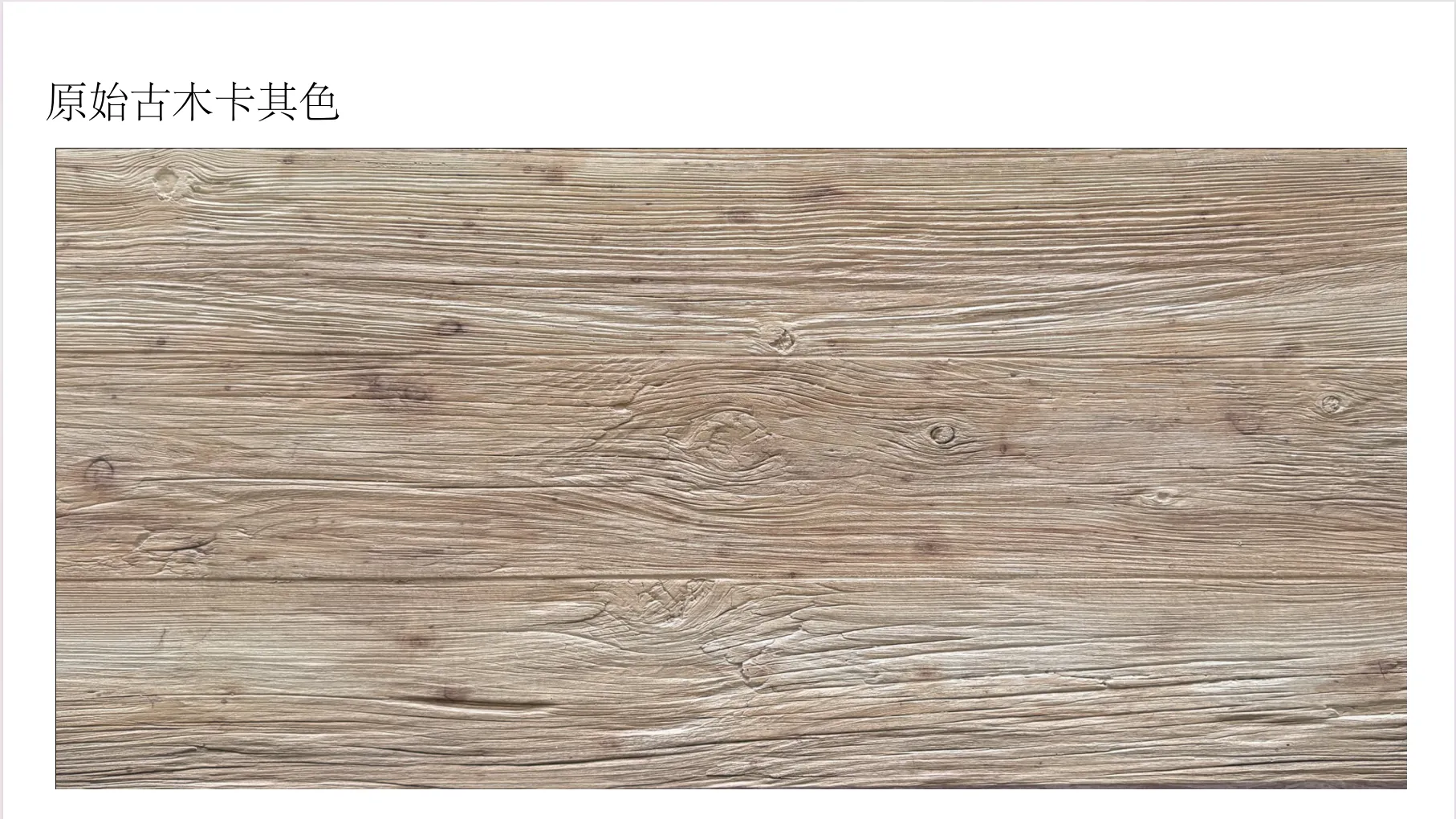
Walk into a room lined with wood, and something shifts. Maybe it's the way light catches the grain, turning straight lines into stories. Maybe it's the soft warmth under your fingertips, a contrast to the cold glass and steel of modern life. Wood isn't just a material—it's a bridge. A bridge between the ancient forests that once covered the earth and the homes, offices, and cafes we build today. It's no wonder we're drawn to it; wood speaks a language older than words, one that whispers of comfort, history, and rootedness. In design, this language is amplified by texture—and few textures are as eloquent as those found in ancient wood and its modern counterparts, like wood grain board, bamboo mat board, and charcoal burnt wood board. Let's explore how these textures shape our emotions, our spaces, and our sense of time.
If wood were a book, wood grain board would be its most readable page. Run your hand over its surface, and you'll feel the ridges and valleys of years—of a tree growing, bending toward the sun, weathering storms. Each knot is a chapter, each swirl a plot twist. Unlike smooth, uniform materials that feel "finished," wood grain board feels alive. It doesn't hide its flaws; it celebrates them. A kitchen with wood grain board cabinets doesn't just store dishes—it feels like a place where generations have gathered, where stories were shared over morning coffee and burnt toast. In a world that often values perfection, this texture is a rebellion. It says, "I am real. I have history." And that honesty is comforting. It makes us feel safe to be ourselves, too.
Think about a cozy bookstore you love. Chances are, it has wood grain somewhere—on the shelves, the floors, maybe the counter. That's not an accident. Retailers know that wood grain board slows us down. It invites us to linger, to touch the spines of books, to breathe in the scent of paper and pine. It turns a transaction into an experience. At home, it does the same. A bedroom with wood grain board accent walls feels less like a "room" and more like a retreat—a space where the chaos of the day fades, replaced by the quiet certainty of something that has stood the test of time.
If wood grain board is a storyteller, bamboo mat board is a mediator—between nature and modernity, between busyness and calm. Bamboo, with its rapid growth and sustainability, is a material of the future, but its texture is deeply rooted in tradition. Woven into mats, it creates a pattern that's both ordered and organic: crisscrossing lines that feel like a gentle hug. Unlike the bold grain of wood, bamboo mat board's texture is lighter, airier. It doesn't demand attention; it invites presence.
I once visited a yoga studio in Kyoto where the walls were clad in bamboo mat board. Sunlight filtered through shoji screens, casting dappled shadows on the woven texture. The room didn't just look peaceful—it felt peaceful. The bamboo absorbed sound, turning chatter into a soft murmur, and its texture gave the eyes something to rest on, something that wasn't a screen or a to-do list. It was a reminder that calm isn't about emptiness; it's about balance. Bamboo mat board brings that balance to any space. In a home office, it softens the harsh glow of computers. In a dining room, it turns meals into rituals. It's nature's way of saying, "Breathe. You're exactly where you need to be."
Not all wood textures play by the rules. Enter charcoal burnt wood board—a texture that marries fire and wood, ancient technique and modern edge. The process is simple but transformative: the wood's surface is burnt, charred, then brushed to reveal the grain beneath. The result? A texture that's dark, dramatic, and full of depth. It's wood with a story of survival—scorched but unbroken. In design, this makes it a wildcard. It can turn a plain wall into a statement, a neutral room into something unforgettable.
I recently dined at a restaurant in Berlin where the back wall was covered in charcoal burnt wood board. The rest of the space was minimalist—white walls, black tables, industrial lighting—but that wall? It was the star. The charred surface caught the light, shifting from deep black to smoky gray as you moved. It felt both primal and sophisticated, like a campfire in a gallery. What struck me most, though, was how it made the room feel intimate. Despite the restaurant's size, the texture drew people in, made conversations feel more personal. It was as if the burnt wood was sharing its own resilience, encouraging us to lean into connection. Charcoal burnt wood board doesn't just decorate a space—it gives it character. It says, "I'm bold, but I'm warm. I've been through fire, and I'm still standing."
If wood grain board tells stories and bamboo mat board soothes, wood line directs. Wood line refers to the linear patterns in wood—vertical, horizontal, diagonal—that guide our eyes and shape our perception of space. It's the unsung hero of design, the conductor of a room's visual orchestra. Vertical wood lines, for example, can make ceilings feel taller, turning a cramped room into one that breathes. Horizontal lines, on the other hand, widen spaces, making them feel more expansive. Diagonal lines add energy, like a dance across the wall.
Consider a hallway lined with wood line paneling. Without texture, that hallway might feel like a tunnel—cold, utilitarian. But with vertical wood lines? Suddenly, it's a path, a journey. Your eyes follow the lines upward, and before you know it, you're at the end, eager to see what's next. In a living room, horizontal wood line accents above a sofa can anchor the space, making it feel grounded. In a bedroom, diagonal lines on a headboard add a playful twist, turning a quiet retreat into something dynamic. Wood line doesn't just look good—it works hard. It turns "rooms" into "experiences," guiding us through space with the quiet confidence of a trusted friend.
What ties these textures together—wood grain board, bamboo mat board, charcoal burnt wood board, wood line—is ancient wood itself. Not the wood of old trees, necessarily, but the idea of ancient wood: the knowledge that wood has been sheltering, comforting, and inspiring us for millennia. When we use these modern textures, we're not just decorating; we're participating in a tradition. We're saying, "I honor the past, but I'm building the future."
Ancient wood teaches us that beauty isn't about perfection. It's about authenticity. It's about the way wood grain board shows its age, bamboo mat board embraces simplicity, and charcoal burnt wood board wears its scars with pride. In a world that's always chasing the "new," these textures remind us that some things are timeless. They remind us that warmth isn't found in trends; it's found in connection—to nature, to history, and to each other.
| Texture Type | Visual Characteristics | Emotional Impact | Ideal Spaces |
|---|---|---|---|
| Wood Grain Board | Swirling, knotty patterns; natural ridges and valleys | Nostalgia, comfort, authenticity | Kitchens, libraries, bedrooms |
| Bamboo Mat Board | Light, crisscross woven lines; airy and delicate | Calm, mindfulness, connection to nature | Yoga studios, home offices, dining rooms |
| Charcoal Burnt Wood Board | Dark, charred surface with exposed grain; dramatic contrast | Resilience, boldness, intimacy | Restaurants, living rooms, feature walls |
| Wood Line | Vertical, horizontal, or diagonal linear patterns | Direction, rhythm, spatial awareness | Hallways, entryways, accent walls |
| Ancient Wood (Concept) | Deep, weathered grain; signs of age and growth | Timelessness, rootedness, connection to history | Heritage buildings, museums, rustic homes |
At the end of the day, design isn't about trends or aesthetics—it's about how a space makes you feel. Wood textures, in all their forms, have a unique power to make us feel "at home," even in the most unfamiliar places. They remind us that we're part of something bigger: a cycle of growth, decay, and renewal that spans centuries. Wood grain board doesn't just cover a wall; it covers us in the memory of forests. Bamboo mat board doesn't just line a room; it lines our hearts with calm. Charcoal burnt wood board doesn't just decorate; it dares us to be unapologetically ourselves.
So the next time you step into a space with wood texture, take a moment to notice. Notice how your breath slows, how your shoulders relax, how your mind wanders to a childhood treehouse or a quiet cabin in the woods. That's the magic of ancient wood and its modern voices. They don't just fill rooms—they fill us. And in a world that's always rushing forward, that's a gift worth cherishing.
Recommend Products












