
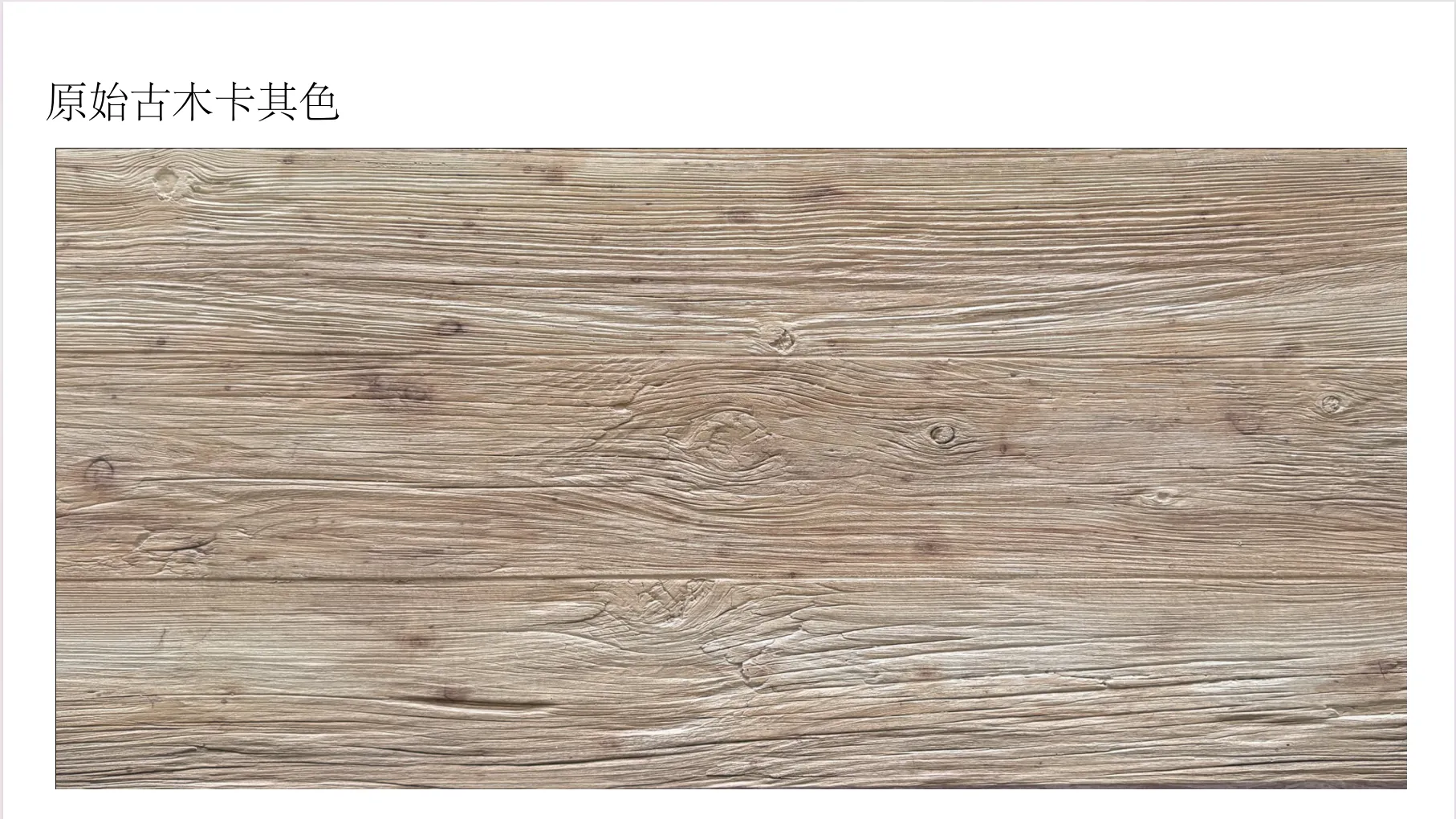
There's something undeniably timeless about the look of aged wood. The way its grains twist like stories written over decades, the warm honey tones that soften a space, the texture that invites touch—these are the qualities that make ancient wood aesthetics a staple in design, from rustic cabins to modern minimalist homes. But here's the catch: when that same beauty is placed under the relentless gaze of the sun, its days are numbered. Cracked surfaces, faded color, warped planks—UV radiation doesn't just damage wood; it erases its soul. For homeowners, designers, and architects who refuse to sacrifice style for durability, this has long been a frustrating trade-off. Enter MCM (Modified Composite Material) solutions: a new chapter in the story of ancient wood-inspired design, where UV resistance meets uncompromising beauty.
Why do we keep coming back to ancient wood? It's not just about nostalgia. There's a primal comfort in materials that feel connected to the earth, that carry the weight of time without feeling heavy. Walk into a room with reclaimed barn wood walls, and suddenly the space feels lived-in, like it has secrets to tell. On a commercial level, restaurants and boutique hotels lean into this aesthetic to create ambiance—think of a café with a wooden ceiling that makes you want to linger over your coffee, or a boutique with wooden shelving that turns shopping into an experience. Even outdoor spaces crave that warmth: wooden decks, pergolas, and garden fences that blend into the landscape, making nature feel like an extension of home.
But here's the reality check: traditional wood, even the hardiest species like teak or cedar, wasn't built for the modern world's sun exposure. In regions with intense UV rays—think the American Southwest, the Mediterranean, or coastal areas—unprotected wood can start showing signs of damage in as little as a year. Annual sanding, staining, and sealing become necessary chores, and even then, the battle is never truly won. The dream of a low-maintenance, sun-resistant ancient wood look starts to feel like a contradiction. Until now.
To understand why MCM solutions are game-changers, let's break down what UV radiation does to wood. Sunlight is made up of three types of ultraviolet rays: UVA, UVB, and UVC. While UVC is mostly blocked by the ozone layer, UVA and UVB penetrate deep into wood fibers. UVA rays break down lignin, the natural "glue" that holds wood cells together, causing the material to become brittle. UVB rays, more intense and shorter in wavelength, attack the wood's pigments, stripping away color and leaving it looking washed out. Over time, this combination leads to cracking (as fibers lose flexibility), warping (as moisture escapes unevenly), and discoloration (that sad, grayish hue no stain can fully hide).
For outdoor applications, the problem is amplified by other elements: rain, snow, and humidity work with UV rays to create a "weathering cocktail" that accelerates decay. Even indoor spaces with large windows—think sunrooms or glass-walled offices—aren't safe. The sun's rays stream in, baking wooden furniture, flooring, and paneling day after day. The result? A constant cycle of repair and replacement, not to mention the environmental toll of cutting down more trees to keep up with demand.
MCM technology wasn't created in a lab with the sole goal of beating UV rays—it was born from a desire to preserve beauty without compromise. By blending natural minerals, high-performance polymers, and advanced manufacturing techniques, MCM products mimic the look and texture of ancient wood (and other natural materials) while packing in superpowers like UV resistance, durability, and flexibility. Unlike traditional composites that often feel plastic-y or one-dimensional, MCM is engineered to breathe, to age gracefully, and to stand up to the elements without losing its character.
At the heart of MCM's UV resistance is its multi-layered construction. Most MCM products start with a reinforced core that provides structural integrity, then add a decorative layer that replicates the texture of wood (or stone, or metal), and finally seal it all with a protective topcoat infused with UV inhibitors. This topcoat acts like a shield, absorbing and deflecting harmful rays before they can reach the decorative layer. The result? A material that doesn't just resist fading—it retains its vibrancy, even after years in direct sunlight. And because MCM is lightweight and flexible, it can be used in places traditional wood can't: curved surfaces, high-rise exteriors, even as cladding for outdoor furniture.
Let's dive into some of MCM's standout products that are redefining sun-exposed design. These aren't just materials—they're solutions tailored to specific aesthetic and functional needs, proving that UV resistance doesn't have to mean sacrificing personality.
When it comes to outdoor walls—whether they're lining a patio, defining a garden, or wrapping a commercial building—durability is non-negotiable. MCM flexible stone steps up to the plate with a design that marries the rugged charm of ancient stone with the adaptability of modern composites. Imagine a wall that looks like it was quarried from a centuries-old cliff, with all the nooks and crannies that make stone so visually interesting, but light enough to install without heavy machinery. What makes it a UV champion? Its protective topcoat is formulated to resist not just fading, but also the bleaching effect of prolonged sun exposure. In coastal areas, where salt air adds another layer of stress, MCM flexible stone holds its ground, ensuring that the wall you install this year looks just as striking a decade from now.
For large, open spaces—think a restaurant's outdoor dining area or a homeowner's expansive backyard terrace—seams can break the illusion of continuity. MCM big slab boards solve this with extra-large panels (some as wide as 1.2 meters) that create a seamless, luxurious look. Designed to mimic the grandeur of ancient wood planks but without the warping, these slabs are a dream for designers aiming for a "less is more" aesthetic. Their UV resistance comes from a combination of pigment stabilization (so the color stays true) and a scratch-resistant surface that holds up to foot traffic, rain, and yes, endless hours of sunlight. Picture a rooftop lounge with MCM big slab flooring in a warm, chestnut tone—no fading, no cracks, just a smooth, inviting surface that makes every sunset feel like a celebration.
Not all sun-exposed areas crave a rustic vibe. For modern homes and commercial buildings with clean lines and a minimalist edge, foamed aluminium alloy board in vintage silver is a revelation. This material takes the industrial chic of metal and softens it with a vintage finish that feels both retro and futuristic. Install it as a facade for a boutique hotel, or use it to clad a pergola over a poolside seating area—the possibilities are endless. What makes it UV-resistant? Aluminium's natural ability to reflect sunlight, combined with MCM's protective coating, means it stays cool to the touch even on the hottest days and resists tarnishing or discoloration. Unlike traditional metal, which can fade to a dull gray under the sun, vintage silver foamed aluminium retains its subtle sheen, adding a touch of sophistication to any space lucky enough to feature it.
For those who want to infuse sun-exposed spaces with a pop of color, travertine (starry blue) is a showstopper. Imagine flooring that looks like a slice of the night sky, with deep blue tones swirled with hints of silver and white, mimicking the look of travertine stone but with a whimsical, starry twist. This isn't just about aesthetics, though—its UV resistance is impressive. Travertine is naturally porous, which can make it prone to fading, but MCM's version seals those pores and adds a UV-protective layer, ensuring that the blue stays vibrant, not muted. Use it as a backsplash for an outdoor kitchen, where it will catch the sunlight and sparkle, or as flooring for a meditation garden, where its calming hue invites mindfulness without worrying about sun damage.
Rammed earth has been used for centuries to build homes that stay cool in summer and warm in winter, but traditional rammed earth can crack in extreme sun. MCM's rammed earth board (matcha green) reimagines this ancient material with a modern twist: a smooth, earthy surface in a soft, soothing green that evokes moss-covered stone or fresh spring grass. Perfect for garden paths, patio flooring, or low garden walls, this board is designed to age like fine wine—gaining character without losing its color. Its UV resistance comes from natural pigments that are locked into the material during manufacturing, so even after years of sun, that matcha green stays as fresh as the day it was installed. Pair it with wooden accents (the MCM kind, of course) for a space that feels like a retreat, where nature and design coexist in harmony.
Curious how MCM stacks up against traditional wood when it comes to sun exposure? Let's break it down:
| Feature | Traditional Wood (e.g., Teak, Cedar) | MCM Products (e.g., Flexible Stone, Big Slab) |
|---|---|---|
| UV Resistance | Low to Moderate: Fades, cracks, and warps within 2–5 years without annual sealing. | High: Retains color and texture for 10+ years with minimal maintenance; UV inhibitors in topcoat prevent fading. |
| Maintenance | High: Requires annual sanding, staining, and sealing; prone to mold/mildew in humid climates. | Low: Occasional cleaning with soap and water; no sealing or refinishing needed. |
| Durability | Moderate: Susceptible to rot, insect damage, and warping in wet/sunny conditions. | High: Resistant to rot, insects, and warping; lightweight but impact-resistant. |
| Aesthetics | Rich, natural grain but fades over time; requires careful selection for consistent look. | Replicates natural textures (wood, stone, metal) with consistent color and pattern; ages gracefully without losing character. |
| Installation | Heavy; requires specialized tools and structural support for large pieces. | Lightweight and flexible; can be cut, curved, and installed with standard tools. |
Still not convinced? Let's look at a real example. A boutique hotel in Arizona—a state known for scorching summers and intense UV rays—recently renovated its outdoor pool area. Originally lined with teak decking, the space required quarterly sanding and sealing to keep up with the sun, costing thousands of dollars and disrupting guest experiences. The hotel switched to MCM big slab boards in a warm, honey tone that mimics aged teak. Two years later, the deck looks brand new: no fading, no cracks, and zero maintenance beyond occasional hosing down. Guests now rave about the "permanent summer vibe" of the pool area, and the hotel has redirected its maintenance budget to guest amenities. It's a win-win that proves MCM isn't just a material—it's a long-term investment in beauty and peace of mind.
At the end of the day, MCM solutions are about more than UV resistance. They're about redefining what's possible in design—about creating spaces that feel alive, that tell a story, and that don't require constant upkeep to stay beautiful. For the homeowner who wants their backyard to be a place of joy, not chores. For the designer who refuses to choose between aesthetics and durability. For the architect who dreams of buildings that age like fine wine, not old newspapers.
Ancient wood will always hold a special place in our hearts. But with MCM, we're not just preserving its look—we're honoring its spirit. We're creating materials that carry the warmth of the past into the future, where the sun shines bright, and beauty lasts. That's the MCM promise: UV resistance isn't a feature; it's the foundation upon which great design is built.
The next time you stand in a sun-drenched space and imagine (oops, think about) how you'd transform it, remember: you don't have to choose between the charm of ancient wood and the resilience modern life demands. MCM has rewritten that rulebook. With products like flexible stone, big slab boards, and foamed aluminium alloy, we're entering an era where sun-exposed spaces can be both stunning and sturdy, where the materials we love don't just survive the sun—they thrive under it.
So go ahead: design that rooftop bar with a travertine (starry blue) floor. Build that garden wall with rammed earth (matcha green). Clad that commercial building with MCM flexible stone. The sun will keep shining, but this time, your design will shine back—bright, bold, and unbreakable.
Recommend Products












