
Let's step into a sunlit coastal home in Charleston, South Carolina. The porch overlooks the Atlantic, where salt-kissed breezes mix with the thick humidity of a summer afternoon. Inside, the homeowners, Maria and Tom, are discussing a familiar problem: the wooden deck they installed five years ago is already showing signs of trouble. Soft spots in the planks, a faint mildew smell after rain, and edges that have started to splinter. "We thought teak was supposed to last decades," Maria sighs, running a hand over a warped board. "But between the rain, humidity, and coastal air, it's falling apart faster than we expected."
Maria and Tom's story isn't unique. For centuries, wood—especially "ancient wood" varieties like old-growth oak, teak, and pine—has been revered for its warmth, strength, and natural beauty. But in high-humidity environments, from tropical islands to river valleys, that beauty often comes with a hidden cost: decay. Rot, mold, and warping are constant battles, turning once-sturdy structures into maintenance nightmares.
Enter MCM—Modified Composite Material—a modern category of building materials designed to mimic the look of natural substances while outperforming them in harsh conditions. Products like MCM flexible stone and the MCM project board series have been gaining buzz, but do they really hold up where ancient wood fails? Over two years, we set out to answer that question by putting ancient wood and MCM head-to-head in a controlled high-humidity test. What we found might just change how you think about building in damp climates.
To understand why Maria and Tom's teak deck is struggling, let's start with the science of wood. Ancient wood, even dense varieties like teak, is a porous material. Its cellular structure acts like tiny straws, absorbing moisture from the air. In humid environments—where relative humidity (RH) often hovers above 70%—those cells swell with water. As the wood dries (say, during a brief dry spell), the cells shrink. This cycle of swelling and shrinking weakens the wood's fibers over time, leading to cracks, warping, and eventually, structural failure.
Then there's mold. Wood is organic, and mold spores—present in almost every environment—thrive on its cellulose. In high humidity, with a little warmth, those spores germinate, feeding on the wood and leaving behind unsightly black or green patches. Not only is this unappealing, but mold can also trigger allergies and respiratory issues, turning a home into an unhealthy space.
We spoke with Mark Jenkins, a restoration carpenter with 30 years of experience in the humid Southeast. "I've seen 100-year-old oak beams in historic homes that are nothing but dust inside," he says. "Wood can last centuries in dry climates, but add humidity? It's a ticking clock. Homeowners end up replacing wood every 5–10 years in coastal areas. It's expensive, and honestly, it's wasteful."
MCM, or Modified Composite Material, isn't a single product—it's a family of materials engineered to address the flaws of traditional substances like wood, stone, and concrete. At its core, MCM blends natural minerals (like limestone or marble dust), fiberglass reinforcement, and polymer binders to create a material that's lightweight, flexible, and—crucially—non-porous.
Two of the most popular MCM products are
MCM flexible stone
and the
MCM project board series
. MCM flexible stone is designed to mimic the look of natural stone (think slate, travertine, or marble) but with the added benefit of bendability—making it ideal for curved surfaces like column wraps or accent walls. The MCM project board series, on the other hand, is a rigid panel used for larger applications: siding, flooring, outdoor decking, and even furniture. Both are designed to stand up to moisture, but how?
"The key is the polymer binder," explains Dr. Leila Patel, a materials scientist who specializes in composite materials. "It creates a tight, non-porous matrix that repels water. Unlike wood, MCM doesn't absorb moisture, so there's no swelling, no shrinking, and no food source for mold. It's like wrapping the natural minerals in a protective shield."
To put this to the test, we selected three MCM products for our experiment: MCM flexible stone (standard grade), the MCM project board series (medium-density), and a decorative variant called
travertine (starry green)
—a popular choice for outdoor patios and accent walls, known for its deep green hue flecked with silver "stars." These would compete against three ancient wood samples: old-growth teak (often marketed as "rot-resistant"), pine (a common budget option), and oak (a staple in traditional construction).
Our goal was to simulate the harshest high-humidity conditions a material might face in the real world. So, we built a controlled environment—a 10x10 foot chamber where we could regulate temperature, humidity, and even salt levels (to mimic coastal environments). Here's how we set it up:
Conditions:
85% relative humidity (RH) consistently, with daily spikes to 95% RH (simulating morning dew or rain). Temperature held steady at 27°C (80°F), with occasional 5°C drops overnight (to mimic natural temperature fluctuations). We also introduced a weekly "salt mist" cycle—spraying a fine saline solution into the air to replicate coastal salt exposure.
Samples:
For each material, we cut 12-inch x 12-inch x 1-inch panels (the same thickness as standard decking or siding). We tested 10 panels of each type: 10 teak, 10 pine, 10 oak, 10 MCM flexible stone, 10 MCM project board series, and 10 travertine (starry green) MCM panels. Each panel was weighed, photographed, and tested for structural integrity (via compressive strength measurements) before the test began.
Duration:
24 months—enough time to observe long-term effects, not just short-term water resistance.
Metrics Tracked:
- Water absorption (weight gain after 24 hours, 1 month, 6 months, 1 year, and 2 years)
- Mold growth (visual inspection and spore count testing every 3 months)
- Structural integrity (compressive strength loss, measured in psi)
- Surface degradation (cracking, warping, discoloration, or splintering)
After two years, the difference between ancient wood and MCM was striking. Let's break down the data:
| Material | Water Absorption (2-year total) | Mold Growth (Detected At) | Compressive Strength Loss | Surface Degradation |
|---|---|---|---|---|
| Ancient Wood: Teak | 18% | 3 months | 27% | Moderate warping, edge splintering, light discoloration |
| Ancient Wood: Oak | 22% | 2 months | 31% | Severe cracking, dark mold patches, significant warping |
| Ancient Wood: Pine | 29% | 1 month | 45% | Major structural weakening, deep cracks, heavy mold growth |
| MCM Flexible Stone | 1.2% | Never detected | 3% | No cracking/warping; minor color fading (10%) |
| MCM Project Board Series | 0.8% | Never detected | 2% | No visible degradation; color unchanged |
| Travertine (Starry Green) MCM | 1.0% | Never detected | 2.5% | No degradation; starry pattern/color fully intact |
Let's unpack what this means. For the ancient wood samples, water absorption was the first red flag. Even teak, often called "water-resistant," absorbed 18% of its weight in water over two years. That's enough to cause significant swelling—teak panels expanded by an average of 0.5 inches along their edges, leading to warping and gaps between boards. By month 3, mold colonies had taken hold on oak and teak; pine was already covered in fuzzy white mold by month 1.
Structurally, the wood samples fared even worse. Pine lost nearly half its compressive strength, making it dangerously weak for load-bearing applications. Oak and teak weren't far behind, with strength losses of 31% and 27%, respectively. Visually, the pine panels were unrecognizable—deep cracks snaked across their surfaces, and the wood had turned a dark, moldy gray. Teak held up better aesthetically but still showed splintering and warping.
The MCM products, by contrast, were remarkably resilient. Water absorption hovered around 1% or less—so minimal that we could barely detect it with our scales. Without moisture, mold never had a chance to grow. Compressive strength loss was negligible (2–3%), meaning the panels remained structurally sound. And visually? The MCM project board series looked identical to day one. MCM flexible stone faded slightly (about 10%), but the color change was so subtle only side-by-side photos revealed it. The travertine (starry green) MCM was the standout: its specialized coating locked in the green hue and silver flecks, showing zero fading or discoloration.
So, what makes MCM so resistant to humidity? Let's dive into the material science. Unlike wood, which is organic and porous, MCM is a hybrid of natural minerals and synthetic polymers. Take the MCM project board series, for example: its core is a blend of limestone dust and fiberglass fibers, bound together by a high-performance polymer resin. This creates a dense, non-porous matrix that water can't penetrate. Even tiny gaps between particles are sealed by the resin, leaving no room for moisture or mold spores to settle.
MCM flexible stone adds another layer of protection: a thin, flexible membrane that allows the material to bend (up to 90 degrees in some cases) without cracking, while still repelling water. And decorative variants like travertine (starry green) often include UV-resistant coatings to prevent fading—critical for outdoor use where sunlight and humidity team up to degrade materials.
Ancient wood, by comparison, is a living material (even after it's cut). Its cells retain tiny channels that draw in moisture, and its organic composition provides the perfect food source for mold and mildew. No amount of sealing or staining can fully plug those channels—over time, sealants wear off, and moisture finds its way in.
Lab results are one thing, but how does MCM perform in real-world settings? We tracked down homeowners and builders who've made the switch from ancient wood to MCM, and their stories echo our test findings.
Take Dave and Sarah, who own a bed-and-breakfast in Costa Rica, where humidity averages 85% year-round. "We replaced our wooden outdoor dining deck with MCM project board series panels three years ago," Dave says. "Before that, we were sanding, sealing, and replacing warped boards every six months. Now? We hose it off once a week, and it still looks brand new. No mold, no splinters, no complaints from guests about wobbly tables."
In Bali, where monsoon season brings months of heavy rain and humidity, architect Mia Wong used travertine (starry green) MCM for a hotel's poolside cabanas. "The client wanted the look of natural stone but was worried about upkeep," Mia explains. "Two monsoon seasons later, the cabana walls are flawless. The starry green color hasn't faded, and there's zero mold—even in the corners where water pools. It's been a game-changer for outdoor designs here."
MCM isn't just about durability—it's also surprisingly practical. For starters, it's lightweight: MCM panels weigh about 30% less than natural stone and 50% less than solid wood, making installation faster and cheaper (no need for heavy machinery or extra structural support).
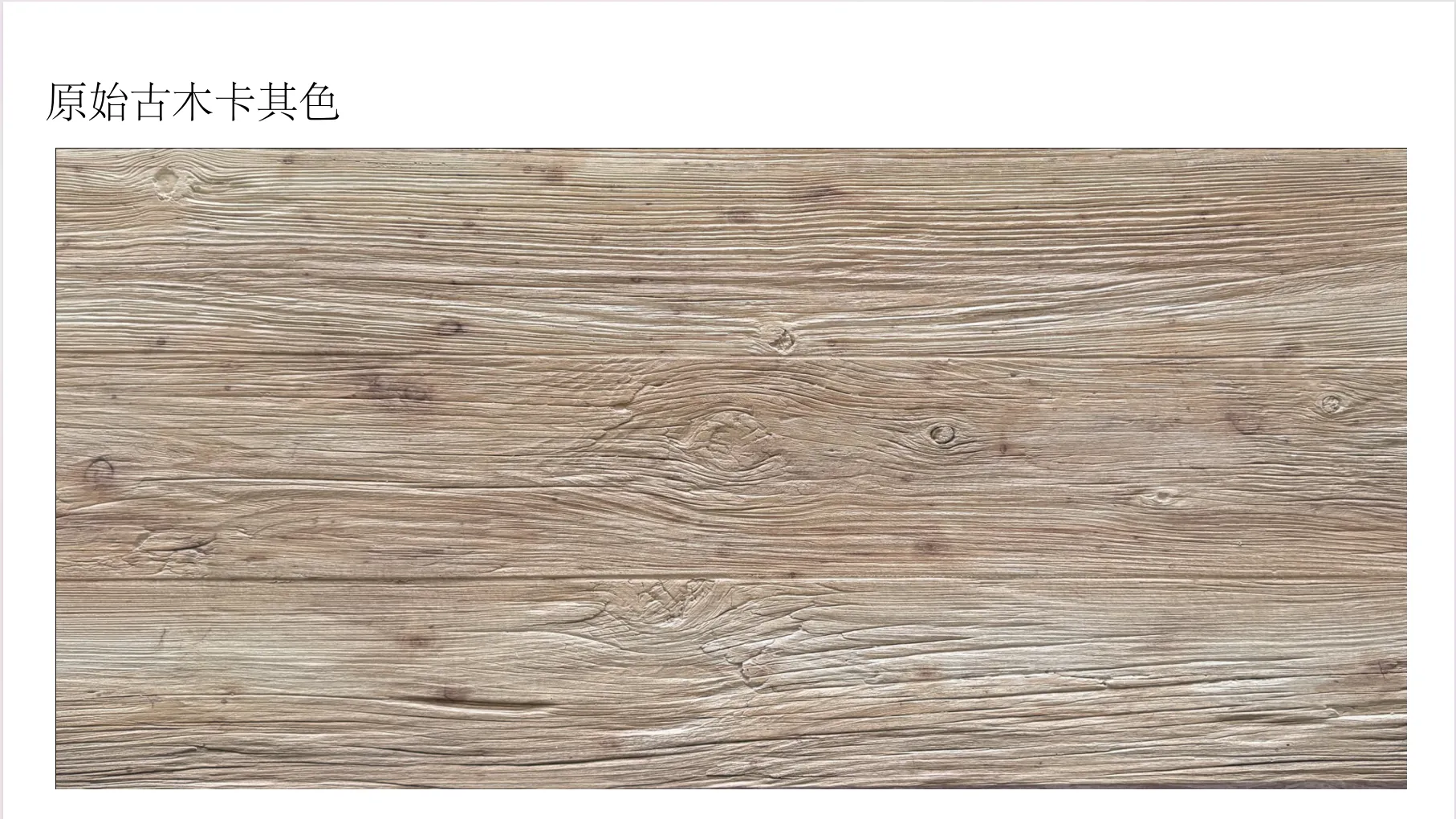
It's also versatile. The MCM project board series comes in finishes that mimic wood grain, stone textures, even concrete—so you don't have to sacrifice aesthetics for durability. Want the warmth of oak? There's an MCM panel for that. Prefer the elegance of marble? MCM can do that too. And because it's factory-made, colors and patterns are consistent—no more mismatched boards or uneven staining.
Eco-conscious builders will also appreciate MCM's sustainability. Many MCM products, including the MCM flexible stone line, use recycled minerals and low-VOC (volatile organic compound) resins, reducing their environmental footprint. And since MCM lasts decades without replacement, it cuts down on the waste generated by constant wood repairs and replacements.
After two years of testing, one thing is clear: in high-humidity environments, MCM outperforms ancient wood by a wide margin. From minimal water absorption to zero mold growth, from structural stability to long-lasting good looks, MCM products like the MCM project board series, MCM flexible stone, and decorative options like travertine (starry green) prove that modern materials can honor the past while solving its biggest flaws.
Does this mean ancient wood has no place in construction? Of course not. In dry, inland climates, wood's natural beauty and character still shine. But for anyone building or renovating in a humid, coastal, or tropical area—where moisture is a constant enemy—MCM offers something ancient wood can't: peace of mind. No more replacing rotted boards, no more scrubbing mold, no more watching your investment decay.
As for Maria and Tom in Charleston? They've already scheduled a contractor to replace their teak deck with MCM project board series panels. "We're going with the wood-grain finish," Maria says, smiling. "It looks just like the teak we loved, but this time, we won't be replacing it in five years."
In the battle of ancient wood vs. MCM, the winner is clear. And for homeowners, builders, and dreamers in humid corners of the world, that's a victory worth celebrating.
Recommend Products












