
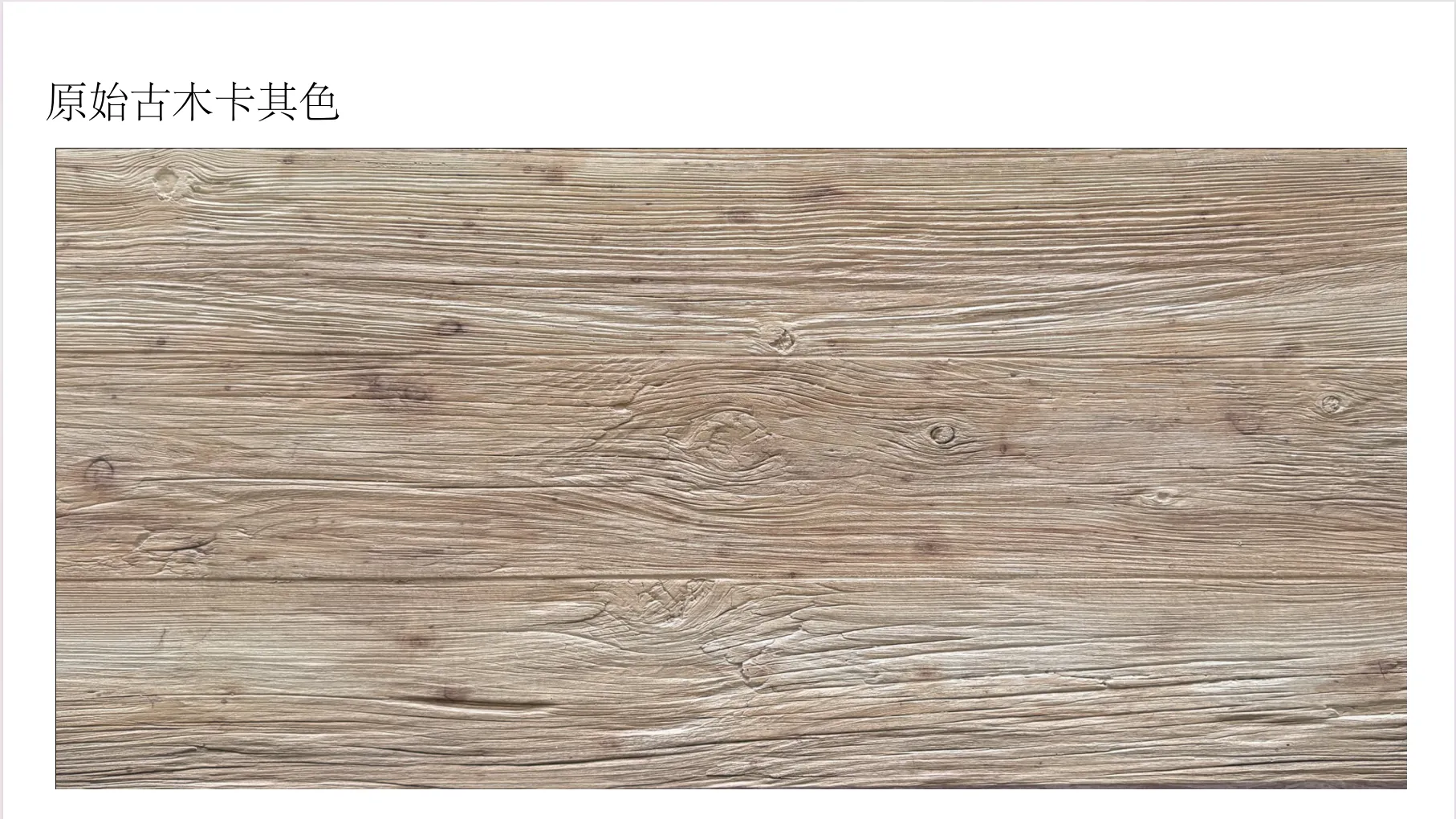
Let's step into the shoes of Lila, a young architect with a penchant for blending the past and present. She's standing in her sunlit studio, surrounded by sketches of a new community center—one that needs to feel both rooted in history and unapologetically modern. On her desk: two samples. One is a slab of reclaimed oak, its surface worn smooth by decades of rain and sun, the grain swirling like a half-remembered story. The other is a thin, flexible sheet of MCM flexible stone , mimicking the texture of travertine but light enough to lift with one hand. "Which one tells the right story?" she mutters. It's a question architects have grappled with for centuries: when designing for the future, do we lean on the warmth of the past, or the innovation of the now? Today, we're diving into that debate by pitting two heavyweights against each other: ancient wood and MCM panels. Let's unpack their stories, their strengths, and why the answer might not be "either/or"—but "both, in balance."
Wood has been humanity's building companion since the first shelters were woven from branches. There's a reason it endures: it's alive. Every knot, every grain, every imperfection is a fingerprint of time. Walk into a room clad in ancient wood—say, reclaimed teak from a 19th-century barn—and you don't just see a material. You feel history. The way sunlight filters through its cracks, casting dappled shadows that dance like old memories; the faint, earthy scent that lingers, a mix of resin and rain. It's no wonder architects like Lila are drawn to it for spaces meant to comfort, to ground, to feel "lived-in."
Aesthetically, ancient wood is unparalleled in its ability to evoke warmth. Its natural tones—honeyed oaks, rich walnuts, weathered pines—soften harsh modern lines, turning a cold concrete box into a home. Think of the lobby of a boutique hotel in Kyoto, where reclaimed cypress beams cradle the ceiling, their surfaces darkened by age, paired with minimalist furniture. The wood doesn't compete; it comforts , like a familiar voice in a busy room. Even in commercial spaces, like a Brooklyn café with walls lined in reclaimed Douglas fir, the wood invites you to slow down, to notice the details—the way the grain bends around a nail hole, the way the color deepens where a cup once sat for years.
But here's the catch: wood is a living material, and living things are fragile. Lila learned this the hard way on her last project, a beach house in Bali. She'd specified local teak for the exterior, falling in love with its golden hue. Within two years, though, the salt air had warped the boards, and termites had left intricate, destructive tunnels. "It looked like lace," she jokes now, but there's a wince in her voice. Ancient wood demands care: regular sealing, painting, or staining to fend off moisture, pests, and rot. In humid climates, it swells; in dry ones, it cracks. And let's talk sustainability. While reclaimed wood (salvaged from old barns, factories, or ships) eases the guilt of cutting down new trees, it's finite. You can't reclaim a 200-year-old oak if there are none left to salvage. And even reclaimed wood has a carbon footprint: transporting massive beams across continents, treating them with chemicals to stabilize them—it's not as "green" as it seems at first glance.
Then there's scale. Ancient wood is heavy. Try cladding a 50-story skyscraper in solid oak beams—it's impractical, if not impossible. Wood's weight limits its use to low-rise buildings or interior accents, boxing architects into a corner when they dream big. "I wanted the entire facade of that community center to feel like a forest," Lila sighs, "but with wood, that's a logistical nightmare. The foundation alone would cost a fortune."
Enter MCM panels—short for Modified Composite Material—a category that's been quietly revolutionizing architecture since the early 2000s. If ancient wood is a storyteller, MCM panels are a chameleon. They're thin, lightweight sheets made by bonding layers of minerals, polymers, and sometimes recycled materials (think: crushed stone, recycled plastics) into a flexible, durable surface. And they don't just mimic wood—oh no. They can look like marble, granite, metal, or even travertine (starry blue) with flecks that catch the light like a night sky. Lila first encountered them at a trade show last year, where a manufacturer handed her a sample of MCM big slab board series —a 4x8-foot panel that looked exactly like rough-hewn limestone, but she could bend it like a sheet of cardboard. "I thought, 'This changes everything,'" she recalls.
Let's talk aesthetics first, because MCM panels are no one-trick pony. The MCM flexible stone line, for example, uses advanced printing and texturing techniques to replicate the feel of natural stone—cool to the touch, with grooves and pits that look like they were carved by centuries of wind and water. But unlike real stone, which is heavy and brittle, these panels are lightweight enough to install on high-rise facades or curved surfaces. Imagine a museum in Dubai with a facade that undulates like sand dunes, clad in gobi panel MCM—mimicking the texture of desert stone, but weighing a fraction of the real thing. Or a restaurant in Tokyo with a feature wall of foamed aluminium alloy board (vintage silver) , its metallic sheen catching the city lights, giving the space a sleek, futuristic vibe without the cost of solid aluminum.
Performance-wise, MCM panels are built for the modern world. They're resistant to moisture, fire, and pests—no more termite "lace" or warped boards. Lila tested a sample once, leaving it outside her studio for six months through rain, snow, and harsh sun. When she brought it in, it looked brand new. "Wood would've turned gray and cracked," she says. They're also low-maintenance: a quick hose-down or wipe with a damp cloth is all it takes to keep them looking fresh. And because they're lightweight, installation is faster and cheaper—no need for massive cranes or reinforced foundations. A crew can clad an entire building facade in MCM panels in weeks, whereas natural stone might take months.
Sustainability? MCM panels have a few tricks up their sleeve here, too. Many manufacturers use recycled materials in their cores, and because they're so durable (some come with 20+ year warranties), they don't need to be replaced as often as wood or even natural stone. Plus, their lightweight nature reduces transportation emissions—trucks can carry more panels per trip, cutting down on fuel use. Lila's firm is currently working on a net-zero office building, and they've specified MCM panels for the exterior. "We calculated it: using MCM instead of natural stone will reduce the building's embodied carbon by 30%," she says. "That's a big deal when you're trying to hit sustainability targets."
Still on the fence? Let's break it down with a head-to-head comparison. Think of this as Lila's cheat sheet when she's staring at those two samples on her desk:
| Criteria | Ancient Wood | MCM Panels |
|---|---|---|
| Aesthetics | Warm, organic, with unique grain patterns and historical character. Best for cozy, intimate spaces. | Versatile—mimics stone, wood, metal, or custom textures (e.g., travertine (starry red) ). Sleeker, more consistent look for modern designs. |
| Durability | Vulnerable to moisture, pests, and rot. Requires regular maintenance (sealing, staining). | Waterproof, fire-resistant, and pest-proof. Withstands harsh climates; minimal maintenance needed. |
| Sustainability | Reclaimed wood reduces deforestation but is finite and requires energy for treatment/transport. | Often contains recycled materials; lightweight design cuts transport emissions; long lifespan reduces replacement needs. |
| Installation & Cost | Heavy and labor-intensive. High upfront costs (especially for reclaimed wood) and ongoing maintenance expenses. | Lightweight and easy to install. Lower upfront and long-term costs due to durability and low maintenance. |
| Design Flexibility | Limited to low-rise or interior use; cannot bend or curve easily. | Lightweight and flexible—ideal for high-rises, curved surfaces, or custom shapes (e.g., wave panel MCM). |
Let's leave the studio and step into real projects to see how these materials play out. Take the Heritage Community Library in Portland, Oregon. The architect wanted to honor the city's logging history, so they used reclaimed Douglas fir for the interior beams and bookshelves. The wood, salvaged from a 1920s lumber mill, has a rich, reddish hue and bears the marks of old saw blades. "When you walk in, you feel like you're in a grand old barn," says the lead architect. "The wood makes the space feel welcoming, like it's been there forever." For the exterior, though, they chose MCM panels in historical pathfinders stone —mimicking the look of local basalt, but lightweight enough to install on the library's curved roofline. "We needed durability for the Pacific Northwest rain," the architect explains, "but we also wanted to tie the exterior to the region's geological history. MCM let us do both."
Then there's the Azure Tower in Singapore, a 40-story residential building with a facade that shimmers like the ocean. The architect specified travertine (starry blue) MCM panels, which have tiny, iridescent flecks that catch the light. "We wanted the building to reflect the city's relationship with water," they say. "Using real travertine would've been impossible—too heavy for the structure. MCM let us create that oceanic effect without compromising safety or cost." Inside, though, the lobby features a wall of reclaimed teak from old fishing boats, its weathered surface telling stories of storms and calm seas. "The contrast works," the architect notes. "The MCM exterior is bold and modern; the wood interior is warm and grounding. Together, they make the building feel both forward-thinking and rooted."
Back in her studio, Lila picks up the oak sample and runs her fingers over its grain. Then she picks up the MCM flexible stone panel, bending it gently. "Why choose?" she says suddenly. "What if we use both?" Her sketchbook comes out, and she starts drawing: reclaimed wood for the community center's interior walls and ceiling, creating a warm, inviting space for gatherings. For the exterior, she specifies MCM big slab board series in lunar peak silvery —mimicking the look of moonlit stone, lightweight enough for the building's cantilevered design, and durable enough to withstand New England winters. "The wood will tell the story of the past," she writes in her notes, "and the MCM will write the story of the future. Together, they'll make the building feel like it's been here forever and just arrived."
That, perhaps, is the real lesson. Ancient wood and MCM panels aren't enemies—they're collaborators. Wood brings warmth, history, and a connection to nature. MCM brings innovation, durability, and design flexibility. The "better" material depends on the story you want to tell, the climate you're building in, and the legacy you want to leave. For Lila, the community center isn't just a building—it's a space where people will laugh, learn, and grow. The wood will wrap them in comfort; the MCM will protect them from the elements. Together, they'll create something timeless and modern, all at once.
So, to answer the question: Ancient wood vs. MCM panels? The best choice is the one that helps your building tell its unique story. And sometimes, that story is most powerful when it's told in two voices.
Recommend Products












