
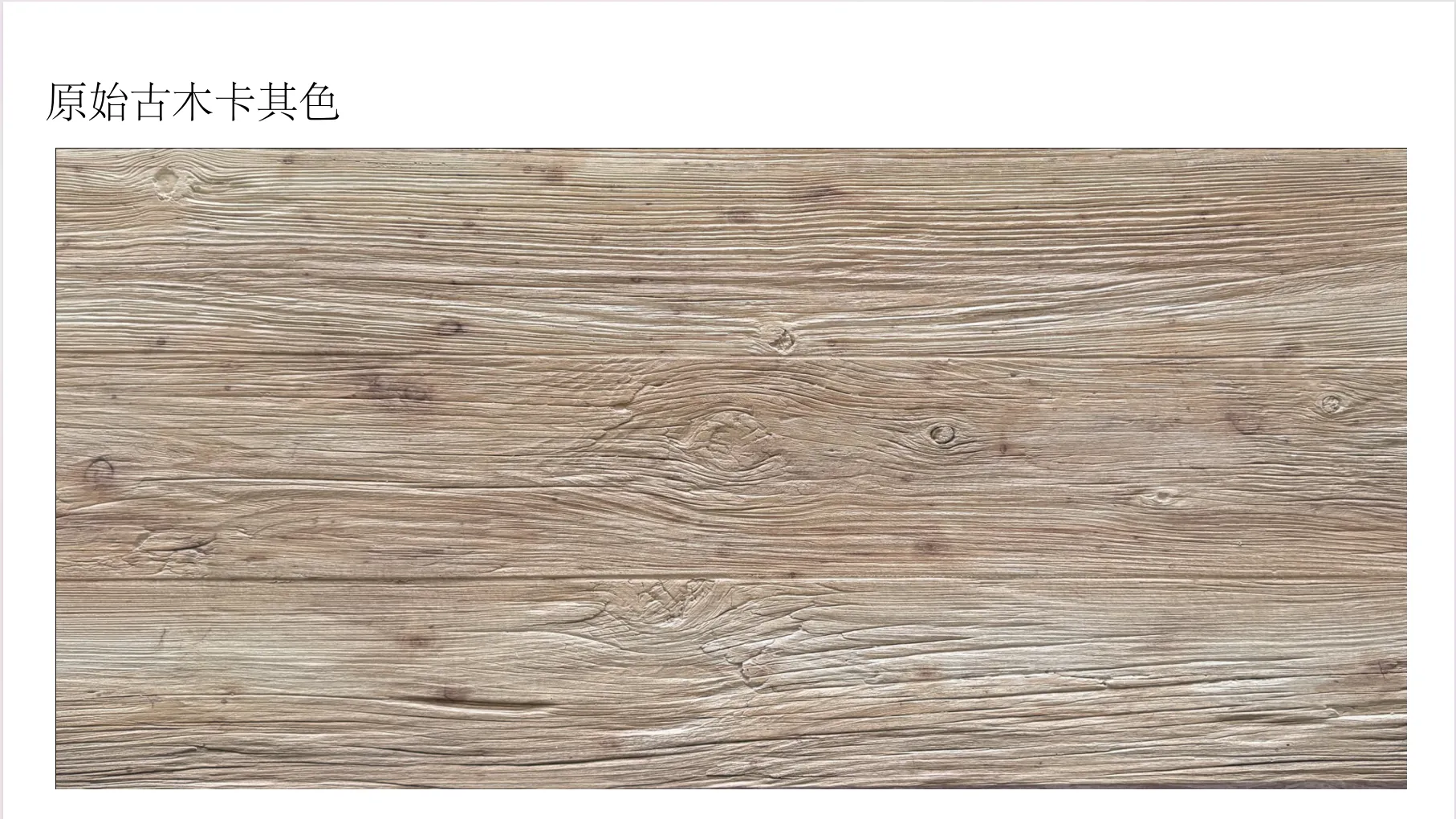
Walk through any historic village in Tuscany, and you'll likely run your hand along weathered wooden beams that have held up roofs for centuries. Ancient wood—oak, teak, cedar—isn't just a building material; it's a storyteller, carrying the marks of carpenters long gone and the weight of generations. But step into a modern construction site in Singapore or New York, and you might notice something different: crews lifting large panels with ease, laughing as they secure them in place without straining their backs. That's MCM—Modified Composite Material—quietly rewriting the rules of what building materials can be. Today, we're diving into a head-to-head between these two giants: the time-honored reliability of ancient wood and the innovative efficiency of MCM. We'll weigh their heft, measure their installation speed, and ask: which one truly serves the builders, architects, and dreamers shaping our world?
Let's start with the elder statesman: ancient wood. For millennia, humans have turned to trees for shelter. There's a reason for that—wood is strong, abundant (or at least, it used to be), and has a warmth that concrete or steel can't match. But let's talk about weight first. Take a mature oak tree, for example. A single cubic meter of oak weighs in at around 700–900 kilograms. That's like stacking seven to nine adult men into a space the size of a small fridge. Now, imagine hoisting a 10-foot oak beam onto a second-story roof. In the days before cranes, that meant ropes, pulleys, and a team of laborers grunting in unison. Even today, with modern machinery, moving large wooden planks is no small feat. Moisture adds another layer: wood absorbs water like a sponge, so a beam that starts at 800 kg can balloon to 900 kg on a rainy day, making it even harder to handle.
Installation? Let's just say patience is a virtue. Carpenters of old spent hours shaping each beam to fit, using hand tools and trial and error. Even with power tools today, installing wood requires precision. Each piece must be measured, cut, sanded, and sealed to prevent warping or rot. And if you're working with reclaimed wood—cherished for its character—you're often dealing with irregular shapes, knots, and cracks that slow things down further. A small team might spend a full week installing wooden siding on a 1,000-square-foot home. Compare that to a crew of two or three setting MCM panels in the same timeframe, and the difference starts to sink in.
But here's the thing: ancient wood has soul. I once spoke to Maria, a restoration architect in Rome, who told me about restoring a 17th-century villa. "We found a beam in the attic with a carpenter's initials carved into it—G.B., 1682," she said, smiling. "When we lifted it out, it creaked like it was whispering stories. You don't get that with a panel made in a factory." That emotional connection is why some builders and homeowners still swear by wood, even when it's heavier and slower to install. It's not just a material; it's a link to the past.
Now, enter MCM. If ancient wood is the wise elder, MCM is the tech-savvy newcomer—innovative, adaptable, and unafraid to challenge the status quo. But what is MCM, exactly? At its core, it's a blend of natural minerals, polymers, and fibers, engineered to mimic the look of traditional materials (stone, wood, even metal) but with a fraction of the weight. Think of it as nature's beauty, reimagined for the 21st century.
Let's talk numbers. Take MCM flexible stone , a popular choice for facades. It weighs about 8–12 kg per square meter. To put that in perspective: a standard wooden siding panel (say, cedar) weighs around 25–35 kg per square meter. That means MCM flexible stone is roughly two to three times lighter . Then there's foamed aluminium alloy board (vintage silver) —a sleek, metallic MCM option that clocks in at just 4–6 kg per square meter. That's lighter than a bag of potatoes. For builders, this is a game-changer. No more straining to lift panels, no need for massive cranes on tight urban sites. A single worker can carry a 4x8-foot MCM panel under one arm—try doing that with a slab of teak.
Installation? MCM was born for speed. Most MCM products come pre-cut, pre-finished, and ready to install. Many use a simple interlocking system or adhesive, so you don't need specialized tools or years of carpentry experience. Take the MCM 3D printing series , for example. These panels are designed with precision-fit grooves, meaning you can snap them together like a giant Lego set. I visited a construction site in Austin last year where a crew of three installed 500 square feet of MCM travertine-look panels in a single day. "With wood, that would've taken us three days, minimum," the foreman, Jake, told me. "And we would've had to sand, stain, and seal each piece. Here? We just peel off the backing, stick 'em up, and call it a day."
But MCM isn't just about speed—it's about adaptability. Unlike wood, which warps in humidity or cracks in extreme temperatures, MCM holds steady. It's resistant to moisture, fire, and pests (no termites munching on MCM panels). And because it's lightweight, it puts less stress on a building's structure, which can reduce foundation costs. For architects, this opens up new possibilities: imagine a cantilevered balcony wrapped in lunar peak silvery MCM panels, or a curved facade covered in travertine (starry blue) that would be impossible with heavy stone or wood.
To really see the difference, let's put ancient wood and MCM side by side. Below is a comparison of common materials, looking at weight, installation time, labor required, and waste generated. These numbers are based on industry averages and real-world project data.
| Material | Average Weight (kg/m²) | Installation Time (per 100m²) | Labor Required (Workers) | Waste Generated (%) |
|---|---|---|---|---|
| Ancient Oak (Beam) | 700–900* | 3–5 days | 4–6 | 15–20% |
| Reclaimed Teak (Siding) | 25–35 | 2–3 days | 3–4 | 10–15% |
| MCM Flexible Stone | 8–12 | 0.5–1 day | 1–2 | 2–5% |
| Foamed Aluminium Alloy Board (Vintage Silver) | 4–6 | 0.3–0.7 days | 1–2 | 1–3% |
| Travertine (Traditional Stone) | 20–30 | 2–4 days | 3–5 | 12–18% |
| MCM Rammed Earth Board (Gradient) | 10–14 | 0.5–1 day | 1–2 | 3–6% |
*Note: Ancient oak beam weight is per cubic meter, as beams are typically measured by volume rather than area.
The table tells a clear story: MCM is lighter, faster to install, and generates far less waste. Take waste, for example. With wood, you often cut panels to fit, leaving scraps that end up in landfills. MCM panels are made to order, so they fit perfectly the first time. Jake, the Austin foreman, put it this way: "With wood, we'd fill a dumpster every week. With MCM? We maybe fill a small trash can. It's better for the planet, and better for our budget."
Numbers are important, but they don't tell the whole story. Let's meet Priya, a small-scale builder in Bangalore, India. She specializes in affordable housing for low-income communities. "Wood was our go-to for years," she told me. "But it's expensive, and we'd lose so much time waiting for it to dry or fixing warped boards. Then we tried MCM flexible stone. Suddenly, we could build a home's facade in three days instead of a week. That means we can help more families get into homes faster. And because MCM is lighter, we don't need to hire extra labor—my crew of four can handle what used to take six people. It's not just about materials; it's about dignity. These families aren't waiting months for a roof over their heads anymore."
Then there's Michael, an architect in Copenhagen who designs eco-friendly offices. "I love the look of wood, but I hate the environmental cost," he said. "Deforestation, shipping heavy timber from miles away—it doesn't align with our sustainability goals. MCM lets us have the best of both worlds. We used MCM wood grain board for a recent project, and clients swear it looks like real oak. But it's made from recycled materials, weighs nothing, and didn't require cutting down a single tree. That's a win-win."
Of course, there are still purists who prefer ancient wood. Maria, the Roman architect, admits she'd never use MCM on a historic restoration. "Those buildings need materials that age gracefully, that develop patina over time," she said. "Wood cracks, fades, and bends—and that's part of its charm. MCM stays perfect, which is great for new builds, but feels out of place in a 400-year-old villa."
So, who wins? Ancient wood or MCM? The answer, I think, is both—and neither. Ancient wood will always have a place in restoration, luxury homes, and projects where tradition and emotion matter most. It's a material with a past, and that past is worth preserving.
But for the future—for sustainable, efficient, and accessible building—MCM is leading the way. It's not about replacing wood; it's about expanding our toolkit. Builders like Priya can now build faster and cheaper. Architects like Michael can design bold, curved structures that would be impossible with heavy materials. And everyday people can enjoy homes and offices that look beautiful, last longer, and don't break the bank.
As we stand at this crossroads of tradition and innovation, one thing is clear: building materials are more than just stuff we put on walls. They're about people—their stories, their needs, their dreams. Ancient wood has carried those dreams for centuries. Now, MCM is ready to carry them into the future. And who knows? Maybe one day, someone will run their hand along an MCM panel and whisper, "Tell me your story."
Whether you're a builder, an architect, or just someone who appreciates a well-built space, the choice between ancient wood and MCM isn't about which is "better." It's about which serves your vision. Do you crave the warmth of history? Reach for wood. Do you dream of efficiency, sustainability, and pushing boundaries? MCM is your ally. In the end, both materials remind us that building is an act of love—for the past, for the present, and for the generations who will walk through the spaces we create.
Recommend Products












