

Architecture has always been more than just walls and roofs—it's a storyteller. For centuries, builders have used stone, wood, and concrete to whisper tales of culture, resilience, and beauty. But as cities grow taller and design dreams bolder, the materials of yesterday often feel like outdated dictionaries. They're heavy, rigid, and stubbornly resistant to the curves and complexities modern architects crave. Enter a new chapter: Bali Stone, reimagined through the MCM 3D Printing Series. It's not just a material upgrade; it's a conversation between nature's patience and technology's precision—a dialogue that turns buildings into living, breathing narratives.
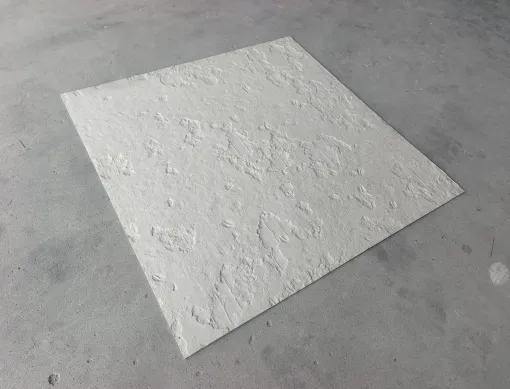
To understand Bali Stone is to touch a piece of the earth's memory. Quarried from regions where volcanic activity and mineral-rich waters have danced for millennia, this stone carries the warmth of sunlit beaches and the depth of ancient forests in its veins. Traditionally, it's been used in temples, villas, and sacred spaces—places where people gather to feel connected to something larger than themselves. Its texture is unapologetically organic: rough yet inviting, with hues that shift from soft beiges to deep, earthy browns, like a landscape painted at dawn. But for all its beauty, traditional Bali Stone had limits. Carving intricate shapes required painstaking labor, and its weight made it impractical for large-scale, gravity-defying designs. It was a poet stuck writing sonnets when architects wanted epics.
The MCM 3D Printing Series isn't here to replace Bali Stone's soul—it's here to set it free. Imagine a sculptor who once chiseled with a hammer now wielding a brush that bends to their every thought. That's the magic of merging Bali Stone with 3D printing technology. MCM (Modified Composite Material) takes the stone's natural essence—its color, texture, and durability—and infuses it with flexibility. Suddenly, Bali Stone isn't just a slab; it's a medium that can curve like a wave, twist like a vine, or form geometric patterns so precise they seem woven by light.
The process is a marvel of efficiency, too. Traditional stone cutting wastes up to 30% of the raw material; 3D printing layers Bali Stone composite with pinpoint accuracy, reducing waste to a fraction. This isn't just good for budgets—it's good for the planet. And because the material is lightweight (thanks to the MCM flexible stone base), it can be installed on structures that would buckle under traditional stone. A museum facade that once required steel girders for support can now float, seemingly weightless, its Bali Stone panels catching the wind like a curtain.
What makes Bali Stone 3D printed installations truly revolutionary is how they marry "can do" with "want to." Let's break it down: function isn't just about durability (though this material has that in spades—it resists rain, UV rays, and temperature swings like a seasoned traveler). It's about adaptability. Need a facade that changes color with the sun? Mix in pigments from the Lunar Peak series—silvery for moonlight, golden for dawn, black for midnight—and watch the building transform. Want an interior wall that feels like a forest floor? Embed starry green travertine flecks, and suddenly every touch is a reminder of mossy woods.
Creativity, meanwhile, is where the magic becomes visible. Take the "Whispering Wall" installation in downtown Portland: a 20-foot-tall curved screen made from 3D printed Bali Stone panels, interspersed with Lunar Peak silvery accents. The panels are shaped like overlapping leaves, their edges so thin they glow when backlit. At night, LED lights behind the starry green travertine flecks mimic constellations, turning the wall into a planetarium. Kids press their palms to it, tracing the curves; poets lean against it, finding inspiration in its flow. It's not just a wall—it's a conversation starter.
Or consider the "River Walk" pavilion in Singapore. Its roof, printed from Bali Stone composite, undulates like a stream, with linear travertine claybank tones that shift from tan to terracotta as you walk beneath. The MCM flexible stone base bends without cracking, even in the city's humid heat, while the material's lightness means the pavilion's columns are slender, almost invisible—making visitors feel like they're standing under a floating riverbed. Function? It shelters from rain and sun. Creativity? It turns a utilitarian space into a journey through nature.
| Feature | Traditional Bali Stone | MCM 3D Printed Bali Stone |
|---|---|---|
| Weight (per sq. ft) | 25-30 lbs | 8-10 lbs |
| Design Flexibility | Limited to simple shapes; intricate designs require custom carving | Unlimited: curves, waves, geometric patterns, and custom textures |
| Installation Time | 3-5 days for a small facade (requires heavy machinery) | 1-2 days (lightweight panels install with basic tools) |
| Weather Resistance | Good, but prone to cracking in extreme temperature shifts | Excellent: MCM flexible stone base resists warping and cracking |
| Material Waste | 25-30% (due to cutting and shaping) | 5-8% (3D printing precision reduces excess) |
In a world grappling with climate change, "green architecture" isn't a trend—it's a responsibility. Bali Stone 3D printed installations check that box, too. The MCM composite uses recycled stone dust and eco-friendly binders, diverting waste from landfills. And because the material is lightweight, transportation emissions plummet. A truck that once carried 10 traditional stone panels can now carry 30 MCM Bali Stone panels, cutting carbon footprints by two-thirds.
Even better, these installations are built to last. Unlike synthetic materials that fade or crack after a decade, MCM 3D printed Bali Stone ages gracefully, its colors deepening like a well-loved book. When a building is renovated, the panels can be recycled, ground down, and reprinted into new designs. It's a closed-loop system—nature's cycle, reimagined with technology.
Bali Stone 3D printed installations are more than a material innovation—they're a shift in how we think about buildings. No longer just shelters, they're canvases. A school might use starry red travertine panels to inspire curiosity; a hospital could incorporate Lunar Peak golden accents to evoke warmth and healing. A community center might wrap itself in Bali Stone waves, reminding residents of the ocean that connects them.
As architects and designers continue to experiment, we'll see even wilder possibilities: 3D printed Bali Stone sculptures that double as acoustic panels, facades that change texture with the seasons, or public art pieces that respond to human touch. The MCM 3D Printing Series hasn't just given us a new material—it's given us a new way to dream.
So the next time you pass a building with a facade that seems to breathe, or a wall that feels more like a hug than a barrier, pause. It might just be Bali Stone, finally free to tell its full story—one 3D printed layer at a time.
Recommend Products












