

Architecture has always been a dialogue between function and beauty, but in recent years, that conversation has grown richer—more intimate, more expressive. Today's buildings don't just shelter us; they tell stories, evoke emotions, and blur the line between structure and art. At the heart of this evolution lies a quiet revolution: the marriage of time-honored materials and cutting-edge technology. Enter Bali Stone and the MCM 3D Printing Series —a pairing that's redefining what's possible when human creativity meets precision engineering. This isn't just about building materials; it's about crafting spaces that feel alive, that carry the warmth of nature and the ingenuity of modern design.
Before diving into the tech, let's talk about the star of the show: Bali Stone. Named for the Indonesian island's lush, organic aesthetic, this material embodies a kind of understated luxury. It's not flashy, but it's deeply resonant—think warm, earthy tones that range from soft terracotta to muted sage, with subtle textures that mimic weathered stone, sun-baked clay, and the gentle wear of time. Unlike polished marble or cold concrete, Bali Stone feels approachable, like it's been shaped by human hands rather than industrial machinery. It carries the weight of tradition but wears it lightly, making it perfect for spaces that aim to feel both grounded and airy.
What sets Bali Stone apart is its versatility. It's durable enough for exterior facades yet delicate enough for interior accents. Run your hand over a slab, and you'll notice tiny variations—specks of mineral, faint veining, a slight roughness that catches the light. These imperfections aren't flaws; they're character. They turn a wall into a canvas, a countertop into a conversation piece. In a world of mass-produced uniformity, Bali Stone celebrates the unique, the handcrafted, the human .
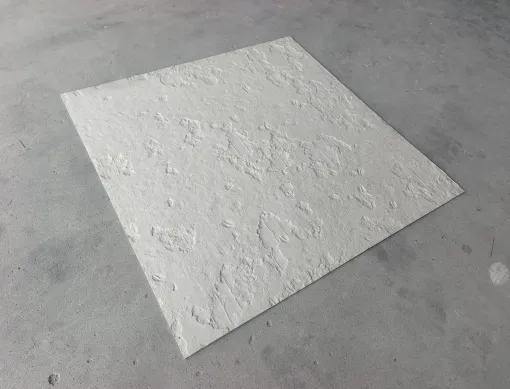
If Bali Stone is the soul of this partnership, the MCM 3D Printing Series is the tool that sets it free. For decades, working with natural stone meant compromise: you were limited by the material's rigidity, by the cost of carving intricate designs, by the waste generated from traditional cutting methods. 3D printing changes all that. It's like giving designers a magic wand—one that can transform Bali Stone into shapes that once existed only in sketches or dreams.
The MCM 3D Printing Series isn't just about slapping a 3D printer on a construction site. It's a system, a philosophy. MCM (Modified Composite Material) technology enhances Bali Stone's natural properties, making it lighter, more flexible, and easier to mold without sacrificing strength. The 3D printers, calibrated specifically for these materials, layer the stone composite with pinpoint accuracy, allowing for curves, undulations, and latticework that would be impossible with traditional tools. Imagine a wall panel that flows like water, or a ceiling accent that spirals upward like a vine—all made from a material that still feels rooted in nature.
But this tech isn't just about aesthetics. It's about accessibility. Small-scale designers, boutique builders, even homeowners can now commission custom pieces that would have been cost-prohibitive a decade ago. Want a Bali Stone backsplash with a pattern inspired by your grandmother's handwoven basket? Done. Need a facade panel that mimics the ripple of a local river? The MCM 3D Printing Series makes it feasible. It's design democracy, one layer at a time.
So, where do these materials leave their mark? Everywhere. From cozy homes to bold commercial spaces, Bali Stone 3D-printed accents are turning ordinary rooms into memorable experiences. Let's walk through a few scenarios.
Picture a modern cottage in the countryside. The exterior is clad in MCM Flexible Stone for durability, but the entryway? That's where Bali Stone takes center stage. A 3D-printed wave panel frames the front door, its curves softening the sharp lines of the roof. The stone's terracotta hue echoes the autumn leaves in the yard, creating a seamless transition between indoors and out. Inside, the living room features a Bali Stone accent wall—no flat, boring sheetrock here. Instead, it's printed with a thread pattern, delicate lines that crisscross like a spider's web, catching the afternoon light and casting dappled shadows on the floor. It's not just a wall; it's a focal point, a storyteller. "This is where we gather," it seems to say. "This is where memories are made."
Now imagine a boutique hotel in the heart of a bustling city. The lobby needs to feel both luxurious and welcoming—no small feat. The designers opt for Bali Stone 3D-printed masonry stone panels for the reception desk, their rough-hewn texture balancing the sleekness of the foamed aluminium alloy board (vintage gold) accents above. Nearby, a feature wall is printed with travertine (starry blue) inlays, tiny flecks of color that mimic a night sky, inviting guests to pause and look up. Even the elevator doors get in on the action: thin, 3D-printed Bali Stone strips in a wood line pattern, warm and tactile against the cool metal. The result? A space that feels exclusive but not intimidating—like a friend's elegant home, not a sterile hotel.
It's often the little things that make a space unforgettable, and Bali Stone 3D prints excel here. Think kitchen backsplashes with custom linear travertine (claybank) patterns, matching the homeowner's favorite childhood pottery. Or bathroom walls printed with stream limestone (claybank) textures that evoke the calm of a forest brook. Even furniture gets a makeover: a coffee table with a Bali Stone top printed in a bamboo mat board design, its edges curved and smooth, like it's been polished by years of use. These aren't just "decorative elements"—they're personal. They carry the fingerprint of the people who live there, turning houses into homes.
Bali Stone is hardly the only star in the MCM universe. Materials like Lunar Peak Golden or MCM Flexible Stone bring their own magic to the table. To help you see how Bali Stone fits into the bigger picture, here's a breakdown of how it compares to some of its MCM siblings:
| Material | Aesthetic Traits | Best For | Key Advantage |
|---|---|---|---|
| Bali Stone | Earthy tones (terracotta, sage), organic textures, subtle veining | Residential interiors, boutique exteriors, accent walls | Warmth and approachability; feels "lived-in" and natural |
| Lunar Peak Golden | Metallic sheen, iridescent flecks, cool gold hue | High-end commercial facades, statement ceilings | Drama and luxury; catches light for dynamic visual impact |
| MCM Flexible Stone | Lightweight, thin profiles, customizable patterns | Curved surfaces, furniture accents, temporary installations | Versatility; bends without cracking for unique shapes |
| Foamed Aluminium Alloy Board (Vintage Silver) | Matte metallic finish, industrial-chic texture | Modern offices, retail storefronts, kitchen backsplashes | Durability and sleekness; resists corrosion and wear |
What's clear? Bali Stone's superpower is its ability to connect. It doesn't demand attention; it invites it. Pair it with Lunar Peak Golden for a contrast of warmth and glamour, or with Flexible Stone for playful, sculptural designs—the possibilities are as endless as your imagination.
Let's get practical for a moment. As lovely as Bali Stone is, it wouldn't make waves in architecture if it didn't deliver on performance. Thanks to the MCM 3D Printing Series, it checks all the boxes:
Sustainability: Traditional stone cutting generates massive waste—up to 70% of a block can end up as rubble. 3D printing is additive, not subtractive, so it uses only the material needed. Plus, MCM materials like Bali Stone often incorporate recycled content, reducing their environmental footprint. It's design with a conscience.
Durability: Don't let its soft look fool you. MCM-enhanced Bali Stone is resistant to moisture, UV rays, and temperature fluctuations—perfect for both indoor and outdoor use. It won't fade, crack, or warp, even in harsh climates. That means your 3D-printed accent wall or facade will look just as good in 20 years as it does today.
Speed: Traditional stone carving can take weeks for a single custom piece. MCM 3D Printing? Days. This speed doesn't just save time; it opens doors for experimentation. Designers can iterate, tweak, and refine without worrying about costly delays, leading to more innovative, personalized results.
At the end of the day, buildings are for people. We live in them, work in them, love in them. They shape our moods, our memories, our sense of belonging. That's why materials like Bali Stone and technologies like the MCM 3D Printing Series are more than just "innovations"—they're tools for empathy. They let us build spaces that don't just look good, but feel good. Spaces that remind us of the natural world, of human craftsmanship, of the beauty in imperfection.
Imagine walking into a home where the walls are printed with Bali Stone in a pattern that echoes the owner's childhood home. Or a community center with a facade of 3D-printed Bali Stone and rust square line stone , telling the story of the neighborhood's history. These aren't just buildings—they're living, breathing testaments to who we are and what we value.
The Bali Stone 3D Printing Applications, part of the broader MCM Project Board Series , are more than a trend. They're a shift in how we think about architecture—away from the cold, the generic, the impersonal, and toward the warm, the unique, the deeply human. In a world that often feels disconnected, they're a reminder that the best buildings are the ones that make us feel seen .
So here's to the future: one where Bali Stone waves, 3D-printed and full of heart, greet us at our doorsteps. One where our walls tell stories, our accents spark joy, and our buildings feel less like structures and more like old friends. It's a future worth building—and with Bali Stone and the MCM 3D Printing Series, we're already well on our way.
Recommend Products












