

Bali Stone has long been a muse for architects and designers, celebrated for its warm, earthy textures and the organic story it tells through every vein and ripple. Quarried from the lush landscapes of Indonesia, this natural stone carries the essence of tropical serenity—think sun-dappled patios, rustic villa walls, and outdoor spaces that feel like an extension of the island's vibrant ecosystem. But as architecture evolves, so too does our need to blend tradition with innovation. Enter 3D printing: a technology that's not just changing how we build, but redefining what's possible when we marry the timeless allure of materials like Bali Stone with cutting-edge manufacturing. Today, we're diving into how Bali Stone 3D printing is revolutionizing custom architectural elements, and why series like MCM's 3D Printing line are leading the charge in this exciting new era.
For decades, architects have dreamed of pushing the boundaries of form—curves that mimic natural landscapes, intricate patterns that tell cultural stories, and structures that feel less like buildings and more like living art. But traditional manufacturing methods often limited these visions: stone was heavy, molds were expensive, and customization meant compromising on scale or cost. 3D printing changed that. By layering materials with precision, this technology lets designers create complex shapes, unique textures, and one-of-a-kind pieces without the constraints of old-world production. And when paired with materials as versatile as Bali Stone, the result is nothing short of magical.
At the forefront of this movement is the MCM 3D Printing Series, a collection that merges Bali Stone's natural beauty with the precision of 3D printing. Unlike mass-produced stone panels, MCM's 3D printed elements are tailored to each project's unique needs—whether it's a hotel lobby craving a statement wall with travertine (starry blue) accents or a residential home wanting a Bali Stone fireplace with custom geometric carvings. The technology allows for micro-level detail, from replicating the look of hand-chiseled stone to creating textures so realistic, you'd swear they were shaped by wind and water over centuries.
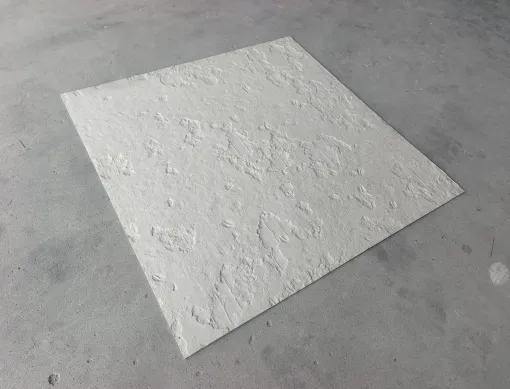
One of the most exciting advancements in this space is MCM Flexible Stone—a material that defies the "brittle" stereotype often associated with natural stone. Lightweight yet surprisingly durable, it's engineered to bend, curve, and adapt to even the most ambitious architectural shapes. Imagine a museum facade that undulates like a wave, or a restaurant ceiling that arcs gracefully overhead, clad in Bali Stone-inspired panels that feel both solid and ethereal. That's the power of MCM Flexible Stone.
What makes it so special? Its composition: a blend of natural stone aggregates and a high-performance polymer binder that retains the stone's authentic look while adding flexibility. This means it can be 3D printed into thin, lightweight sheets that are easy to install, reducing construction time and labor costs. For designers, this opens up a world of possibilities. No longer limited to flat surfaces, they can now create curved walls, spiral staircases, and even sculptural art pieces that double as functional architecture. And because it's resistant to weathering, fading, and impact, MCM Flexible Stone isn't just a pretty face—it's built to last, making it ideal for both indoor and outdoor use.
While Bali Stone remains the heart of this innovation, the magic often lies in pairing it with complementary materials that enhance its beauty. Take foamed aluminium alloy board (vintage gold) , for example. With its warm metallic sheen and lightweight properties, it's the perfect counterpart to Bali Stone's earthiness. Imagine a commercial building facade where 3D printed Bali Stone panels are interspersed with vintage gold aluminium accents—the contrast of rough stone and smooth metal creates a dynamic visual rhythm that draws the eye and feels both modern and grounded.
Then there's the travertine family, which adds a touch of celestial wonder to architectural designs. Travertine (starry blue) is a standout, with its deep blue base and flecks of shimmer that mimic a night sky. When 3D printed into thin, translucent panels, it becomes a stunning choice for interior lighting features—think backlit accent walls in a hotel lobby or pendant lights shaped like falling stars. And for those who prefer a more muted palette, lunar peak silvery offers a cool, understated elegance. Its soft gray tones with subtle metallic highlights pair beautifully with Bali Stone's warmth, creating spaces that feel calm and sophisticated, like a modern sanctuary.
Even classic materials like fair-faced concrete get a fresh update when paired with 3D printed Bali Stone elements. Imagine a minimalist home where exposed concrete walls are softened by a 3D printed Bali Stone fireplace surround—the raw, industrial vibe of concrete balances the stone's organic texture, resulting in a space that feels both edgy and inviting. It's this ability to mix and match materials that makes the MCM 3D Printing Series so versatile; whether you're designing a beachfront villa, a corporate headquarters, or a cultural center, there's a combination that will bring your vision to life.
| Material/Series | Core Aesthetic | Key Strengths | Best For |
|---|---|---|---|
| Bali Stone (3D Printed) | Earthy, organic, tropical warmth | Natural texture, customizable via 3D printing, durable | Outdoor patios, villa exteriors, rustic interior walls |
| MCM Flexible Stone | Versatile, adaptive, sculptural | Lightweight, bendable, weather-resistant | Curved facades, spiral staircases, artistic installations |
| Foamed Aluminium Alloy Board (Vintage Gold) | Metallic, sleek, warm | Lightweight, corrosion-resistant, reflective | Accent panels, facade highlights, modern interior trim |
| Travertine (Starry Blue) | Celestial, dramatic, ethereal | Shimmering texture, customizable translucency | Backlit walls, lighting features, statement ceilings |
| Lunar Peak Silvery | Cool, sophisticated, minimalist | Subtle metallic sheen, neutral palette | Modern offices, luxury residential interiors, gallery spaces |
It's one thing to talk about possibilities, but seeing these innovations in action is where the excitement truly hits. Take the recent renovation of a boutique hotel in Bali, for example. The designers wanted to honor the island's heritage while infusing the space with modern luxury. They turned to 3D printed Bali Stone for the lobby's feature wall, using MCM Flexible Stone to create a sweeping, curved surface that mimics the shape of local rice terraces. Embedded within the stone are small niches housing foamed aluminium alloy board (vintage silver) shelves, each holding artifacts that tell the story of Bali's cultural history. The result? A lobby that feels like a museum, a gallery, and a welcoming space all at once—guests can't help but pause and take it all in.
In a more urban setting, a tech company headquarters in Singapore used 3D printed travertine (starry red) panels for their employee lounge. The panels, printed in a wave-like pattern, cover one entire wall, creating the illusion of a flowing river of stone. Paired with wood grain board accents and soft lighting, the space feels less like an office and more like a retreat, encouraging collaboration and creativity. It's a reminder that architecture isn't just about function—it's about how a space makes you feel.
Even historical preservation projects are embracing this technology. A 19th-century mansion in Europe, undergoing restoration, needed to replace damaged stone carvings on its facade. Traditional methods would have required skilled artisans to hand-carve each piece, a time-consuming and expensive process. Instead, the team used 3D scanning to map the original carvings, then 3D printed replicas using Bali Stone-infused materials. The result was indistinguishable from the original, preserving the mansion's heritage while saving time and resources. It's a beautiful example of how technology can honor the past while building for the future.
As technology advances, the future of Bali Stone 3D printing looks brighter than ever. One emerging trend is the integration of smart materials—think 3D printed Bali Stone panels embedded with sensors that monitor temperature, humidity, or even air quality. These "living walls" could one day regulate a building's energy use, making it more sustainable. Another exciting development is the use of AI in design. Imagine inputting your vision—a "tropical modernist home with a focus on natural light"—and an AI algorithm generating 3D models that incorporate Bali Stone, masonry stone , and other materials, optimizing for both aesthetics and functionality. It's a collaboration between human creativity and machine precision that could speed up the design process and unlock even more innovative ideas.
Sustainability is also a key focus. MCM's 3D Printing Series already uses recycled stone aggregates and eco-friendly binders, reducing waste and carbon footprint. Looking ahead, we may see even more emphasis on circular design—materials that can be recycled or repurposed at the end of a building's life. For example, 3D printed Bali Stone panels could be ground down and reused to create new elements, closing the loop and minimizing environmental impact.
At the end of the day, architecture is about more than bricks and mortar—it's about creating spaces that connect us to our surroundings, our history, and each other. Bali Stone 3D printing does exactly that. It takes a material with deep cultural roots and gives it new life through technology, allowing us to build structures that are both timeless and forward-thinking. Whether it's a cozy home with a 3D printed Bali Stone fireplace, a commercial building with a facade that shimmers with travertine (starry blue) , or a cultural center that blends MCM Flexible Stone with lunar peak golden accents, these designs don't just look good—they feel meaningful.
As we continue to explore the possibilities of 3D printing and innovative materials, one thing is clear: the future of architecture is not about replacing tradition, but reimagining it. And with Bali Stone at the center of this journey, we're building spaces that will inspire, delight, and endure for generations to come.
Recommend Products












