

In the world of architecture and design, materials aren't just building blocks—they're storytellers. They shape how spaces feel, how light plays across surfaces, and how structures connect with their environment. For decades, designers and builders have chased materials that blend beauty, durability, and flexibility. Enter Bali Stone—a material that feels both ancient and modern, with its warm textures and earthy tones that evoke the lush landscapes of its namesake island. But like many natural and engineered materials, Bali Stone once faced a critical challenge: traditional molding methods struggled to unlock its full potential. That is, until the rise of the MCM 3D Printing Series. Today, we're diving into how this cutting-edge technology is revolutionizing how we work with Bali Stone, leaving traditional molding methods in the dust.
Let's start with the basics. Traditional molding for materials like Bali Stone, fair-faced concrete, or even marble typically involves creating a physical mold—often made of wood, metal, or plastic—into which the material is poured, pressed, or carved. It's a process that's been around for centuries, and to its credit, it built some of history's most iconic structures. But in an era where architects dream up curvilinear facades, custom textures, and oversized panels, traditional molding is showing its age.
Take, for example, the challenge of creating complex shapes. If you wanted a Bali Stone wall with undulating waves or intricate geometric patterns, traditional methods would require hand-carving each mold or using expensive, one-off tools. Not only is this time-consuming, but it also limits creativity—designers often scale back their visions to fit what's feasible with molds. Then there's the issue of material waste. Traditional molding often leaves behind excess stone or concrete, especially when cutting large slabs to fit specific dimensions. In a world increasingly focused on sustainability, that waste isn't just costly—it's environmentally irresponsible.
Another pain point? Consistency. With traditional molding, human error and slight variations in mold alignment can lead to uneven surfaces or mismatched textures, especially when working with natural materials like Bali Stone, which has its own unique veining and grain. For projects that demand uniformity—say, a hotel lobby with floor-to-ceiling Bali Stone panels—this inconsistency can be a nightmare, requiring rework and delaying timelines.
And let's not forget the weight. Traditional Bali Stone slabs, especially those in the mcm big slab board series, are heavy. Transporting and installing them requires specialized equipment and extra labor, driving up project costs. For builders working on tight budgets or in hard-to-reach locations, this added complexity can be a dealbreaker.
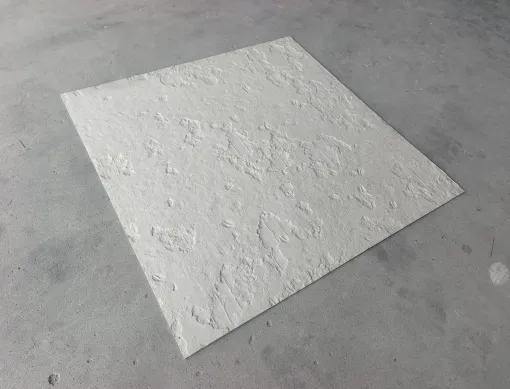
It's no secret that 3D printing has transformed industries from healthcare to aerospace, but its impact on construction materials—especially with Bali Stone—might be one of its most exciting chapters yet. The MCM 3D Printing Series, developed specifically for engineered stones like Bali Stone and mcm flexible stone, isn't just about "printing walls." It's about reimagining what's possible with material, design, and efficiency.
At its core, MCM 3D printing uses layer-by-layer deposition to build Bali Stone structures directly from digital designs. Think of it like a high-tech pastry chef piping intricate frosting patterns, but on a massive scale, using durable, weather-resistant materials. This approach bypasses the need for physical molds entirely, turning digital blueprints into tangible, textured surfaces with unprecedented precision.
What makes this technology a perfect match for Bali Stone? Bali Stone itself is already prized for its flexibility (thanks to innovations like mcm flexible stone), lightweight composition, and natural aesthetic. When paired with 3D printing, these qualities are amplified. Suddenly, that curved Bali Stone facade an architect sketched at 2 a.m. isn't a pipe dream—it's a deliverable. Those custom starburst textures for a restaurant's accent wall? They can be printed in hours, not weeks. And because the process is digital, designers can tweak details on the fly, ensuring the final product matches their vision exactly.
To truly understand the shift, let's break down the advantages of using MCM 3D printing for Bali Stone compared to traditional molding. It's not just about "new technology"—it's about solving real-world problems that architects, builders, and homeowners face every day.
| Aspect | Traditional Molding with Bali Stone | 3D Printing with Bali Stone (MCM Series) |
|---|---|---|
| Design Freedom | Limited to simple shapes; complex designs require costly, custom molds. | Unlimited complexity—curves, textures, and custom patterns printed directly from digital files. |
| Material Waste | High waste (15-25%) from cutting slabs to fit molds or trimming excess. | Minimal waste (less than 5%)—only the exact amount of Bali Stone needed is used. |
| Production Time | Weeks to months (mold creation + curing + finishing). | Days to weeks (digital design to printed product, no mold delays). |
| Cost Over Time | High upfront mold costs + labor for installation of heavy slabs. | Lower long-term costs (no mold fees, reduced labor, less waste). |
| Sustainability | More energy and resource-intensive; higher carbon footprint from waste and transportation. | Energy-efficient printers, reduced waste, and lightweight materials cut emissions. |
| Quality Control | Inconsistent textures and sizing due to manual mold alignment. | Precision to 0.1mm; every layer matches the digital design exactly. |
Imagine an architect wanting to create a Bali Stone feature wall that mimics the flow of a river—with gentle curves, varying depths, and embedded textures that catch the light. With traditional molding, this would require carving a custom mold by hand, a process that could take weeks and cost tens of thousands of dollars. And if the design needed tweaking? Back to the drawing board (and the mold shop).
With MCM 3D printing, that same river-inspired wall can be designed on a computer, adjusted in minutes, and printed directly. The 3D printer lays down layers of Bali Stone-infused material with pinpoint accuracy, creating organic shapes and intricate details that would be impossible with molds. It's not just about aesthetics, either—this flexibility allows for functional designs, too. For example, 3D-printed Bali Stone panels can integrate built-in drainage channels, cable management, or even acoustic dampening features, all in a single piece.
Sustainability isn't just a buzzword for today's builders—it's a business imperative. Traditional Bali Stone molding is notoriously wasteful. When you carve a slab to fit a mold, you're often left with scraps that end up in landfills. Even with recycling efforts, the energy and resources used to produce those excess materials are lost.
MCM 3D printing flips this script. Because the printer deposits material only where it's needed, waste is reduced to less than 5%—a fraction of traditional methods. This isn't just good for the planet; it's good for the bottom line. Builders save on material costs, and projects become more attractive to eco-conscious clients who prioritize green building practices. Plus, the lightweight nature of 3D-printed Bali Stone (thanks to its porous, optimized structure) means less fuel is used during transportation, further cutting carbon footprints.
In construction, time is money. Delays due to material production can derail projects, strain client relationships, and eat into profits. Traditional Bali Stone molding involves multiple steps: designing the mold, manufacturing it, curing the stone, trimming, and finishing. Each step adds weeks to the timeline, and any hiccup—like a mold crack or curing issue—means starting over.
3D printing streamlines this entire process. Once the digital design is finalized, the printer gets to work immediately. There's no waiting for mold fabrication, and because the layers cure as they're printed, the final product is ready for installation in a fraction of the time. For example, a 200-square-foot Bali Stone accent wall that might take 6-8 weeks with traditional molding can be 3D-printed and installed in 10-14 days. That's a game-changer for tight deadlines, especially in commercial projects where every day of delay costs money.
Anyone who's worked with natural stone knows that consistency is hard to come by. Traditional Bali Stone slabs can vary in color, texture, and thickness, even within the same batch. When installing a large surface—like a hotel lobby with mcm big slab board series panels—these variations can create a patchwork effect that undermines the design's impact.
3D printing eliminates this problem. The MCM 3D Printing Series uses a precisely calibrated mixture of Bali Stone particles, binders, and additives, ensuring every layer is identical. Whether you're printing 10 panels or 100, each one will have the same texture, color, and thickness. This uniformity is a lifesaver for designers aiming for a cohesive look, and it reduces the need for on-site adjustments or replacements.
Traditional Bali Stone slabs are heavy—often 20-30 pounds per square foot. Installing them requires cranes, scaffolding, and a team of workers, increasing labor costs and safety risks. In contrast, 3D-printed Bali Stone panels are lightweight (around 8-12 pounds per square foot) thanks to their honeycomb-like internal structure, but they're just as durable. The layer-by-layer printing process creates a strong, interlocked matrix that resists cracking and weathering, making it ideal for both interior and exterior use.
This lightweight quality opens up new possibilities for installation. Imagine a historic building renovation where weight restrictions prevent using traditional stone—3D-printed Bali Stone panels can be mounted without reinforcing the structure, preserving the building's integrity while updating its aesthetic. Or a remote mountain retreat where transporting heavy slabs is logistically impossible—3D-printed panels can be shipped flat and assembled on-site, saving time and money.
It's one thing to talk about advantages, but seeing Bali Stone 3D printing in action drives the point home. Take the recent renovation of a boutique hotel in Bali itself. The design team wanted the lobby to feature a massive, curved Bali Stone wall that paid homage to the island's volcanic landscapes—complete with textured peaks and valleys. Traditional molders quoted six months and a small fortune to create the custom molds needed.
Instead, the team turned to MCM 3D printing. Using the MCM 3D Printing Series, the wall was designed digitally, printed in 12 interlocking panels, and installed in just 3 weeks. The result? A showstopping feature that looks like it was carved by nature, not machines. Guests often mistake it for a centuries-old stone formation, unaware it was built with cutting-edge technology.
Another example: a restaurant chain in Europe wanted to standardize its interior design across locations, using Bali Stone accents. With traditional molding, each location would have slightly different textures and colors, diluting the brand's cohesive look. By switching to 3D-printed Bali Stone panels, every restaurant now has identical, high-quality accents—from the bar front to the backsplash—ensuring customers get the same immersive experience, no matter which location they visit.
Even residential projects are benefiting. A homeowner in California wanted a Bali Stone fireplace with a custom, geometric pattern that matched their modern decor. Traditional methods would have required hand-carving the stone, which was both expensive and risky (one mistake would ruin the slab). MCM 3D printing allowed the design to be printed in sections, assembled seamlessly, and installed in a weekend. The result? A one-of-a-kind fireplace that's become the focal point of their home.
Bali Stone has always been a material with soul—its warm, earthy tones and natural texture connect us to the environment in a way few other materials can. But for too long, traditional molding methods have held it back, limiting its potential to inspire and transform spaces.
The MCM 3D Printing Series changes that. By combining Bali Stone's timeless appeal with 3D printing's cutting-edge technology, we're entering an era where design is limited only by imagination, not machinery. Whether you're an architect dreaming up the next iconic building, a builder looking to streamline projects, or a homeowner wanting to add a touch of luxury to your space, Bali Stone 3D printing offers something traditional methods never could: freedom.
As we look ahead, it's clear this isn't just a trend—it's a shift in how we think about construction materials. With advantages like design flexibility, sustainability, and cost-effectiveness, Bali Stone 3D printing is poised to become the gold standard for modern building. And in a world that craves both authenticity and innovation, that's a future worth building.
Recommend Products












