

Redefining Exterior Aesthetics with the mcm Big Slab Board Series
In the world of modern architecture, the exterior of a building is more than just a protective shell—it's a statement. Today's designers and homeowners crave spaces that feel both sophisticated and organic, where the line between nature and structure blurs into something harmonious. Yet, for years, one challenge has stood in the way of this vision: joints. Those tiny, unavoidable gaps between traditional cladding materials—tiles, bricks, small stone slabs—have long disrupted the flow of exteriors, creating a fragmented look that feels dated and high-maintenance. Enter Bali Stone Big Slabs, a game-changer in the mcm big slab board series, designed to minimize joints and deliver the seamless, modern aesthetic that today's buildings demand.
Bali Stone isn't just another building material; it's a response to a collective desire for simplicity. Imagine a facade that reads like a single, continuous canvas—no interruptions, no distractions, just the natural beauty of stone amplified by its unbroken expanse. That's the promise of Bali Stone Big Slabs, and it's quickly becoming the go-to choice for architects, developers, and anyone who refuses to compromise on both form and function.
To appreciate the innovation of Bali Stone Big Slabs, it helps to understand the limitations of the status quo. Traditional exterior cladding often relies on small, individual pieces—think 300x600mm tiles or 400x400mm stone slabs. While these materials have their merits, their size means one unavoidable outcome: joints. Lots of them. Even with skilled installation, these joints are visible, creating a grid-like pattern that can make a building feel busy or cluttered.
But the issues with joints go beyond aesthetics. Functionally, they're a maintenance nightmare. Dirt, dust, and grime accumulate in the gaps, turning once-clean exteriors into patchworks of discoloration. In humid climates, mold and mildew thrive in these crevices, requiring regular scrubbing or even regrouting to keep the facade looking fresh. Worse, water can seep through poorly sealed joints, infiltrating the building's structure and causing rot, mold, or structural damage over time. For commercial buildings, this means higher upkeep costs and a shorter lifespan for the exterior—hardly ideal for projects aiming to stand the test of time.
Even materials celebrated for their beauty, like travertine, often fall victim to this problem. Travertine's porous, organic texture is beloved for adding warmth to spaces, but when cut into small tiles, its natural charm is undermined by the grid of joints surrounding each piece. The same goes for materials like fair-faced concrete, which, while offering a sleek, industrial look, can feel cold and lifeless when divided by visible seams.
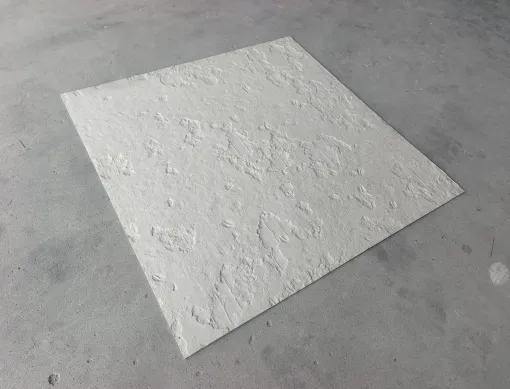
Bali Stone Big Slabs were engineered to solve these problems head-on. As part of the mcm big slab board series, they're designed around one core principle: bigger is better when it comes to minimizing joints. These slabs are massive—think 1200x2400mm or even larger—meaning fewer pieces are needed to cover a given area. Fewer pieces equal fewer joints, and fewer joints equal a cleaner, more cohesive exterior.
But size alone isn't what makes Bali Stone special. It's the material itself. Bali Stone is crafted using a blend of natural stone aggregates and advanced modified composite materials, placing it firmly in the category of flexible stone. Unlike rigid, heavy natural stone slabs that crack under stress or are difficult to transport, Bali Stone is lightweight and bendable, making it easy to handle and install even on curved or uneven surfaces. This flexibility is a game-changer: it reduces waste during installation (no more broken slabs from rough handling) and allows for creative architectural designs that would be impossible with traditional stone.
Visually, Bali Stone strikes a perfect balance between organic warmth and modern minimalism. Its surface mimics the look of natural stone—think soft veining, subtle texture, and earthy tones that range from warm beiges to rich terracottas—without the inconsistency or heaviness of solid stone. When installed as part of the mcm big slab board series, the effect is striking: a facade that looks like it was carved from a single block of stone, yet feels light and approachable.
| Material | Joint Visibility | Durability | Flexibility | Aesthetic Vibe |
|---|---|---|---|---|
| Bali Stone Big Slabs | Very Low (1-2 joints per 10m²) | High (Resistant to weather, impact, and fading) | High (Bendable, ideal for curved surfaces) | Warm, organic, seamless modernity |
| Traditional Travertine Tiles | High (10+ joints per 10m²) | Medium (Porous, requires sealing) | Low (Rigid, prone to cracking) | Classic, textured, but fragmented |
| Fair-Faced Concrete Panels | Medium (Visible panel seams) | High (Durable but prone to staining) | Low (Heavy, inflexible) | Industrial, sleek, but cold |
| mcm Flexible Stone (Small Slabs) | Medium (5-8 joints per 10m²) | High (Similar to Bali Stone) | High (Flexible, lightweight) | Natural, but less seamless than big slabs |
The table above highlights why Bali Stone Big Slabs stand out. Compared to traditional travertine tiles, they reduce joint visibility by up to 90%, transforming a cluttered grid into a smooth, uninterrupted surface. Against fair-faced concrete, they offer the same durability but with the warmth of natural stone and far fewer seams. Even when compared to smaller flexible stone slabs from the mcm lineup, Bali Stone's larger size delivers a level of seamlessness that's hard to match.
While the visual appeal of seamless exteriors is undeniable, the practical benefits of Bali Stone's minimal joints are equally compelling. Let's start with maintenance. With fewer joints, there's simply less space for dirt, mold, or water to accumulate. This means less time and money spent on cleaning, regrouting, or repairing water damage. For busy commercial properties—think hotels, shopping malls, or office complexes—this translates to lower operational costs and a facade that stays looking fresh for years longer than traditional cladding.
Weather resistance is another key advantage. In regions with heavy rain, snow, or extreme temperatures, water infiltration is a constant threat. Bali Stone's large slabs, combined with advanced waterproof adhesives, create a tighter seal than traditional tile installations. There are fewer gaps for water to sneak through, reducing the risk of structural damage and extending the life of the building envelope. This is especially important in coastal areas, where saltwater can accelerate corrosion—Bali Stone's durable surface and minimal joints stand up to these harsh conditions with ease.
Installation efficiency is a hidden gem, too. Because Bali Stone slabs are large but lightweight, crews can cover more area in less time. A typical installation team might spend a day covering 50m² with traditional tiles; with Bali Stone Big Slabs, that same team could cover 100m² or more. Faster installation means shorter project timelines, lower labor costs, and less disruption to surrounding areas—all wins for developers and contractors.
Bali Stone Big Slabs aren't limited to a single type of project—their versatility makes them suitable for everything from commercial high-rises to boutique residential homes. Let's explore a few key applications where their seamless aesthetic and practical benefits truly stand out.
In commercial settings, first impressions matter. A sleek, seamless exterior signals professionalism, innovation, and attention to detail—qualities that resonate with clients, customers, and employees alike. Imagine a luxury hotel with a Bali Stone facade: its warm, natural texture invites guests in, while the lack of joints gives it a polished, high-end feel. Or a tech company headquarters, where the modern lines of the building are complemented by the organic beauty of Bali Stone, creating a space that feels both cutting-edge and grounded.
Homeowners are increasingly seeking exteriors that reflect their personal style while standing up to the elements. Bali Stone Big Slabs offer the best of both worlds. For a modern minimalist home, they provide a clean, unbroken canvas that lets the architecture speak for itself. For a more rustic or Mediterranean-inspired design, their natural stone texture adds warmth without the clutter of traditional masonry. And because they're lightweight, they're suitable for both new builds and renovations—no need to reinforce the structure to support heavy stone slabs.
Museums, art galleries, and community centers often aim to blend functionality with artistic expression. Bali Stone Big Slabs excel here, too. Their seamless surface can act as a backdrop for outdoor installations, while their natural texture adds depth and character to public plazas. In one recent project, a municipal library used Bali Stone to clad its exterior, creating a facade that resembles a stack of massive stone books—fitting for a building dedicated to knowledge and storytelling. The minimal joints ensure the focus stays on the design, not the materials.
Bali Stone Big Slabs don't exist in a vacuum—they're part of the broader mcm big slab board series, a collection of high-performance cladding solutions designed for the modern built environment. What sets this series apart is its commitment to innovation, from material science to manufacturing processes.
At the heart of the mcm big slab board series is a focus on sustainability. Unlike traditional stone extraction, which can be resource-intensive and environmentally damaging, Bali Stone is made using recycled stone aggregates and eco-friendly binders. This reduces waste and minimizes the carbon footprint of each slab. Additionally, the lightweight nature of the material reduces transportation emissions—trucks can carry more slabs per trip, cutting down on fuel use.
Manufacturing precision is another cornerstone of the series. Each Bali Stone slab is crafted in state-of-the-art facilities, where computer-controlled processes ensure consistent thickness, size, and texture. This level of precision makes installation easier: slabs fit together seamlessly, further reducing the visibility of any remaining joints. It also means architects can rely on accurate measurements during the design phase, avoiding costly on-site adjustments.
The series also prioritizes adaptability. While Bali Stone is a standout option, the mcm big slab board series includes a range of other materials, from metallic finishes like foamed aluminium alloy board to textured options like bamboo mat board. This variety ensures there's a big slab solution for every design vision, whether you're aiming for industrial chic, natural warmth, or futuristic sleekness.
As architecture continues to evolve, the demand for seamless, natural-looking exteriors is only growing. Biophilic design—the practice of integrating nature into built environments—is becoming increasingly mainstream, as studies show that connection to nature improves well-being, productivity, and creativity. Bali Stone Big Slabs align perfectly with this trend, offering the organic texture of natural stone without the environmental drawbacks of traditional extraction or the visual disruptions of small tiles.
Sustainability will also play a bigger role in material selection. The mcm big slab board series, with its eco-friendly manufacturing and long lifespan, is well-positioned to lead this charge. As more jurisdictions implement stricter environmental regulations, building materials that reduce waste, energy use, and carbon emissions will become not just preferred, but required. Bali Stone checks all these boxes, making it a smart choice for forward-thinking projects.
Finally, customization will drive innovation. Architects and designers are no longer satisfied with one-size-fits-all solutions—they want materials that can be tailored to their unique visions. The mcm big slab board series, including Bali Stone, offers a range of colors, textures, and finishes to meet this demand. Whether it's a custom hue inspired by local landscapes or a unique texture that mimics a specific natural stone, the ability to personalize big slabs will open up new possibilities for exterior design.
Recommend Products












