

Walk up to a modern building today, and you might notice something different—its walls don't just sit straight and stiff. They curve, they flow, they wrap around corners like a gentle embrace. From the sweeping arcs of cultural centers to the soft bends of boutique hotels, architects are ditching rigid lines for organic, sculptural forms. But here's the catch: traditional cladding materials—marble, concrete, even natural stone—weren't built for this. They crack under pressure, weigh down structures, and turn bold design dreams into logistical nightmares. Enter Bali Stone Flexible Panels, a game-changer in the world of architectural cladding. Part of the broader MCM flexible stone family, these panels are redefining what's possible for curved facades and innovative shapes, blending the beauty of natural stone with the adaptability modern design demands.
For decades, architects have faced a frustrating trade-off: choose between the aesthetic richness of natural materials or the flexibility to create dynamic forms. Natural stone, for example, is timeless and luxurious, but it's heavy and inflexible. A single slab can weigh hundreds of pounds, making it nearly impossible to bend around a curve without risking cracks or structural strain. Concrete, while durable, is equally rigid; a curved concrete facade often requires custom molds, driving up costs and limiting design tweaks mid-project.
Then there's the issue of installation. Traditional cladding materials demand precision—even a slight miscalculation in a curve can throw off an entire design. "We'd spend weeks planning a curved section, only to have the stone slabs arrive and realize they couldn't flex enough to follow the blueprint," says Mia Chen, a senior architect at a global design firm. "It wasn't just about aesthetics; it was about practicality. Rigid materials turned our most exciting concepts into logistical headaches."
This is where MCM flexible stone technology stepped in. Short for Modified Composite Material, MCM combines natural stone aggregates with a lightweight, flexible polymer matrix. The result? A material that looks and feels like natural stone but bends, cuts, and adapts to shapes traditional stone never could. And within this innovative family, Bali Stone Flexible Panels stand out—crafted with a focus on texture, color depth, and extreme flexibility, making them the go-to choice for architects chasing the perfect curve.
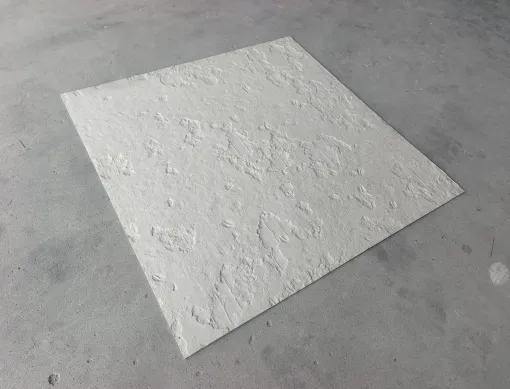
At first glance, you might mistake Bali Stone for natural travertine or sandstone. Its surface carries the same subtle veining, the same earthy tones, the same tactile warmth that makes stone so beloved in architecture. But pick up a panel, and you'll notice the difference immediately: it's surprisingly lightweight, thin (often just 3-5mm thick), and—most importantly—flexible. Bend it gently, and it gives, like a stiff fabric, without fracturing or losing its shape. That flexibility is no accident; it's the result of a proprietary manufacturing process that binds crushed natural stone particles (sourced from sustainable quarries) with a high-performance polymer resin. The ratio is key: enough stone to retain authenticity, enough resin to enable flexibility.
But Bali Stone isn't just about bending. It's about durability, too. Unlike some flexible cladding options that sacrifice strength for adaptability, these panels are built to withstand the elements. They're resistant to UV rays (so colors won't fade in harsh sunlight), moisture (no warping or mold), and impact (a stray golf ball or hailstorm won't leave a mark). "We tested Bali Stone panels in our lab for months," says Raj Patel, a materials engineer who specializes in cladding systems. "We exposed them to extreme temperatures, heavy rain, even simulated earthquakes. They held up better than some traditional stone slabs. The polymer matrix acts like a shock absorber, distributing stress evenly instead of letting it in one spot."
Another standout feature? Versatility in design. Bali Stone comes in a range of finishes—from matte to semi-polished—and colors that echo natural landscapes: soft beiges reminiscent of Balinese beaches, warm terracottas that mirror desert sands, and deep grays that evoke mountain stone. Architects can mix and match, or even request custom hues, to align with a project's unique theme. And because the panels are lightweight (typically 4-6 kg per square meter, compared to 20-30 kg for natural stone), they reduce the load on a building's structure, opening up possibilities for taller, more ambitious curved designs without compromising safety.
Curved facades aren't just about aesthetics—they serve a purpose. A gently curved wall can redirect wind, reducing a building's energy use by cutting down on drafts. It can maximize natural light, wrapping around a structure to let sunlight penetrate deeper into interiors. And psychologically, curves feel welcoming; they soften a building's presence, making it feel more approachable, more human. But to achieve these benefits, the cladding material must move with the curve—and that's where Bali Stone excels.
Take, for example, the Riverbank Arts Center, a hypothetical (but representative) project in a mid-sized city. The center's design called for a facade that mirrored the flow of the river beside it—no sharp angles, just smooth, continuous curves. Initially, the team considered natural travertine, but the weight and rigidity made the math impossible: the structure would need additional steel supports, driving up costs by 30%. Then they switched to Bali Stone Flexible Panels. "Overnight, the project became feasible," Chen recalls. "The panels were light enough that we could reduce the structural steel, and their flexibility meant we could follow the curve exactly—no gaps, no awkward seams. When the building opened, visitors kept touching the walls, asking if it was real stone. That's the magic of Bali Stone: it doesn't just look authentic; it feels authentic."
Residential projects, too, are embracing Bali Stone's curved potential. Imagine a hillside home with a curved balcony that juts out over the landscape, clad in Bali Stone's warm beige panels. The curve maximizes views, while the stone-like texture blends the home with its natural surroundings. "Homeowners want their spaces to feel unique, not like every other house on the block," says Mark Torres, a residential architect. "Bali Stone lets us add that 'wow' factor with curved walls or rounded corners, without the hassle of traditional stone. Clients love that it's low-maintenance, too—no sealing, no staining, just an occasional wash with water."
| Feature | Bali Stone Flexible Panels | Natural Stone | Traditional Concrete Cladding | MCM Big Slab Board Series |
|---|---|---|---|---|
| Flexibility | High (bends up to 120° without cracking) | Low (brittle, minimal flex) | Very Low (rigid, prone to cracking under stress) | Moderate (flexible but designed for larger, flatter surfaces) |
| Weight (kg/m²) | 4-6 | 20-30 | 15-25 | 8-10 |
| Installation Ease | High (lightweight, easy to cut on-site) | Low (requires heavy machinery, precise fitting) | Moderate (heavy, requires formwork for curves) | Moderate (larger size needs careful handling) |
| Durability | High (UV, moisture, and impact resistant) | High (but prone to chipping/cracking) | High (but susceptible to spalling over time) | High (similar to Bali Stone, but less flex-focused) |
| Sustainability | High (uses recycled stone aggregates, low carbon footprint) | Moderate (quarrying impacts ecosystems) | Low (high cement usage, high carbon emissions) | High (part of MCM's eco-friendly line) |
While curved facades are Bali Stone's most headline-grabbing application, its flexibility opens doors to even more creative designs. Think undulating walls that mimic sand dunes, spiral staircases clad in continuous stone-like panels, or "folded" facades that create dynamic shadows throughout the day. Because the panels are lightweight and easy to cut, architects can experiment with intricate patterns—geometric shapes, organic motifs, even custom logos embedded into the cladding.
One particularly innovative use is in "double-curved" surfaces—walls that bend both horizontally and vertically, like the hull of a ship. Traditional materials struggle with this; even flexible metals or composites often lack the natural texture clients crave. Bali Stone, however, adapts seamlessly. "We recently used Bali Stone on a boutique winery with a double-curved entrance wall," Torres shares. "The design was inspired by the swirl of wine in a glass. The panels bent in two directions without a single wrinkle. It became the focal point of the building—visitors stop to take photos there every day."
"Bali Stone doesn't just solve problems—it sparks ideas. When you know your cladding can bend, you stop thinking 'what's possible?' and start thinking 'what if?'" — Mia Chen, Senior Architect
For construction crews, Bali Stone Flexible Panels are a breath of fresh air. Unlike natural stone, which requires cranes, heavy lifting equipment, and teams of workers to maneuver, Bali Stone panels can be carried by hand. They cut easily with standard tools (a circular saw or utility knife), so on-site adjustments are a breeze—no need to send back slabs that don't fit a curve perfectly.
The installation process itself is straightforward. Panels are attached to a substrate (like plywood or metal framing) using a high-strength adhesive, designed to bond securely even on curved surfaces. Because they're lightweight, there's less risk of the adhesive failing under stress, and the reduced load means fewer fasteners are needed. "Installing Bali Stone is like working with large, durable wallpaper," says Carlos Mendez, a construction foreman with 15 years of experience. "We can cover a curved section in a day that would take a week with natural stone. And because the panels are flexible, we can get a tight, seamless fit—no gaps, no uneven edges."
Maintenance, too, is minimal. Unlike natural stone, which often requires periodic sealing to prevent staining, Bali Stone's polymer matrix repels water and dirt. A quick rinse with a hose or gentle wipe with a damp cloth is usually enough to keep it looking fresh. "We installed Bali Stone on a restaurant patio three years ago," Mendez adds. "It's faced rain, snow, and spilled wine, and it still looks brand new. Clients are always surprised by how little upkeep it needs."
In an era where sustainability is non-negotiable, Bali Stone checks all the boxes. The manufacturing process prioritizes eco-friendliness: it uses recycled stone aggregates (leftover from natural stone quarries that would otherwise go to waste), and the polymer resin is low in volatile organic compounds (VOCs). Because the panels are lightweight, transporting them requires less fuel than hauling heavy natural stone, cutting down on carbon emissions during shipping.
Durability also plays a role in sustainability. A longer-lasting cladding material means fewer replacements over a building's lifetime, reducing waste. And when a Bali Stone panel does reach the end of its life (decades down the line), it's recyclable— the stone aggregates can be repurposed, and the polymer resin can be melted down and reused. "Sustainability isn't just about the material itself; it's about the whole lifecycle," Patel explains. "Bali Stone scores high on every front: resource use, transportation, longevity, and end-of-life disposal."
As architects continue to push the boundaries of design, materials like Bali Stone Flexible Panels will only grow in importance. We're already seeing trends toward "biomimetic architecture"—buildings inspired by nature's forms, from leaf-shaped roofs to shell-like facades—and these designs demand cladding that can keep up. Bali Stone, with its blend of natural beauty and flexibility, is poised to be at the forefront of this movement.
There's also potential for innovation within the MCM flexible stone family. Researchers are experimenting with adding insulating properties to panels, making them not just cladding but part of a building's energy efficiency system. Others are exploring color-changing pigments that react to light or temperature, turning facades into dynamic, ever-evolving artworks. "The future of cladding isn't just flexible—it's smart," Chen predicts. "And Bali Stone is the perfect foundation for that future."
At the end of the day, architecture is about more than function—it's about emotion. It's about how a building makes you feel when you walk through its doors, how its curves make you pause and appreciate the beauty of design. Bali Stone Flexible Panels don't just enable better buildings; they enable more meaningful ones. They let architects turn abstract ideas into tangible, touchable spaces—spaces that flow, that adapt, that feel alive. In a world where rigid materials once limited our creativity, Bali Stone is proving that the most beautiful structures are the ones that bend, flex, and embrace the art of possibility.
Recommend Products












