

Architecture has always been a dialogue between form and function—but what happens when form demands flexibility? For decades, architects and designers have dreamed of buildings that flow like rivers, curve like hills, and wrap around spaces like a gentle embrace. Yet traditional building materials—heavy, rigid, and unforgiving—often turned those dreams into. Enter Bali Stone Flexible Stone, a game-changer in the world of construction that's redefining what's possible when materials bend, not break. In this article, we'll explore how this innovative product from the MCM flexible stone series is transforming curved architecture, why it's become a favorite among forward-thinking creators, and how pairing it with elements like wave panels and wood grain board is unlocking new realms of design expression.
Walk through any city, and you'll notice a pattern: straight lines dominate. Skyscrapers rise in sharp angles, walls meet at 90-degree corners, and facades lie flat as paper. This isn't for lack of imagination—it's often because traditional materials like fair-faced concrete, marble, or even thick stone slabs simply can't handle curves. Imagine trying to wrap a slab of granite around a rounded wall: it would crack, chip, or require expensive, labor-intensive cutting that drains budgets and delays timelines. Rigid materials don't just limit design—they limit how we experience space. Curved surfaces, studies show, evoke calmness, encourage movement, and create a sense of flow that straight lines can't match. For architects aiming to build spaces that feel human, not industrial, flexibility isn't a luxury—it's a necessity.
That's where Bali Stone Flexible Stone comes in. Part of the broader MCM flexible stone family—a collection celebrated for blending durability with adaptability—this material was engineered with one goal in mind: to let curves be curves. Unlike rigid alternatives such as century stone or boulder slab, which stand firm but unyielding, Bali Stone bends without breaking, conforms without cracking, and transforms even the most ambitious curved designs from blueprints into reality.
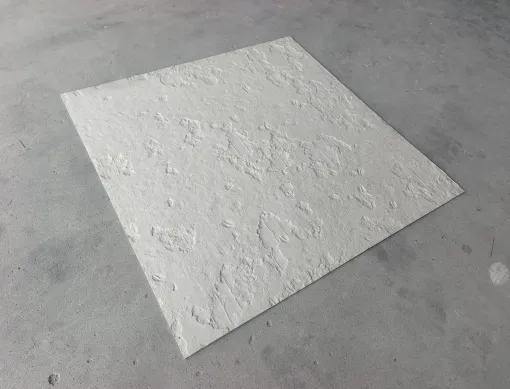
At first glance, Bali Stone might look like traditional stone—rich in texture, warm in tone, and authentic in appearance. But touch it, and you'll feel the difference. Thin, lightweight, and surprisingly pliable, it's a material that marries the best of nature and technology. Let's break down what sets it apart:
Bali Stone owes its bendable nature to its unique composition. Made from a modified composite material (MCM), it combines natural stone particles with a high-strength, flexible resin matrix. This hybrid structure allows it to curve to radii as tight as 30cm—far tighter than rigid materials like fair-faced concrete, which often require complex scaffolding and custom molds to achieve even gentle arcs. Whether you're designing a sweeping rooftop, a curved interior wall, or a spiral staircase wrap, Bali Stone hugs the shape without compromising structural integrity.
Traditional stone slabs can weigh upwards of 50kg per square meter, making them cumbersome to transport and install—especially on curved surfaces, where precision is key. Bali Stone, by contrast, weighs just 8-12kg per square meter and comes in thin, manageable sheets (typically 3-6mm thick). This lightness reduces structural load on buildings, cuts down on installation time, and eliminates the need for heavy machinery. Imagine a team of workers effortlessly lifting and adhering panels to a curved facade—no cranes, no stress, just smooth progress. It's a logistical dream for contractors and a budget-saver for project managers.
You might wonder: if it bends, does it break easily? The answer is a resounding no. Bali Stone is engineered to withstand the elements: UV resistant to prevent fading, water-resistant to avoid mold or warping, and impact-resistant enough to handle daily wear and tear. Unlike wood grain board, which can scratch or warp in humid climates, or even some types of travertine (beige) that stain easily, Bali Stone holds up in both interior and exterior applications. It's a material that looks delicate but acts tough—a rare combination in the construction world.
Flexibility isn't just physical—it's aesthetic, too. Bali Stone comes in a range of finishes that mimic natural materials, from the earthy warmth of travertine (beige) to the rustic charm of wood grain board. Want to evoke the look of weathered stone? Opt for the "historical pathfinders stone" texture. Prefer something modern? The "linear travertine (claybank)" finish offers clean lines with subtle depth. This versatility means it can adapt to any design language, whether you're building a minimalist home, a bohemian café, or a grand cultural center.
To truly understand Bali Stone's impact, let's step into the shoes of an architect named Lila, who recently designed a community library in a bustling urban neighborhood. Her vision? A building that felt welcoming, not imposing—one that curved around a central courtyard, inviting visitors to "hug" the space as they entered. But there was a problem: the budget was tight, and the timeline was tighter. Traditional materials like boulder slab (vintage black) would have required custom cutting and heavy installation, blowing both budget and schedule. Then she discovered Bali Stone.
"It was like finding a missing puzzle piece," Lila recalls. "We chose the 'travertine (starry blue)' finish for the exterior—it shimmers faintly in sunlight, like the night sky—and paired it with wave panels along the entranceway. The wave panels, with their undulating texture, complement Bali Stone's flexibility perfectly. Together, they create this sense of movement, as if the building itself is breathing."
Installers spent just three days applying Bali Stone to the library's curved facade—a task that would have taken weeks with rigid stone. The result? A building that kids run up to, tracing the curves with their fingers, and adults pause to admire, noting how it "feels like part of the park, not just next to it."
This isn't an isolated case. From residential homes with curved interior accent walls (often paired with wood grain board for warmth) to commercial spaces like boutique hotels using Bali Stone in "travertine (vintage gold)" to wrap around curved reception desks, the material is proving that flexibility doesn't mean sacrificing style or durability.
Curious how Bali Stone stacks up against old-school options? Let's take a closer look with a side-by-side comparison:
| Feature | Bali Stone Flexible Stone | Fair-Faced Concrete | Traditional Travertine Slabs | Boulder Slab (Vintage Silver) |
|---|---|---|---|---|
| Weight (per sq.m) | 8-12kg | 220kg | 45-60kg | 70-80kg |
| Minimum Curvature Radius | 30cm | 5m+ (with custom formwork) | 1.5m (high risk of cracking) | 2m (requires specialized cutting) |
| Installation Time (per sq.m) | 15-20 minutes | 2-3 hours (including curing) | 45-60 minutes | 60-90 minutes |
| Design Flexibility | High (custom cuts, textures, colors) | Low (limited to formwork shapes) | Medium (natural veining limits uniformity) | Low (thick, heavy, hard to modify) |
| Durability | High (UV-resistant, water-resistant, impact-resistant) | High (but prone to cracking on curves) | Medium (porous, requires sealing) | High (but heavy, increasing structural load) |
The data speaks for itself: Bali Stone outperforms traditional materials in flexibility, installation speed, and design versatility—all while holding its own in durability. For projects where curves are non-negotiable, it's not just a better choice; it's often the only choice.
One of the joys of working with Bali Stone is its ability to play well with others. Designers are increasingly pairing it with complementary materials to create layered, sensory-rich spaces. Here are two standout combinations:
Wave panels—with their rippled, ocean-like texture—are a natural partner for Bali Stone. When applied to curved surfaces, the two materials create a visual rhythm that draws the eye and encourages movement. For example, a restaurant in Bali (fittingly) used Bali Stone in "bali stone" finish on curved walls, then added wave panels in "stream limestone (claybank)" above the bar. The effect? A space that feels both grounded (thanks to Bali Stone's earthy texture) and alive (thanks to the wave panels' flowing lines). Diners often remark that they "feel like they're dining by the beach, even in the city."
Wood grain board adds a touch of organic warmth, making it ideal for interiors. When combined with Bali Stone's sleek flexibility, it creates a balance of modern edge and natural comfort. A home office in Tokyo, for instance, features a curved desk built with wood grain board, backed by a Bali Stone accent wall in "travertine (light grey)." The contrast of warm wood and cool stone, softened by the curve, turns a functional workspace into a calming retreat.
In an era where sustainability is as important as aesthetics, Bali Stone shines here too. As part of the MCM flexible stone series, it's manufactured using recycled stone particles and low-VOC resins, reducing its environmental footprint. Its lightweight nature also cuts down on transportation emissions—trucks can carry far more Bali Stone sheets than traditional stone slabs, meaning fewer trips to the job site.
Moreover, Bali Stone's durability translates to longevity. Unlike materials that fade, crack, or require frequent replacement (looking at you, painted concrete), it maintains its appearance for decades, reducing the need for repairs and replacements. For architects aiming to build "future-proof" structures, this longevity is a game-changer.
As we look ahead, one thing is clear: the demand for flexible building materials will only grow. Architects are increasingly rejecting the "boxy" aesthetic of the past in favor of designs that reflect the organic, flowing nature of human experience. Think of buildings that mimic the curve of a hand, or wrap around public plazas like a protective arm—these aren't just artistic statements; they're attempts to create spaces that feel more human, more connected, and more alive.
Bali Stone is at the forefront of this movement. With innovations like the MCM 3D printing series, which allows for custom-shaped Bali Stone panels, the possibilities are expanding even further. Imagine a museum where every curved wall is unique, or a residential complex where each home's facade is tailored to its owner's personality—all made possible by a material that bends to vision, not the other way around.
Bali Stone Flexible Stone isn't just a building material. It's a tool for storytelling, a bridge between imagination and reality, and a reminder that architecture doesn't have to be rigid to be strong. It lets us build spaces that curve, flow, and embrace—spaces that don't just exist in the world, but interact with it.
For architects, designers, and dreamers, it's an invitation: stop limiting your ideas to what rigid materials can handle. Start with the shape, the feeling, the experience you want to create—and let Bali Stone handle the rest. After all, the most innovative buildings aren't just built—they're shaped .
And in a world that needs more beauty, more connection, and more flexibility, that's a power worth celebrating.
Recommend Products












