

Bringing the calm of nature into the heart of your workplace
Walk into any modern office today, and you'll likely notice a quiet revolution unfolding. Gone are the days of sterile, all-white cubicles and generic carpet tiles that felt more like a hospital waiting room than a space for creativity. Instead, there's a growing hunger for environments that breathe —spaces that remind us of the world outside, even when we're stuck in back-to-back meetings or late-night deadlines.
It makes sense, doesn't it? We spend roughly a third of our lives at work, and science has long told us that our surroundings shape our mood, focus, and even productivity. Studies from the World Green Building Council, for example, show that offices with natural elements (think plants, natural light, and organic materials) can reduce employee stress by up to 15% and boost cognitive function by nearly 20%. But here's the catch: "natural" doesn't have to mean chaotic or hard to maintain. It's about balance—blending the best of nature with the practicality of modern design.
Enter Bali Stone. A material that doesn't just mimic the look of nature, but captures its essence —the warmth of sun-baked stone, the subtle texture of weathered cliffs, the calm of a Balinese beach at dawn. It's part of a new wave of building materials designed to bridge the gap between corporate professionalism and the human need for connection to the outdoors. And when paired with complementary surfaces like MCM Flexible Stone or Wood Grain Board, it transforms offices from functional spaces into places where people actually want to be.
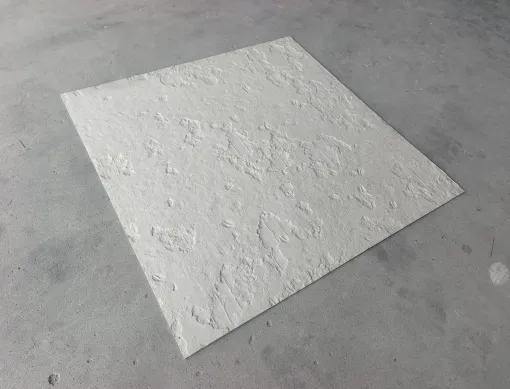
Let's start with the basics: What is Bali Stone? Imagine running your hand over a surface that feels like it was carved by wind and water over centuries, yet fits seamlessly into a sleek, contemporary office. That's Bali Stone in a nutshell. Inspired by the rugged beauty of Balinese landscapes—think volcanic rock softened by tropical rains, or coastal stone polished by the sea—it's a material that balances raw texture with refined elegance.
Unlike traditional natural stone, which can be heavy, brittle, and expensive to install, Bali Stone is part of the MCM (Modified Composite Material) family—a category that includes innovations like MCM Flexible Stone. What does that mean for your office? For starters, it's lightweight, making it easy to install on walls, ceilings, or even furniture without requiring structural reinforcements. It's also flexible, so it can curve around corners or wrap columns, adding architectural interest where rigid materials would fail. And because it's a composite, it's engineered to resist the wear and tear of busy offices—scratches from rolling chairs, stains from spilled coffee, even the humidity of tropical climates.
Visually, Bali Stone is a chameleon. It comes in a range of earthy tones—warm beiges with hints of terracotta, soft greys that mimic weathered stone, and even deeper hues that evoke the richness of Balinese soil. The texture is where it really shines: a matte finish with subtle, organic variations (no two panels are exactly alike) that catch the light in ways that feel alive. It's not just a surface; it's a conversation starter. Clients walking into your reception area might pause and say, "Is this real stone?"—and when you tell them it's Bali Stone, you're not just talking about a material, but a story of bringing nature indoors.
Let's be honest: In the world of office design, aesthetics are important, but they'll only get you so far. You need materials that can keep up with the chaos of daily work life. Bali Stone doesn't just look good—it works hard, too. Let's break down the practical benefits:
Offices are busy places. From delivery trucks bumping into lobby walls to interns dragging chairs across floors, your surfaces take a beating. Bali Stone, thanks to its MCM Flexible Stone core, is built to last. It's scratch-resistant (no more panic when someone drags a metal filing cabinet across a Bali Stone floor), stain-resistant (coffee spills wipe clean with a damp cloth), and even fire-retardant—an important safety feature for commercial spaces.
Traditional stone surfaces often require regular sealing, polishing, or professional cleaning to keep them looking fresh. Bali Stone? It's practically set-it-and-forget-it. A quick wipe with mild soap and water is all it takes to maintain its appearance, even after years of use. That means less time spent on upkeep and more time focusing on what matters—your business.
Today's businesses don't just want to look good—they want to do good, too. Bali Stone checks that box. As part of the MCM Flexible Stone family, it's often made with recycled materials, reducing its environmental footprint. It also requires less energy to produce than natural stone, which often involves heavy mining and transportation. And because it's lightweight, shipping and installation generate fewer carbon emissions. For companies aiming for LEED certification or simply wanting to reduce their impact, Bali Stone is a choice that aligns with both style and sustainability.
One of the best things about Bali Stone is how well it plays with others. It's not a material that demands the spotlight; instead, it elevates the materials around it, creating layered, cohesive spaces that feel intentional. Let's explore a few pairings that work particularly well in office settings:
If Bali Stone is the "earth" in your office, Wood Grain Board is the "wood"—a pairing that evokes the comfort of a cabin in the woods, but with a modern twist. Imagine a breakout area where the walls are clad in Bali Stone (in a soft beige) and the ceiling features Wood Grain Board (in a rich walnut finish). The contrast of rough stone and smooth wood creates a space that feels both grounded and inviting. Employees might linger here longer, brainstorming or taking calls, because it doesn't feel like "workspace"—it feels like a retreat.
For areas where you want to make a statement—like a CEO's office, a client meeting room, or a brainstorming space—pair Bali Stone with Travertine (Starry Blue). Travertine is known for its porous, honeycomb texture, and the "Starry Blue" variant adds a pop of deep, celestial color that feels both bold and calming. Use Bali Stone as the main wall surface, then add a Travertine (Starry Blue) accent wall behind a conference table. The blue tones spark creativity, while the Bali Stone grounds the space, preventing it from feeling too overwhelming.
For offices with a more industrial or minimalist vibe, Fair-Faced Concrete is the perfect partner for Bali Stone. Fair-Faced Concrete—raw, unpolished, and full of character—brings a sleek, modern edge, while Bali Stone adds warmth and texture. Picture a reception area with Fair-Faced Concrete floors and a Bali Stone feature wall behind the front desk. The combination feels contemporary but not cold, professional but approachable. It's a look that says, "We're innovative, but we never lose touch with what matters."
| Material Pairing | Best For | Vibe |
|---|---|---|
| Bali Stone + Wood Grain Board | Breakout areas, lounges, casual meeting spaces | Warm, cozy, cabin-like |
| Bali Stone + Travertine (Starry Blue) | Executive offices, client meeting rooms, accent walls | Dramatic, creative, sophisticated |
| Bali Stone + Fair-Faced Concrete | Reception areas, open workspaces, modern lobbies | Sleek, industrial, balanced |
Let's put this all into context with a real-world example. Meet "Innovatech," a mid-sized tech company based in Singapore that recently moved into a 10,000-square-foot office space. Their goal? To create a workspace that reflected their brand values: innovation, collaboration, and employee well-being. They wanted to move away from the cold, all-glass offices of their competitors and instead build a space that felt "human."
The design team proposed a scheme centered around Bali Stone, with complementary materials to differentiate zones. Here's how it came together:
The reception area sets the tone for visitors, so Innovatech wanted it to feel welcoming yet professional. The team chose Bali Stone (in a warm beige) for the main wall behind the reception desk, paired with Fair-Faced Concrete floors. A small accent wall of Travertine (Starry Blue) added a pop of color, while a Wood Grain Board bench provided a place for guests to sit. The result? A space that feels grounded but not heavy, modern but not sterile. "Clients often comment on how 'un-techy' our office feels in the best way," says Sarah, Innovatech's office manager. "They say it feels more like a boutique hotel than a startup—and that's exactly what we wanted."
Innovatech's brainstorming room is where the magic happens, so the design needed to fuel creativity. Here, the team went bold: Bali Stone on three walls (in a deeper, earthy grey) and a full Travertine (Starry Blue) wall as the backdrop for a whiteboard. The blue, they hoped, would inspire out-of-the-box thinking, while the Bali Stone would keep the space from feeling too chaotic. "We've noticed a big difference in meetings here," says Mark, a senior developer. "People are more likely to speak up, and ideas flow faster. I think the walls have something to do with it—it doesn't feel like a 'meeting room'; it feels like a space where you're supposed to think big."
The employee lounge was designed to be a "third space"—not work, not home, but somewhere in between. Here, Bali Stone took a backseat, used sparingly on the fireplace wall, while Wood Grain Board dominated the ceiling and one accent wall. Plush couches, plants, and warm lighting completed the look. "Before, the lounge was just a place to eat lunch," Sarah notes. "Now, people hang out here after work, play board games, or even take calls. It's become the heart of the office."
As we look ahead, it's clear that the offices of tomorrow will be defined by their ability to balance function with humanity. Gone are the days when "professional" meant "sterile." Today's employees—and clients—expect spaces that reflect their values: sustainability, well-being, and a connection to something bigger than themselves.
Bali Stone, as part of the MCM Flexible Stone family, is at the forefront of this shift. Its combination of natural aesthetics, practical durability, and eco-friendly credentials makes it more than just a trend—it's a glimpse into the future of building materials. And as technology advances, we can expect even more innovations: think Bali Stone panels with integrated smart features (like embedded lighting or touch-sensitive surfaces) or custom colorways that mimic rare natural stones without the environmental impact.
But perhaps the most exciting thing about Bali Stone is what it represents: a return to designing for people, not just productivity. In a world that's becoming increasingly digital, there's a growing hunger for tangible, sensory experiences—the feel of rough stone under your hand, the way light plays on textured surfaces, the comfort of a space that feels "lived-in." Bali Stone doesn't just satisfy that hunger; it celebrates it.
Recommend Products












