

There's something inherently inviting about a facade clad in Bali stone. Its warm, sun-kissed tones and organic texture—think soft ridges that mimic wind-worn beaches and subtle variations that tell the story of its natural formation—have made it a favorite among architects and homeowners alike. Whether you're revamping a commercial building or adding curb appeal to a residential property, Bali stone brings a touch of timeless elegance that few materials can match. But here's the thing: that beauty doesn't just happen by accident. A seamless, long-lasting Bali stone facade relies on careful planning, precise technique, and a few insider tricks. In this guide, we'll walk through everything you need to know to get it right—from prepping the surface to putting the final seal on your project. And along the way, we'll touch on how Bali stone plays well with other materials like travertine (beige) or fair-faced concrete , plus why options like mcm flexible stone might just become your new go-to for tricky spots. Let's dive in.
Before we grab the trowel, let's talk about what makes Bali stone special. Quarried from regions known for their rich geological diversity, this stone is prized for its unique blend of durability and softness. Unlike some harsh granites or brittle marbles, Bali stone has a gentle porosity that allows it to breathe (great for preventing moisture buildup) while still standing up to rain, wind, and UV rays. Its color palette leans toward warm neutrals—sandy beiges, soft terracottas, and creamy whites—with occasional veining in deeper browns or grays, which means it pairs beautifully with almost any architectural style. Modern minimalist? It adds texture without overwhelming. Traditional? It complements classic details like wooden accents or wood grain board trim. Even industrial designs benefit from its contrast against fair-faced concrete or metal elements.
But here's the catch: Bali stone is a natural material, which means no two pieces are exactly alike. That's part of its charm, but it also means you can't just wing the installation. Variations in thickness, texture, and color require careful layout planning to ensure the final look feels cohesive, not chaotic. And because it's slightly softer than, say, granite, you'll need to handle it with care to avoid chipping or cracking during installation. Trust me—rushing through this step is how you end up with a facade that looks patchy or, worse, starts to deteriorate after the first storm.
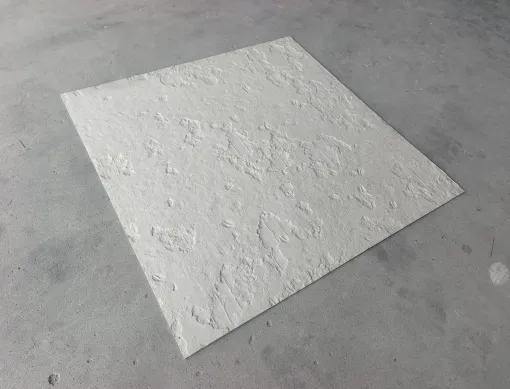
You've heard it a hundred times: "Measure twice, cut once." But when it comes to Bali stone, prep work goes way beyond measurements. The surface you're applying it to—whether it's fair-faced concrete , brick, or even a properly primed wood frame—needs to be stable, clean, and ready to bond. Let's break this down step by step.
First, walk the wall. Literally. Run your hand over the surface to check for cracks, bumps, or. Even small imperfections can throw off the alignment of your stones, leading to uneven gaps or loose pieces down the line. If you're working with fair-faced concrete , look for spalling (flaking) or areas where the surface has become powdery—these need to be repaired with a high-quality concrete patcher before moving forward. For brick walls, check for loose mortar joints; repoint any that are crumbling. And if the wall is painted? Scrape off any peeling paint and sand the surface to create a rough texture—paint acts as a barrier, and you need the adhesive to grip directly to the substrate.
Moisture is another silent enemy. Use a moisture meter to test the substrate—anything above 5% moisture content is a red flag. Excess moisture can prevent the adhesive from curing properly, leading to delamination (stones peeling away from the wall). If you find high moisture, address the source first: check for leaky gutters, poor drainage, or condensation issues. In some cases, you might need to install a vapor barrier or let the wall dry out for a few weeks before proceeding.
Now, let's talk about the stars of the show: your Bali stone panels (or tiles, depending on your project). Unpack them in a well-lit area and lay them out on a flat surface—this is called "dry fitting," and it's non-negotiable. Arrange the pieces to mix and match colors and textures, ensuring no single section has too many light or dark stones clustered together. Natural variation is good, but consistency in tone helps the facade feel balanced. While you're at it, inspect each piece for defects: hairline cracks, deep pits, or edges that are too uneven. Set aside any damaged stones—you can sometimes use them for cuts in less visible areas, but never install a piece that's already compromised.
Depending on your design, you might also be using complementary materials. Travertine (beige) is a popular choice here—it has a similar porous texture to Bali stone but with a lighter, more uniform base color, which can create a nice contrast when used as an accent band or border. Mcm flexible stone is another option to keep in mind, especially for curved surfaces or areas where weight is a concern. Unlike solid Bali stone, which can be heavy, mcm flexible stone is lightweight and bendable, making it ideal for arches, columns, or tight corners where rigid stone would crack. It also comes in finishes that mimic Bali stone, so the transition can be nearly seamless.
You don't need a construction crew's worth of tools, but having the right gear will make the job infinitely easier. Here's a breakdown of the essentials:
| Tool/Material | Purpose | Pro Tips |
|---|---|---|
| Notched Trowel | Applying adhesive evenly to the substrate | Use a 1/4-inch v-notch trowel for Bali stone tiles (up to 6x12 inches) or a 1/2-inch square-notch trowel for larger panels. The notches ensure consistent adhesive thickness. |
| Spirit Level (2-foot and 4-foot) | Checking for plumb (vertical) and level (horizontal) alignment | Don't skimp on quality—cheap levels can give false readings. Check every 3-4 stones to keep the rows straight. |
| Wet Tile Saw with Diamond Blade | Cutting stones to size (especially for corners or outlets) | Use a blade labeled for natural stone to avoid chipping. Keep the blade wet to reduce dust and heat buildup. |
| Rubber Mallet | Gently tapping stones into place without cracking them | Always tap on a scrap piece of wood placed over the stone—direct hits can damage the surface. |
| Adhesive (Polymer-Modified Thinset) | Bonding stone to the substrate | Choose a thinset rated for exterior use and natural stone. For fair-faced concrete substrates, look for one with a high compressive strength (at least 3,000 psi). |
| Grout (Sanded or Unsanded) | Filling gaps between stones | Use sanded grout for gaps wider than 1/8 inch (it resists shrinkage better). Match the color to the lighter tones in your Bali stone to keep the focus on the stone itself. |
| Stone Sealer (Impregnating) | Protecting against stains and moisture | Opt for a breathable, impregnating sealer (not a topical one) to let the stone "breathe." Apply 2-3 coats after grout has cured completely. |
Now that you're prepped and tooled up, let's get to the fun part: putting the stone on the wall. This process is all about patience and precision, so take your time—rushing leads to mistakes that are hard to fix later.
Start by finding the center of your wall. Measure the width and height, then snap a vertical chalk line down the middle—this will be your reference point to ensure the stones are centered and symmetrical. Next, decide on the pattern: stack bond (stones aligned vertically), running bond (offset like brick), or a random pattern (varying stone sizes). For Bali stone, a running bond or random pattern often looks most natural, as it mimics how stone would lay in nature. Mark horizontal lines every 16-24 inches (depending on your stone size) using a level to guide you—these lines will keep your rows straight.
Before mixing any adhesive, do a dry run. Lay out the stones along the chalk lines, leaving 1/8-1/4 inch gaps for grout. This is your chance to adjust for color variation, swap out stones that don't fit, and plan where cuts will be needed (e.g., around windows, doors, or electrical outlets). Take photos of the dry layout—you'll thank yourself later when you need to remember where each stone goes.
Polymer-modified thinset is your best bet for Bali stone—it's strong, flexible, and resistant to temperature changes. Follow the manufacturer's instructions for mixing, but as a general rule, aim for a consistency like peanut butter. If it's too runny, it will sag; too thick, and it won't spread evenly. Mix only as much as you can use in 20-30 minutes (less in hot weather, as it dries faster). Pro tip: Add a splash of water and stir again if it starts to thicken before you're done with a batch—don't add more powder, as that can weaken the bond.
Here's where the notched trowel comes in. Spread a thin, even layer of adhesive over the substrate, starting at the bottom center of the wall (working your way up prevents adhesive from dripping onto already installed stones). Hold the trowel at a 45-degree angle and drag it across the surface to create ridges—this ensures the adhesive makes full contact with the stone. Now, "back butter" each stone: spread a thin layer of adhesive on the back of the stone, then press it firmly into place along the chalk lines. Twist the stone slightly as you press to help the adhesive spread and eliminate air bubbles. Use the rubber mallet to tap it gently until it's level with the surrounding stones.
Work in small sections—about 3-4 square feet at a time—to prevent the adhesive from drying out before you set the stones. Check with your level after every 2-3 stones to make sure the row is straight. If a stone is too high, tap it down; if it's too low, carefully lift it, add more adhesive, and reset it. Don't let the adhesive dry before adjusting—it's nearly impossible to fix once it sets.
At some point, you'll need to cut stones to fit around obstacles or at the edges of the wall. For straight cuts, use the wet tile saw: mark the cut line with a pencil, then slowly feed the stone into the blade, keeping your hands clear of the blade path. For curved cuts or notches (e.g., around a pipe), use a angle grinder with a diamond blade—just go slowly to avoid chipping the stone's face. Always wear safety glasses and a dust mask when cutting stone; the dust can be harmful if inhaled.
For really tight spaces or curved surfaces, mcm flexible stone is a lifesaver. Because it's thin and bendable, you can cut it with heavy-duty scissors or a utility knife, and it conforms to the substrate without cracking. I once used it to clad a curved entryway arch with Bali stone—by using mcm flexible stone for the arch itself and solid Bali stone for the flat walls, the transition was so smooth most people couldn't tell the difference.
Wait at least 24 hours (longer in humid weather) after installing the stones before grouting—this gives the adhesive time to cure. Mix the grout according to the package directions (again, peanut butter consistency), then use a rubber grout float to press it into the gaps at a 45-degree angle. Hold the float diagonally to the stone edges to avoid pulling grout out of the joints. Let the grout set for 10-15 minutes, then wipe the excess off the stone faces with a damp sponge, rinsing the sponge frequently in clean water. Be gentle—scrubbing too hard can remove grout from the joints or scratch the Bali stone's surface.
After the grout has dried for 24-48 hours, buff the stones with a dry cloth to remove any haze. If haze persists, mix a solution of equal parts water and white vinegar, apply it with a sponge, and wipe clean—vinegar is mild enough not to damage the stone but strong enough to dissolve grout residue.
Last but never least: sealing. Bali stone is porous, which means it can absorb stains from rain, dirt, or even bird droppings. An impregnating sealer (also called a penetrating sealer) soaks into the stone, creating a barrier against moisture and stains without changing the stone's appearance (unlike topical sealers, which can leave a glossy film). Apply the sealer with a paintbrush or roller, working in small sections, and let it soak in for 5-10 minutes. Wipe off any excess with a clean cloth—don't let it puddle, as that can leave streaks. Apply a second coat after the first has dried (usually 2-4 hours), then let the sealer cure for 24-48 hours before exposing the facade to water.
Reapply sealer every 2-3 years (more often in harsh climates) to keep the protection strong. To test if it's time, sprinkle a few drops of water on the stone—if they bead up, the sealer is still working; if they soak in, it's time to reseal.
Even with careful planning, it's easy to fall into a few common traps. Here's how to steer clear of them:
If your substrate is fair-faced concrete , brick, or cement board, apply a bonding primer before the adhesive. Primer helps the adhesive stick better, especially on porous surfaces that might suck moisture out of the thinset too quickly. Look for a primer labeled for natural stone installations—they're formulated to create a strong bond without interfering with the adhesive's curing process.
Avoid installing Bali stone in extreme temperatures: below 40°F (4°C) or above 90°F (32°C). Cold weather slows adhesive curing, while heat causes it to dry too fast, leading to weak bonds. Rain is another enemy—adhesive and grout need to dry, so check the forecast and plan for a 2-3 day window of dry, mild weather.
Bali stone is durable, but it's not indestructible. Always carry stones by their edges, never by the corners, to avoid chipping. When stacking them during storage, place a piece of cardboard or foam between each layer to prevent scratches. And if a stone does chip, don't panic—you can often hide small chips with a bit of grout or touch-up paint (test the paint on a scrap stone first to match the color).
Uneven grout lines are one of the quickest ways to make a facade look unprofessional. Use plastic spacers (1/8-1/4 inch) between stones to ensure gaps are uniform. Remove the spacers before the adhesive dries completely—usually after 30-60 minutes.
Now that you've mastered the technical side, let's talk design. Bali stone is versatile, but these ideas will help you take your facade to the next level:
Even the best-laid plans hit snags. Here's how to handle a few common problems:
This usually means the adhesive was too thin or the substrate wasn't clean. Carefully remove the loose stone, scrape off old adhesive, clean the substrate with a wire brush, then reapply fresh adhesive and reset the stone. Hold it in place with painter's tape until the adhesive dries.
Cracked grout is often due to movement in the wall (e.g., settling) or using the wrong type of grout. Use a grout saw to remove the cracked grout, then regrout with a flexible, sanded grout designed for exterior use.
Act fast! For oil-based stains (e.g., grease), sprinkle baking soda on the stain, spray with water to make a paste, and let sit overnight, then rinse. For water-based stains (e.g., mud), blot with a damp cloth and mild soap. If the stain has set, use a stone-safe stain remover (test on a hidden area first).
Installing Bali stone on a facade is hard work, but there's nothing quite like stepping back and seeing that warm, textured surface come to life. It's a project that blends art and science—respecting the stone's natural beauty while using careful technique to ensure it lasts for decades. Remember: take your time with prep work, handle the stone with care, and don't be afraid to adjust as you go. And when you're done, sit back and admire your handiwork—you've just added not just value to your property, but a little piece of natural beauty that will weather gracefully over time. Happy installing!
Recommend Products












