

Let's set the scene: It's a Tuesday morning, and Priya, the lead architect on a 14-week boutique hotel renovation in downtown Austin, is staring at her project timeline. The client wants a lobby that feels like a Balinese retreat—warm, textured, rooted in natural materials—but the construction crew just informed her that traditional stone installation could add three weeks to the schedule. "We need something that looks like real stone but acts like a problem-solver," she mutters, scrolling through supplier catalogs. That's when she spots it: the Bali Stone Project Board Series. By Friday, samples are on her desk. By Monday, the crew is already prepping the first wall. This isn't just a material—it's a deadline lifesaver.
Bali Stone isn't your average building material. Part of MCM's innovative lineup of mcm flexible stone solutions, it marries the organic beauty of natural stone with the practicality of modern engineering. Think of it as stone with a "can-do" attitude: lightweight enough to be carried by two people, flexible enough to wrap around curved walls, and durable enough to stand up to Texas heat, coastal humidity, or the foot traffic of a busy hotel lobby. For fast-track projects, where every day counts, these traits aren't just nice—they're non-negotiable.
Traditional stone? It's a diva. Heavy (20-30kg per square meter, compared to Bali Stone's 4-5kg), brittle, and stubborn about on-site adjustments. Installers need cranes, mortar, and days to set each slab. Bali Stone? It's more like a team player. Its flexibility means it can be cut with standard tools on-site, no specialized equipment required. And because it's part of the mcm big slab board series , each panel spans up to 1200x2400mm—fewer seams, faster installation, and a cleaner, more cohesive look. Priya's crew, for example, managed to cover 80 square meters of lobby wall in a single day with Bali Stone; with traditional travertine, that same job would've taken three.
Let's break it down. Traditional stone installation involves: sourcing blocks, cutting them to size at a factory, transporting heavy slabs to site, mixing mortar, waiting for curing, and then grouting. Each step adds days—sometimes weeks—to a project. Bali Stone skips most of that. It arrives pre-cut to your project's specs (or can be trimmed on-site in minutes), is lightweight enough to be carried up stairwells (no crane rental!), and installs with a simple adhesive or dry-lay system. No mortar, no curing time, no waiting. For Priya's hotel, that translated to a 40% reduction in wall installation time alone.
| Material | Installation Time (per 100 sqm) | Weight (per sqm) | On-Site Customization | Aesthetic Range |
|---|---|---|---|---|
| Bali Stone Project Board | 1-2 days | 4-5kg | Easy (cuts with standard tools) | Travertine, sandstone, wood grain, and more |
| Fair-Faced Concrete | 3-4 days (curing time included) | 22kg | Limited (requires formwork adjustments) | Industrial, uniform, matte |
| Foamed Aluminium Alloy (Vintage Silver) | 2-3 days | 6-8kg | Moderate (specialized cutting tools needed) | Metallic, modern, sleek |
| Traditional Travertine | 5-7 days | 25-30kg | Difficult (brittle, prone to chipping) | Natural veining, classic, porous |
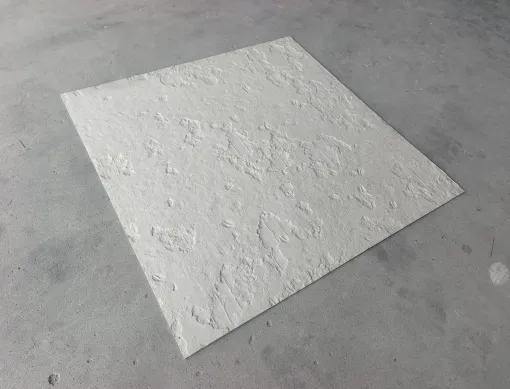
Here's the kicker: Bali Stone doesn't just save time—it elevates design. Priya's client wanted "Balinese retreat," so she opted for Bali Stone's travertine (starry green) finish: soft, earthy tones with subtle crystalline flecks that catch the light like sunlight on water. But walk through MCM's catalog, and you'll find options for every mood: warm wood grains that mimic teak, rough-hewn textures that evoke mountain stone, even sleek metallic accents that pair beautifully with foamed aluminium alloy board (vintage silver) for a modern-industrial vibe.
Unlike traditional stone, which often limits you to the patterns nature provides, Bali Stone's manufacturing process lets you dial in the exact look you want. Need a wall that looks like it was carved from a single block of marble? Go for the big slab format. Want to mix textures? Pair Bali Stone's "ancient wood" finish with fair-faced concrete panels for a raw, organic contrast. The best part? Because it's a flexible material, it can adapt to curved surfaces, angled walls, or even ceiling accents—no more compromising on design because "the stone won't bend."
When the construction team at Mercy Health needed to revamp their pediatric wing, they had two priorities: create a calming, nature-inspired space for young patients and stay within a strict 12-week timeline. Traditional stone was off the table—too heavy for the existing structure, too slow to install. Enter Bali Stone's "stream limestone (claybank)" finish: soft, warm, with gentle ripples that mimic a meandering creek. The lightweight panels (just 4.2kg/sqm) meant no structural reinforcements were needed, and the crew installed 120 sqm of wall and ceiling panels in just 3.5 days. "We finished three weeks early," says project manager Jake. "And the kids? They keep pointing at the walls and saying, 'It looks like a river!' That's the magic of it—it's fast, but it doesn't feel fast."
Let's be real: Fast installation means nothing if the material falls apart in a year. Bali Stone is built to last. It's water-resistant (no warping in humid bathrooms), fire-rated (meets ASTM E84 Class A standards), and scratch-resistant (perfect for high-traffic areas like hotel lobbies or restaurant corridors). Unlike natural stone, which can absorb stains or etch from acidic spills, Bali Stone's protective top layer repels coffee, wine, and even the occasional crayon (looking at you, pediatric wing). And because it's lightweight, it puts less stress on building structures—no need for extra support beams or reinforced foundations, which saves even more time during pre-construction planning.
In an era where "green building" isn't just a buzzword but a client demand, Bali Stone delivers here, too. MCM's manufacturing process uses 70% recycled materials, and the lightweight design reduces transportation emissions (fewer trucks needed to haul the same amount of material). Plus, because it's so durable, it won't need replacement in 5-10 years like some synthetic alternatives. "We had a client ask for LEED points," says Priya. "Bali Stone checked that box without us having to jump through hoops. It's sustainable, but it doesn't make you choose between the planet and the deadline." *MCM's production facilities run on 30% solar energy, and all waste from Bali Stone manufacturing is recycled or repurposed.
At the end of the day, construction is about people: the architects with vision, the contractors with deadlines, the clients with dreams. Bali Stone speaks their language. It understands that "fast-track" doesn't mean "cut corners"—it means "work smarter." It knows that a beautiful space shouldn't require sacrificing sanity (or schedules). And it proves that with the right material, you can have it all: the warmth of natural stone, the speed of modern technology, and the peace of mind that comes from knowing your project will finish on time, on budget, and on-brand.
So, to Priya, Jake, and every builder, architect, or designer staring down a tight timeline: Bali Stone isn't just a board. It's the answer to that 3 a.m. question: "How are we going to pull this off?" It's the material that turns "impossible" into "I'll send you the photos by Friday." And in a world where time is the most precious resource, that's more than a product—that's progress.
Recommend Products












