

In the world of architecture, materials are more than just building blocks—they're storytellers. They shape how we experience space, connect us to culture, and bridge the gap between tradition and innovation. Nowhere is this more evident than in Saudi Arabia, a nation where ancient heritage meets cutting-edge modernity. Among the materials making waves in this dynamic landscape is Bali Stone—a versatile, textured cladding solution that has become a favorite for designers seeking to blend warmth, durability, and aesthetic depth. But Bali Stone doesn't shine alone. When paired with complementary materials like Lunar Peak series, Historical Pathfinders Stone, and MCM flexible stone, it transforms ordinary structures into extraordinary narratives. Let's explore three standout projects where these materials have left an indelible mark, from Riyadh's bustling cultural hubs to Jeddah's coastal retreats and Medina's historic lanes.
Nestled in the heart of Riyadh's diplomatic quarter, the Al-Murjan Cultural Center was conceived as a space to celebrate Saudi Arabia's rich cultural tapestry while fostering global dialogue. The design team, led by award-winning architect Lina Karim, aimed to create a building that felt both rooted in tradition and unapologetically contemporary. "We wanted visitors to step inside and feel a sense of belonging—to recognize elements of their heritage, but also see how those elements can evolve," Karim explains. The challenge? Balancing this vision with the practical demands of a high-traffic public space: durability, ease of maintenance, and adaptability to Riyadh's extreme temperature fluctuations.
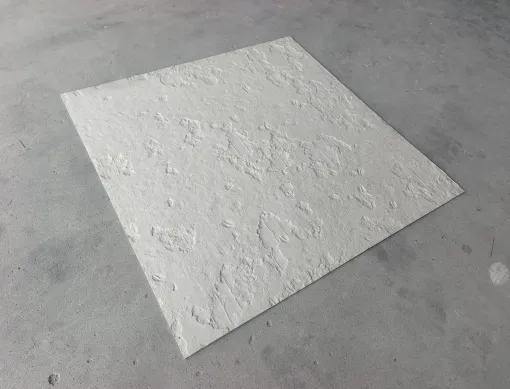
From the outset, Bali Stone was the front-runner for the center's exterior and interior cladding. "There's something about Bali Stone's texture that feels alive," Karim notes. "It has this warm, earthy quality—like sandstone kissed by the desert sun—but with a subtle uniformity that works in modern design." The team opted for Bali Stone in a soft beige hue, its natural veining echoing the patterns of traditional Saudi woven textiles. To add contrast and highlight key architectural features—such as the sweeping archways framing the main entrance—they paired it with Lunar Peak Golden, a metallic-finished MCM panel that shimmers like sunlight on sand.
"Lunar Peak Golden was a bold choice, but it paid off," says project engineer Majed Al-Harbi. "It's not just about aesthetics—MCM flexible stone, which both Bali Stone and Lunar Peak are part of, is lightweight and flexible. That was crucial for the center's curved walls; traditional stone would have been too heavy and rigid. Installation was a breeze compared to solid marble or granite, and we saved weeks on the timeline."
Riyadh's climate—scorching summers with temperatures exceeding 45°C, followed by cool, dry winters—posed a unique challenge. The team needed materials that could withstand thermal expansion and contraction without cracking. Bali Stone's composition, which combines natural minerals with a reinforced composite backing, proved ideal. "We did thermal stress tests before installation," Al-Harbi recalls. "Bali Stone held up better than expected, retaining its color and texture even after months of simulated extreme heat." Another hurdle was the center's iconic curved facade, which required custom-cut panels. Thanks to MCM flexible stone's adaptability, the fabrication team was able to create seamless, precision-fit pieces that followed the building's organic lines.
Since its opening in 2024, the Al-Murjan Cultural Center has become a beloved landmark. Visitors often remark on how the interplay of Bali Stone and Lunar Peak Golden creates a dynamic visual experience throughout the day—soft and warm at sunrise, radiant at noon, and glowing amber at sunset. "The best part is seeing how people interact with the space," Karim says. "Children run their hands along the Bali Stone walls, feeling the texture, while adults pause to admire how the Lunar Peak accents catch the light. It's more than a building; it's a sensory journey through Saudi culture."
Perched on Jeddah's northern coastline, the Azure Sands Resort was designed to be a sanctuary where guests could escape the city's hustle while staying connected to Saudi Arabia's coastal heritage. The client, a luxury hospitality group, wanted a design that felt both exclusive and rooted in place—avoiding the generic "tropical resort" aesthetic in favor of something uniquely Saudi. Enter Bali Stone, paired with Historical Pathfinders Stone and fair-faced concrete, to create a palette inspired by the Red Sea, desert dunes, and ancient trade routes.
For the resort's villa exteriors and poolside pavilions, Bali Stone was chosen for its ability to evoke the region's natural beauty without overwhelming it. "We wanted the villas to blend into the landscape, not stand out," says lead designer Amina Fahmy. "Bali Stone in a weathered beige tone does exactly that—it looks like it's been shaped by the wind and sea, even though it's brand-new." The stone's non-slip surface was another selling point for pool areas, ensuring safety without sacrificing style.
Inside the resort's grand lobby, Historical Pathfinders Stone took center stage. "Historical Pathfinders Stone has this rugged, timeworn texture that tells a story of exploration," Fahmy explains. "It's a nod to the ancient sailors and traders who once navigated the Red Sea, their journeys leaving marks on the region's culture." The stone was used for the lobby's feature wall, which curves upward to meet a ceiling of fair-faced concrete—creating a contrast between old and new that mirrors Jeddah's own identity as a historic port city with a futuristic skyline.
Jeddah's coastal humidity and salt air can be harsh on building materials, causing corrosion and discoloration over time. Bali Stone's resistance to moisture and salt was a key factor in its selection. "We tested samples in a salt spray chamber for six months," says sustainability consultant Kareem Nasser. "Bali Stone showed zero signs of degradation, which was a huge relief. Historical Pathfinders Stone, with its denser composition, performed equally well." The resort also prioritized sustainability, aiming for LEED Gold certification. MCM flexible stone's lightweight nature reduced the need for heavy structural support, cutting down on concrete usage, while its low-maintenance requirements mean less water and energy spent on upkeep.
Since opening in early 2025, Azure Sands has earned rave reviews for its "timeless luxury." Guests often comment on how the materials make them feel grounded—connected to the land and sea. "One guest told me the Bali Stone walls in her villa reminded her of her grandmother's house in Yanbu," Fahmy shares. "That's the power of these materials—they don't just look good; they evoke emotion and memory." The resort's success has even inspired other coastal projects in the region to adopt Bali Stone as a go-to cladding solution.
In Medina, one of Saudi Arabia's holiest cities, the Al-Rahma Madrasa—a 19th-century Islamic school—had fallen into disrepair, its original stone walls crumbling and its wooden beams rotting. The renovation project aimed to restore the madrasa to its former glory while making it functional for modern use as a cultural center and library. The challenge? Balancing preservation with innovation, ensuring new materials complemented the old without overshadowing it. Bali Stone, dolomitic travertine (dark grey), and MCM flexible stone emerged as the perfect trio to bridge this gap.
"The original madrasa was built with local limestone, which is porous and prone to weathering," explains conservation architect Zayd Al-Mansoori. "We needed a replacement material for the damaged sections that matched the original in color and texture but offered better durability. Bali Stone was the answer. Its earthy beige tone and subtle grain mimicked the limestone, but its composite core made it stronger and more resistant to moisture." For the new extension—a glass-walled library wing—dolomitic travertine (dark grey) was used to create a visual contrast, signaling modernity while respecting the madrasa's historic fabric.
Renovating a heritage site requires a delicate touch, and the Al-Rahma project was no exception. "We couldn't use heavy machinery near the original walls, so lightweight materials were a must," Al-Mansoori says. "MCM flexible stone, which Bali Stone is part of, weighs a fraction of traditional stone—about 80% less. That meant we could install it by hand, minimizing vibration and risk to the old structure." The team also had to match the original stone's mortar color and application technique, spending weeks testing mixes until they got it right. "It was like solving a puzzle," Al-Mansoori laughs. "But when we stepped back and saw the restored walls next to the new Bali Stone sections, you couldn't tell where the old ended and the new began. That's when we knew we'd succeeded."
Today, the Al-Rahma Madrasa stands as a model for heritage renovation, blending the past and present seamlessly. "Local residents were initially worried we'd lose the madrasa's soul," Al-Mansoori recalls. "Now, they bring their children to see the restored walls, pointing out the Bali Stone sections and explaining how they're keeping history alive. It's become a community hub, and that's the greatest success of all."
| Project Name | Location | Key Materials | Design Goal | Outcome |
|---|---|---|---|---|
| Al-Murjan Cultural Center | Riyadh | Bali Stone (beige), Lunar Peak Golden, MCM flexible stone | Blend tradition and modernity in a public cultural space | Became a landmark with dynamic light interaction and cultural resonance |
| Azure Sands Resort | Jeddah | Bali Stone (weathered beige), Historical Pathfinders Stone, fair-faced concrete | Create coastal luxury rooted in Saudi heritage | LEED Gold candidate with high guest satisfaction and seamless landscape integration |
| Al-Rahma Madrasa Renovation | Medina | Bali Stone (heritage beige), dolomitic travertine (dark grey), MCM flexible stone | Preserve a historic madrasa while adding modern functionality | Restored community hub with indistinguishable old/new material integration |
From cultural centers to luxury resorts to heritage sites, Bali Stone has proven itself more than just a building material—it's a collaborator in storytelling. When paired with complementary materials like Lunar Peak series, Historical Pathfinders Stone, and MCM flexible stone, it creates spaces that honor the past, embrace the present, and inspire the future. In Saudi Arabia and beyond, these projects stand as testaments to the power of thoughtful material selection: choosing not just what looks good, but what feels right—what connects us to the land, to our history, and to each other. As architects and designers continue to push boundaries, one thing is clear: Bali Stone will be right there with them, shaping the spaces where stories unfold.
Recommend Products












