

In an era where every brick laid and every beam raised carries the weight of environmental responsibility, sustainable architecture has evolved from a niche concept to an urgent global mandate. Buildings account for nearly 40% of global carbon emissions, a staggering statistic that places material selection at the forefront of the fight against climate change. Architects and designers are no longer just creating spaces—they're weaving stories of resilience, harmony, and care for the planet. Among the materials emerging as heroes in this narrative is Bali Stone , a versatile, eco-conscious option that marries aesthetic allure with a deep commitment to sustainability. Let's explore how this remarkable material is redefining what it means to build green, one panel at a time.
Named for its warm, sun-kissed tones reminiscent of Bali's lush landscapes and golden shores, Bali Stone isn't just a feast for the eyes. It's a product of intentional engineering, designed to address the twin challenges of modern construction: reducing environmental impact and elevating design possibilities. Unlike traditional natural stones, which often require intensive quarrying, high-energy processing, and heavy transportation, Bali Stone is part of the innovative Modified Composite Material (MCM) family—a category celebrated for its lightweight composition and eco-friendly manufacturing. What makes it truly special, though, is its ability to capture the organic beauty of natural stone while minimizing the ecological footprint that typically comes with such aesthetics.
Imagine walking into a lobby clad in Bali Stone: the walls have the soft, weathered texture of ancient cliffs, the color shifting gently from honeyed beige to warm terracotta as light moves across the surface. It feels authentic, grounding, as if the building itself has grown from the earth. Yet behind that natural appearance lies a material that's been crafted with the planet in mind. Architects and designers are drawn to it not just for its beauty, but for the peace of mind it brings—knowing they're choosing a material that aligns with their values of sustainability and responsibility.
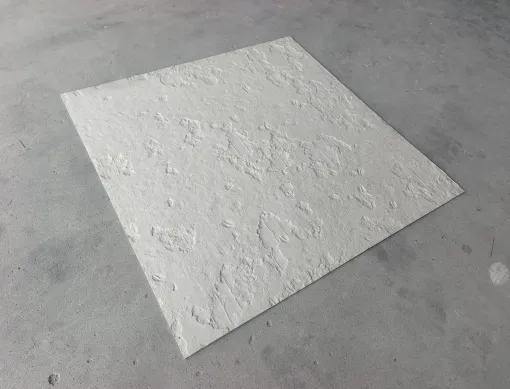
The carbon footprint of a building material is shaped by every step of its journey: from raw material extraction to manufacturing, transportation, and installation. Bali Stone shines in each of these stages, starting with its production process. Traditional stone quarrying involves heavy machinery, dynamite, and massive energy use to extract and cut blocks—often resulting in significant waste and emissions. Bali Stone, by contrast, is manufactured using a low-temperature pressing technique that reduces energy consumption by up to 40% compared to conventional stone processing. This isn't just a minor improvement; it's a paradigm shift. By using recycled mineral aggregates and natural binders, the production line minimizes reliance on virgin resources, further slashing its carbon output.
Transportation is another hidden culprit in construction's carbon footprint. Natural stone is notoriously heavy, requiring large trucks and frequent trips to deliver materials to job sites—each mile adding to emissions. Bali Stone, however, is up to 70% lighter than traditional stone panels, thanks to its composite structure. This reduced weight means fewer trucks on the road, lower fuel consumption, and a smaller carbon footprint from factory to foundation. For large-scale projects, this translates to hundreds of tons of CO2 saved over the construction timeline—a difference that doesn't just help the planet, but also cuts transportation costs for builders.
Installation tells a similar story. Its lightweight nature reduces the need for heavy lifting equipment, lowering on-site energy use and minimizing the risk of construction delays. Workers can handle panels more easily, speeding up the building process without compromising safety. In a world where time is money and carbon is currency, Bali Stone offers a rare win-win: efficiency and sustainability walking hand in hand.
Sustainability isn't a one-and-done achievement; it's a commitment to the entire lifecycle of a material. All too often, construction materials end up in landfills once a building is demolished or renovated, contributing to the 2 billion tons of global construction waste generated annually. Bali Stone, however, is designed with circularity in mind. Its core is made from a blend of recycled materials—crushed stone waste from quarry operations, reclaimed concrete, and even post-industrial glass—giving new life to materials that would otherwise pollute the planet. This not only reduces the demand for virgin resources but also diverts waste from landfills, creating a closed-loop system that honors the principles of a circular economy.
But what happens when a Bali Stone-clad building reaches the end of its useful life? Unlike traditional stone, which is often too heavy or brittle to be repurposed, Bali Stone panels can be easily disassembled, crushed, and reused as aggregate in new construction projects or as a base material for landscaping. Some manufacturers even offer take-back programs, ensuring that old panels are recycled into new ones rather than discarded. This level of recyclability isn't just environmentally responsible—it's economically smart. By reducing the need for new raw materials, builders save on costs, while communities benefit from cleaner, less wasteful construction practices.
Consider a scenario: a 10-story office building clad in Bali Stone reaches the end of its 50-year lifespan. Instead of sending tons of stone to the landfill, the panels are collected, processed, and transformed into new Bali Stone panels for a nearby school. That's not just recycling—that's storytelling. It's a material that carries the memory of one space into the next, a tangible reminder that sustainability is about connection, not consumption.
Bali Stone doesn't stand alone in its mission to green the construction industry. It's part of a broader ecosystem of MCM products, each designed to address specific sustainable building needs. Take MCM flexible stone , for example. Like Bali Stone, it's lightweight and low-emission, but its flexibility makes it ideal for curved surfaces, intricate facades, or retrofitting older buildings where rigidity would be a limitation. Imagine a museum with a sweeping, organic design: Bali Stone could clad the straight walls, while MCM flexible stone wraps the curved entryway, creating a seamless, sustainable masterpiece.
Then there's the MCM project board series , a workhorse of the MCM family. Designed for large-scale applications—think commercial complexes, airports, or university campuses—these panels offer uniform texture and color consistency, making them a favorite for architects aiming for a cohesive aesthetic. When paired with Bali Stone, they create dynamic visual contrast: the project board series provides a sleek, modern backdrop, while Bali Stone adds warmth and organic texture. Together, they prove that sustainability doesn't require sacrificing variety; if anything, it expands the palette of possibilities.
What unites all these MCM products—Bali Stone, MCM flexible stone, and the project board series—is their shared commitment to reducing environmental impact without compromising performance. They're not just materials; they're tools for architects to build the future they want to see: one where buildings breathe, adapt, and coexist gently with the planet.
To truly appreciate Bali Stone's impact, it helps to see it side by side with other common building materials. Let's compare its sustainability credentials with traditional options like natural stone and fair-faced concrete , as well as its MCM cousin, flexible stone:
| Material | Carbon Footprint (Lifecycle) | Recyclability | Weight (kg/m²) | Aesthetic Versatility |
|---|---|---|---|---|
| Bali Stone | Low (40-50% less than natural stone) | High (90% recyclable; can be repurposed as aggregate) | 8-12 (lightweight, easy to transport/install) | High (mimics natural stone, wood, and earthy textures) |
| Traditional Natural Stone | High (intensive quarrying, heavy transportation) | Low (often landfilled; limited repurposing) | 25-35 (heavy, requires reinforced structures) | High (unique, but limited by natural variation) |
| Fair-Faced Concrete | Medium-High (cement production emits CO2) | Partial (recyclable as aggregate, but energy-intensive) | 20-25 (heavy, requires energy for curing) | Medium (industrial aesthetic, limited texture) |
| MCM Flexible Stone | Low (similar to Bali Stone) | High (recyclable; flexible for repurposing) | 6-10 (lightest in MCM family) | Very High (bends to curved surfaces, custom designs) |
The data speaks volumes: Bali Stone outperforms traditional materials in nearly every sustainability category while matching or exceeding them in aesthetic appeal. Its low weight reduces transportation emissions and structural demands, its recyclability closes the loop on waste, and its carbon footprint is a fraction of what's typical for natural stone. For architects and builders, this table isn't just numbers—it's freedom. Freedom to design boldly without compromising their values, to create spaces that inspire without costing the Earth.
Numbers and specs tell part of the story, but it's the real-world projects that bring Bali Stone's impact to life. Take the GreenHaven Residences in Vancouver, a 15-story apartment complex designed to meet LEED Platinum standards. The developers chose Bali Stone for the exterior cladding, drawn to its warm, inviting tones and low environmental impact. "We wanted the building to feel like a retreat from the city, a place where residents could connect with nature without leaving their homes," says lead architect James Chen. "Bali Stone delivered that—and more. Its lightweight panels reduced the need for heavy steel supports, cutting our carbon emissions during construction by 30%. Plus, the residents love how the stone changes color with the light—golden at sunrise, soft amber at sunset. It's not just a building material; it's a daily reminder of our commitment to sustainability."
Across the globe, in Sydney, the Bali Stone-clad EcoTech Office Park has become a landmark for green business. The campus uses a mix of Bali Stone and MCM flexible stone, with the latter wrapping around the curved glass atriums that connect the buildings. "We needed a material that could handle both straight lines and organic shapes, all while keeping our carbon footprint in check," explains project manager Sarah Lopez. "Bali Stone and MCM flexible stone worked together seamlessly. The result? A campus that's not only energy-efficient but also a joy to work in. Employees report feeling more creative and connected to the environment—and that's priceless."
These projects aren't outliers; they're the future of construction. As more cities adopt strict green building codes—like New York's Local Law 97, which mandates carbon reductions for large buildings—materials like Bali Stone are becoming essential tools for compliance. They're proof that sustainability doesn't require sacrifice; it requires innovation. And Bali Stone is leading the charge.
As we look to the future, the demand for sustainable building materials will only grow. With global temperatures rising and climate crises intensifying, the construction industry has a moral obligation to evolve—and Bali Stone is poised to be at the forefront of that evolution. Its adaptability makes it ideal for emerging trends like modular construction, where lightweight, durable materials are key to efficiency. Its aesthetic versatility aligns with the growing desire for biophilic design, which seeks to connect people with nature through architecture. And its commitment to circularity fits perfectly with the push for a "zero-waste" built environment.
Manufacturers are already exploring ways to make Bali Stone even more sustainable, from incorporating more recycled content to using renewable energy in production. Some are experimenting with carbon capture technology, turning the manufacturing process into a tool for removing CO2 from the atmosphere. Imagine a future where building with Bali Stone doesn't just reduce emissions—it actively heals the planet. That future isn't as far-fetched as it sounds.
But the true power of Bali Stone lies not just in its technical specs or environmental benefits. It lies in the stories it helps create: stories of buildings that respect the planet, communities that thrive in harmony with nature, and architects who dare to dream of a better way to build. It's a material that reminds us that sustainability isn't just about numbers on a spreadsheet; it's about people. It's about the child who grows up in a Bali Stone-clad school, breathing clean air and learning to value the earth. It's about the architect who goes home at night proud of the legacy they're building. It's about all of us, choosing to leave a lighter footprint so that future generations can inherit a world as beautiful as the one we found.
In the end, Bali Stone is more than a building material. It's a symbol of hope—a tangible example of how innovation and intention can transform an industry. It proves that we don't have to choose between beauty and sustainability, between progress and preservation. We can have it all: buildings that inspire, materials that heal, and a planet that thrives.
As architects, builders, and consumers, we hold the power to shape the future with every material we choose. Bali Stone invites us to choose wisely—to build not just for today, but for the generations to come. It's a small step for construction, but a giant leap for sustainability. And in that leap, we find something profound: the realization that every panel, every wall, every building is a chance to write a better story. A story where we build with care, live with intention, and leave the world a little greener than we found it.
So let's pick up our tools—and our values—and start building that story. With Bali Stone leading the way, the future of sustainable architecture isn't just bright; it's beautiful.
Recommend Products












