

When it comes to building materials, few things are as disheartening as watching a once-vibrant surface fade under the sun's relentless gaze. Whether it's the exterior of a home, the facade of a commercial building, or the cladding of a public pavilion, color stability isn't just about aesthetics—it's about protecting your investment, preserving curb appeal, and ensuring that the spaces we create remain visually striking for years to come. Enter Bali Stone, a standout in the MCM project board series that's turning heads not just for its versatility and natural beauty, but for its exceptional ability to stand up to UV radiation. In this article, we'll dive into what makes Bali Stone a game-changer for sun-exposed areas, how it compares to other materials like fair-faced concrete and travertine (starry blue) , and why it's becoming the go-to choice for architects, designers, and homeowners alike.
To understand Bali Stone's UV resistance, we first need to grasp why the sun is such a formidable opponent. UV radiation—specifically UVA and UVB rays—penetrates materials at a molecular level, breaking down bonds in pigments, dyes, and even the structural components of the material itself. Over time, this process, known as photodegradation, leads to fading, discoloration, and brittleness. For outdoor surfaces, this isn't just a cosmetic issue; faded materials can lose their protective properties, become more prone to cracking, and require costly replacements far sooner than expected.
Consider a common scenario: a restaurant in Miami with a fair-faced concrete facade. When first installed, the concrete has a clean, uniform gray tone that complements the building's modern design. But after two years of intense Florida sunshine, the surface starts to take on a chalky, uneven appearance. The gray deepens in some spots, fades to almost white in others, and what was once a sleek statement piece now looks worn and neglected. The restaurant owner is forced to repaint or resurface, adding unexpected maintenance costs to their budget.
This is where UV resistance becomes critical. A material that can withstand prolonged sun exposure without significant color change doesn't just look better longer—it saves time, money, and the environmental impact of frequent replacements. And that's exactly where Bali Stone shines.
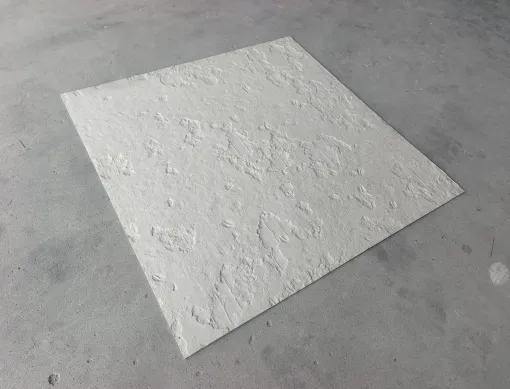
Bali Stone isn't just another cladding material; it's a product of innovative engineering, part of the MCM flexible stone family that prioritizes durability without sacrificing beauty. Its UV resistance stems from a carefully crafted combination of natural ingredients and advanced technology, designed to tackle photodegradation head-on.
At its core, Bali Stone is a blend of natural stone aggregates (think crushed marble, granite, and quartz) and a modified composite resin matrix. This matrix acts as a protective barrier, encapsulating the stone particles and preventing UV rays from reaching the pigments that give Bali Stone its color. Unlike traditional materials like travertine (starry blue) , which relies solely on its natural mineral composition for color (and is thus more vulnerable to fading), Bali Stone's matrix is infused with UV-stabilizing additives. These additives absorb harmful UV radiation, converting it into harmless heat that dissipates without damaging the material's structure or hue.
Even the most stable matrix would fail if the pigments themselves aren't up to the task. Bali Stone uses high-grade, inorganic pigments that are resistant to photobleaching—the process by which UV rays break down color molecules. These pigments are mixed into the composite matrix during manufacturing, ensuring they're evenly distributed and deeply embedded, rather than just applied as a surface coat (which can wear off over time). The result? Colors that retain their vibrancy, whether it's a warm terracotta, a cool slate gray, or a rich navy blue.
Before reaching the market, Bali Stone undergoes rigorous UV testing to simulate years of sun exposure in a controlled environment. One common test involves exposing samples to accelerated weathering chambers, where they're bombarded with UV radiation, extreme temperatures, and humidity—conditions far harsher than what most real-world locations experience. After thousands of hours of testing, Bali Stone consistently shows minimal color change (often less than 5% delta E, a measure of color difference imperceptible to the human eye) and no signs of cracking, peeling, or brittleness. Compare that to fair-faced concrete , which can show color shifts of 15% or more under similar conditions, and it's clear why Bali Stone is a standout.
To truly appreciate Bali Stone's UV resistance, it helps to see how it stacks up against other popular building materials. Below is a comparison of Bali Stone with three common alternatives: fair-faced concrete , travertine (starry blue) , and poly wood board .
| Material | UV Resistance (1-5) | Color Retention After 5 Years | Durability in Sun/Heat | Maintenance Needs |
|---|---|---|---|---|
| Bali Stone (MCM project board series) | 5/5 | 95%+ (minimal fading) | Excellent; resists warping, cracking, and brittleness | Low; occasional cleaning with water |
| Fair-Faced Concrete | 2/5 | 60-70% (noticeable fading, uneven discoloration) | Moderate; prone to surface chalking and hairline cracks | High; periodic sealing, repainting, or resurfacing |
| Travertine (Starry Blue) | 3/5 | 75-80% (mild fading, especially in intense sun) | Good; but porous—may absorb moisture and stain in heat | Moderate; annual sealing required to prevent staining/fading |
| Poly Wood Board | 3/5 | 70-80% (fades to a lighter shade; may warp in extreme heat) | Moderate; can warp or soften in temperatures over 120°F | Moderate; requires annual sealing to slow fading |
*Ratings based on industry testing and real-world feedback from contractors in high-sun regions (e.g., Arizona, Florida, Dubai).
Numbers and tests tell part of the story, but nothing beats seeing a material perform in real life. Let's take a look at two projects where Bali Stone's UV resistance made all the difference.
In 2018, the Azure Hotel, a boutique property on Miami Beach, underwent a major renovation. The design team wanted the exterior to reflect the vibrant energy of South Beach while withstanding the area's harsh sun and salt air. After considering options like travertine (starry blue) and painted stucco, they settled on Bali Stone in a soft teal hue, part of the MCM flexible stone lineup.
Fast forward to 2023: The hotel's facade still looks as fresh as the day it was installed. "We were worried about fading, especially with the sun reflecting off the ocean," says Maria Gonzalez, the hotel's general manager. "But even after five Florida summers, the teal color hasn't dulled. Guests still comment on how 'bright and welcoming' the exterior is—it's become a signature part of our brand." Maintenance has been minimal, too: a quick rinse with a hose twice a year keeps the surface free of salt and grime, with no need for repainting or resealing.
For homeowners Dave and Lisa Chen, building their dream home in Phoenix meant prioritizing materials that could handle 100+ degree temperatures and intense UV exposure. They chose Bali Stone for their outdoor patio, pool surround, and exterior accent walls, selecting a warm terracotta shade to complement the desert landscape.
"We'd seen neighbors' homes use fair-faced concrete or wood, and within a couple of years, everything looked washed out," Lisa explains. "With Bali Stone, it's been three years, and the color is exactly the same. Even during monsoon season, when rain and humidity hit, there's no discoloration or water damage. It's like the material just laughs off the elements."
Bali Stone's UV resistance makes it versatile, but there are certain spaces where it truly excels. Here are a few scenarios where choosing Bali Stone is a no-brainer:
From residential homes to commercial buildings, exterior walls take the brunt of sun exposure. Bali Stone's ability to retain color and resist weathering makes it perfect for facades, whether you're going for a modern, sleek look or a rustic, natural vibe. Its flexibility (thanks to the MCM project board series engineering) also means it can be shaped to fit curved surfaces, adding architectural interest without compromising durability.
Pool areas are doubly challenging: not only do they face direct sun, but they're also exposed to water, chlorine, and foot traffic. Bali Stone's non-porous surface resists water damage and staining, while its UV stability ensures that the area around your pool stays vibrant, even when the sun is at its peak.
Parks, plazas, and outdoor seating areas need materials that can handle heavy use and constant sun. Bali Stone's durability and low maintenance make it ideal for benches, planter boxes, and walkway cladding. Imagine a public square in Texas, where Bali Stone in warm earth tones retains its color year after year, creating a welcoming space that doesn't require frequent repairs or replacements.
Coastal regions combine intense sun with saltwater spray, which can accelerate fading and corrosion. Bali Stone's resistance to both UV rays and salt makes it a standout choice for beachfront homes, boardwalks, and coastal resorts. Unlike travertine (starry blue) , which can absorb salt and develop pitting over time, Bali Stone's sealed matrix keeps salt at bay.
At the end of the day, choosing building materials is about more than just picking a color or texture. It's about selecting products that will grow with your space, stand up to the elements, and keep looking their best for years to come. Bali Stone, with its exceptional UV resistance, color stability, and durability, does exactly that.
Whether you're a homeowner tired of repainting faded exteriors, an architect designing a sun-drenched commercial project, or a contractor looking to deliver lasting value to clients, Bali Stone offers peace of mind. It's a material that doesn't just meet expectations—it exceeds them, proving that beauty and resilience can go hand in hand.
As part of the MCM project board series , Bali Stone is a testament to how innovation in building materials can solve real-world problems. So the next time you're planning a project in a sun-exposed area, ask yourself: Do I want a material that fades, or one that endures? For those who choose the latter, Bali Stone is the answer.
Recommend Products












