

There's something inherently timeless about Bali stone. Its warm, earthy tones, intricate veining, and natural texture have made it a staple in high-end architectural projects, from luxury resorts to commercial plazas. But while its aesthetic appeal is undeniable, installing Bali stone slabs on a large scale—think sprawling hotel facades or expansive shopping mall interiors—can feel like navigating a labyrinth of logistical challenges. Tight deadlines, precision requirements, and the sheer weight of the slabs often turn what should be a creative process into a stressful race against time. The good news? Modern techniques and innovative materials are changing the game, making large-scale Bali stone installation faster, more efficient, and surprisingly manageable. Let's dive into the strategies that are revolutionizing how we work with this beloved material.
Before a single slab is lifted, the key to saving time lies in meticulous pre-installation planning. Anyone who's worked on a large project knows that rushing this phase is like building a house on sand—sooner or later, the cracks will show. For Bali stone, which often comes in irregular natural shapes, this step is even more critical. Let's break down the essentials.
Site Assessment with a Digital Edge: Traditional site surveys rely on tape measures and manual sketches, but in 2024, there's no excuse for that. Using 3D laser scanners, teams can capture every nook and cranny of the installation area in hours, generating precise digital models. This isn't just about measurements—it's about identifying potential hurdles early: a slightly uneven wall that could throw off slab alignment, or a narrow corridor that complicates material transport. For example, on a recent project in Dubai, a team scanning a 50,000 sq. ft. mall atrium discovered a structural beam that jutted 2 inches further than blueprints indicated. Catching that early saved them from re-cutting 12 Bali stone slabs later, a mistake that would have cost 3 days of work and thousands in wasted material.
Material Handling: From Quarry to Site, Without the Headaches Bali stone slabs aren't lightweight. A standard 24x48 inch slab can weigh upwards of 200 pounds, and moving them manually is not only slow but risky (for workers and the slabs). The solution? Investing in specialized lifting equipment—like vacuum lifters with adjustable pads that cradle the stone without pressure points—and creating a dedicated material staging area. On one resort project in Bali, the team set up a "slab hotel" near the installation zone: a shaded area with labeled racks where slabs were sorted by size and pattern. This cut down on time spent hunting for the right slab, reducing on-site material handling by 40%.
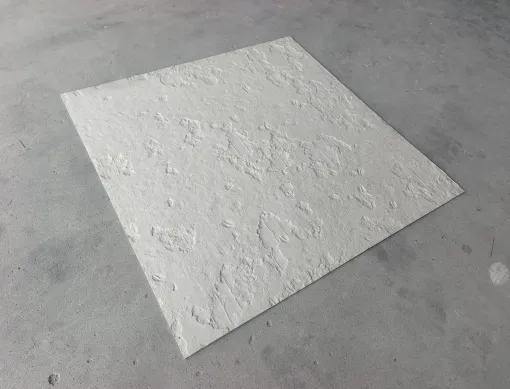
Once the groundwork is laid, the real magic happens in the installation process itself. Here are the techniques that top contractors are using to shave weeks off project timelines.
Gone are the days of installing each Bali stone slab individually, like piecing together a giant, heavy puzzle. The MCM big slab board series has emerged as a game-changer here. These pre-engineered panels are designed to act as a "backbone" for Bali stone, allowing installers to mount multiple slabs onto a single, lightweight board off-site. Once assembled, the entire module is lifted into place and secured—turning a day of individual slab placements into a few hours of modular fitting. On a recent office tower project in Singapore, the team used 4x8 ft. MCM big slab boards to install Bali stone on the lobby walls. Instead of 10 workers spending 5 days on the job, 6 workers finished in 2 days. The secret? The boards' interlocking edges ensured perfect alignment, and their composite core reduced the overall weight, making lifting safer and faster.
Not every surface is a flat wall or floor. Curved facades, arched doorways, or custom niches often require Bali stone to be bent or shaped, a process that traditionally involves painstaking hand-carving. Enter MCM flexible stone—a thin, lightweight material that mimics the look of natural Bali stone but bends to fit contours. It's made by bonding a layer of real stone veneer to a flexible backing, allowing it to wrap around curves without cracking. On a boutique hotel in Bali with a circular lobby, the design called for Bali stone to follow the curved walls. Using MCM flexible stone instead of solid slabs cut installation time from 10 days to 3, as the material could be pre-cut to the exact curve in the workshop and simply adhered on-site.
Even with 3D scans, cutting Bali stone slabs on-site is messy, loud, and time-consuming. Dust clogs the air, saws need frequent sharpening, and each cut is a chance for error. Modern laser cutting technology changes that. By importing the 3D scan data into a CNC laser cutter, slabs can be pre-cut in a controlled workshop environment with pinpoint accuracy. The result? Slabs arrive on-site ready to install, with edges that fit together like a well-made puzzle. On a hospital expansion project in Kuala Lumpur, the team pre-cut all Bali stone slabs for the exterior cladding using this method. The on-site installation team reported that "it felt like assembling IKEA furniture—no measuring, no cutting, just placing and securing." The project finished 2 weeks ahead of schedule.
| Aspect | Traditional Installation | Modern Installation (with MCM & Tech) |
|---|---|---|
| Time per 100 sq. ft. | 12–15 labor hours | 4–6 labor hours |
| Labor Required | 4–5 workers | 2–3 workers |
| Precision Rate | 85–90% | 98–100% |
| Material Waste | 10–15% | 2–3% |
Bali stone rarely works alone in large projects. Pairing it with the right complementary materials not only enhances its beauty but also speeds up installation. Here are two standout combinations that are winning over architects and contractors alike.
Bali Stone + Foamed Aluminium Alloy Board (Vintage Silver): When durability and weight are concerns—like in high-rise facades—foamed aluminium alloy board (vintage silver) is an ideal partner. It's lightweight yet strong, acting as a sturdy backing for Bali stone slabs. The vintage silver finish adds a subtle metallic contrast to Bali stone's earthiness, creating a modern, layered look. On a 30-story residential tower in Jakarta, the exterior featured alternating panels of Bali stone and foamed aluminium alloy board (vintage silver). The aluminium boards were pre-drilled with mounting holes, and the Bali stone slabs were attached using a clip system. This hybrid approach reduced the load on the building's structure and cut installation time by 25% compared to using solid stone alone.
Bali Stone + Fair-Faced Concrete: For industrial-chic interiors, fair-faced concrete provides the perfect neutral backdrop for Bali stone. Its raw, textured surface complements Bali stone's organic patterns, and it's incredibly quick to install. On a co-working space in Bangkok, the design called for Bali stone accent walls alongside fair-faced concrete partitions. The concrete panels were pre-cast off-site and installed in a day, while the Bali stone (cut to size with laser tech) was added the next. The result? A space that felt warm and modern, finished in half the time of a traditional drywall-and-stone setup.
The Marina Bay Retail Plaza in Singapore is a sprawling 120,000 sq. ft. complex with a design that blends natural elements and modern architecture. The client wanted the main atrium to feature a 200-foot-long Bali stone wall, a statement piece that would greet visitors. The challenge? The project had a tight 12-week deadline, and traditional installation methods would have taken at least 6 weeks for the wall alone.
The contractor's solution: Combine MCM big slab board series with 3D scanning and laser pre-cutting. First, they scanned the atrium wall to create a digital model, identifying any irregularities. Then, they used MCM big slab boards as the base, mounting pre-cut Bali stone slabs onto the boards in the workshop. The modular panels were then transported to the site and installed using a crane. To add contrast, they interspersed sections of foamed aluminium alloy board (vintage silver) between the stone panels. The result? The entire 200-foot wall was installed in just 10 days, freeing up time for other finishing work. The client was thrilled, noting that the wall "looked like it had been carved from a single block of stone, but was installed in record time."
Even the best tools and materials won't save time if the team isn't aligned. On large-scale projects, miscommunication between designers, contractors, and installers can lead to delays that no tech can fix. That's why top teams prioritize clear workflows and training.
Daily Huddles and Digital Check-Ins: Short, focused daily meetings keep everyone on the same page. On the Marina Bay project, the team held 15-minute huddles each morning to review progress, flag issues, and adjust priorities. They also used a shared digital platform where installers could upload photos of completed work, allowing the project manager to track progress in real time. No more waiting for end-of-day reports—problems were solved as they arose.
Specialized Training: New tools like MCM flexible stone or laser cutters require skill to use effectively. Investing in training sessions for the installation crew ensures that everyone knows how to handle the materials and equipment safely and efficiently. On one project, a crew that received 2 hours of training on MCM big slab board installation was 30% faster than a crew that learned on the job.
Bali stone has been captivating architects and designers for centuries, but its installation no longer has to be a slow, labor-intensive process. By combining pre-installation digital planning, modular systems like the MCM big slab board series, flexible materials like MCM flexible stone, and precision tools like laser cutters, large-scale projects can be completed faster, safer, and with stunning results. Whether paired with foamed aluminium alloy board (vintage silver) for a modern twist or fair-faced concrete for an industrial edge, Bali stone continues to evolve—proving that some traditions only get better with innovation.
At the end of the day, the goal isn't just to save time. It's to create spaces that feel timeless and alive, where Bali stone's natural beauty can shine without the stress of missed deadlines or budget overruns. And with these techniques, that goal is more achievable than ever.
Recommend Products












