

When it comes to exterior cladding, the choice of material isn't just about aesthetics—it's a long-term commitment to durability, especially when faced with Mother Nature's unpredictable moods. From scorching sun to driving rain, freezing winters to salty coastal breezes, your cladding needs to stand firm year after year. Two materials that often top the list for their unique charm are Bali Stone and limestone(beige) . Both bring distinct character to buildings, but how do they stack up when it comes to weather resistance? Let's dive in, break down their strengths and weaknesses, and help you decide which one deserves a spot on your next project.
Picture the rugged, sun-kissed landscapes of Bali—volcanic terrain, tropical storms, and a climate that tests even the toughest materials. It's no wonder Bali Stone has earned a reputation as a hardy exterior cladding option. Originating from the volcanic-rich regions of Southeast Asia, this stone is formed from compressed volcanic ash and minerals, giving it a unique blend of density and texture. Unlike some softer stones, Bali Stone boasts a naturally rough, yet surprisingly uniform surface, with hues ranging from warm terracottas to deep grays, often flecked with hints of gold or black. What sets it apart, though, is its inherent flexibility—a trait that echoes the innovation seen in modern materials like mcm flexible stone , making it adaptable to various architectural styles, from sleek contemporary homes to rustic villas.
But Bali Stone isn't just about looks. Its volcanic origins mean it's forged under intense heat and pressure, resulting in a material that's inherently resistant to wear and tear. Builders and designers often praise its ability to withstand heavy rainfall, high humidity, and even the occasional brush with saltwater—qualities that make it a standout choice for coastal or tropical regions.
On the other side of the ring, we have limestone(beige) —a classic that's graced buildings for centuries, from ancient Roman temples to modern suburban homes. Formed from the accumulation of marine organisms like coral and shells over millions of years, limestone is primarily composed of calcium carbonate, giving it a soft, earthy appearance. Beige limestone, in particular, is beloved for its warm, neutral tones that complement everything from traditional brick to modern glass, making it a versatile canvas for architects.
But here's the catch: limestone's beauty comes with a trade-off. As a sedimentary rock, it tends to be more porous than volcanic stones like Bali Stone. Those tiny pores can act like sponges, absorbing water, dirt, and pollutants over time. While this porosity gives limestone its unique, weathered charm (think of the patina on old European cathedrals), it also raises questions about its long-term resilience in harsh climates. That said, not all limestone is created equal—denser varieties can hold their own, but beige limestone, with its softer composition, often requires a bit more TLC.
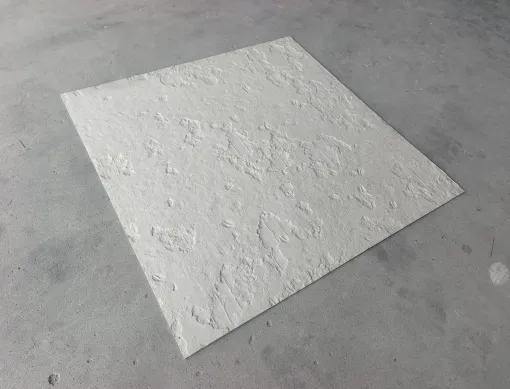
To truly understand which material is better for exterior cladding, we need to put them through the ultimate test: how they hold up against the elements. Let's break it down by key weather-related factors.
Water is public enemy number one for exterior cladding. Whether it's rain, snow, or humidity, excess moisture can lead to mold, mildew, staining, and even structural damage over time. So, how do Bali Stone and limestone(beige) stack up here?
Bali Stone : Thanks to its volcanic origins, Bali Stone is naturally dense. Its formation under high pressure compacts the minerals tightly, leaving fewer pores for water to seep into. Testing shows that Bali Stone typically has a water absorption rate of less than 3%, meaning it repels most moisture on contact. This is a game-changer in regions with heavy rainfall or high humidity—think coastal areas or tropical climates where mold growth is a constant threat. Even after years of exposure, Bali Stone retains its texture and color because water isn't lingering in its structure to cause internal damage.
Limestone(Beige) : Limestone, by contrast, is a porous rock. Beige limestone, in particular, can have a water absorption rate ranging from 5% to 15%, depending on its density. Those pores we mentioned earlier? They don't just absorb water—they can also trap salts from rainwater, which can crystallize and cause efflorescence (that white, powdery residue you sometimes see on stone walls). In areas with frequent rain, this can lead to unsightly stains that are tough to remove. For example, a homeowner in the Pacific Northwest once shared that their beige limestone siding developed dark water spots after just two winters, requiring annual power washing to keep it looking clean.
The sun's ultraviolet (UV) rays are another silent culprit, causing colors to fade and materials to degrade over time. A cladding that retains its vibrancy not only looks better but also indicates that its structural integrity is intact.
Bali Stone : Volcanic stones are known for their resistance to UV radiation, and Bali Stone is no exception. Its dark, mineral-rich composition includes elements like iron and magnesium, which act as natural sunscreens. In fact, studies conducted in sunny regions like Arizona and Florida show that Bali Stone fades by less than 5% over a decade—compared to some stones that fade by 15% or more. That means your exterior will stay looking fresh, whether you choose a bold rusty red or a subtle lunar peak silvery accent to complement it.
Limestone(Beige) : Beige limestone, with its lighter color and calcium carbonate base, is more susceptible to UV damage. The sun's rays can break down the stone's surface over time, causing it to lighten or develop a chalky texture. While this "sun-bleached" look is desirable for some (it adds a rustic, Mediterranean vibe), it can be a downside if you want your cladding to maintain its original color. Homeowners in desert climates, where UV intensity is off the charts, often report that their beige limestone fades noticeably within 5–7 years, requiring staining or sealing to restore its appearance.
For those in colder climates, freeze-thaw cycles are a major concern. When water seeps into a stone, freezes, and expands, it can create cracks or spalling (where pieces of the stone flake off). This is a common issue with porous materials, but how do our two contenders handle it?
Bali Stone : Here's where Bali Stone's low water absorption shines. Since it doesn't absorb much water in the first place, there's less liquid to freeze and expand in cold weather. In lab tests simulating 50 freeze-thaw cycles (the equivalent of about 10–15 years in a harsh winter climate), Bali Stone showed zero signs of cracking or spalling. Its density acts like a shield, keeping the stone stable even when temperatures swing from below freezing to above. This makes it an excellent choice for regions like the Northeastern U.S. or Northern Europe, where winters are long and brutal.
Limestone(Beige) : Limestone's porosity becomes a liability here. When water seeps into its pores and freezes, the expansion can cause tiny cracks to form. Over time, these cracks grow, leading to spalling and structural weakness. While sealing limestone can help reduce water absorption, the sealant needs to be reapplied every 2–3 years to remain effective. In areas with frequent freeze-thaw cycles, beige limestone may require more maintenance to prevent damage—adding both time and cost to your project.
It's not just extreme cold that tests cladding—it's the daily and seasonal temperature swings. From scorching summer days to cool nights, materials expand and contract, which can lead to warping, buckling, or gaps. Bali Stone and limestone(beige) have different responses to these changes.
Bali Stone : Volcanic stones are known for their thermal stability, and Bali Stone is no exception. Its dense, uniform structure expands and contracts minimally with temperature changes. This stability is crucial for large exterior surfaces, where even small shifts can cause visible gaps or misalignment. Builders in areas with extreme temperature variations (like the American Southwest, where daytime highs hit 100°F and drop to 50°F at night) often prefer Bali Stone for its reliability.
Limestone(Beige) : Limestone, being softer and more porous, tends to expand and contract more than Bali Stone. This is especially true for beige limestone, which has a lower density. Over time, repeated expansion and contraction can loosen mortar joints or cause the stone to crack. While this is less of an issue in mild climates, it's a significant concern in regions with hot, dry summers and cold winters. Imagine your beautiful beige limestone facade developing hairline cracks after just a few years—that's a problem no homeowner wants to face.
Weather resistance isn't just about how a material holds up—it's also about how much effort you need to put in to keep it looking good. Let's compare maintenance needs.
Bali Stone : Low-maintenance is Bali Stone's middle name. Thanks to its density and resistance to water, UV rays, and temperature swings, it requires very little upkeep. A simple annual wash with mild soap and water is usually enough to remove dirt and grime. Unlike limestone, it doesn't need regular sealing, saving you time and money on maintenance products. Even in high-pollution areas (like cities with smog), Bali Stone resists staining, keeping your exterior looking fresh with minimal effort.
Limestone(Beige) : Beige limestone, on the other hand, is a bit high-maintenance. To protect it from water, UV rays, and pollutants, you'll need to seal it every 2–3 years. Sealing involves cleaning the stone thoroughly, applying the sealant, and letting it dry—usually a full day's work for a professional. If you skip sealing, you risk stains from oil, dirt, or algae, which can be tough to remove. Additionally, limestone is more prone to etching from acidic substances like rain (which can be slightly acidic in polluted areas) or bird droppings. These etch marks create dull spots that require specialized cleaning or even resurfacing to fix. Over time, the cost of sealing, cleaning, and repairs can add up, making limestone a more expensive choice in the long run.
| Feature | Bali Stone | Limestone(Beige) |
|---|---|---|
| Water Absorption Rate | < 3% (low porosity) | 5–15% (high porosity) |
| UV Resistance | Excellent (fades < 5% in 10 years) | Moderate (fades 10–15% in 7–10 years) |
| Freeze-Thaw Durability | High (no cracking after 50 cycles) | Moderate (requires sealing to prevent spalling) |
| Thermal Expansion | Minimal (stable in temperature swings) | Moderate (prone to expansion/contraction) |
| Maintenance Needs | Low (annual wash only) | High (seal every 2–3 years, stain removal) |
| Best For | Coastal, tropical, cold, or high-UV climates | Mild climates with low freeze-thaw and minimal pollution |
Tables and lab tests are helpful, but nothing beats real-world examples. Let's look at how Bali Stone and limestone(beige) have fared in different environments.
In Bali itself, where the climate is hot, humid, and prone to monsoons, Bali Stone is a staple for exterior cladding. Take the Villa Serenity in Seminyak—a beachfront property that's withstood years of saltwater spray, heavy rains, and intense sun. The owners opted for Bali Stone in a warm, terracotta hue, and after 12 years, the cladding still looks as vibrant as the day it was installed. "We were worried about salt damage and mold, but the stone has held up perfectly," says the villa manager. "We hose it down once a year, and that's it. No stains, no cracks—just that beautiful, natural texture."
Closer to home, in Miami, Florida—a city known for its humidity, hurricanes, and salty air—architect Maria Gonzalez chose Bali Stone for a luxury condo project. "We needed something that could handle the constant moisture and strong UV rays without fading or warping," she explains. "Bali Stone was the clear choice. Three hurricane seasons later, the exterior still looks brand new. The residents love that they don't have to worry about maintenance—they can enjoy the ocean views instead of stressing over their cladding."
Beige limestone has its success stories too—especially in milder climates. The Heritage Estates subdivision in Portland, Oregon, uses beige limestone for its traditional-style homes. With mild, rainy winters and cool summers, the limestone has developed a lovely, soft patina over the years. "We wanted that timeless, European look, and limestone delivers," says homeowner Sarah Chen. "But we do have to seal it every two years, and we have to be careful with pressure washing—too much force can damage the surface."
However, in harsher climates, the story changes. A historic inn in upstate New York, which renovated its exterior with beige limestone 10 years ago, has faced ongoing issues. "The freeze-thaw cycles here are brutal," says the innkeeper. "We've had to replace several stones that cracked, and the sealant wears off quickly. It still looks beautiful, but it's costing us thousands in repairs every few years."
While weather resistance is a critical factor, your choice between Bali Stone and limestone(beige) should also consider aesthetics, budget, and architectural style.
Bali Stone offers a rugged, organic look with its textured surface and earthy tones—think of a mountain retreat or a tropical villa. It pairs beautifully with materials like lunar peak silvery metal accents or fair-faced concrete for a modern-rustic vibe. Limestone(beige), on the other hand, exudes classic elegance with its smooth, uniform surface and soft beige hues. It's perfect for traditional homes, colonial-style buildings, or spaces where you want a timeless, understated look.
Beige limestone is often cheaper upfront than Bali Stone, making it appealing for budget-conscious projects. However, remember the maintenance costs: sealing, repairs, and potential replacements add up over time. Bali Stone has a higher initial price tag, but its low maintenance and longevity mean it's often more cost-effective in the long run—especially in harsh climates where limestone would require frequent upkeep.
At the end of the day, climate should be your biggest consideration. If you live in a coastal area, a desert, a cold region with freeze-thaw cycles, or a place with high humidity, Bali Stone is the safer bet. Its weather resistance will save you time, money, and stress. If you're in a mild climate with little extreme weather, and you love limestone's classic look, go for it—but be prepared to invest in maintenance.
When it comes to exterior cladding, weather resistance is non-negotiable. While both Bali Stone and limestone(beige) have their merits, Bali Stone emerges as the clear winner in this category. Its volcanic density, low water absorption, UV resistance, and freeze-thaw durability make it a powerhouse in harsh climates, while its low maintenance needs and long-term resilience add to its appeal.
That said, limestone(beige) shouldn't be discounted. In mild climates where aesthetics and tradition take precedence, it offers a timeless beauty that's hard to match. Just be prepared to put in the work to keep it looking its best.
Ultimately, the choice depends on your priorities: Do you want a cladding that can brave the elements with minimal effort, or are you willing to trade some resilience for classic charm? For most homeowners and builders, especially those in challenging climates, Bali Stone is the smarter, more durable choice. After all, your exterior cladding isn't just a design element—it's a shield that protects your home for decades to come. Choose wisely.
Recommend Products












