

Installation day can make or break a renovation timeline. Heavy materials, finicky cutting, and unexpected delays can turn a weekend project into a month-long headache. Let's start by walking through what installing Bali Stone vs. porcelain tiles actually feels like—no hard hats required.
First, let's talk about lifting. Porcelain tiles are dense—really dense. A standard 12x24 inch porcelain tile can weigh 7-8 pounds, and larger formats (like 24x48 inches) often tip the scales at 15-20 pounds per tile. Multiply that by the number of tiles needed for a 500 sq ft kitchen, and you're looking at hauling literal tons of material. I once watched a crew of three struggle to carry a stack of 24x48 porcelain tiles up a narrow staircase; by lunchtime, they were exhausted, and one tile slipped, cracking against the wall (RIP, $50 tile).
Bali Stone, by contrast, is a natural stone but often comes in thinner, more manageable slabs. A 24x48 inch Bali Stone slab typically weighs 10-12 pounds—still substantial, but light enough that one person can carry it without grunting like a weightlifter. This isn't just about convenience; lighter materials mean fewer installers needed on site, which cuts down on labor costs. And fewer dropped tiles? That's money saved on replacements.
For context, consider MCM flexible stone —a newer, ultra-lightweight alternative in the stone family. At just 3-4 pounds per square foot, it's even easier to handle than Bali Stone, but it trades some rigidity for flexibility (great for curved walls, less ideal for high-traffic floors). Bali Stone hits that sweet spot: light enough for easy transport, sturdy enough to stand up to daily use.
Ever tried cutting a porcelain tile with a regular saw? Spoiler: It doesn't end well. Porcelain's hardness (it's rated 7 on the Mohs scale, just below granite) means you need a wet saw with a diamond blade to get clean cuts. And even then, if you're not careful, the tile can chip along the edges, especially if it's a glazed variety. I visited a bathroom renovation where the installer tried to cut a porcelain tile around a toilet flange with a dry saw; the result was a jagged, uneven edge that required extra grout to hide—hardly the "seamless luxury" the homeowner wanted.
Bali Stone, being a softer natural stone (around 3-4 on the Mohs scale), is far more forgiving. A standard circular saw with a masonry blade works just fine for straight cuts, and a jigsaw can handle curves. Installers often mention that Bali Stone cuts "like butter" compared to porcelain, with minimal dust and fewer cracked edges. One contractor friend told me he once customized a Bali Stone backsplash with intricate corner cuts using just a handheld tile cutter—something he'd never attempt with porcelain.
That said, both materials require precision, but Bali Stone's natural variation means small mistakes blend in. A slightly uneven cut on a Bali Stone slab might get lost in its veining, whereas the same mistake on a uniform porcelain tile would stick out like a typo in a book.
Let's talk timelines. For a 300 sq ft living room floor, how long does each take to install? Porcelain tiles, with their smaller size (most common are 12x12 or 18x18 inches), require more individual pieces to lay. That means more time applying thinset, spacing tiles, and grouting. A professional crew might finish a 300 sq ft porcelain floor in 2-3 days, including drying time for thinset and grout.
Bali Stone, often available in larger slabs (36x72 inches or more), cuts that time down. Fewer pieces mean fewer grout lines to worry about and less time aligning edges. The same 300 sq ft space? A crew could knock it out in 1-2 days, with drying time included. And since Bali Stone adheres well to most substrates (including plywood, concrete, and even fair-faced concrete ), there's no need for special underlayment—another time-saver.
Of course, every project is unique. If you're installing over an uneven subfloor, porcelain's smaller tiles can be easier to adjust for levelness (you can tweak each tile individually). Bali Stone's larger slabs require a flatter surface upfront, but that's a one-time prep step that pays off in speed later.
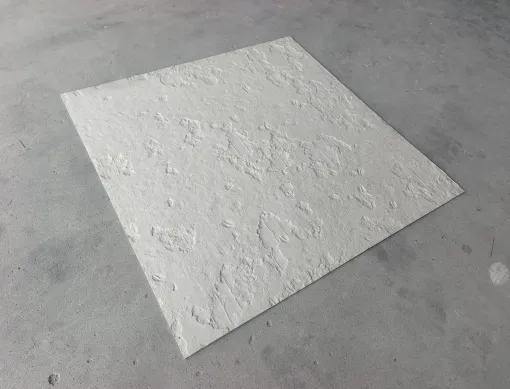
Installation is temporary; performance is forever (or at least, for as long as you own the space). Let's fast-forward a decade. How do Bali Stone and porcelain tiles hold up to kids, pets, rain, sun, and the inevitable spills of daily life?
Let's start with the worst-case scenario: a heavy cast-iron pot slips from your hand and crashes onto the floor. With porcelain tiles, the outcome depends on where it lands. If it hits the center of the tile, the hard glaze might crack or chip, leaving a white mark that's impossible to hide (glazed porcelain's Achilles' heel). If it hits the grout line? You might get lucky, but grout is softer than tile, so you could end up with a cracked grout line that lets moisture seep underneath.
Bali Stone, being a natural stone, reacts differently. Instead of chipping, it might scratch—but those scratches tend to blend into the stone's natural texture. Think of it like a leather couch: small scratches add character, whereas a big gash on a porcelain tile looks like a mistake. I visited a family home where the Bali Stone kitchen floor had been through three kids, a dog, and countless dropped toys over 12 years. The surface had light scratches, but the homeowner laughed and said, "It looks more 'lived-in' now, not 'worn out.'"
For outdoor spaces, the durability gap widens. Porcelain tiles can handle rain and sun, but freeze-thaw cycles are their enemy. Water seeps into tiny cracks, freezes, expands, and eventually loosens the tile. Bali Stone, with its porous but dense structure, allows water to evaporate slowly, reducing the risk of cracking in cold climates. One landscaper in Minnesota told me he refuses to use porcelain tiles for outdoor patios anymore—too many callbacks in winter. Bali Stone? He hasn't had a single replacement request in five years.
Let's talk upkeep. Porcelain tiles are often marketed as "low maintenance," and for the most part, that's true—until grout enters the chat. Grout lines between porcelain tiles are magnets for dirt, mold, and mildew, especially in humid areas like bathrooms or kitchens. I've seen a beautiful porcelain shower tile job ruined by black mold in the grout, requiring a harsh bleach scrub (and even then, the grout never looked the same).
Bali Stone, when installed with larger slabs, minimizes grout lines. Some installers even use a "butt joint" method, where slabs are placed edge-to-edge with minimal spacing, eliminating grout almost entirely. And while Bali Stone does need sealing (about once a year for indoor use, twice for outdoor), it's a simple process: apply a stone sealer with a sponge, let it sit, and wipe off the excess. No scrubbing, no regrouting, no harsh chemicals.
Stain resistance is another win for Bali Stone. Porcelain's glaze repels most stains, but if the glaze is chipped, the unglazed core absorbs liquids quickly. I spilled red wine on a porcelain tile sample once; it wiped right off—until I scratched the glaze first, then spilled again. The result? A permanent purple spot. Bali Stone, sealed properly, resists stains just as well, but even if a stain seeps in, a poultice of baking soda and water can draw it out. One restaurant owner I know swears by Bali Stone for their outdoor dining area: "We've had ketchup, coffee, and even motor oil spills—after sealing, they all wipe away like nothing happened."
Here's the thing about natural materials: they age like fine wine. Bali Stone, with its organic veining and earthy hues, develops a subtle patina over time. Sunlight softens its colors slightly, and minor scratches add depth, making it look more integrated into the space. I visited a 15-year-old Bali Stone fireplace; the original warm beige had mellowed into a richer, honeyed tone, and the owner said, "It looks better now than the day it was installed."
Porcelain tiles, by contrast, are stuck in time. Their color is locked in during manufacturing, which means they won't fade, but they also won't develop character. A porcelain tile floor from 2010 looks exactly like a new one in 2023—great if you want consistency, but lacking the "soul" that comes with a material that ages alongside your life.
That said, travertine —another natural stone—takes aging to an extreme, with its porous surface absorbing oils and liquids to create unique patterns. Bali Stone, being denser than travertine, ages more gracefully, striking a balance between travertine's "lived-in" look and porcelain's "brand-new" feel.
| Feature | Bali Stone | Porcelain Tiles |
|---|---|---|
| Weight per Square Foot | 8-10 lbs (slabs); easy for 1-2 people to carry | 12-15 lbs (tiles); often requires 2+ people per tile |
| Cutting Tools Needed | Circular saw with masonry blade (or even a tile cutter for small jobs) | Wet saw with diamond blade (required for clean, chip-free cuts) |
| Installation Time (300 sq ft, professional crew) | 1-2 days (fewer slabs = faster laying) | 2-3 days (more tiles + grout drying time) |
| Durability (Resistance to Chips/Scratches) | Scratches blend into natural texture; rarely chips | Glaze chips easily; scratches show as white marks |
| Maintenance Needs | Seal yearly (indoor) or twice yearly (outdoor); minimal grout upkeep | Wipe clean easily, but grout requires regular cleaning/sealing |
| Aging Aesthetic | Develops a warm patina; colors mellow and deepen | Color remains static; no patina development |
| Best For | Outdoor patios, fireplaces, high-traffic living areas | Bathrooms, kitchens (low-moisture areas), accent walls |
At the end of the day, the choice between Bali Stone and porcelain tiles depends on your priorities. If you want a material that's easy to install, ages beautifully, and adds character to your space—all while keeping long-term maintenance low—Bali Stone is the clear winner. It's lighter, more forgiving during installation, and turns small imperfections into part of its charm.
Porcelain tiles, on the other hand, are ideal if you need something ultra-durable in high-moisture areas (like a shower) or want a perfectly uniform look that never changes. Just be prepared for heavier lifting, specialized tools, and ongoing grout maintenance.
And if you're still on the fence? Consider mixing materials. One designer I know used Bali Stone for her kitchen countertops (high impact, high character) and porcelain tiles for the backsplash (easy to clean, uniform look). It's all about balance—just like life.
So, whether you're renovating a cozy cottage or designing a sleek office space, remember: the best material isn't just the one that looks good in the sample book. It's the one that fits your lifestyle, your budget, and your vision for the future. And if Bali Stone checks those boxes? You might just find yourself falling in love with it more with each passing year.
Recommend Products












