

Walk into any well-designed space—whether a boutique hotel lobby, a cozy home kitchen, or a sleek office facade—and you'll likely notice it: the quiet power of stone. For centuries, natural stone has been the backbone of architecture, admired for its timeless beauty and raw authenticity. But in recent years, a new contender has emerged, turning heads in design circles: Bali Stone. Part of innovative material families like the MCM (Modified Composite Material) series, Bali Stone isn't just another pretty face—it's a product of modern engineering, blending tradition with technology. But how does it stack up against the quarried classics we've loved for generations? Let's dive in.
This isn't just a battle of old vs. new. It's about understanding what each material brings to the table—literally and figuratively—so you can make choices that align with your project's goals, aesthetic vision, and practical needs. Whether you're a designer sourcing materials for a high-end restaurant, a homeowner remodeling your bathroom, or a developer planning a commercial complex, the difference between Bali Stone and traditional natural stone could shape everything from installation day to the space's feel ten years down the line.
Before we jump into differences, let's clarify the contenders. Traditional natural stone is the stuff of ancient temples and Renaissance palaces: think marble veined with gold, granite flecked with mica, limestone with soft, earthy hues. Quarried from the earth, cut into slabs, and polished (or left rough), it's a product of millions of years of geological processes—each piece as unique as a fingerprint.
Bali Stone , on the other hand, is a modern innovation. While it draws inspiration from natural stone's texture and warmth, it's part of a newer category of materials often grouped under MCM technology—short for Modified Composite Material. You might hear it mentioned alongside terms like MCM flexible stone or MCM big slab board series , which hint at its core strengths: flexibility, durability, and the ability to be produced in larger, more consistent formats. Unlike traditional stone, Bali Stone isn't mined; it's engineered, blending natural aggregates (like crushed stone or sand) with polymers and resins to create a material that's both lightweight and tough.
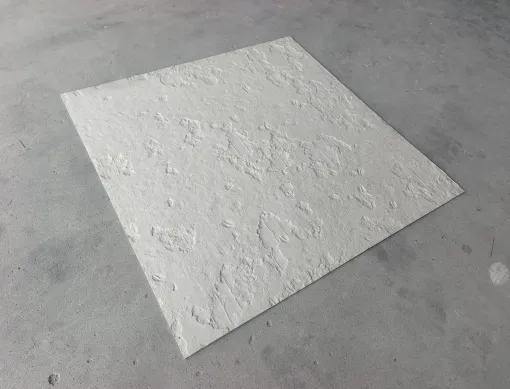
At their cores, these materials are worlds apart—and that's where much of their divergence begins.
Traditional stone is as natural as it gets. Take travertine (beige) , a classic example: it forms in hot springs, where mineral-rich water cools and deposits calcium carbonate, leaving behind porous, pitted surfaces and soft, neutral tones. Granite, another staple, is an igneous rock formed from slowly cooling magma, packed with quartz, feldspar, and mica for a hard, crystalline structure. Every slab is a slice of the earth's crust, bearing the marks of its formation—veins, pits, color variations, and all.
The downside? That naturalness means inconsistency. Two slabs from the same quarry might look drastically different, which can be a headache for projects requiring uniform aesthetics. It also means traditional stone is dense and heavy—granite, for instance, can weigh 15-20 pounds per square foot—limiting how it's used and where it can be installed.
Bali Stone flips the script. As part of the MCM flexible stone family, it's designed to marry the best of natural texture with modern performance. The base is often a mix of natural aggregates (think fine stone dust or recycled mineral particles) bound together with polymers, resins, or cement. This composite structure gives it two key advantages: flexibility and lightness.
Flexibility means it can bend slightly without cracking—ideal for curved walls or uneven surfaces where rigid traditional stone would fail. Lightness? We're talking 3-5 pounds per square foot, a fraction of natural stone's weight. And because it's engineered, Bali Stone can be produced in massive, seamless slabs (hello, MCM big slab board series ), eliminating the need for unsightly grout lines in large installations. Want a 10-foot-tall feature wall with zero joints? Bali Stone makes it possible.
Consistency is another win. While it mimics natural textures—from the pockmarks of travertine to the smoothness of fair-faced concrete —each batch is controlled for color and pattern. No more surprises when your second shipment arrives looking like a different material entirely.
Beauty is subjective, but when it comes to design, versatility matters. Let's see how each material flexes its creative muscles.
There's a reason traditional stone has endured: its uniqueness is irreplaceable. A marble slab with sweeping blue veins can become the focal point of a luxury bathroom; a rough-hewn limestone wall adds rustic warmth to a cabin. These materials tell stories—of the earth's history, of craftsmanship, of time itself. For projects aiming for "organic luxury" or historical authenticity, traditional stone is unbeatable.
But that uniqueness has limits. If you want a specific shade of travertine (beige) with minimal variation, you might spend weeks hunting for the right quarry. And customization is tricky: you can polish it, hone it, or leave it rough, but you can't change its inherent color or pattern. It's a collaboration with nature, not a blank canvas.
Bali Stone is the ultimate mimic. Thanks to advanced manufacturing techniques, it can replicate almost any natural stone look—from the warmth of travertine (beige) to the industrial edge of fair-faced concrete —but with a twist: you call the shots. Want travertine (beige) but with a hint of gold? Done. Prefer the look of weathered granite but in a lighter weight? No problem. It even comes in finishes that traditional stone can't match, like metallic accents or matte textures that stay fingerprint-free.
This versatility is a dream for designers. Imagine a retail space where the facade mimics fair-faced concrete (thanks to Bali Stone) but the interior walls shift to a warm travertine (beige) texture—all without switching materials. Or a home where the kitchen backsplash uses MCM big slab board series Bali Stone in a seamless, marble-like pattern, avoiding the grout lines that trap dirt in traditional tile.
Is it "real" stone? No—but for many projects, that's beside the point. It's about capturing the essence of stone without the limitations.
Beauty fades if a material can't stand up to daily life. Let's talk about how these stones hold up over time.
Traditional stone is known for durability—marble and granite have lasted centuries in ancient structures, after all. But "tough" doesn't mean "low-maintenance." Take travertine (beige) : its porous surface is a magnet for stains. Spill red wine on an unsealed travertine floor, and you'll likely have a permanent reminder. Even sealed stone needs regular re-sealing (every 1-3 years for high-traffic areas) to stay protected. Granite, while less porous, can still chip if hit with heavy objects, and its polished surface scratches easily.
Weather is another enemy. Freeze-thaw cycles can crack limestone; salt from roads eats away at marble facades. For exterior use, traditional stone often requires ongoing care to stay looking its best.
Bali Stone, with its composite structure, is engineered to be more forgiving. The polymer binders make it less porous than natural stone, so stains (coffee, oil, even paint) wipe away with a damp cloth—no sealing required. Its flexibility also helps it withstand impacts better; a dropped pot is less likely to chip it than a traditional stone slab.
Externally, it's a rockstar. MCM flexible stone formulations often include UV inhibitors to prevent fading, and the material stands up to rain, snow, and temperature swings without cracking or warping. In coastal areas, where salt air corrodes traditional stone, Bali Stone holds its own, making it a popular choice for beachfront homes or commercial properties.
Maintenance? Simple. A quick wipe with mild soap and water keeps it looking new. No special cleaners, no re-sealing, no panic over spills. For busy spaces—restaurants, schools, hospitals—this low-maintenance factor alone can make it worth the switch.
Installation is where the rubber meets the road—or, in this case, the stone meets the wall. And here, the difference between traditional and Bali Stone is night and day.
Installing traditional stone is no small feat. First, you need to transport those heavy slabs—often requiring specialized equipment like cranes or forklifts. Then, the surface it's being applied to needs to be reinforced. A granite countertop, for example, needs sturdy cabinets to support its weight; a marble facade might require additional structural steel in the building's frame.
Cutting traditional stone is also a challenge. It requires diamond-tipped saws and skilled labor to avoid cracking, and mistakes are costly—ruining a $500 slab isn't an option. For large projects, installation can drag on for weeks, driving up labor costs and delaying timelines.
Bali Stone installation is a breeze by comparison. Its light weight (remember, 3-5 pounds per square foot) means it can be carried by two people, no crane needed. It doesn't require structural reinforcement, so it's ideal for retrofits or buildings with weight restrictions—think older homes or high-rise exteriors where adding heavy stone isn't feasible.
Cutting and shaping? Simple. Standard power tools (jigsaws, circular saws) work, and the material doesn't chip easily, so even DIYers can tackle small projects. The MCM big slab board series also means fewer seams—installers can cover large areas quickly, reducing labor time and costs. For a commercial project with tight deadlines, that speed can be a game-changer.
Even curved or uneven surfaces are manageable. Bali Stone's flexibility lets it conform to gentle bends, opening up design possibilities—like a rounded fireplace surround or a curved accent wall—that would be nearly impossible with traditional stone.
| Feature | Traditional Natural Stone | Bali Stone (MCM Flexible Stone) |
|---|---|---|
| Composition | Quarried natural rock (marble, granite, travertine (beige) , etc.) | Engineered composite: natural aggregates + polymers/resins (part of MCM flexible stone series) |
| Weight | Heavy (15-20 lbs/sq ft) | Lightweight (3-5 lbs/sq ft) |
| Aesthetic Consistency | Highly variable (unique veining, color shifts) | Uniform (customizable colors/patterns) |
| Durability | Hard but porous; prone to staining, chipping, and weather damage | Stain-resistant, flexible, UV/weather-resistant |
| Installation | Requires structural support; heavy lifting; skilled labor | Lightweight, easy to cut/install; suitable for curves/uneven surfaces |
| Maintenance | High (regular sealing, specialized cleaners) | Low (soap and water; no sealing needed) |
| Sustainability | Quarrying impacts ecosystems; high waste from cutting | Often uses recycled materials; lower energy production; MCM big slab board series reduces waste |
In an era of eco-conscious design, sustainability is more than a buzzword—it's a priority. How do these materials stack up?
Quarrying natural stone is resource-intensive. It involves clearing land, drilling, blasting, and hauling massive slabs, which disrupts ecosystems and contributes to carbon emissions. Waste is also a issue: up to 30% of a quarried block is lost during cutting and shaping. Once installed, traditional stone's weight increases a building's energy use—heavier structures require more heating and cooling to maintain comfortable temperatures.
That said, natural stone is a natural material and can be recycled or repurposed at the end of its life, which is a plus. But the upfront environmental cost is hard to ignore.
Bali Stone has a greener edge, thanks to its engineered composition. Many MCM flexible stone manufacturers use recycled aggregates (like crushed waste from traditional stone quarries) in their mixes, reducing the need for new mining. The production process is also more energy-efficient than quarrying and transporting heavy stone slabs.
Its light weight is another sustainability win: lighter building materials reduce a structure's carbon footprint by lowering transportation emissions and decreasing the need for heavy structural support (which uses more steel and concrete). Plus, since Bali Stone lasts longer with less maintenance, it reduces the need for replacement—another win for longevity.
Is it perfect? No material is. But for projects aiming for LEED certification or low environmental impact, Bali Stone often comes out ahead.
Let's talk numbers. Traditional stone and Bali Stone differ in upfront cost, but the long-term picture matters too.
Traditional stone isn't cheap. A slab of granite can cost $50-100 per square foot, and marble or rare stones can hit $200+ per square foot. Installation adds more: because it's heavy and labor-intensive, installation costs often match or exceed the material cost itself. Then there's maintenance—sealers, specialized cleaners, and occasional repairs—adding hundreds of dollars over the years.
For luxury projects where "authenticity" is non-negotiable, this is a worthwhile investment. But for budget-conscious builds, it can be a dealbreaker.
Bali Stone typically costs less upfront—around $20-50 per square foot for materials, depending on the finish. Installation is cheaper too, thanks to its light weight and ease of handling. But the real savings come later: no sealing, no expensive cleaners, and fewer repairs mean lower long-term costs. Over 10 years, Bali Stone can end up costing 30-50% less than traditional stone when you factor in maintenance and replacement.
It's a classic case of "pay now or pay later." For commercial projects with tight budgets or homeowners looking to maximize value, Bali Stone's lower total cost of ownership is hard to beat.
There's no one-size-fits-all answer—both Bali Stone and traditional natural stone have their place. Traditional stone shines in projects where authenticity, unique character, and a "luxury" label are top priorities: think heritage restorations, high-end homes, or spaces where natural variation is celebrated. It's a material with soul, carrying the weight of history in every slab.
Bali Stone, meanwhile, is the practical innovator. It's for designers who want the look of stone without the hassle—consistent aesthetics, easy installation, low maintenance, and sustainability. It's perfect for large-scale projects, curved surfaces, or spaces where durability and cost-efficiency matter most: retail stores, office buildings, coastal homes, or busy family kitchens.
At the end of the day, the best choice depends on your project's goals, budget, and vision. But one thing is clear: with materials like Bali Stone leading the charge, the future of stone in design is looking more flexible, more sustainable, and more exciting than ever.
Recommend Products












