

Where nature's artistry meets architectural innovation—crafting spaces that breathe with warmth and purpose
Every building tells a story. Behind the steel frames and glass facades, it's the materials that give a structure its voice—whether whispering of tradition, shouting of modernity, or humming a melody of nature. For architects and designers worldwide, finding that perfect material is like finding a missing puzzle piece: it must fit the vision, endure the test of time, and resonate with the people who inhabit the space.
Enter Bali Stone Wall Cladding—a material born from the marriage of Bali's lush landscapes and cutting-edge engineering. More than just a building product, it's a bridge between the organic beauty of the natural world and the precision of contemporary design. And at the heart of making this bridge accessible to global projects is COLORIA GROUP, a one-stop solution provider that transforms visionary ideas into tangible, tactile reality.
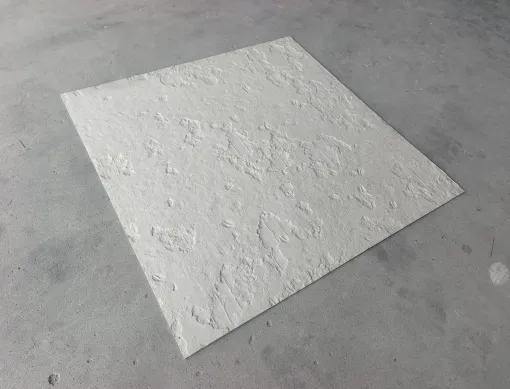
Close your eyes and picture Bali: sun-dappled rice terraces, weathered stone temples, beaches where volcanic rock meets turquoise water. Bali Stone captures that essence—not by mimicking nature, but by channeling its soul. Developed as part of COLORIA's MCM Flexible Stone series, this cladding material is a testament to how modified cementitious materials (MCM) can redefine what's possible in architectural design.
What makes Bali Stone unique? Unlike rigid natural stone, its flexibility allows it to embrace curves, angles, and unconventional surfaces—think undulating accent walls in a boutique hotel or gently sloped facades of a coastal villa. Its texture, inspired by Bali's weathered coral stones and hand-carved temple walls, adds depth that no flat paint or generic tile can match. And because it's part of the MCM family, it carries the hallmark of sustainability: lightweight, durable, and crafted to minimize environmental impact.
"We wanted a material that felt alive," says Maria Gonzalez, an architect who specified Bali Stone for a luxury resort in Dubai. "Natural stone is beautiful, but it's heavy and hard to shape. Bali Stone gave us the warmth of stone with the freedom to design a facade that flows like the waves nearby. The result? Guests stop and touch the walls—they don't just see the building; they connect with it."
Bali Stone isn't magic—it's meticulous engineering. As a modified cementitious material, MCM combines the strength of cement with polymers and natural minerals to create a material that's both robust and surprisingly versatile. Let's break down why MCM, and specifically MCM Flexible Stone and MCM Big Slab Board Series , have become go-to choices for global projects:
| Feature | Natural Stone | Bali Stone (MCM Flexible) |
|---|---|---|
| Weight (per sq.m) | 25-30 kg | 6-8 kg |
| Installation Time | 3-4 days (per 100 sq.m) | 1-2 days (per 100 sq.m) |
| Custom Colors | Limited by natural deposits | Unlimited (matched to Pantone/design specs) |
| Environmental Impact | High (quarrying, heavy transport) | Low (recycled materials, reduced emissions) |
In 2024, a leading Saudi developer set out to build a commercial tower that would stand out in Riyadh's skyline—not with height, but with heart. Their vision: a "vertical garden" where office workers could feel connected to nature, even in the bustling city center. The challenge? Finding a cladding material that could handle Riyadh's extreme temperatures (up to 50°C in summer) while mimicking the look of overgrown stone cliffs.
COLORIA's team proposed a hybrid solution: MCM Big Slab Board Series for the main facade (large, seamless panels to reduce joints and maintenance) and Bali Stone for the "green pockets"—curved niches where plants and seating would be integrated. The result? A 22-story tower where the exterior feels like a living, breathing ecosystem.
"The Bali Stone in those niches was a game-changer," says project manager Ahmed Al-Mansoori. "It's durable enough to withstand sandstorms, but soft enough that when you lean against it, you forget you're touching a building material. Employees now eat lunch there, kids from the ground-floor daycare draw on the smooth surfaces—it's become more than a tower; it's a community space."
Bali Stone may be the star, but COLORIA's strength lies in its ability to deliver a full spectrum of solutions. For projects that demand scale, MCM Big Slab Board Series offers panels up to 3m x 1.5m—minimizing installation time and creating a sleek, monolithic look. For designers pushing boundaries, the MCM 3D Printing Series turns impossible geometries into reality, like the parametric facade of a cultural center in Jeddah that resembles wind-swept sand dunes.
"We don't just sell materials; we solve problems," explains Elena Petrova, COLORIA's design consultant. "A client in Milan wanted a lobby wall that looked like it was carved from a single block of stone, but with integrated lighting. We used 3D-printed MCM panels with embedded channels for LEDs—something traditional stone could never do. And because we handle everything from design to delivery, they didn't have to coordinate with five different suppliers."
In an era where "green building" is more than a buzzword, MCM stands out as a responsible choice. COLORIA's commitment to sustainability runs deeper than just using recycled materials (though that's part of it). By focusing on lightweight MCM, they reduce carbon emissions from transportation. By offering prefabricated panels, they cut down on on-site waste. And by designing products to be recyclable at the end of their lifecycle, they ensure buildings don't become future landfills.
"We once worked with a university in Copenhagen that wanted their new campus to be carbon-neutral," says Petrova. "By choosing MCM Flexible Stone over natural granite, they reduced the building's embodied carbon by 35%. That's the kind of impact that makes our work meaningful—not just creating beautiful spaces, but creating spaces that respect the planet."
Imagine this: You're an architect in Sydney, designing a hotel in Riyadh, and you need custom Bali Stone panels with a unique gradient finish. You call COLORIA. Within 48 hours, their design team shares samples. Two weeks later, 3D renderings of the facade are approved. Six weeks after that, the panels are on a truck from their factory to Riyadh—coordinated by COLORIA's local agency, which handles customs, delivery, and even on-site installation support.
That's the one-stop difference. With decades of experience and a presence in key markets like Saudi Arabia, COLORIA doesn't just ship products—they provide peace of mind. From initial concept sketches to post-installation check-ins, they're with you every step of the way.
Recommend Products












