


Close your eyes and picture it: the serene tranquility of a Balinese villa. You can almost hear the gentle trickle of water, feel the warm, humid air, and see the lush greenery framing a stunning infinity pool. What stands out in this idyllic scene? It's the stone. That iconic, earthy, natural stone that clads the walls, paves the walkways, and lines the pools, creating a seamless connection between architecture and nature. It's a look that whispers luxury, peace, and timeless elegance. For years, architects, designers, and homeowners have strived to capture this specific brand of paradise in their own projects.
But bringing that dream to life, especially outside of its native tropical environment, comes with a set of stubborn, real-world challenges. The very sun that makes a tropical paradise so appealing can be the biggest enemy of its signature materials. Traditional Bali stone, while undeniably beautiful, often struggles against the relentless assault of ultraviolet (UV) radiation, leading to fading, discoloration, and a slow decay of that vibrant, natural aesthetic. It can be heavy, difficult to install, and its sourcing can raise questions about environmental impact and consistency. What if you could have the soul of Bali stone without its weaknesses? What if there was a way to guarantee that rich, beautiful color would last, defiant against the sun's rays? That's not a fantasy anymore. It's a reality made possible by a revolution in material science.
The Timeless Dream vs. The Harsh Reality of Balinese Stone
The allure of Balinese architecture is rooted in its philosophy of "Tri Hita Karana" – harmony among people, nature, and the divine. This is reflected in the choice of materials. Natural stones like Green Sukabumi (often used in pools for its stunning emerald hue) and rustic Palimanan stone are cornerstones of this design language. They are porous, textured, and feel alive, changing subtly with the light and weather. This organic quality is precisely what makes them so desirable. They don't just cover a wall; they give it character and a story.
The Unspoken Problems of Paradise's Building Blocks
Anyone who has worked with or maintained properties featuring traditional natural stone in sun-drenched locations knows the flip side of this beauty. The dream can quickly turn into a high-maintenance headache.
- The Fading Color Crisis: The number one enemy is the sun. UV radiation is a powerful force that breaks down chemical bonds in materials, a process called photodegradation. For natural stones, especially those with vibrant colors like Green Sukabumi, this means the glorious green can bleach out over time, turning into a washed-out, pale version of its former self. The color isn't just a feature; it's the main event. Losing it means losing the very essence of the design.
- Water Woes and Algae Blooms: Natural stones are often porous. While this contributes to their organic look, it also means they absorb water. In humid climates, this constant moisture becomes a breeding ground for algae, moss, and mold. What was once a clean, elegant wall can become stained and slippery, requiring constant, harsh chemical cleaning that can further damage the stone's surface.
- The Burden of Weight: A slab of natural stone is incredibly heavy. This has massive implications for any project. Structurally, the building must be engineered to support the immense load, adding complexity and cost. Installation is a laborious, specialized, and expensive process, often requiring heavy machinery and a larger crew. This makes it particularly challenging for renovations or for application on higher floors.
- The Sustainability Question: Quarrying stone is an energy-intensive process that can scar landscapes. Furthermore, being a natural product, consistency is never guaranteed. A batch of stone quarried today might have a different shade, veining, or quality from a batch quarried a month from now. This can lead to a patchy, inconsistent look on large projects, frustrating designers who planned for a uniform finish.
A New Dawn for Wall Cladding: The COLORIA GROUP Innovation
At COLORIA GROUP, we saw these challenges not as roadblocks, but as an engineering puzzle waiting to be solved. As a dedicated one-stop solution provider for architectural materials, we are obsessed with pushing the boundaries of what's possible. Our mission was clear: create a material that embodies the aesthetic spirit of natural stone but is engineered for superior performance, longevity, and sustainability. The result of this mission is our groundbreaking MCM (Modified Cementitious Material) technology.
So, what exactly is MCM? Think of it as a form of architectural alchemy. We take natural, inorganic materials—like common soil, stone powder, and other mineral components—and put them through a proprietary, low-temperature process. This process modifies the materials at a molecular level, reforming them into a new, incredibly versatile building material. It's not synthetic plastic, and it's not traditional concrete. It's a new category altogether, one that combines the best of nature and science.
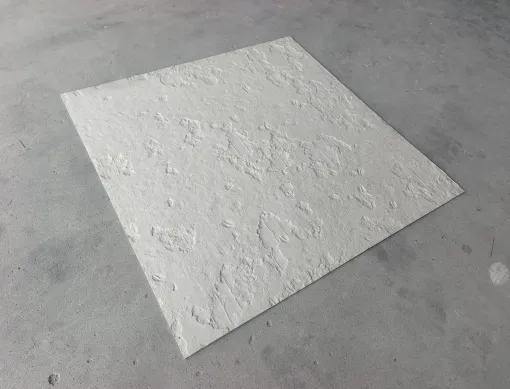
For achieving that perfect "Bali Stone" look, our star performer is the MCM Flexible Stone series. This product is a revelation. It perfectly captures the visual and tactile essence of natural stone, from its subtle color variations to its authentic texture. But here's the magic: it's thin, lightweight, and—as the name suggests—flexible. It can be bent to wrap around curved walls, columns, and archways, something that is simply impossible with traditional stone slabs. This opens up a universe of design possibilities, allowing for the creation of organic, flowing forms that truly echo nature.
The Unbreakable Promise: UV Resistance and Guaranteed Color
Let's circle back to the biggest problem: color fading. This is where our MCM technology truly shines and where we make our boldest promise. The color in our MCM products is not a superficial coating. It's not a dye that's been applied to the surface. The color is inherent to the material itself .
The Science of Lasting Color
How do we achieve this? It's a multi-faceted approach.
- Mineral-Based Pigments: We use inorganic mineral pigments. Unlike organic dyes that are susceptible to breaking down under UV light, these mineral pigments are incredibly stable. They are, in essence, colored rock powders. Their color is a fundamental property of their crystalline structure, making them naturally resistant to fading.
- Homogeneous Composition: During our unique manufacturing process, these pigments are blended and bonded with the other natural ingredients to form a completely homogeneous material. This means the color runs all the way through the product, from front to back. If the surface ever gets scratched or abraded, the color underneath is exactly the same. There is no other color to reveal.
- Locked-In Stability: The low-temperature curing process creates a stable molecular structure that effectively "locks in" the pigments, protecting them from environmental factors. The material is formulated to be non-reactive to the typical atmospheric conditions that cause other materials to oxidize, tarnish, or change color.
What does "Color Retention Guaranteed" mean for you, the designer, developer, or homeowner? It means peace of mind. It means the stunning emerald green or earthy terracotta you chose for your wall will remain that same stunning color year after year, decade after decade. It means the initial design vision is preserved for the long term, protecting the aesthetic and financial value of the property. No more costly repainting, resurfacing, or replacing faded cladding. It's a commitment to beauty that endures. We have subjected our materials to rigorous accelerated weathering tests, simulating years of intense sun exposure in a matter of weeks, and the results consistently prove an exceptional level of color fastness that far surpasses traditional materials.
A Universe of Possibilities: Beyond the Bali Aesthetic
While our MCM Flexible Stone is perfect for recreating the Bali look, the power of MCM technology extends far beyond a single aesthetic. At COLORIA GROUP, we've developed an entire ecosystem of products designed to provide solutions for virtually any architectural challenge. We understand that every project is unique, and our diverse product lines reflect this commitment to versatility.
MCM Big Slab Board Series: For Grand Statements
When your design calls for a grand, monolithic, and seamless appearance, the MCM Big Slab Board Series is the answer. These are large-format panels that can create the breathtaking effect of a single, massive slab of quarried stone, marble, or travertine, but without the logistical nightmare. Imagine a hotel lobby, a corporate headquarters entrance, or a luxury retail facade with expansive, uninterrupted surfaces. Because these boards are still based on our lightweight MCM technology, they can be installed quickly and on structures that could never support the weight of natural stone equivalents. The result is pure, high-impact drama.
MCM Project Board Series: The Professional's Choice
For large-scale residential and commercial developments, efficiency, consistency, and durability are paramount. The MCM Project Board Series is our workhorse solution, engineered specifically for these demands. This series offers a wide range of standard finishes—from brick and stone to wood and concrete looks—that provide incredible aesthetic value combined with rapid installation and long-term performance. For developers and contractors, this means faster project completion, predictable quality across hundreds or thousands of square meters, and a final product that is both beautiful and built to last.
MCM 3D Printing Series: Where Imagination Takes Form
This is where we venture into the truly avant-garde. The MCM 3D Printing Series leverages the unique properties of our material to create custom, three-dimensional surfaces that are limited only by your imagination. We can produce intricate geometric patterns, flowing organic reliefs, custom logos, and artistic murals that are literally part of the wall itself. This is not just cladding; it's architectural sculpture. It allows brands to create unforgettable environmental graphics and designers to craft spaces that are truly one-of-a-kind. It's the ultimate tool for bespoke design.
The Clear Advantages: A Side-by-Side Look
The benefits of COLORIA GROUP's MCM technology become even clearer when you compare it directly with conventional materials. Let's break down how our MCM Flexible Stone stacks up against traditional natural stone and other common cladding options.
| Feature | COLORIA MCM Flexible Stone | Traditional Natural Stone | Ceramic / Porcelain Tile |
|---|---|---|---|
| UV Resistance / Color Fastness | Excellent. Inherent mineral pigments are extremely stable. Color is guaranteed. | Variable to Poor. Prone to fading and discoloration, especially vibrant stones. | Good to Excellent. Glaze provides good protection, but patterns are surface-level. |
| Weight | Extremely Lightweight (approx. 4-6 kg/m²). | Very Heavy (50-100+ kg/m²). Requires structural reinforcement. | Moderately Heavy (15-25 kg/m²). |
| Flexibility | Excellent. Can be bent to fit curved surfaces and columns. | None. Completely rigid and brittle. | None. Completely rigid. |
| Installation | Fast and easy. Can be cut with a utility knife. Adheres with simple adhesive. | Slow, complex, and expensive. Requires specialized labor and equipment. | Moderately complex. Requires wet saw for cutting and skilled tile setter. |
| Impact Resistance | Good. Flexible nature allows it to absorb impact without shattering. | Poor to Fair. Can chip, crack, or shatter under impact. | Poor. Brittle and can easily crack or chip on impact. |
| Eco-Friendliness | High. Made from natural/recycled soil, low-energy unfired production, low transport emissions. | Low. High-energy quarrying process, significant transport emissions due to weight. | Moderate. High-temperature firing process is energy-intensive. |
| Customization | Extensive. Custom colors, textures, and shapes are possible. | Limited. Restricted to what can be quarried. Consistency is an issue. | Limited to available prints and molds. True customization is difficult. |
| Maintenance | Low. Non-porous surface resists staining and algae growth. Easy to clean. | High. Porous surface requires frequent cleaning and sealing to prevent staining and biological growth. | Low. Grout lines can be prone to staining and mold. |
Your Partner in Design and Innovation
At COLORIA GROUP, our identity as a one-stop solution provider is at the heart of everything we do. We don't just sell innovative products; we build partnerships. We understand that bringing a great design to life requires more than just great materials. It requires expertise, support, and a shared vision. With decades of industry experience and a global footprint that includes dedicated agencies in key markets like Saudi Arabia, we are equipped to support projects of any scale, anywhere in the world.
Our process involves working closely with architects, designers, and developers from the initial concept to the final installation. We provide in-depth consultations to help you select the perfect material, texture, and color for your project's specific needs. Our capacity for customization means that if you have a unique vision, we have the tools and expertise to help you realize it. We are your technical resource, your creative collaborator, and your reliable supplier, all in one.
Conclusion: Build with Beauty That Endures
The dream of a timeless, Bali-inspired escape—or any other architectural vision that relies on the beauty of natural materials—is no longer at the mercy of the elements. You no longer have to choose between the authentic look you desire and the long-term performance you need. Modern material science has closed the gap.
With COLORIA GROUP's MCM product series, you can design and build with confidence. Confidence that the color will remain vibrant and true, guaranteed. Confidence that the material is lightweight, versatile, and easy to work with. And confidence that you are choosing a sustainable, eco-friendly solution for the future. It's time to stop compromising. It's time to explore the future of architectural finishes.










