
I've stood in too many rooms where the walls felt like an afterthought. Not actively bad, just… there. Flat, painted a safe beige or gray, with no texture, no personality, no story to tell. They didn't welcome you; they just existed. And I always thought: Walls should do more than hold up the roof. They should set the mood, spark conversation, make you pause and think, "This space feels alive." That's the magic of a well-chosen wall material—and it's exactly what I witnessed when Romanite entered the picture.
Let's talk about the "before" first. Picture a commercial lobby I visited last year: high ceilings, large windows flooding the space with natural light, but walls that looked like they'd been stuck in the 90s. Dull, matte paint that absorbed light instead of reflecting it, a few faint stains near the baseboards, and zero texture—just a flat, unbroken expanse of "meh." The furniture was modern, the lighting sleek, but the walls? They dragged the whole room down. Employees glanced at their phones while waiting, visitors stared at their shoes. No one lingered because the walls didn't invite them to.
Or take a home renovation client's living room: decades-old wallpaper peeling at the corners, a faint musty smell near the windows, and walls that felt cold to the touch, even in summer. "I want this room to feel like a hug," she told me. But those walls? They felt more like a handshake—polite, but distant. The problem wasn't just wear and tear; it was that the materials themselves lacked soul. They were functional, sure, but they didn't connect emotionally.
These aren't isolated cases. So many spaces suffer from walls that are "good enough." They serve a purpose, but they don't elevate the space. And that's where MCM (Modified Composite Material) comes in—materials designed to be more than just functional. They're designed to tell a story. And among them, Romanite stands out like a classic novel in a sea of magazines.
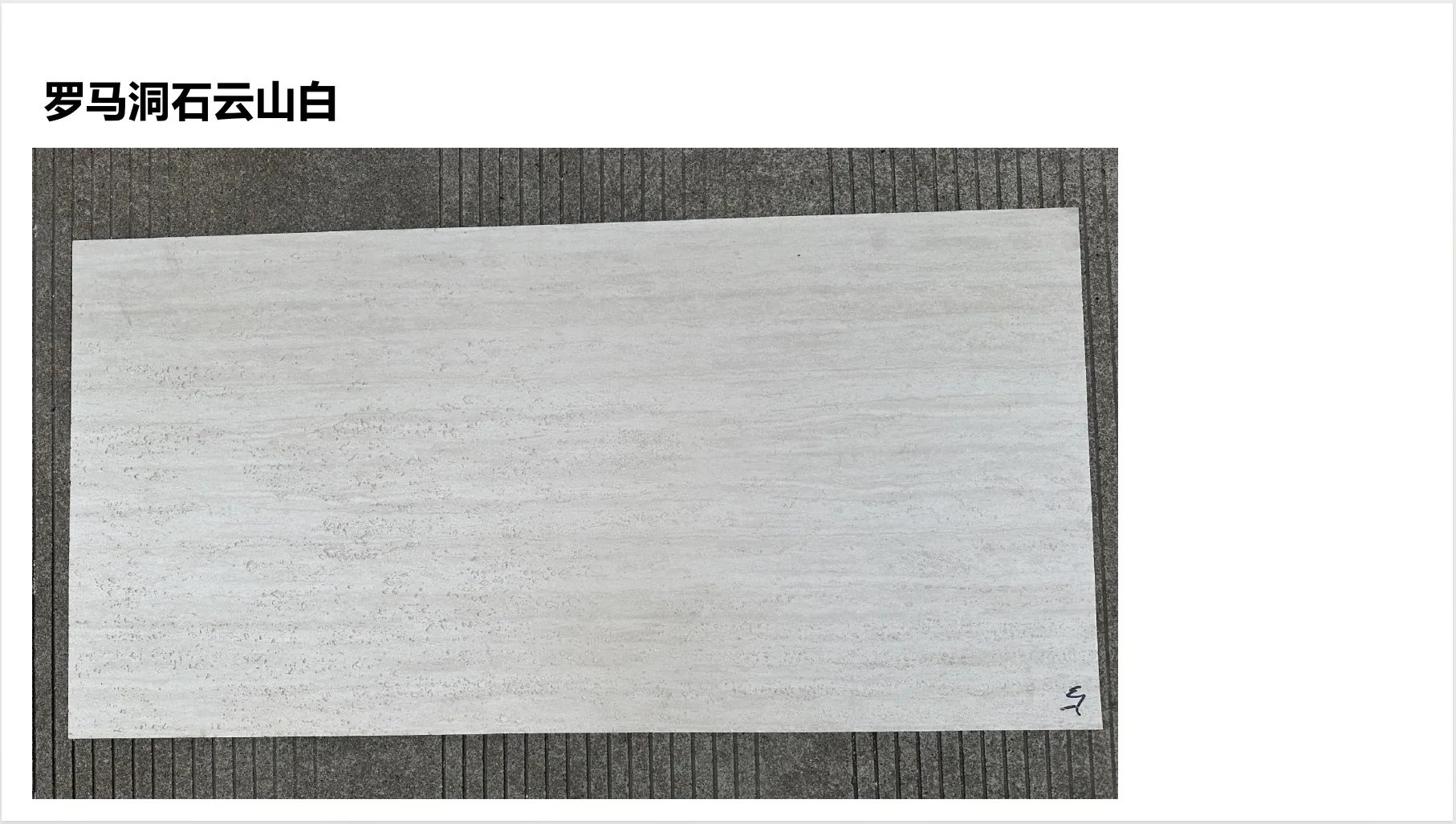
I first heard about Romanite while researching MCM options for that lobby renovation. The project manager mentioned it offhand: "We're considering Romanite—large format, really makes a statement." I'll admit, I was skeptical at first. "Large format" can sometimes mean "impersonal," like staring at a blank billboard. But then I saw the real photos —large-size panels that didn't just cover walls, but transformed them. These weren't just "materials"; they were like pieces of art scaled to fit a room.
Romanite, part of MCM's innovative lineup, draws inspiration from ancient Roman architecture—think the grandeur of the Colosseum, the weathered elegance of travertine columns— but reimagined for modern spaces. What struck me first was the texture: a subtle, organic pattern that mimics natural stone, with soft ridges and valleys that catch the light. Run your hand over it, and it's warm, not cold like marble or concrete. It feels lived-in , like it has a history, even in a brand-new space.
And that "large size"? It's a game-changer. Traditional stone or tile often requires grout lines that break up the pattern, making walls feel busy. Romanite's large panels (some as big as 1200x2400mm) create a seamless flow, turning a wall into a single, sweeping canvas. It's bold without being overwhelming—like a symphony instead of a jingle.
Let's circle back to that lobby. The design team wanted something that would make visitors stop and look up, that would complement the modern furniture and the flood of natural light. After narrowing down options—foamed aluminium alloy board (vintage silver) was a contender for its sleekness, and travertine (starry green) had a fun, cosmic vibe—Romanite won out. Why? Because it balanced grandeur with warmth. It didn't compete with the space; it completed it.
The installation was surprisingly smooth, too. MCM materials are lightweight compared to traditional stone, so crews didn't need heavy machinery—just a few tools and a clear vision. I visited the site halfway through, and watching the first Romanite panel go up was like watching a puzzle piece click into place. The dull, flat wall suddenly had depth. Light from the windows hit the texture, casting soft shadows that shifted as the sun moved. By the end of the day, a section of the wall was done, and even the construction workers were pausing to take photos. "It looks like it's always been here," one said. That's the mark of a great material: it feels inevitable.
Words can only do so much—you need to see the real photos to believe it. But let me paint the picture: Before, the lobby wall was a washed-out gray, absorbing light, making the room feel smaller than it was. After? Romanite in a warm, earthy tone (think sunbaked stone with hints of gold) that turned the wall into a light reflector. The texture caught the morning light, casting gentle ripples of shadow that made the space feel dynamic, like it was breathing. Employees now gather near the wall for coffee breaks; visitors snap photos. The room doesn't just function—it engages .
The home client's living room? Her "hug" vision came to life with Romanite paired with rammed earth board (gradient). The Romanite covered the main wall behind the sofa, its large size making the room feel more spacious, while the gradient rammed earth—softly shifting from terracotta to sand—added a cozy, organic contrast. "I walk in and feel like I'm wrapped up," she told me. "The walls don't just look good—they make me happy."
| Feature | Before | After (with Romanite) |
|---|---|---|
| Appearance | Flat, dull paint/wallpaper; stains, peeling edges; no visual interest. | Seamless, large-format panels with organic texture; warm, earthy tones; light-catching ridges and valleys. |
| Texture | Smooth, cold, unyielding (or sticky, peeling wallpaper). | Warm, tactile surface with subtle depth; feels natural, like weathered stone. |
| Light Interaction | Light absorbed; room feels dim, even with windows. | Light reflects off texture, creating soft shadows and dynamic patterns; room feels brighter, more alive. |
| Emotional Vibe | Passive, forgettable, "just a wall." | Inviting, memorable, "this space has personality." |
| Durability | Prone to stains, peeling, fading; needed repainting every 2-3 years. | Water-resistant, scratch-resistant, fade-proof; built to last decades. |
MCM's lineup is impressive—lunar peak silvery has a cool, otherworldly glow; foamed aluminium alloy board (vintage gold) adds a touch of luxury; travertine (starry green) feels playful and modern. But Romanite's secret weapon is its versatility. It works in commercial spaces (hotels, lobbies, restaurants) where you need to make a statement, and it works in homes (living rooms, bedrooms, home offices) where you need to feel at ease. It's not "too fancy" for a casual space, and not "too casual" for a high-end one.
Another win? It's low-maintenance. Unlike natural stone, which needs sealing and polishing, Romanite wipes clean with a damp cloth. No special cleaners, no fuss. That lobby I mentioned? Six months later, it still looks brand-new—no scuffs, no stains, just that same warm, textured glow.
Walls are the unsung heroes of design. They're the backdrop to your life—morning coffee, work meetings, family gatherings, quiet evenings. They deserve to be more than "good enough." Romanite isn't just a material; it's a way to turn a room into a story. And the best part? You don't have to imagine it—just look at the real photos . The large-size panels, the texture, the way light dances on them—they speak for themselves.
So if your walls are feeling stuck in the past, if they're not making you smile when you walk in, maybe it's time for a change. Whether you go with Romanite, lunar peak golden, or a mix of MCM materials, remember: walls should feel like they belong in your space. They should make you think, "This is my room." And when they do? That's when a house becomes a home, and a lobby becomes a destination.
The next time you walk into a room, take a second to look at the walls. Do they tell a story? If not, maybe it's time to write a new one—with Romanite leading the way.
Recommend Products












