
Choosing the right material for your home or commercial space can feel like solving a puzzle. You want something that looks stunning, stands up to the elements, and doesn't turn into a chore to maintain. If you've ever stared at a wall of samples—travertine in every shade, concrete boards, stone veneers—and wondered, "Is there something that checks all the boxes?", you're not alone. Today, let's talk about a material that's been turning heads in architecture and design circles: gradient color rammed earth board. It's not just a pretty face; it's a workhorse with benefits that matter for real life. Let's dive in.
First things first: let's break down the name. "Rammed earth" might make you think of ancient adobe walls or historic forts—and you're not wrong. Traditional rammed earth is a mixture of soil, gravel, and sometimes lime, compressed into forms to create thick, durable walls. It's a technique that's been around for centuries, used by civilizations from the Great Wall of China to African mud-brick villages. But gradient color rammed earth board? That's the old wisdom meets modern innovation.
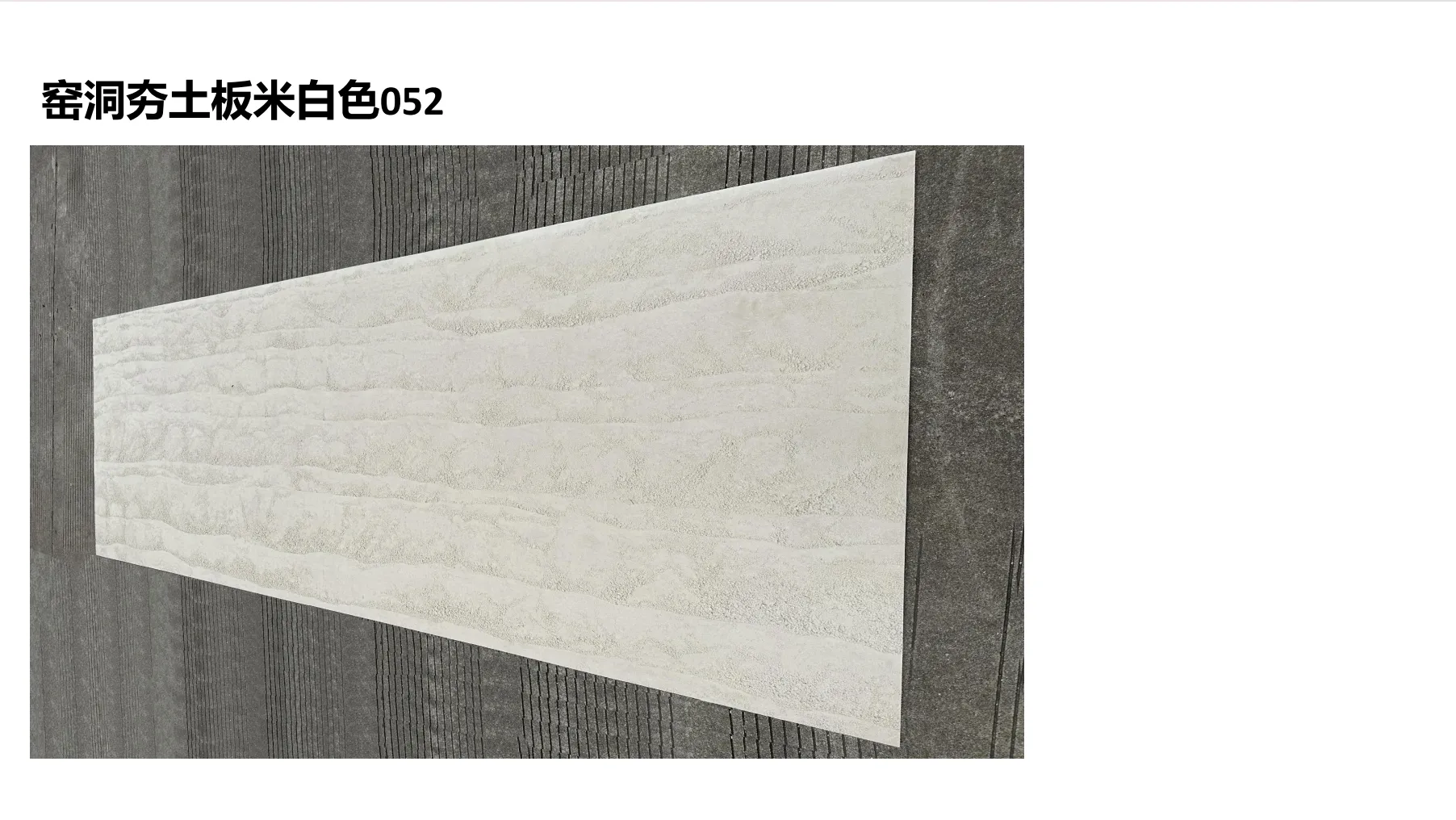
Unlike its traditional counterpart, which is often monochromatic and heavy, gradient color rammed earth board is a lightweight, flexible panel. It's made by compressing natural earth materials with advanced binders, then infusing them with pigments that blend seamlessly from one hue to another—think soft terracotta fading into warm sienna, or muted sage transitioning to pale moss. The result? A material that looks like it was carved from the earth itself, but with the convenience of a panel that's easy to install and transport.
And here's where it gets interesting: it's part of the broader family of MCM products, or Modified Composite Materials. If you've heard of MCM flexible stone, you know the drill—these materials are designed to mimic the look and feel of natural stone, wood, or concrete, but with added benefits like flexibility, light weight, and resistance to damage. Gradient color rammed earth board fits right in, offering the organic texture of rammed earth with the modern perks that make it practical for today's buildings.
Let's talk about the big one: weather. Whether you live in a rainy coastal town, a desert with scorching sun, or a region that sees all four seasons (hello, snow, rain, humidity, and UV rays), your exterior materials take a beating. Paint peels, wood rots, even some stones crack or fade over time. So how does gradient color rammed earth board hold up?
Surprisingly well, as it turns out. Let's start with water. Traditional rammed earth can be porous, which means it absorbs water if not sealed properly—bad news for rainy climates. But gradient color rammed earth board is engineered to be water-resistant. The compression process and added binders create a dense surface that repels moisture, so rainstorms or morning dew won't seep in and cause mold, mildew, or warping. I spoke to an architect in Seattle last year who used it on a home's exterior walls. "We get 38 inches of rain annually here," he told me. "After two winters, those walls still look brand new. No staining, no water spots—just that same rich gradient."
Then there's UV radiation. If you've ever walked past a house with faded siding or a patio with bleached stone, you know the sun's rays can turn vibrant colors into washed-out versions of themselves. Gradient color rammed earth board's pigments are mixed into the material, not just painted on top. That means the color runs all the way through, so even if the surface fades slightly over decades (and we're talking 20+ years here), the gradient remains intact. Compare that to fair-faced concrete, which often requires periodic sealing to maintain its color, or painted wood, which needs repainting every 3-5 years. It's a game-changer for low-effort longevity.
What about extreme temperatures? Freeze-thaw cycles are the enemy of many building materials. When water seeps into cracks, freezes, and expands, it can split stone, concrete, or brick. But gradient color rammed earth board's flexibility helps here. It has a slight give, so it can expand and contract with temperature changes without cracking. A builder in Minnesota, where winters hit -20°F, used it on an outdoor fireplace surround. "We were worried about frost heave," he admitted. "But after three winters, there's not a single crack. The board just… moves with the cold. It's wild."
Even wind? Yep. Because the panels are lightweight but rigid, they're less likely to be damaged by strong winds compared to heavy stone veneers that can loosen over time. And unlike materials like vinyl siding, which can crack or tear in high gusts, gradient color rammed earth board holds strong. It's the kind of durability that gives homeowners peace of mind—no more checking the forecast and worrying about your walls.
Let's be real: life is busy. Between work, family, and the never-ending to-do list, the last thing anyone wants is another maintenance task. That's where gradient color rammed earth board shines: it's low maintenance to the core. Let's break down what that actually means.
First, cleaning. Spills, dirt, bird droppings, pollen—outdoor surfaces take a beating from daily grime. With some materials, like travertine (starry blue) or marble, you need special cleaners to avoid etching the surface. Not here. Gradient color rammed earth board can be cleaned with nothing more than a hose and a soft brush. For tougher stains, a little mild soap and water does the trick. No harsh chemicals, no expensive cleaning solutions, no need to hire a professional. A quick rinse every few months is usually enough to keep it looking fresh.
Then there's sealing. Many natural stones, like travertine or limestone, are porous and require regular sealing to prevent stains. Even fair-faced concrete, which is dense, often needs a sealant every 1-2 years to protect against water and oil damage. Gradient color rammed earth board? No sealing required. The manufacturing process creates a non-porous surface that resists stains on its own. Imagine never having to buy a can of sealant or schedule a sealing appointment again. That's time and money back in your pocket.
Repairs? Also a breeze. If a panel gets scratched or damaged (hey, accidents happen), you don't have to replace the entire wall. Since it's installed in panels, you can simply swap out the damaged one for a new one. Compare that to traditional rammed earth, which would require patching and re-coloring, or brick, which can be tricky to match. It's a small detail, but it makes a big difference for long-term upkeep.
To put it in perspective: let's say you have a 200-square-foot exterior wall. With wood siding, you'd be repainting every 3-5 years (costing $500-$1,000 each time). With natural travertine, sealing every year ($200-$300) and occasional stain removal. With gradient color rammed earth board? Maybe a $20 bottle of soap every few years. Over 20 years, that's thousands of dollars saved—and countless hours not spent on maintenance.
You might be thinking, "Okay, but how does this compare to other materials I'm familiar with?" Great question. Let's put it head-to-head with a few common options.
| Material | Weather Resistance | Maintenance Needs | Installation Ease | Aesthetic Flexibility |
|---|---|---|---|---|
| Gradient Color Rammed Earth Board | Resists water, UV, freeze-thaw, wind | Hose off occasionally; no sealing | Lightweight panels; DIY-friendly | Gradient colors, organic texture |
| Fair-Faced Concrete | Durable but prone to staining; needs sealing | Seal every 1-2 years; stains hard to remove | Heavy; requires professional installation | Modern, industrial look; limited colors |
| Travertine (Starry Blue) | Porous; vulnerable to water and stains | Seal every 6-12 months; avoid harsh cleaners | Heavy tiles; requires mortar and grout | Elegant, natural stone look; bold colors |
| Historical Pathfinders Stone | Very durable but heavy; prone to cracking if not installed properly | Minimal, but repairs are difficult | Heavy; needs structural support | Rustic, heritage aesthetic; limited color range |
The takeaway? Gradient color rammed earth board isn't just better in one area—it's a balanced choice that excels in weather resistance, maintenance, and ease of use, while still offering unique aesthetic appeal. It's like the Swiss Army knife of building materials: versatile, reliable, and ready for whatever you throw at it.
Okay, so it's durable and low-maintenance—but does it look good? Absolutely. And here's where the fun begins: gradient color rammed earth board plays well with others, especially MCM flexible stone. MCM flexible stone, if you're not familiar, is another star in the MCM family. It's a thin, flexible panel that mimics the look of natural stone—think slate, granite, or marble—without the weight or fragility.
Imagine this: a home exterior with gradient color rammed earth board as the main wall cladding, its soft earthy gradient creating a warm, inviting base. Then, accents of MCM flexible stone in a complementary shade—maybe a rough-hewn "granite" for the entryway, or a smooth "marble" for window sills. The contrast of textures (the organic, slightly rough rammed earth vs. the sleek, stone-like finish of MCM flexible stone) adds depth, while the color coordination ties it all together.
Or consider a commercial space, like a café. The back wall could be gradient color rammed earth board in warm terracotta to amber, evoking a cozy, earthy vibe. The bar counter? MCM flexible stone in "travertine (starry blue)", adding a pop of cool color that balances the warmth. It's a design that feels intentional, layered, and totally unique—without requiring a huge budget or complicated installation.
Designers love it because it's versatile. Whether you're going for a modern minimalist look, a bohemian vibe, or a rustic cabin feel, gradient color rammed earth board can adapt. It pairs with wood, metal, glass, and other stones, making it a chameleon in the best way. And because the gradient is customisable, you can work with manufacturers to create a color blend that's specific to your project—no more settling for "close enough" from a standard sample.
Let's get practical: where can you use gradient color rammed earth board? The short answer: almost anywhere. But let's look at some real examples.
Residential exteriors are a big one. Homeowners are using it for siding, accent walls, outdoor kitchens, and even pool surrounds. One family in Arizona replaced their faded stucco with gradient color rammed earth board in soft beige to terracotta. "It stays cool in the sun, which is a big deal here," the homeowner told me. "And we love that it doesn't fade—our old stucco turned pink after a few years!"
Commercial buildings are jumping on board too. Restaurants, boutique hotels, and offices are using it to create memorable facades. A boutique hotel in Colorado used gradient color rammed earth board in sage to olive green for their exterior, pairing it with wooden accents and large windows. The result? A building that blends into the mountain landscape while still standing out as modern and upscale.
Even interior spaces are getting in on the action. Imagine a living room with a feature wall of gradient color rammed earth board in soft gray to charcoal, adding texture and warmth without overwhelming the space. Or a bathroom with shower walls made from the material—its water resistance makes it perfect for wet areas, and the natural colors create a spa-like atmosphere.
And let's not forget heritage projects. When restoring older buildings, architects often struggle to find materials that match the original aesthetic but meet modern building codes. Gradient color rammed earth board offers a solution. For example, a renovation of a 1920s schoolhouse in New England used the material to replicate the look of the original stone walls, but with the fire resistance and insulation needed for today's standards. It's a way to honor the past while building for the future—much like historical pathfinders stone, which draws on ancient designs but with modern durability.
I mentioned historical pathfinders stone earlier, and it's worth circling back to. What is it, exactly? Historical pathfinders stone is a category of MCM materials designed to mimic the look of stone used in historic architecture—think cobblestones from European villages, or the weathered limestone of colonial buildings. It's a nod to the past, a way to bring the character of old-world stone into new construction.
So why does that matter for gradient color rammed earth board? Because both materials share a common philosophy: respecting tradition while embracing innovation. Historical pathfinders stone takes the durability and beauty of historic stone and makes it practical for today. Gradient color rammed earth board does the same with rammed earth, an ancient technique. Together, they represent a shift in design: moving away from purely synthetic materials and towards options that feel connected to the earth, to history, but without the drawbacks of the originals.
Ancient builders chose rammed earth and stone because they were the most durable materials available. They needed structures that could withstand the elements, protect their communities, and stand the test of time. Today, we have the same needs—we just have better tools to meet them. Gradient color rammed earth board isn't just a "modern alternative"; it's a continuation of that legacy. It's proof that the best ideas never really go out of style—they just get smarter.
At the end of the day, the question is: is gradient color rammed earth board right for your project? If you value durability, low maintenance, and a unique, organic aesthetic, the answer is probably yes. It's not just for luxury homes or high-end commercial buildings, either. Its affordability (especially when you factor in long-term maintenance savings) makes it accessible for a range of budgets.
Whether you're building a new home, renovating an existing one, or designing a commercial space, it's worth adding to your list of options. Talk to your architect or contractor about it—chances are, they've heard the buzz and can share examples of local projects using it. And if you're worried about the look? Most manufacturers offer samples, so you can hold it, touch it, and see how the colors shift in different lights. It's one thing to see a photo; it's another to run your hand over the surface and feel the texture that makes it so special.
Gradient color rammed earth board is more than a building material—it's a bridge between the past and present. It takes the time-tested durability of rammed earth, adds the beauty of gradient color, and wraps it all up in a low-maintenance, weather-resistant package that works for modern life. Whether you're drawn to its aesthetic, its practical benefits, or both, it's clear that this material is here to stay.
So the next time you're standing in front of that wall of samples, trying to choose between the usual suspects, remember: there's a better option out there. One that looks like it was born from the earth, stands up to whatever the weather throws at it, and lets you spend less time maintaining and more time enjoying your space. That's the promise of gradient color rammed earth board. And honestly? It's a promise worth keeping.
Recommend Products












