

In the world of interior design, walls are more than just dividers—they're canvases. They hold stories, set moods, and turn spaces into experiences. Today, we're diving into a material that's redefining what these canvases can be: Red Travertine, reimagined through MCM technology and 3D printing. It's not just about building walls; it's about crafting moments that linger.
Let's start with the star of the show: Red Travertine. Picture this: a slab pulled from the earth, its surface rippled with veins that look like rivers of rust, amber, and terracotta. This isn't just stone—it's a fossil of time, formed over centuries as mineral-rich springs deposit layer upon layer of calcium carbonate. What makes the red variety so special? Iron oxides, which tint the stone in hues that range from a soft brick blush to a deep, fiery crimson. It's nature's way of adding warmth to cold, hard surfaces.
Designers have long been drawn to travertine for its organic texture, but red? It's a statement. Unlike the more common beige or cream travertine, red demands attention without being overwhelming. It's the difference between a whisper and a story—one that feels both ancient and alive. "Red Travertine has this unique ability to shift with light," says Mia Chen, an interior designer specializing in boutique hospitality spaces. "In the morning, it's soft, almost honeyed. By evening, it glows like embers. It turns a quiet corner into a focal point without screaming for attention."
But here's the catch: traditional travertine is heavy, brittle, and notoriously tricky to shape. Want a curved wall? A custom arch? You'd be limited by the stone's natural rigidity. Enter MCM technology—and a game-changing material: Flexible Stone.
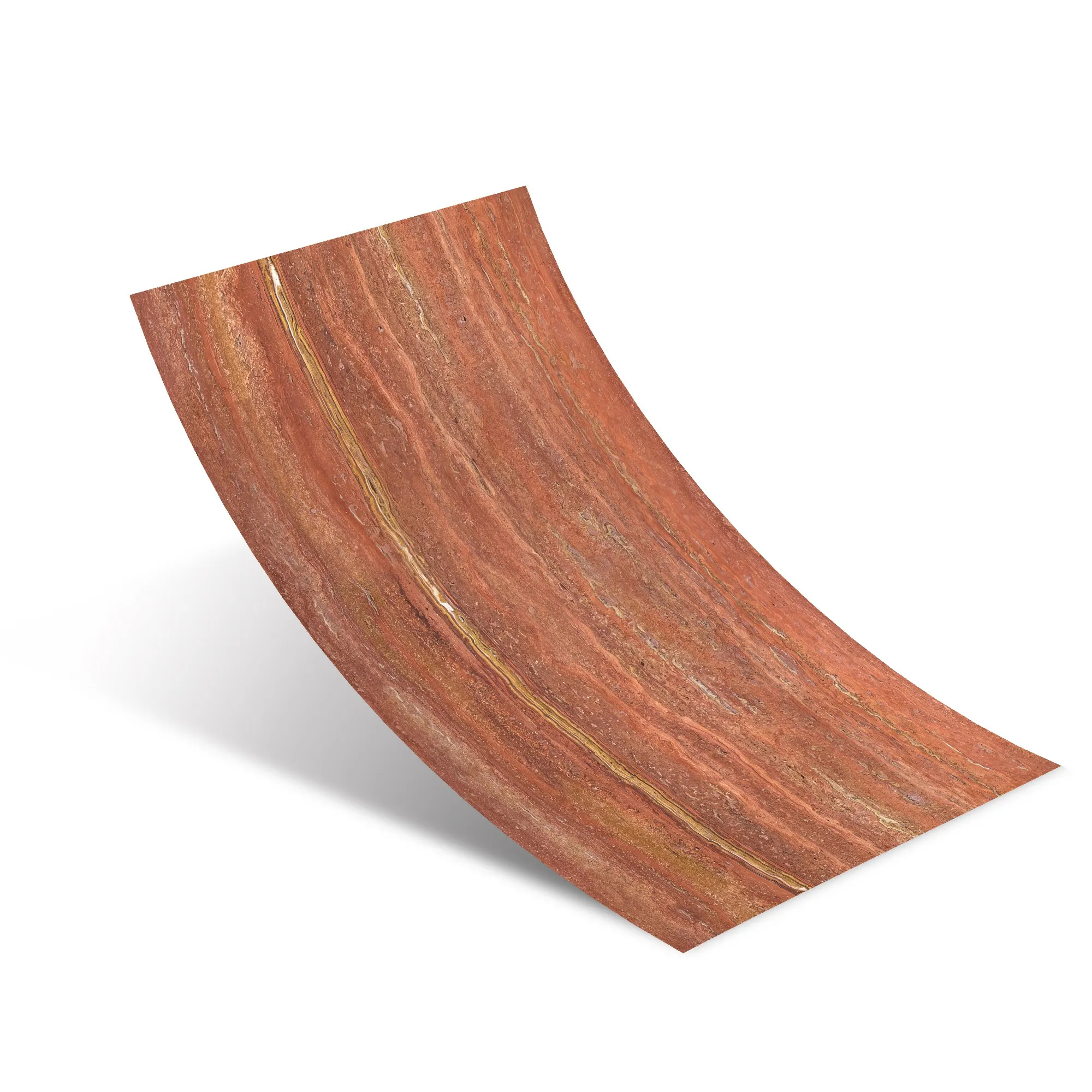
MCM, or Modified Composite Material, isn't just a manufacturing term—it's a design revolution. Imagine taking the raw beauty of Red Travertine and infusing it with flexibility. That's exactly what MCM does. By bonding ultra-thin layers of natural travertine to a lightweight, durable backing, the material becomes bendable, shatter-resistant, and surprisingly easy to install. Suddenly, that curved wall Mia dreamed of? It's possible. A 3D-printed wave pattern snaking across a restaurant facade? No problem.
"Flexible Stone changed how I approach materiality," explains Carlos Mendez, a architect focused on sustainable design. "Traditional stone requires massive structural support. With MCM, we can clad a 20-foot wall without reinforcing the foundation. It's lighter, which cuts down on construction time and costs, but it doesn't sacrifice that authentic stone feel. Run your hand over it, and you'd never guess it's flexible."
That flexibility opens doors for spaces big and small. Think a home office where the Red Travertine wraps around a desk nook, creating a cozy, cave-like retreat. Or a hotel lobby where the stone bends overhead, forming a ceiling that feels like a warm embrace. It's stone, but not as we know it—stone with adaptability.
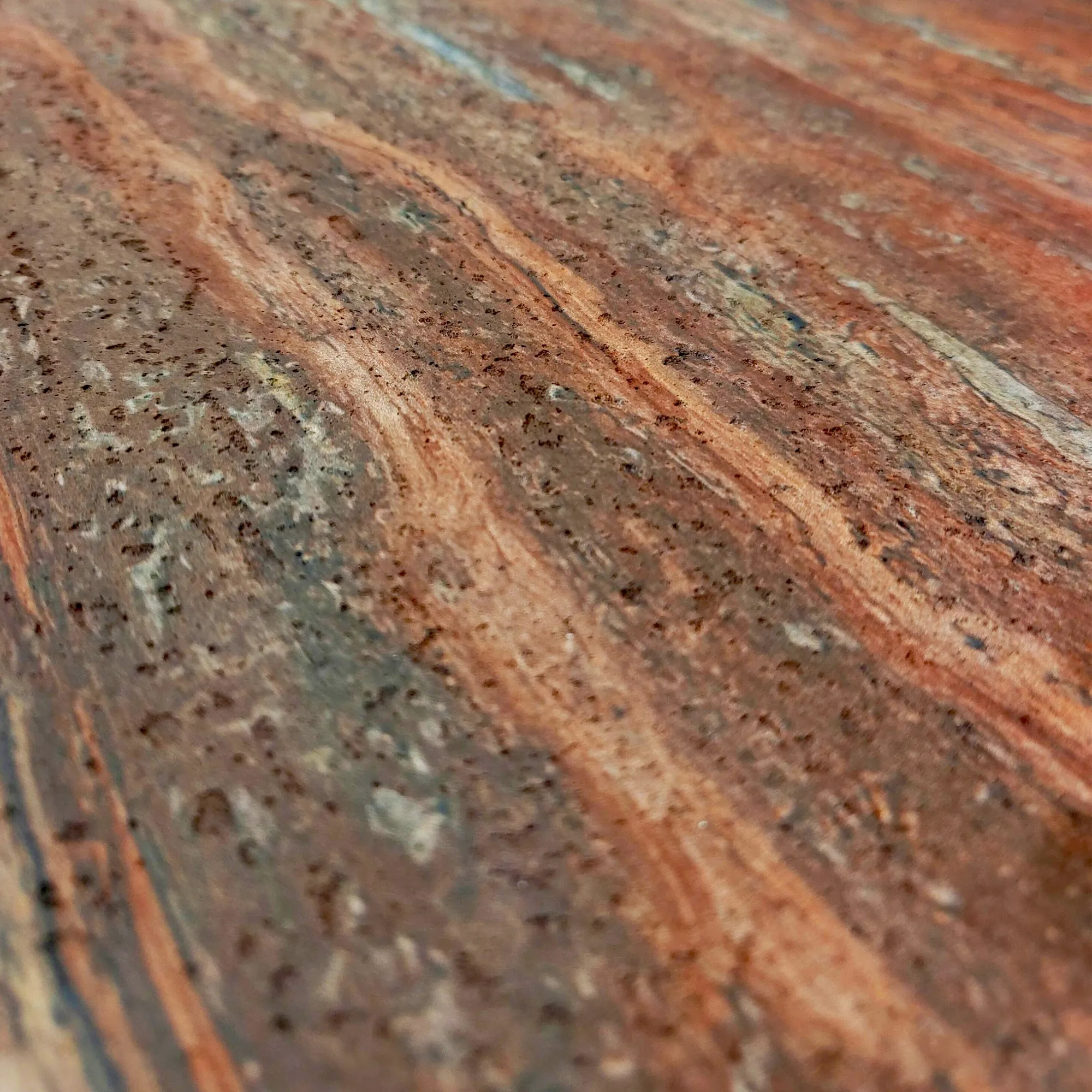
If Flexible Stone is the canvas, the MCM 3D Printing Series is the brush. 3D printing isn't new, but when paired with MCM's adaptability, it becomes a tool for customization that traditional stone-cutting can't match. No more cookie-cutter tiles or standard slabs—now, you can design a wall that's as unique as the story it's meant to tell.
Take, for example, a recent project by Studio Lumen: a wine bar in Barcelona where the main wall is a 3D-printed Red Travertine installation shaped like rolling hills. Each "peak" and "valley" was designed to mimic the vineyards of Rioja, with grooves that catch the light and cast shadows that shift throughout the day. "3D printing let us translate the client's love for wine country into something tangible," says lead designer Javier Ruiz. "We could adjust the curvature of each ridge, tweak the depth of the veins—details that would have been impossible with traditional cutting. The result? A wall that doesn't just look like a landscape; it feels like one."
And it's not just about grand gestures. The 3D Printing Series excels at the small, intentional details, too. Imagine a residential living room where Red Travertine panels are printed with a subtle, repeating pattern of semicircles—echoing the shape of the homeowner's childhood home windows. Or a café where the stone is cut into interlocking hexagons, each one slightly different, like a puzzle that tells the story of the neighborhood's history.
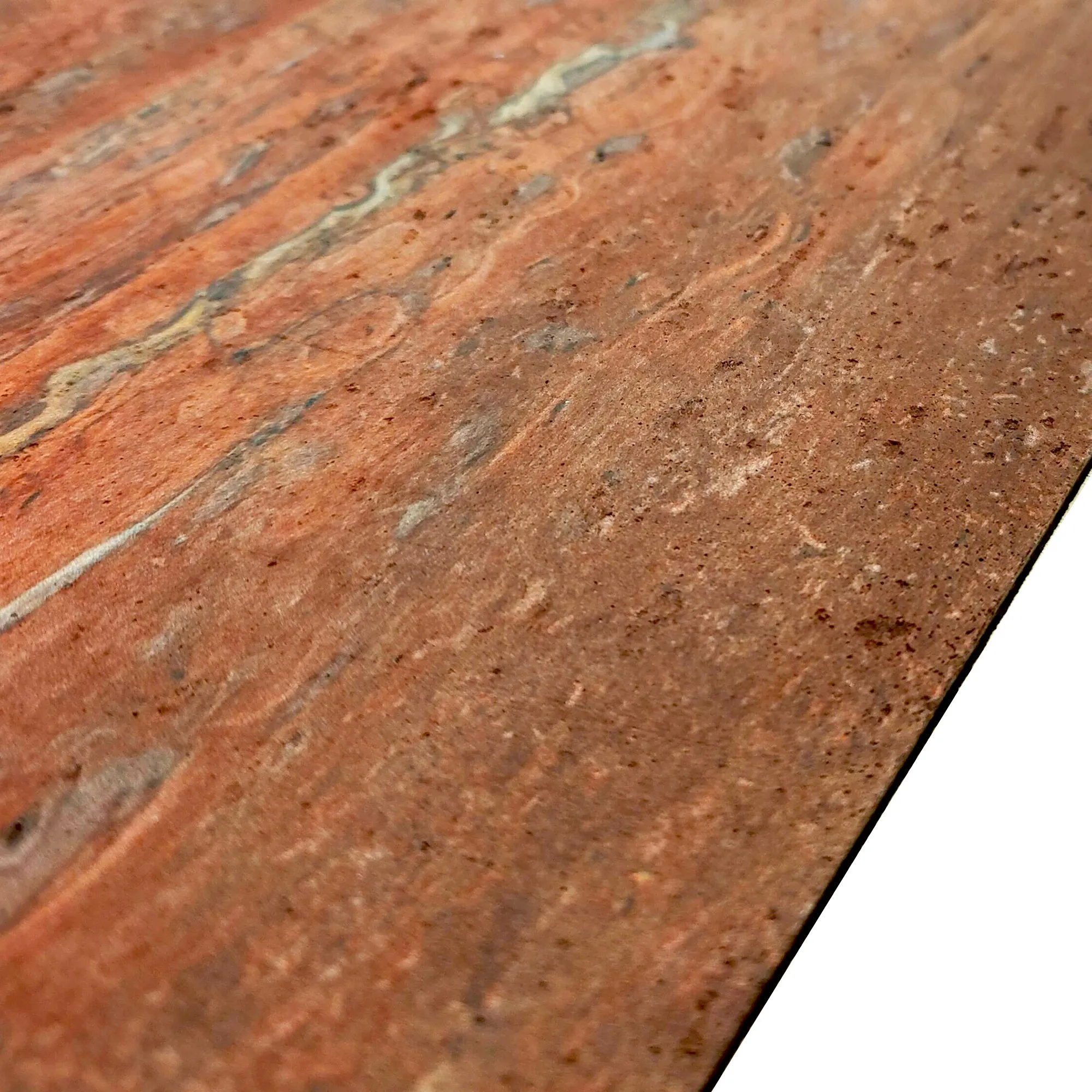
Great design is about balance—and Red Travertine plays well with others. To truly make a statement wall sing, designers often pair it with complementary materials from MCM's lineup. Let's explore two standouts: the Lunar Peak series and Boulder Slab.
| Material | Texture | Best For | Mood |
|---|---|---|---|
| Red Travertine | Earthy, vein-rich surface with warm red undertones; slightly porous, matte finish | Main feature walls, fireplaces, accent niches | Warmth, nostalgia, organic energy |
| Lunar Peak Silvery | Sleek, metallic sheen with subtle lunar-like craters; cool, smooth to the touch | Accent strips, floating shelves, backdrop for art | Modernity, contrast, calm sophistication |
| Boulder Slab (Vintage Black) | Rugged, chiseled edges with a deep, matte black finish; heavy texture that invites touch | Baseboards, column wraps, fireplace surrounds | Strength, timelessness, grounding energy |
"Lunar Peak Silvery is like the moon to Red Travertine's sun," Mia Chen says. "The cool silver cuts through the warmth, creating a balance that feels both dynamic and serene. I used them together in a yoga studio—Red Travertine for the main wall, Lunar Peak for the meditation nook. The contrast helped clients shift from active practice to relaxation."
Boulder Slab, on the other hand, adds a raw, elemental edge. Its vintage black finish and rough texture play up Red Travertine's earthiness, making spaces feel grounded. "I paired them in a mountain lodge-inspired restaurant," Carlos Mendez notes. "Red Travertine walls with Boulder Slab accents around the bar. It felt like bringing the outdoors in—warmth and wildness, all at once."
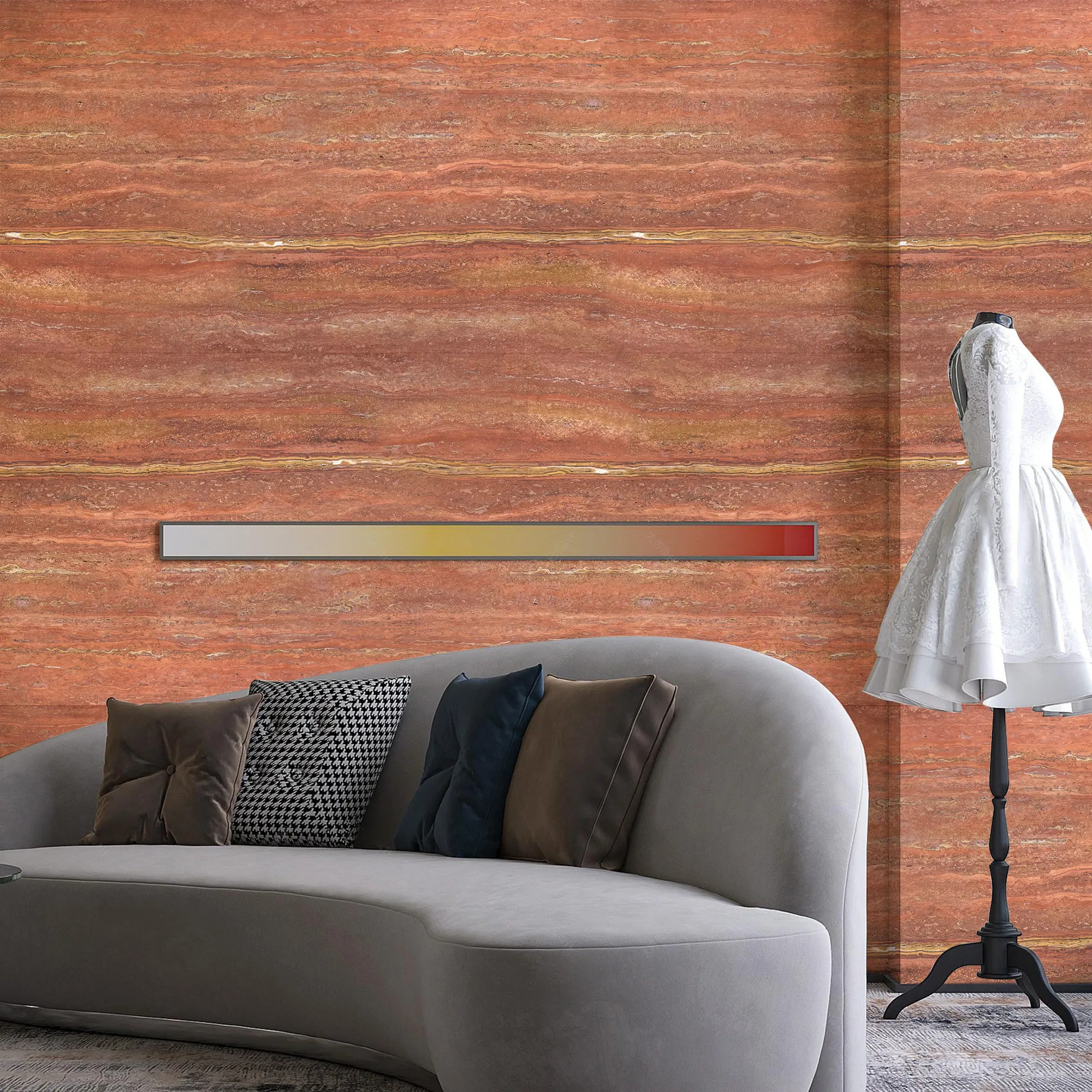
Let's get real: a statement wall needs to be more than pretty—it needs to keep up with life. MCM Red Travertine checks those boxes, too. Thanks to the composite backing, it's resistant to moisture (goodbye, mold in bathrooms!), fading (no more sun-bleached patches), and everyday wear and tear (kids, pets, clumsy guests—no problem). "I installed it in a family home's playroom," Mia laughs. "Three years later, it still looks brand new. Spilled juice? Wiped right off. Scratches from toy trucks? Barely noticeable. It's beauty with backbone."
And sustainability? MCM technology uses less raw stone than traditional methods, cutting down on waste. The 3D printing process further reduces material usage by creating precise, custom pieces—no more trimming slabs to fit, no excess stone ending up in landfills. "Sustainability isn't just a trend; it's a responsibility," Carlos adds. "Clients want materials that look good and do good. MCM Red Travertine delivers on both."
At the end of the day, a statement wall isn't about the material—it's about the feeling it evokes. Red Travertine, shaped by MCM Flexible Stone and 3D printing, doesn't just fill a space; it transforms it. It's the difference between a room that's "nice" and one that's memorable—a room where people pause, touch the wall, and ask, "What is this?"
Whether you're designing a boutique hotel, a home, or a community space, the message is clear: your walls don't have to be ordinary. With MCM's 3D Printing Series, Red Travertine, and a little imagination, they can be extraordinary—crafted to fit your vision, your story, and the moments you want to create.
So go ahead: dream of curves, of custom patterns, of walls that feel less like walls and more like art. With Red Travertine and MCM, that dream isn't just possible—it's within reach.
Recommend Products











