
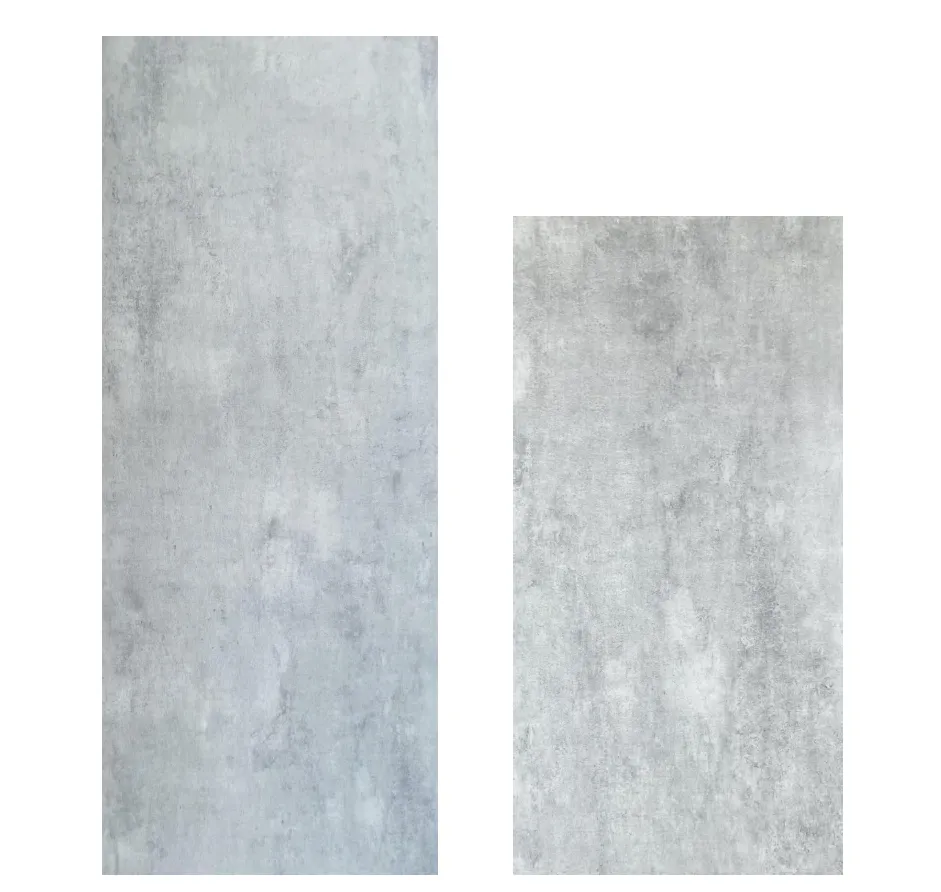
Walk into any modern commercial space today—a sleek downtown office lobby, a bustling boutique in a shopping mall, or a serene hotel courtyard—and you'll likely notice something striking: walls and surfaces that flow seamlessly, unbroken by the clutter of small tiles or mismatched stone pieces. That polished, expansive look isn't just a design trend; it's the result of a quiet revolution in building materials: large format slabs. Among these innovators stands the Big Slab Marble Concrete Board , a product that's redefining how architects, designers, and contractors approach commercial construction. But what makes this material so special? Why are large format solutions suddenly the go-to choice for high-stakes projects? Let's dive in.
For decades, commercial spaces relied on small to medium-sized building materials—think 12x12 inch tiles, 2x4 foot stone slabs, or brick-sized masonry units. These materials had their merits: they were easy to transport, familiar to installers, and widely available. But as design evolved, their limitations became impossible to ignore. Smaller pieces meant more grout lines, which not only disrupted visual flow but also became magnets for dirt and bacteria in high-traffic areas like airports or hospitals. Installing hundreds of small tiles was labor-intensive, driving up project timelines and costs. And when it came to creating a sense of grandeur—say, a hotel lobby with a statement wall—smaller materials often felt cramped, failing to deliver the "wow" factor clients demanded.
Enter large format slabs. Defined loosely as materials with at least one dimension over 3 feet, these panels promised a cleaner aesthetic, faster installation, and greater design flexibility. But early iterations had their own issues: natural stone slabs, for example, were heavy and brittle, making them difficult to transport and prone to cracking. Concrete panels, while durable, lacked the elegance of marble or granite. What the industry needed was a material that combined the best of both worlds—the beauty of natural stone, the strength of concrete, and the practicality of large format design. That's where Big Slab Marble Concrete Board comes in.
Part of the innovative mcm big slab board series , Big Slab Marble Concrete Board is a hybrid material that marries the timeless appeal of marble with the durability and versatility of high-performance concrete. Unlike traditional marble slabs quarried from the earth, this engineered material is crafted in controlled environments, blending marble aggregates, specialized binders, and reinforcing fibers to create panels that are both larger and more resilient than their natural counterparts. The result? Slabs that can reach sizes up to 10 feet in length and 5 feet in width—large enough to cover entire walls or floors with minimal seams—without sacrificing the unique veining, texture, or color depth that makes marble so beloved.
But it's not just about size. What truly sets this material apart is its flexibility. While natural stone is rigid and unforgiving, Big Slab Marble Concrete Board has a slight flexural strength that allows it to adapt to minor structural movements in buildings—think the subtle shifting of a commercial high-rise on a windy day—without cracking. This flexibility, paired with its lightweight composition (up to 30% lighter than natural marble slabs of the same size), makes it a practical choice for both new construction and renovation projects, where weight and installation ease are critical factors.
At first glance, the appeal of large format slabs might seem purely aesthetic—and there's no denying that a seamless wall of marble-like material makes a powerful visual statement. But the benefits go far deeper, touching on everything from project efficiency to long-term maintenance. Let's break down why size matters in commercial design:
In commercial design, perception is everything. A retail store that feels cramped will drive customers away; a hotel lobby that feels invites guests to linger. Large format slabs eliminate the visual clutter of grout lines, creating a continuous surface that tricks the eye into perceiving more space. This is especially impactful in smaller commercial areas, like boutique shops or office reception areas, where every square foot counts. Imagine a clothing store with walls covered in 10-foot Big Slab panels in travertine (starry green) —the uninterrupted flow of color and texture would make the space feel larger, more luxurious, and infinitely more Instagram-worthy.
Time is money in construction, and large format slabs slash installation time dramatically. A crew installing 12x12 inch tiles might lay 50 square feet in a day; with Big Slab panels, that same crew could cover 200 square feet or more. Fewer pieces mean fewer cuts, less measuring, and reduced labor hours. Take a hypothetical example: a 5,000 square foot restaurant renovation. Using traditional 2x4 foot stone slabs would require over 600 individual pieces, each needing to be aligned, grouted, and sealed. With 10x5 foot Big Slab panels, that number drops to just 100 pieces—cutting installation time by 50% or more. The savings add up quickly, making projects more profitable for contractors and more affordable for clients.
Commercial spaces are tough environments. They face foot traffic from thousands of people, exposure to harsh cleaning chemicals, and the occasional bump from luggage carts or delivery trucks. Big Slab Marble Concrete Board is engineered to withstand this abuse. Its reinforced concrete core resists scratches and impacts, while the marble aggregate adds scratch resistance comparable to natural stone. Unlike pure concrete, which can crack under stress, the material's flexibility—thanks in part to its connection to flexible stone cladding panels technology—allows it to absorb minor shocks without breaking. In tests, panels have withstood over 10,000 cycles of foot traffic without showing significant wear, making them ideal for airports, train stations, and shopping malls.
To truly appreciate this material, it helps to understand what goes into making it. Unlike natural marble, which is mined and cut, Big Slab Marble Concrete Board is a precision-engineered composite. Here's a closer look at its key components:
At its heart are marble aggregates—crushed fragments of natural marble sourced from sustainable quarries. These aggregates give the board its characteristic veining, color, and texture. Depending on the desired look, manufacturers can blend different marble types: travertine (starry red) for bold pops of color, dolomitic travertine (dark grey) for industrial chic, or marble veil white for timeless elegance. The aggregates are carefully sorted by size and color to ensure consistency across batches, so a project using 50 slabs will have a uniform appearance—something natural stone, with its inherent variations, can't always guarantee.
The marble aggregates are suspended in a specialized concrete matrix fortified with polymers and glass fibers. This matrix gives the board its structural strength while keeping weight in check. Traditional marble slabs of similar size can weigh over 200 pounds; Big Slab panels tip the scales at around 120 pounds, making them easier to handle and reducing the load on building structures. The concrete is also formulated to be resistant to moisture, preventing mold and mildew growth in humid environments like indoor pools or spa facilities.
What truly separates Big Slab from older large format materials is its flexible backing layer, a technology borrowed from flexible stone cladding panels . This thin, rubberized layer allows the board to bend slightly—up to 2 degrees without cracking—making it ideal for curved surfaces or walls with minor irregularities. Imagine a museum with a circular exhibition space; instead of cutting small tiles to fit the curve (and creating unsightly gaps), installers can use Big Slab panels that conform gently to the wall's shape, creating a smooth, continuous surface that enhances the exhibit's impact.
In today's world, sustainability isn't just a buzzword—it's a business imperative. Clients, especially in the commercial sector, are increasingly demanding materials that minimize environmental impact. Big Slab Marble Concrete Board delivers on this front in several key ways:
Natural stone quarrying is notoriously resource-intensive, with up to 50% of extracted stone going to waste during cutting and shaping. Big Slab, by contrast, uses marble aggregates that would otherwise be discarded as quarry waste, giving new life to materials that would've ended up in landfills. Its manufacturing process is also energy-efficient: unlike firing bricks or melting metal, producing the concrete matrix requires relatively low temperatures, reducing greenhouse gas emissions. Some manufacturers even use solar power to run their facilities, further shrinking the carbon footprint.
The most sustainable material is one that lasts. Big Slab's durability means it won't need to be replaced every 5-10 years like some cheaper alternatives. A hotel that installs Big Slab walls today can expect them to look great for 20+ years, reducing the need for frequent renovations and the associated waste of tearing out and replacing old materials. This longevity aligns with the principles of green building materials , which prioritize products that minimize lifecycle environmental impact.
Traditional stone and tile often require harsh chemical sealers to prevent staining—a problem for both the environment and indoor air quality. Big Slab Marble Concrete Board, thanks to its dense concrete matrix, is naturally stain-resistant. Spills of coffee, wine, or oil can be wiped away with mild soap and water, no toxic sealers needed. This not only reduces chemical use but also improves indoor air quality, a critical factor in LEED-certified buildings and healthcare facilities where patient health is paramount.
To truly see the value of Big Slab Marble Concrete Board, it helps to compare it to other common commercial materials. Below is a breakdown of how it measures up against natural marble, traditional concrete, and ceramic tile:
| Feature | Natural Marble Slabs | Traditional Concrete Panels | Ceramic Tile (12x12 inch) | Big Slab Marble Concrete Board |
|---|---|---|---|---|
| Max Slab Size | 4x8 feet (limited by weight/brittleness) | 5x10 feet (heavy, rigid) | 1x1 feet | 10x5 feet (lightweight, flexible) |
| Weight (per sq ft) | 25-30 lbs | 20-25 lbs | 5-7 lbs | 12-15 lbs |
| Installation Time (500 sq ft) | 3-4 days | 2-3 days | 5-6 days | 1-2 days |
| Scratch Resistance | High (but prone to etching) | Medium (can scratch easily) | Low (glaze chips) | High (resistant to both scratches and etching) |
| Water Resistance | Low (requires sealing) | High (but porous without sealer) | High (non-porous glaze) | High (dense matrix, no sealing needed) |
| Sustainability | Low (high quarry waste, transportation emissions) | Medium (some recycled content, high energy to produce) | Medium (fired at high temps, but recyclable) | High (recycled aggregates, low energy production, long lifespan) |
| Cost (per sq ft, installed) | $40-60 | $25-35 | $15-25 | $30-45 (but lower labor costs offset higher material price) |
As the table shows, Big Slab Marble Concrete Board strikes a balance between beauty, performance, and practicality. It offers the aesthetic appeal of natural marble with the durability of concrete, all while being lighter, larger, and more sustainable than both. While its upfront material cost is higher than ceramic tile, the savings in installation time and longevity often make it the more cost-effective choice over the long run.
Big Slab Marble Concrete Board isn't a one-trick pony—it's versatile enough to enhance nearly any commercial setting. Here are just a few examples of where it's making a difference:
In retail, the goal is to make customers feel inspired—and spend money. Big Slab panels can transform ordinary stores into immersive brand experiences. A high-end jewelry store might use marble interstellar gray slabs for walls and countertops, creating a sleek, luxurious backdrop that makes diamonds and watches stand out. A casual clothing brand could opt for wood grain board Big Slab panels to evoke a warm, rustic vibe, encouraging shoppers to relax and browse. The large format also allows for creative installations: imagine a flagship store with a curved wall made from seamless travertine (starry blue) panels, becoming a social media hotspot and drawing in crowds.
Hotels, resorts, and restaurants live and die by their aesthetics and durability. Guests expect beautiful surroundings, while owners need materials that can handle spills, scratches, and constant cleaning. Big Slab is perfect for hotel lobbies (statement walls in lunar peak golden ), restaurant backsplashes (resistant to grease and heat), and even bathroom walls (no grout lines to harbor mold). One luxury resort in Bali recently renovated its beachfront bar using bali stone Big Slab panels; the result was a seamless indoor-outdoor space that withstood saltwater spray and foot traffic from barefoot guests, all while maintaining its tropical charm.
Hospitals and clinics have unique needs: materials must be non-porous, easy to sanitize, and contribute to a calming environment. Big Slab Marble Concrete Board checks all these boxes. Its dense surface resists bacteria growth, making it ideal for patient rooms, operating theaters, and waiting areas. Colors like slate veil white and lime stone (beige) create a bright, airy feel that reduces patient anxiety, while the lack of grout lines eliminates hiding spots for germs. Some pediatric hospitals have even used travertine (starry orange) panels in play areas, adding a cheerful pop of color without sacrificing cleanliness.
Modern offices are no longer just workspaces—they're reflections of company culture. Tech startups might opt for edgy fair-faced concrete Big Slab panels to convey innovation, while law firms could choose classic granite portoro for a sense of authority. The material's large format also works well for branding: companies can embed logos or patterns directly into the slabs during manufacturing, creating custom feature walls that reinforce brand identity. Imagine a marketing agency with a reception area wall made from epoch stone Big Slab panels, with the agency's logo subtly integrated into the veining—impressive, memorable, and uniquely "them."
As commercial design continues to evolve, large format materials like Big Slab Marble Concrete Board will only grow in popularity. Here's why:
From "less is more" to "quiet luxury," modern design trends lean toward simplicity and clean lines. Big Slab panels, with their seamless look, are the perfect embodiment of this aesthetic. Designers are increasingly rejecting busy patterns and cluttered surfaces in favor of monochromatic, expansive spaces—exactly what Big Slab delivers.
Advances in manufacturing are pushing the limits of what's possible. New 3D printing techniques (part of the mcm 3d printing series ) allow for even larger slabs and more intricate textures, from wave panel patterns to custom designs. Digital printing technology also means manufacturers can replicate rare or expensive stones—like granite nero margiua or marble stream stone —at a fraction of the cost, making high-end looks accessible to more projects.
As governments crack down on carbon emissions and clients demand greener buildings, materials like Big Slab that prioritize sustainability will become the norm, not the exception. Its use of recycled aggregates, low-energy production, and long lifespan align with global efforts to reduce construction's environmental impact, making it a smart choice for LEED, BREEAM, and WELL-certified projects.
Big Slab Marble Concrete Board isn't just another building material; it's a reflection of how commercial design is evolving—toward beauty that doesn't sacrifice practicality, innovation that respects the planet, and solutions that make projects easier, faster, and better. Whether you're designing a boutique store, a luxury hotel, or a cutting-edge office, this material offers a way to create spaces that are both visually stunning and built to last.
As part of the mcm big slab board series , it's clear that Big Slab Marble Concrete Board is more than a trend—it's the future of commercial building materials. So the next time you walk into a commercial space and find yourself admiring a seamless, stunning wall or floor, take a closer look. Chances are, you're looking at the work of Big Slab—and witnessing the next chapter in the story of how we build.
In a world where first impressions matter more than ever, why settle for small when you can go big? Big Slab Marble Concrete Board proves that when it comes to commercial design, size isn't just a number—it's a statement.
Recommend Products












