


Imagine a home perched on a cliff, overlooking the vast expanse of the ocean. The sunsets paint the sky in hues of orange and gold, the sea breeze carries the scent of salt, and the sound of waves is a constant, soothing rhythm. Building in such a location is a dream for many. But for architects, builders, and homeowners, this idyllic setting presents a formidable, relentless challenge: the environment itself. Coastal areas are beautiful but brutal. The combination of high-salinity air, persistent humidity, intense sun, and driving winds wages a constant war on building materials.
For decades, the choice of exterior cladding in these environments has been a compromise. Do you opt for the classic beauty of natural stone, knowing it will require costly sealing and face potential degradation? Do you choose wood for its warmth, accepting the endless cycle of staining, sealing, and fighting off rot and mildew? Or do you settle for synthetic stucco, which can trap moisture and crack over time? This compromise often means sacrificing either aesthetic vision or long-term durability.
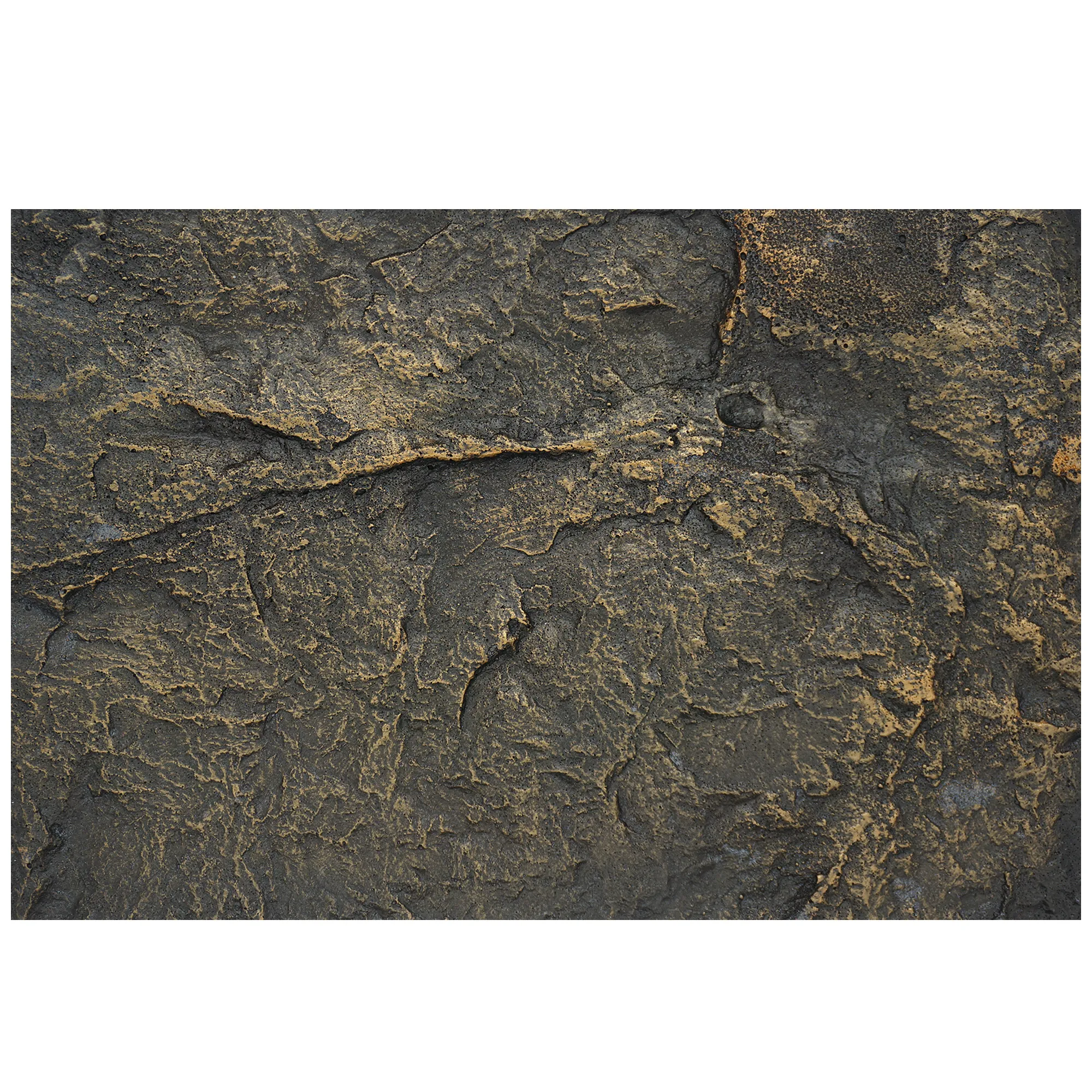
But what if that compromise was no longer necessary? What if there was a material that captured the raw, majestic beauty of natural elements, like a sun-kissed boulder with veins of gold, yet possessed a resilience engineered to defy the harshest coastal conditions? This is where the conversation shifts. We're not just talking about a new product; we're talking about a new paradigm in architectural design, embodied by materials like the Boulder Slab in its stunning Vintage Gold finish. It's a solution born from innovation, designed for beauty, and built to last where others falter.
The Coastal Conundrum: Why Conventional Materials Falter
To truly appreciate the breakthrough that modern materials represent, we first need to get up close and personal with the enemy. The coastal environment isn't just one problem; it's a multi-front assault on a building's exterior.
The Invisible Attacker: Salt-Laden Air
The most pervasive and destructive element is something you can't even see: aerosolized salt. Tiny particles of salt are carried by the sea spray and wind, blanketing every surface. For metal components—fasteners, flashing, railings—this is a recipe for rapid corrosion, leading to rust, structural weakness, and unsightly stains. For porous materials like traditional brick, concrete, and many types of natural stone, the salt works its way into the pores. When moisture evaporates, it leaves behind salt crystals that expand, a process called subflorescence, which creates immense internal pressure, causing the material to spall, flake, and crumble from the inside out. This is the cancer of coastal construction.
The Constant Dampness: Humidity and Moisture
Coastal air is almost always heavy with moisture. This high humidity creates the perfect breeding ground for mold, mildew, and algae, especially on surfaces that don't dry quickly. Wood is particularly vulnerable, as moisture absorption leads to swelling, warping, and eventually, rot. Even stone and masonry aren't immune. Persistent dampness can lead to discoloration and provides the water necessary for the destructive salt crystallization cycle. Furthermore, in regions with temperature swings, water that has seeped into cracks and pores can freeze and expand, widening those fissures and accelerating the material's breakdown in a process known as freeze-thaw damage.
The Unforgiving Sun: UV Radiation and Thermal Stress
Coastal areas often enjoy plenty of sunshine, but this comes at a cost. The sun's ultraviolet (UV) radiation is a powerful bleaching agent. It breaks down the chemical bonds in pigments, causing colors to fade dramatically over time. Painted surfaces, stained wood, and even some colored polymers can look washed-out and aged in just a few years. Beyond fading, the sun also causes significant thermal stress. Dark-colored materials absorb heat, leading to extreme surface temperatures and subsequent expansion. When the sun sets or a cool rain shower passes, the material rapidly contracts. This constant cycle of expansion and contraction puts immense strain on the material and its fasteners, leading to fatigue, cracking, and eventual failure.
The Engineered Solution: Unveiling MCM Technology
Faced with this array of challenges, it's clear that a new kind of material was needed. Not just an improvement, but a fundamental rethinking of what a building material can and should be. This is the philosophy behind the groundbreaking technology from COLORIA GROUP: MCM, or Modified Cementitious Material.
So, what exactly is it? In the simplest terms, think of MCM as the next evolution of stone and earth. It starts with natural, inorganic raw materials—the same fundamental building blocks of our planet, like soil and mineral powders. The magic happens in the modification process. These natural ingredients are mixed with a minimal amount of a water-based polymer modifier and then undergo a specialized, low-temperature firing process. This isn't the brute-force, energy-intensive firing of traditional ceramics or stone sintering. It's a precise, controlled transformation that reorganizes the material at a molecular level.
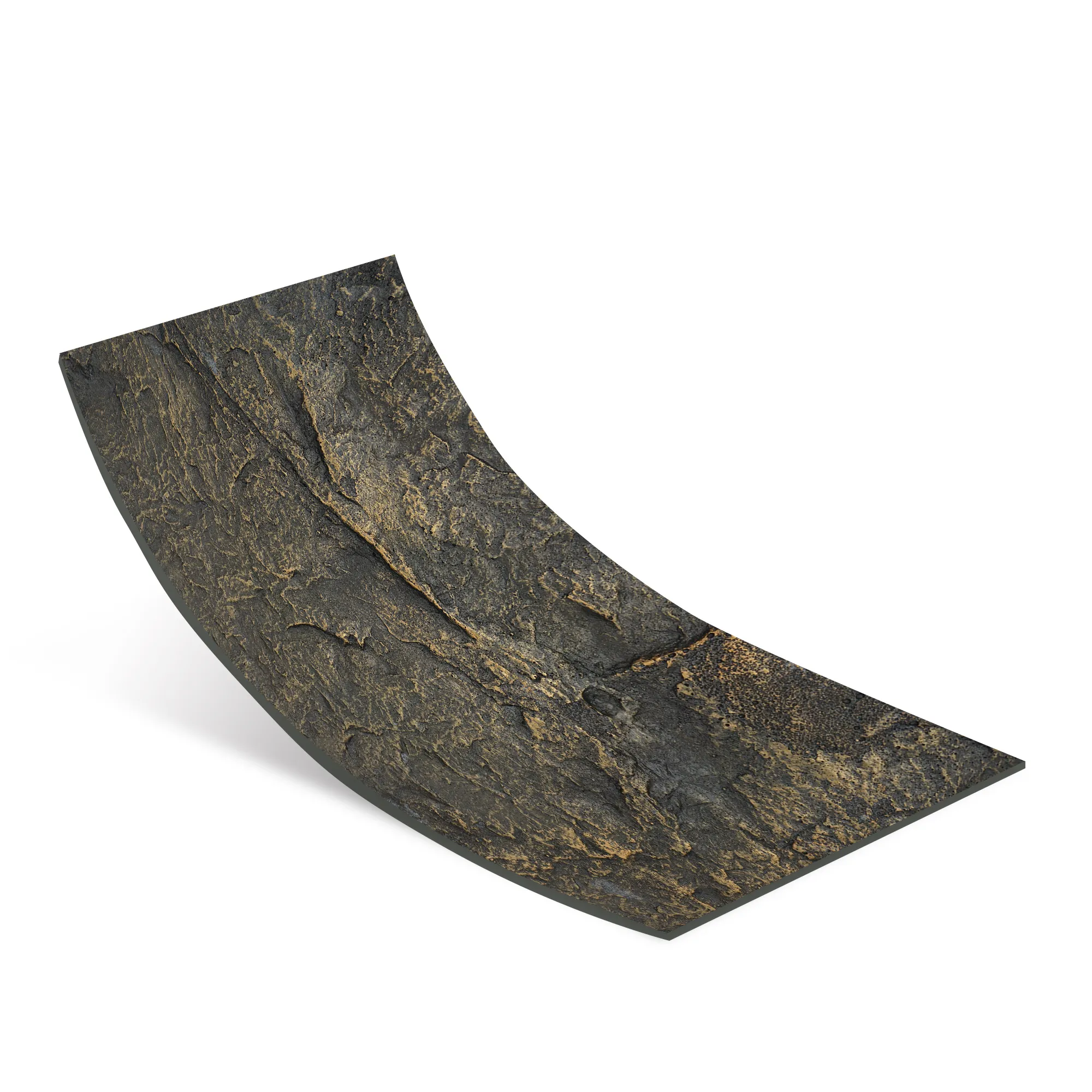
The result is extraordinary: a material that retains the authentic texture and soul of natural stone but is imbued with properties that make it vastly superior. It's lightweight, incredibly flexible, and forms a non-porous, highly durable surface. It's the best of both worlds—nature's beauty enhanced by human ingenuity.
How MCM Defeats the Coastal Elements
Let's circle back to the specific coastal problems and see how MCM technology, as a core principle of COLORIA GROUP's product lines, provides a direct and effective countermeasure.
- Impervious to Salt: The core weakness of porous materials is their ability to absorb salt. The surface of an MCM panel is fundamentally different. It's a closed-pore structure. Salt-laden moisture can sit on the surface, but it cannot penetrate it. When the water evaporates, the salt is left on the exterior, where it can be simply washed away by rain or a gentle rinse, leaving the material completely unharmed. There is no internal pressure, no spalling, no degradation.
- Masters of Moisture Management: Because MCM doesn't absorb water, it's inherently resistant to mold, mildew, and algae growth. It dries quickly and doesn't provide the damp, organic-friendly environment that these organisms need to thrive. This also completely eliminates the risk of freeze-thaw damage, as there is no trapped water to expand and cause cracking. This makes it an ideal material not just for exterior walls, but for any wet area.
- Unfading, Integral Color: The rich, nuanced color of the Boulder Slab (Vintage Gold) isn't a paint or a surface coating. The pigments are mixed in with the raw materials from the very beginning. The color is integral to the material, running all the way through the slab. This means it's incredibly resistant to UV degradation. It won't fade or bleach, even under the most intense coastal sun. The golden hues will remain as vibrant and warm decades later as they were on the day of installation.
- Flexible and Stable: The unique manufacturing process gives MCM a surprising degree of flexibility. This allows it to handle the thermal expansion and contraction cycles without stress. It also means it can accommodate slight shifts in the building's substrate without cracking, a common failure point for rigid materials like traditional stone or tile. This resilience ensures the building's facade remains pristine and weathertight for the long haul.
Spotlight: The Boulder Slab (Vintage Gold)
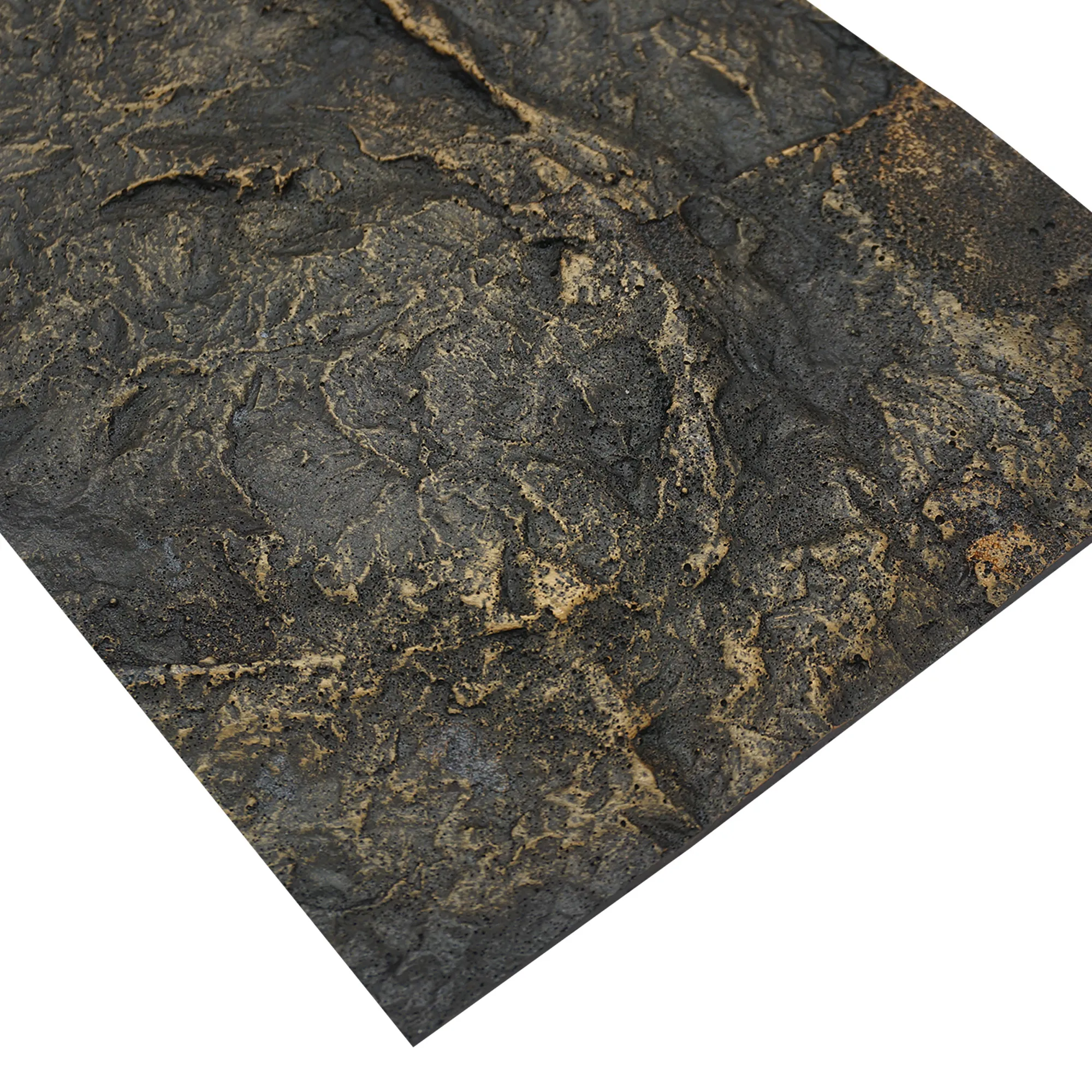
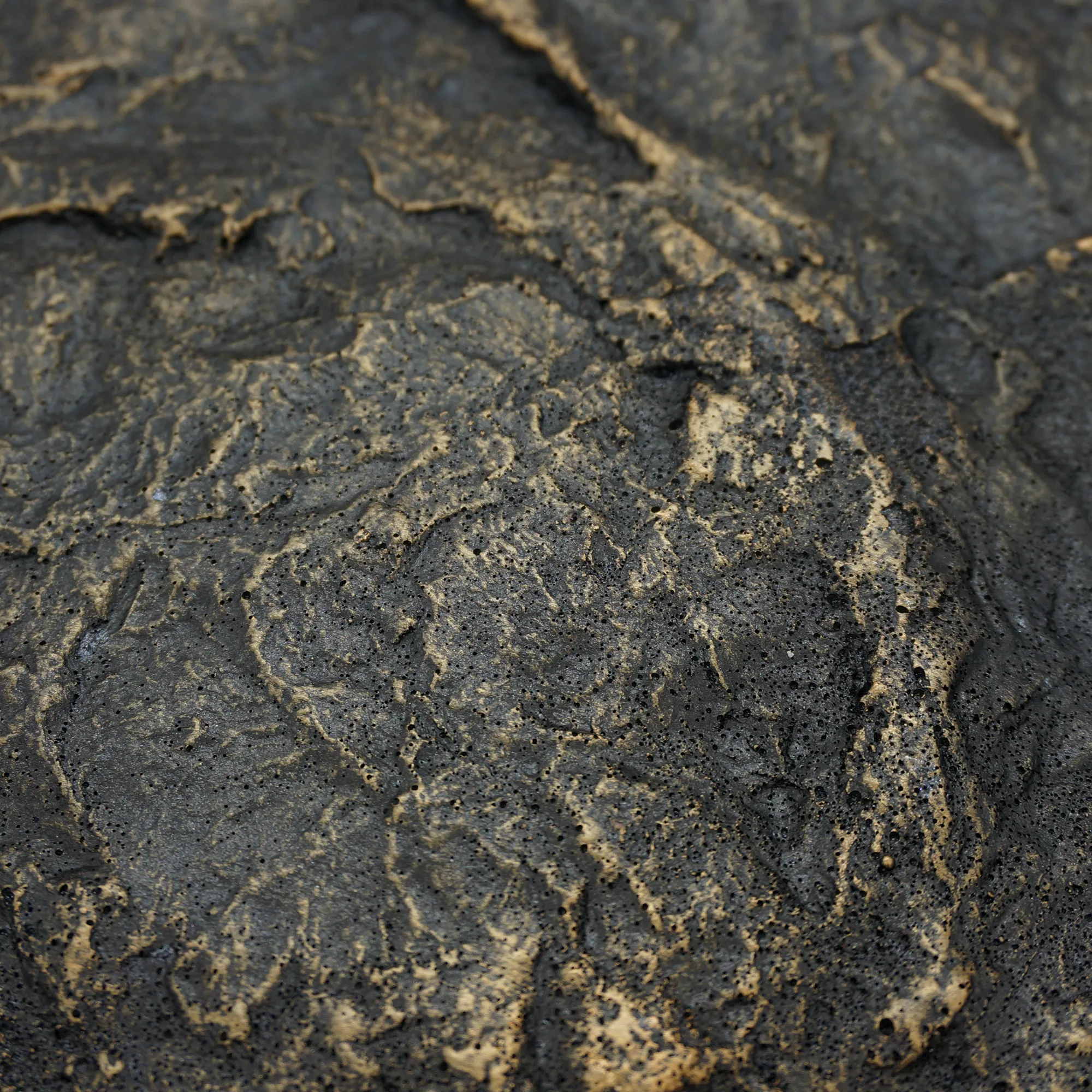
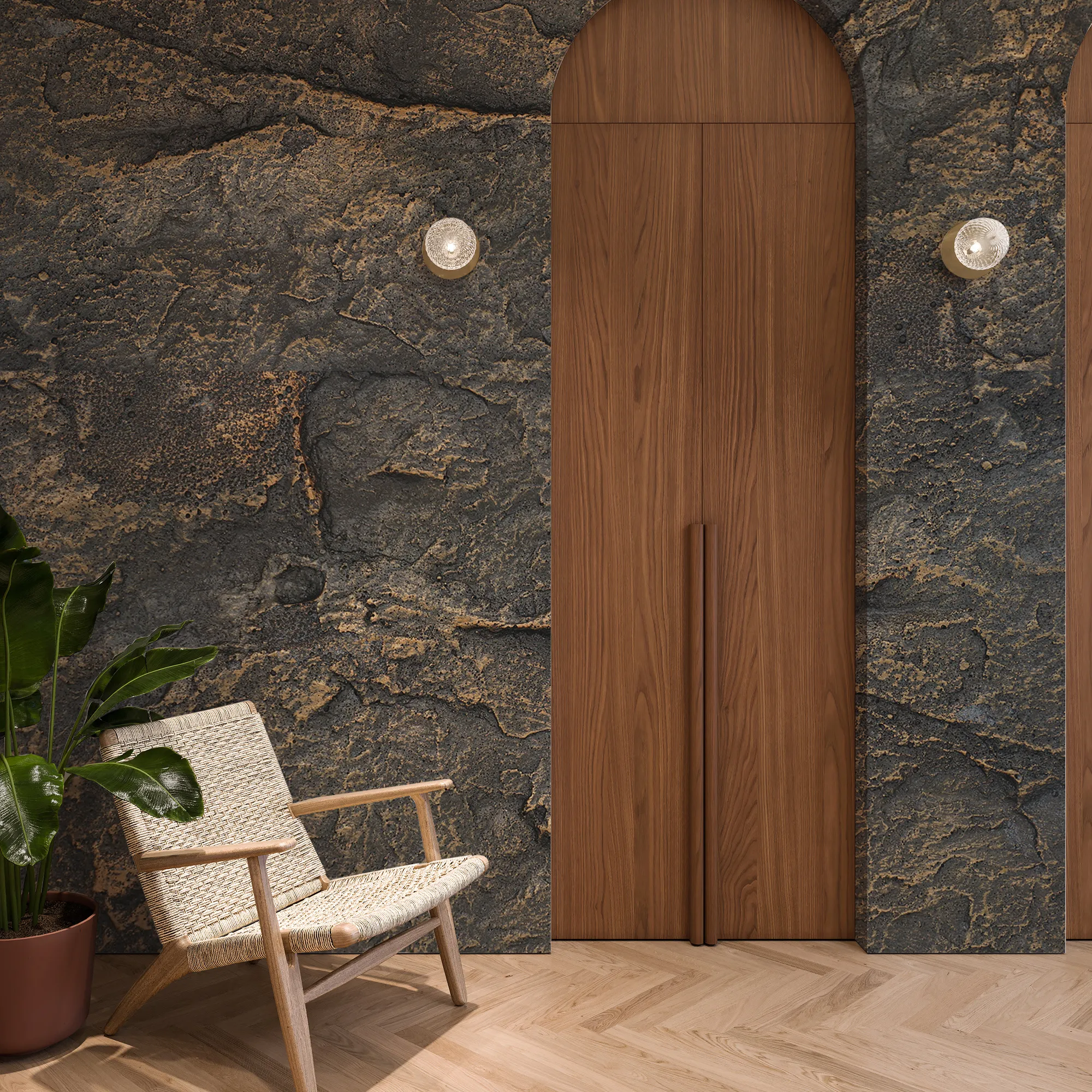
Now, let's focus on the star of the show. The Boulder Slab, particularly in its Vintage Gold finish, is more than just a building material; it's a design statement. It perfectly captures the look of a massive, weathered rock face, warmed by millennia of sunlight, with rich, earthy tones interwoven with shimmering veins of gold. It has a tactile, three-dimensional texture that feels authentic to the touch, providing depth and character that flat, printed surfaces can never replicate.
This product is a flagship example from our **MCM Big Slab Board Series**. The focus of this series is to provide large-format panels that minimize grout lines and create sweeping, monolithic surfaces. Imagine cladding an entire feature wall or the full facade of a beach house with these large slabs. The effect is breathtaking—a seamless, powerful statement of natural beauty and modern luxury that feels both grounded and opulent.
The "Vintage Gold" coloration is particularly suited for coastal designs. It harmonizes with the natural palette of sand, sea, and sky. In the morning light, it has a soft, warm glow. In the golden hour of sunset, the metallic veins catch the light and seem to shimmer, bringing the entire building to life. It bridges the gap between the natural landscape and the built environment, making the structure feel like it truly belongs there.
Versatility in Application: One Material, Endless Possibilities
While the Boulder Slab is perfect for grand exterior statements, the underlying MCM technology from COLORIA GROUP offers a spectrum of solutions for any architectural challenge. This is where our commitment to being a "one-stop solution provider" truly shines. We understand that a single project has diverse needs.
For large-scale commercial developments, such as coastal resorts or condominium towers, consistency and efficiency are key. This is where our **MCM Project Board Series** comes into play. This series is engineered to offer the same durability and aesthetic quality but is optimized for streamlined installation and project specifications, ensuring a cohesive look across a large and complex build.
But what about the design features that defy straight lines? Coastal architecture often embraces organic shapes—curving retaining walls that follow the landscape, rounded towers that maximize ocean views, or elegant arched entryways. Rigid panels can't conform to these shapes. This is precisely why we developed our **MCM Flexible Stone**. It's an incredibly innovative product that offers the same stunning textures and finishes—including looks similar to the Boulder Slab—but in a thin, fabric-like format. It can be wrapped around columns, bent to fit concave or convex walls, and applied to almost any shape imaginable, ensuring that no part of the design vision is compromised. This flexibility empowers architects to design with true creative freedom.
| Feature | MCM Boulder Slab (Vintage Gold) | Natural Granite Slab | Wood Cladding (e.g., Cedar) | Synthetic Stucco (EIFS) |
|---|---|---|---|---|
| Salt Resistance | Excellent (Non-porous, surface salt washes off) | Poor to Moderate (Porous, prone to subflorescence and staining) | Poor (Hardware corrodes, wood can be damaged) | Moderate (Surface is resistant, but cracks can allow salt intrusion) |
| Moisture & Mold Resistance | Excellent (Does not absorb water, inorganic) | Good (If sealed properly, but sealant fails over time) | Poor (Absorbs moisture, prone to rot, mold, and mildew) | Poor (Can trap moisture behind the surface, leading to mold) |
| UV / Color Stability | Excellent (Integral color, highly resistant to fading) | Good to Excellent (Color is stable, but surface polish can dull) | Poor (Fades to gray, requires regular re-staining to maintain color) | Moderate (Prone to fading, especially darker colors) |
| Maintenance Required | Very Low (Periodic cleaning with water) | High (Requires regular inspection and re-sealing every few years) | Very High (Annual cleaning, re-staining or re-painting every 3-5 years) | Moderate (Requires inspection for cracks and repairs to prevent water intrusion) |
| Weight | Lightweight (Significantly reduces structural load and installation cost) | Extremely Heavy (Requires reinforced structure and heavy machinery) | Lightweight | Lightweight |
| Flexibility & Crack Resistance | Excellent (Flexible, resists cracking from thermal stress or building movement) | Poor (Rigid and brittle, can crack under stress) | Good (Naturally flexible, but can warp and split) | Poor (Prone to cracking, especially at joints and impact points) |
| Eco-Friendliness | High (Made from natural soils, low-energy production, fully recyclable) | Moderate (Natural material, but quarrying is energy-intensive and destructive) | Moderate (Renewable if sustainably sourced, but treatments can be toxic) | Low (Petroleum-based synthetic polymers) |
The COLORIA GROUP Advantage: A Partnership in Creation
Choosing a material for a project, especially in a demanding environment, is about more than just a spec sheet. It's about trust and partnership. With decades of industry experience, COLORIA GROUP isn't just a supplier; we are a dedicated solutions provider. Our global presence, from the dynamic markets of the Middle East to projects across the world, has given us unparalleled insight into what it takes to build durable, beautiful structures in every conceivable climate.
Our commitment extends beyond just the product. We work alongside architects and designers from the conceptual stage, leveraging our extensive product families—from big slab boards to flexible stone and even our cutting-edge **MCM 3D Printing Series** that allows for unparalleled custom textures—to find the perfect solution for every unique vision. We believe in pushing the boundaries of what's possible, providing the tools that empower creativity rather than limit it.
Ultimately, our mission is to help create buildings that are not only visually stunning on day one, but that also stand the test of time with grace and minimal intervention. A building in a coastal area should be a source of joy and tranquility, not a constant maintenance burden. By choosing an advanced material like the MCM Boulder Slab (Vintage Gold), you are making an investment in longevity, sustainability, and enduring beauty. You are choosing to build not just for today, but for a lifetime of coastal sunsets.










