
When you're designing a space, whether it's the sleek lobby of a commercial tower or the cozy kitchen of your dream home, the surfaces you choose say a lot. They set the tone, define the aesthetic, and bear the brunt of daily life. For years, materials like granite, marble, and more recently, engineered stone, have dominated the conversation. They promise durability and a premium look. But today, there's a growing question that hangs over every design choice: "Is it sustainable?"
This isn't just a trend; it's a fundamental shift in how we think about building. We're all becoming more aware of our environmental footprint, from the energy our buildings consume to the materials used to construct them. This brings us to a fascinating comparison. On one side, we have engineered stone, the popular, lab-created countertop material. On the other, we have a groundbreaking new player: COLORIA Group's Boulder Slab in its stunning Vintage Gold finish, a product born from advanced Modified Cementitious Material (MCM) technology.
The question is simple, but the answer is deep: which of these is truly the more eco-friendly choice? To figure this out, we can't just look at the finished product. We need to dig into the entire story of each material, from the moment its raw ingredients are pulled from the earth to the day it's eventually replaced. Let's peel back the layers and see what we find.
Before we can judge them, we need to understand the contestants. They might both end up as a beautiful surface in a building, but their origins and make-up are worlds apart.
You've seen it everywhere. Engineered stone, often known by brand names like Caesarstone or Silestone, is a composite material. Think of it as a recipe. The main ingredient, making up about 90-95% of the slab, is crushed natural quartz—one of the hardest minerals on Earth. The remaining 5-10% is a mix of polymer resins (which act as a binder) and pigments (which provide the color and pattern).
The manufacturing process is intense. This mixture is poured into a mold, compressed under immense vacuum and pressure, and then baked at high temperatures to cure the resin. The result is an incredibly hard, non-porous, and durable slab that's resistant to scratches and stains. Its consistency is a major selling point; unlike natural stone, a slab of engineered quartz will look almost identical to the sample you saw in the showroom. For large projects demanding uniformity, this is a huge plus.
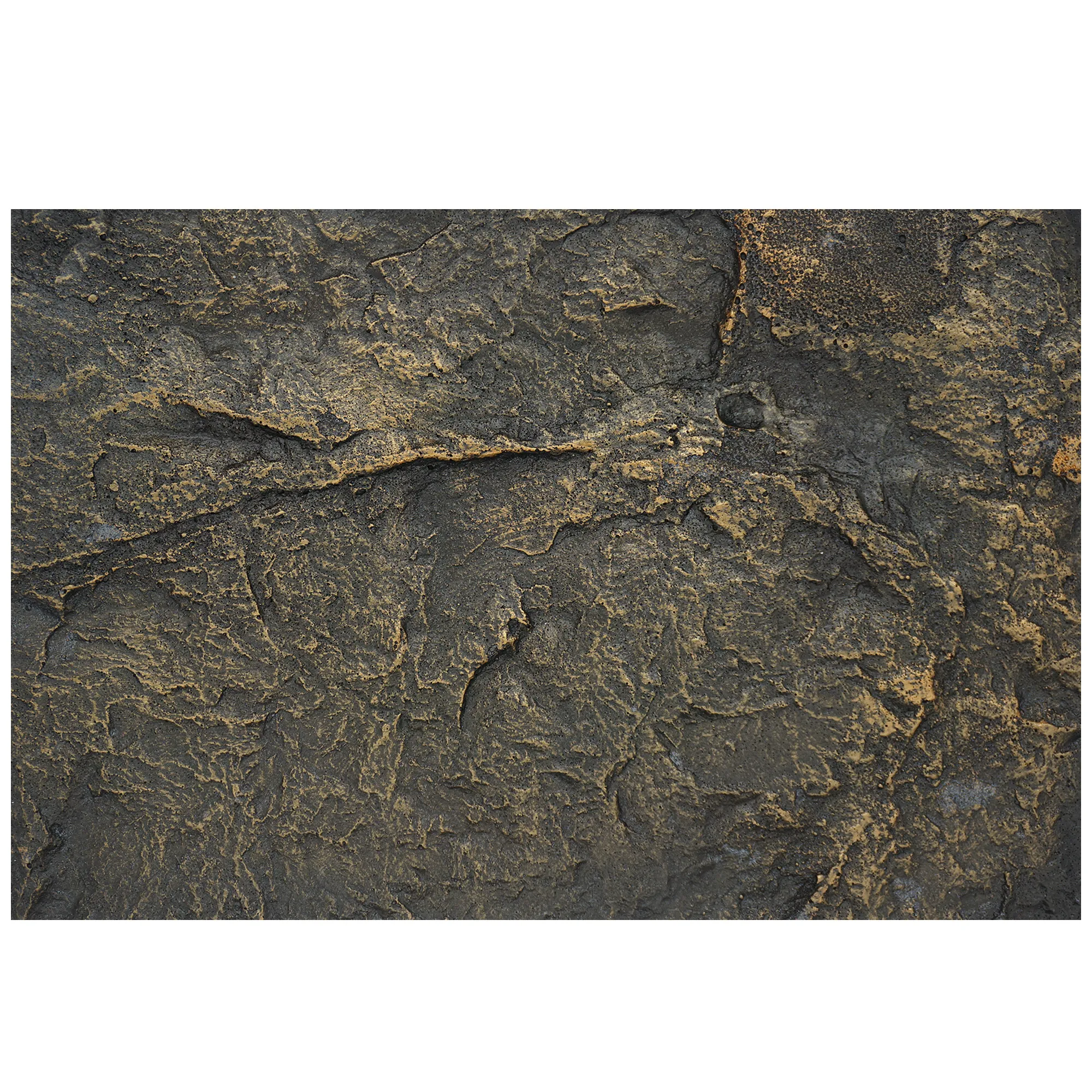
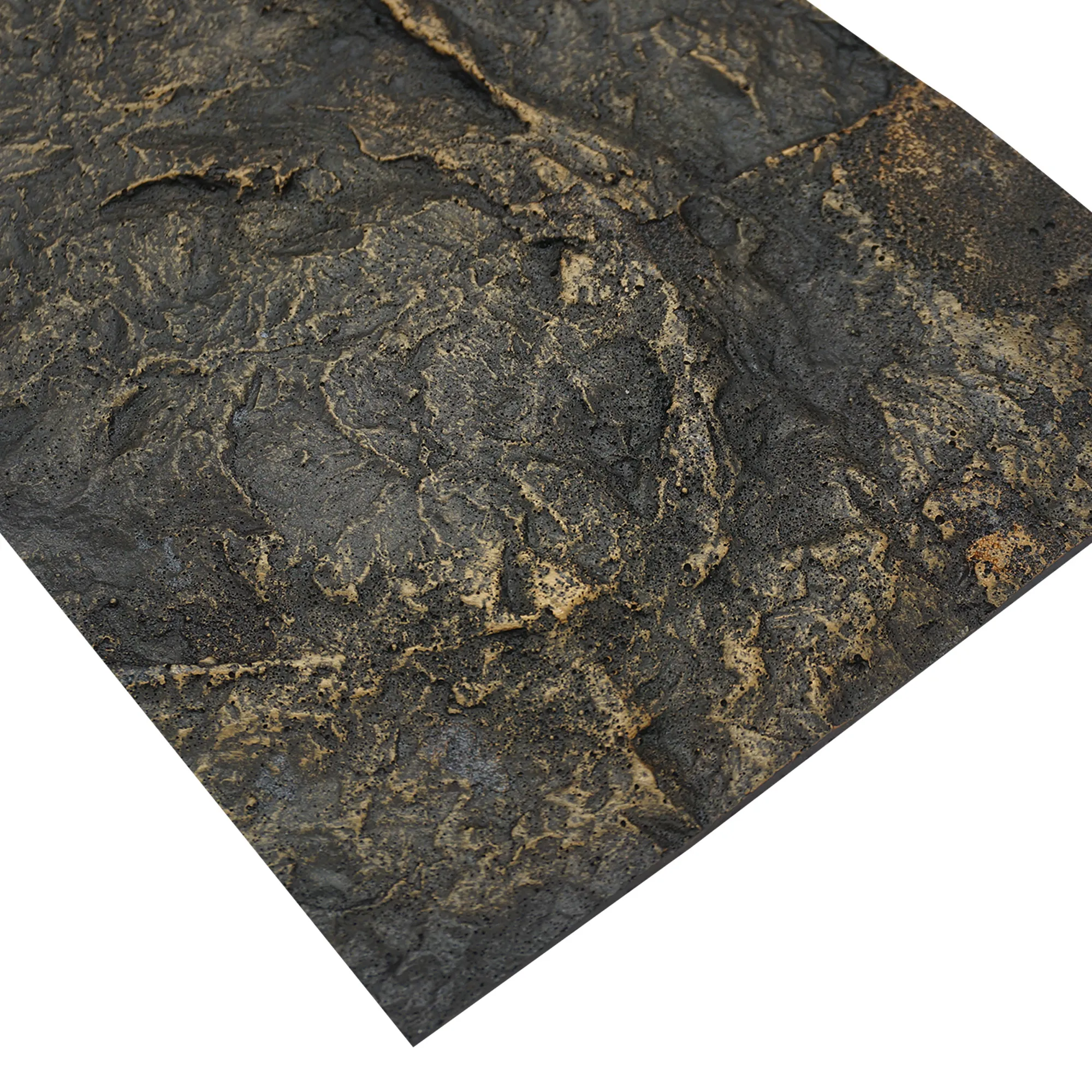
Now, let's turn to the newcomer. Boulder Slab is a showcase product from COLORIA Group's MCM Big Slab Board Series . The name hints at its robust, stone-like appearance, while "Vintage Gold" speaks to its sophisticated, custom finish. But the real magic is what's under the hood: Modified Cementitious Material, or MCM.
Forget the high-pressure, high-heat recipe of engineered stone. MCM is a completely different philosophy. It's a technology that starts with natural, often locally sourced, raw materials. We're talking about things like natural mineral powders, stone dust, sand, and sometimes even recycled components. These base materials are mixed with a small amount of water and special modifying agents. The genius of the process is that it doesn't rely on brute force. Instead, it uses a low-temperature curing process, often just sunlight and controlled airflow, to create a chemical bond at the molecular level.
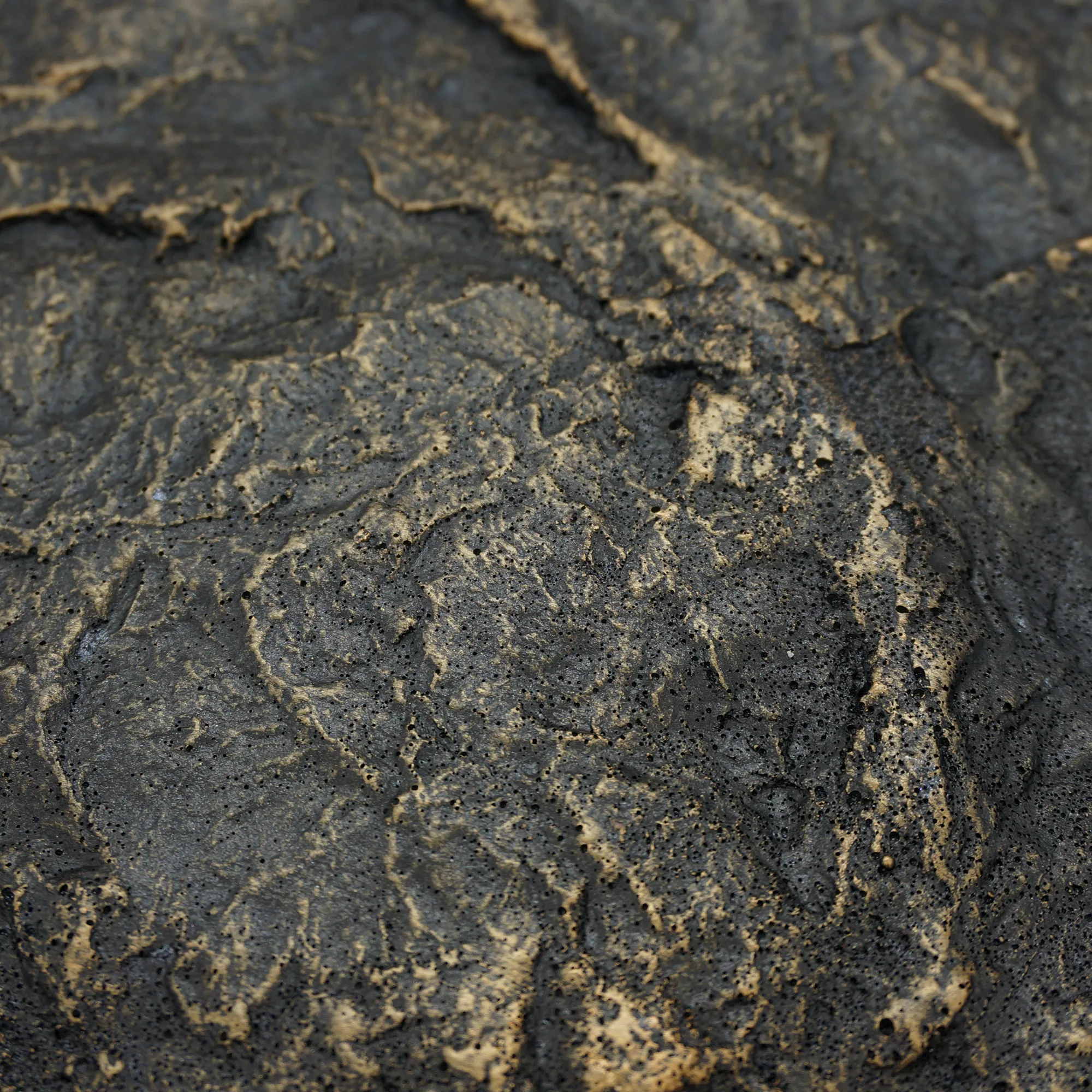
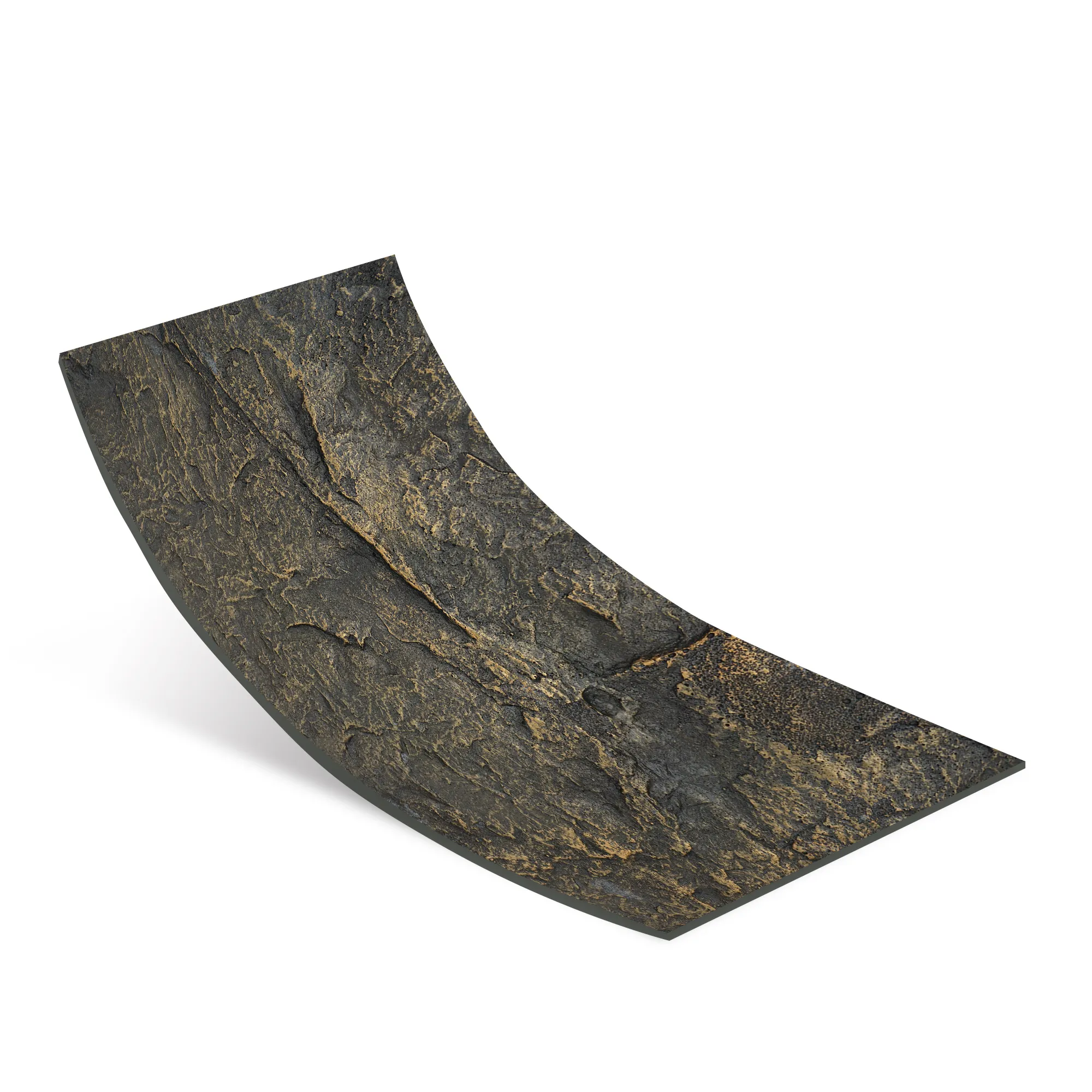
The result is a material that is surprisingly lightweight yet strong and durable. It can be made to look and feel like almost anything—from rugged stone and classic brick to warm wood and even supple leather. The "Vintage Gold" finish on the Boulder Slab, for example, isn't just a printed pattern; it's an integral part of the material, offering a rich, textured depth that plays with light. This level of customization is where MCM technology truly flexes its muscles.
Now that we know what they are, let's put them head-to-head across their entire lifecycle. This is where the true environmental cost is revealed.
| Lifecycle Stage | Engineered Stone | Boulder Slab (MCM Technology) |
|---|---|---|
| Raw Material Sourcing | Relies heavily on quartz quarrying, an industrial mining process with significant land disruption, water use, and energy consumption. The binding agent is a petroleum-based polymer resin. High Impact. | Boulder Slab (MCM)"> Utilizes common, often local, raw materials like soil, sand, and stone powder. Can incorporate recycled content. Sourcing is far less invasive and energy-intensive. Low Impact. |
| Manufacturing & Energy | Extremely energy-intensive process involving high-pressure compression and high-temperature oven curing (baking) to set the resins. High carbon footprint per slab. Potential for VOC (Volatile Organic Compound) emissions from resins. | Boulder Slab (MCM)"> A low-temperature, low-pressure process. Curing often uses natural light and air, drastically reducing energy consumption by up to 80% compared to traditional materials. Minimal to zero VOC emissions. Very Low Energy. |
| Transportation & Logistics | Very heavy and dense. This translates to higher fuel consumption for transportation from factory to distributor to job site. Requires more manpower and equipment to handle. | Boulder Slab (MCM)"> Significantly lighter than traditional stone or engineered stone. This drastically cuts down on transportation costs and the associated carbon emissions. Easier and safer to handle on-site. |
| Installation & Worker Safety | Cutting and grinding releases fine crystalline silica dust, a known carcinogen that causes silicosis, a deadly and incurable lung disease for workers. Requires wet cutting and extensive personal protective equipment (PPE). | Boulder Slab (MCM)"> Contains no crystalline silica. It can be easily cut with a simple utility knife or saw, producing minimal, non-toxic dust. This creates a much safer working environment for installers. High Safety Profile. |
| Durability & Performance | Excellent durability, scratch-resistant, and non-porous. However, it can be chipped, and repairs can be difficult. UV exposure can cause discoloration in some types. | Boulder Slab (MCM)"> Highly durable, fire-resistant (Class A), water-resistant, and fade-resistant. Its inherent flexibility makes it less prone to cracking from building settlement. It excels in both interior and exterior applications. |
| End-of-Life & Recyclability | The polymer resin binder makes it extremely difficult to recycle. Broken or replaced slabs almost always end up in a landfill, where they remain for centuries. Landfill Burden. | Boulder Slab (MCM)"> The material can be ground down and potentially reintegrated into the production of new MCM products, creating a closed-loop system. Depending on the exact composition, it can even be returned to farmland to be repurposed as soil. Recyclable/Reusable. |
Looking at the table, a clear pattern emerges. At nearly every stage of its life, from cradle to grave, the Boulder Slab, representing COLORIA Group's MCM technology, presents a significantly smaller environmental footprint than engineered stone. The differences in energy consumption and end-of-life options are particularly stark.
Eco-friendliness isn't just about carbon footprints and recycling. It's also about people—the ones who make the materials and the ones who live with them.
This is a crucial point that is often overlooked in design showrooms. The high concentration of crystalline silica in engineered stone becomes a deadly hazard when the material is cut, ground, or polished. Fabricators and installers who inhale this fine dust are at extreme risk of developing accelerated silicosis. This has become a global health epidemic in the stone fabrication industry, leading to devastating health outcomes for countless workers and new regulations in many countries. Choosing a material that avoids this risk is a profoundly ethical and responsible decision.
COLORIA Group's MCM products, including the Boulder Slab, completely sidestep this issue. Their composition is free of crystalline silica, making them safe to handle and work with. This focus on human health, from the factory to the final installation, is a core part of what makes a material genuinely "green."
From a creative standpoint, the differences are just as significant. Engineered stone is rigid. It's heavy. It's flat. Its application is largely limited to countertops, backsplashes, and flooring.
MCM technology, on the other hand, is a designer's dream.
So, returning to our original question: Boulder Slab (Vintage Gold) vs. engineered stone—which is more eco-friendly?
The evidence is overwhelming. While engineered stone offers durability, its environmental and human health costs are substantial. From the energy-hungry manufacturing and reliance on quarried minerals and petroleum resins to the hazardous installation dust and its final resting place in a landfill, its lifecycle is fraught with negative impacts.
In stark contrast, the Boulder Slab, powered by COLORIA Group's MCM technology, represents a true paradigm shift. It is a material designed for the 21st century. It is born from a low-energy process using abundant natural materials. It is safe for the workers who craft and install it. It is lighter to transport, reducing its carbon footprint on the way to your project. And at the end of its long life, it offers the promise of being recycled or returned to the earth.
Choosing a material like Boulder Slab isn't a compromise. It's an upgrade. It's a decision to embrace innovation that delivers not only stunning aesthetics and robust performance but also aligns with a deeper commitment to the health of our planet and its people. As a one-stop solution provider with decades of experience, COLORIA Group is championing this shift, proving that high-end design and true sustainability can, and should, go hand in hand.
The next time you're faced with a choice of surfaces, look beyond the surface. Consider the entire story. The greener path is not only clearer than ever—it's also more beautiful and versatile.
Recommend Products












