
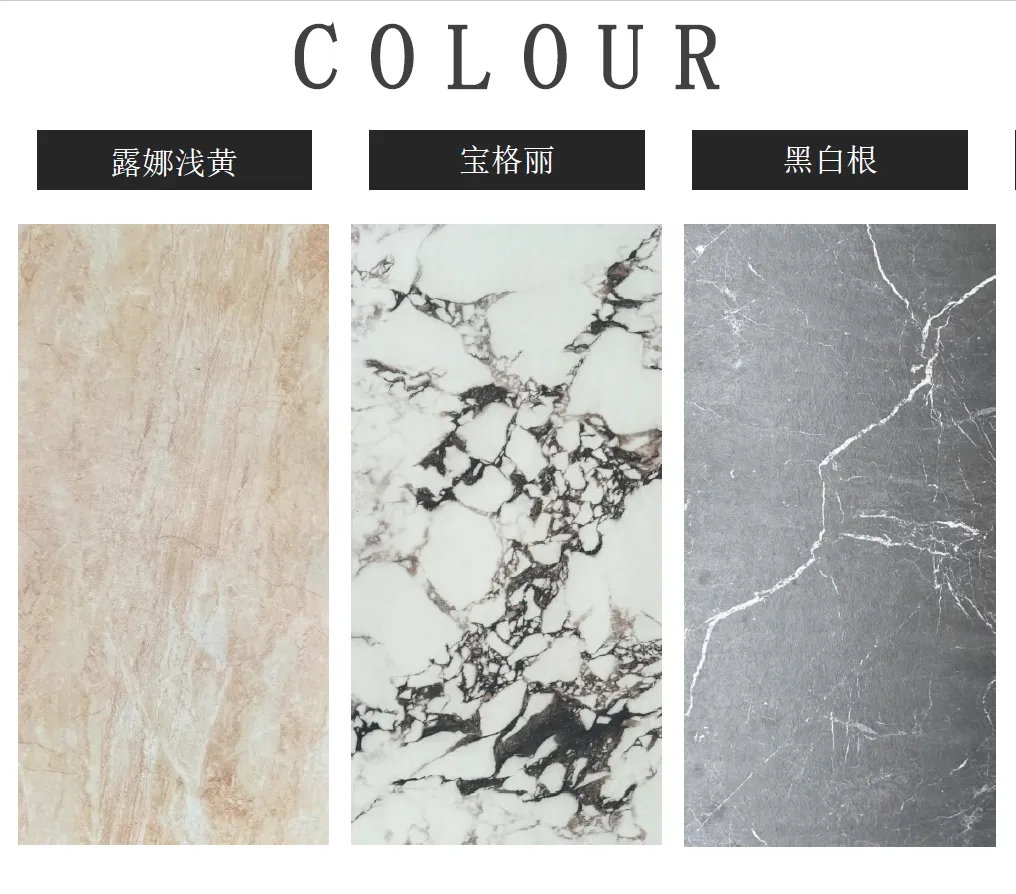
When it comes to flooring, homeowners and designers alike are often caught in a tug-of-war between aesthetics and practicality. Natural marble, with its timeless veining and luxurious appeal, has long been a top choice—but its reputation for scratching, staining, and requiring constant maintenance can give even the most enthusiastic renovator pause. Enter the MCM marble series: a modern innovation that promises to bridge the gap between beauty and durability. But is it really the flooring solution we've been waiting for? Let's dive in, exploring everything from its unique composition to real-world performance, so you can decide if MCM marble series deserves a spot underfoot in your space.
First things first: let's demystify the term. MCM stands for Modified Composite Material, a technology that's been turning heads in the construction and design world for its ability to blend the best of natural materials with the resilience of modern polymers. Think of it as a high-tech hybrid: MCM marble series starts with crushed natural marble particles—sourced from leftover stone from quarries, making it eco-friendly from the get-go—then binds them with ultra-strong resins and fibers. The result? A material that's thin (often just 3-5mm thick), lightweight, and surprisingly flexible, yet retains the authentic look and feel of natural marble.
Unlike traditional marble slabs, which are heavy, brittle, and prone to cracking during installation, MCM marble series is designed to adapt. It can be bent, curved, and even cut into intricate shapes without losing structural integrity. This flexibility opens up a world of design possibilities, from flooring that flows seamlessly up stair risers to custom patterns that mimic the organic irregularity of natural stone. And with a range of finishes—matte, polished, honed, and even textured—there's a style to suit every space, whether you're going for a sleek modern kitchen or a cozy rustic bedroom.
Let's talk about the elephant in the room: natural marble is stunning, but it's not exactly tough. Spill a glass of red wine, and you're left with a permanent stain. Drag a chair across the floor, and you've got a scratch that's impossible to buff out. MCM marble series, on the other hand, is built to handle the chaos of daily life. Thanks to its composite structure, it's resistant to scratches, stains, and even UV rays (so it won't fade in sunlight, unlike some natural stones). In independent lab tests, MCM marble flooring has withstood 10,000 cycles of abrasion testing—twice the number required for commercial-grade flooring—making it a solid choice for high-traffic areas like entryways, living rooms, and kitchens.
Take Lunar peak silvery , a popular MCM marble variant with a cool, metallic sheen that mimics the glow of moonlight on stone. Designers love it for its durability: one hospitality project in downtown Chicago installed Lunar peak silvery in a busy hotel lobby three years ago, and today, the floors still look as crisp and unmarked as the day they were laid—despite thousands of guests walking over them daily. "We were worried about scuffs from luggage and high heels," says the project's interior designer, Mia Chen, "but the MCM held up better than we ever expected. It's like having the beauty of marble with the toughness of porcelain."
If you've ever tried to install natural marble on a slightly uneven subfloor or around a curved wall, you know the struggle: the rigid slabs crack, chip, or leave unsightly gaps. MCM marble series, with its inherent flexibility, solves this problem. It can conform to minor imperfections in the floor, making it ideal for older homes with wonky subfloors or spaces with unique architectural features, like rounded niches or spiral staircases.
Consider Boulder slab , another MCM standout known for its rugged, slab-like appearance. A recent residential project in Colorado used Boulder slab (vintage black) to floor a sunroom with a gently sloped ceiling and curved walls. "Natural stone would have required custom cutting and tons of grout to make the curves work," explains the homeowner, Jake Torres. "With MCM, the installers just bent the sheets to follow the walls—it was seamless. Now, the sunroom feels like a cave of polished stone, but without the headache of traditional installation."
Natural marble slabs can weigh upwards of 15 pounds per square foot, which means installing them often requires reinforcing the floor structure and hiring a team of strong workers. MCM marble series, by contrast, weighs just 3-5 pounds per square foot—light enough that a single installer can carry and lay sheets without extra help. This not only cuts down on labor costs but also reduces the strain on your home's foundation, making it a safer choice for second-story rooms or older buildings with weaker floors.
Installation is also faster. Unlike natural marble, which needs to be sealed, grouted, and left to cure for days, MCM marble series often comes with a peel-and-stick backing or can be glued down with a simple adhesive. Many homeowners report that a 500-square-foot room can be floored in a weekend, compared to a week or more with natural stone. "We did our entire basement in MCM marble series over a long weekend," says DIY enthusiast Lisa Wong. "My husband and I handled it ourselves—no contractors, no heavy lifting. It was almost too easy!"
One of the biggest draws of MCM marble series is its sheer range of styles. Whether you crave the classic elegance of white marble with gray veins or the bold drama of black stone with metallic flecks, there's an MCM variant for you. Take the Lunar peak line, for example: Lunar peak silvery offers a soft, iridescent finish that shimmers in light, while Lunar peak golden adds warm, sunlit tones, and Lunar peak black brings deep, moody drama. Then there's the Travertine sub-series, with options like starry red (speckled with tiny "stars" of color) and vintage gold (a weathered, antique look that pairs perfectly with rustic decor).
Designers also love that MCM marble series can mimic rare or expensive natural stones at a fraction of the cost. "I had a client who wanted the look of Italian Calacatta marble but couldn't afford the $200-per-square-foot price tag," says designer Carlos Mendez. "We went with MCM's Marble veil white, which has the same bright white background and gray veining, for $50 per square foot. No one can tell the difference—even the client's marble-obsessed mother was fooled!"
Natural marble requires regular sealing (every 6-12 months) to prevent stains, and even then, acidic substances like lemon juice or vinegar can etch its surface. MCM marble series? It's practically maintenance-free. Its resin coating acts as a built-in sealant, so spills can be wiped up with a damp cloth without leaving a mark. No need for expensive sealers, special cleaners, or professional polishing. "I have three kids and a dog, so my floors take a beating," says homeowner Maria Gonzalez, who installed MCM travertine (beige) in her kitchen. "Juice spills, muddy paws, marker—nothing phases it. A quick wipe with soap and water, and it looks brand-new. I used to stress about my old marble floors; now, I don't give them a second thought."
While MCM marble series is cheaper than high-end natural marble, it's often pricier than budget options like laminate, vinyl, or even fair-faced concrete . Depending on the style and brand, MCM marble flooring can cost $40-$80 per square foot, including installation. For comparison, fair-faced concrete (a popular industrial-style option) typically runs $30-$50 per square foot. This higher upfront cost can be a barrier for homeowners on a tight budget—though many argue the long-term savings on maintenance and replacement make it worth it.
While MCM marble series holds up well to everyday heat (like sunlight through windows or hot pans set down briefly), it's not universally compatible with underfloor heating systems. Some lower-quality MCM products can warp or discolor if exposed to constant heat above 85°F. If you're set on underfloor heating, you'll need to choose a heat-resistant MCM variant (check the manufacturer's specs!)—and even then, it's wise to keep the temperature moderate. "We installed underfloor heating in our bathroom with MCM boulder slab," says homeowner Tom Wilson, "and after a few months, we noticed slight warping near the heating vents. The manufacturer said we'd cranked the heat too high—now we keep it at 75°F, and it's fine, but it's a hassle we didn't anticipate."
Polished MCM marble surfaces can be just as slippery as natural marble when wet, which is a safety concern for bathrooms, kitchens, or entryways prone to moisture. The solution? Opt for a honed or textured finish, which adds grip. But if you fall in love with a polished look, you'll need to take extra precautions—like adding anti-slip mats or choosing a product with a built-in slip-resistant coating. "Our polished MCM marble kitchen floor is gorgeous, but after my daughter slipped while washing dishes, we had to add rubber mats near the sink," says homeowner Priya Patel. "It's a small price to pay for beauty, but it's something to consider."
For purists who crave the unique, one-of-a-kind texture of natural marble—the tiny pits, the subtle color variations, the way light plays off its porous surface—MCM marble series can feel a bit "perfect." While manufacturers do their best to replicate natural stone's irregularities, MCM's uniform appearance and smooth, resinous finish lack the organic charm of the real thing. "I love the look of MCM, but it doesn't have that 'lived-in' feel of natural marble," admits designer Elena Kim, who specializes in historic home renovations. "In a 100-year-old brownstone, natural stone's imperfections tell a story. MCM, while beautiful, feels… new. That's not a bad thing—it just depends on the project's vibe."
While MCM marble series is easier to install than natural stone, it's not a total DIY free-for-all. The material is thin and flexible, which means it can bubble or shift if not installed properly. You'll need a contractor who's familiar with MCM products—someone who knows how to prep the subfloor, apply the right adhesive, and trim the sheets without cracking them. "I tried to install MCM myself to save money," says homeowner Ryan Lee, "and ended up with gaps between the sheets and a few bubbled areas. I had to hire a pro to fix it, which cost more than if I'd just hired them in the first place. Lesson learned: leave it to the experts."
| Feature | MCM Marble Series | Natural Marble | Fair-Faced Concrete |
|---|---|---|---|
| Durability | High (scratch/stain-resistant) | Low (prone to scratches/stains) | High (resistant to wear, stains) |
| Cost (per sq ft, installed) | $40-$80 | $80-$150+ | $30-$50 |
| Installation | Easy (lightweight, flexible) | Difficult (heavy, brittle) | Moderate (requires smoothing/curing) |
| Maintenance | Low (no sealing needed) | High (seal every 6-12 months) | Low (occasional sealing) |
| Aesthetics | Wide range (veins, colors, finishes) | Timeless, unique veining | Industrial, minimalist (limited colors) |
| Eco-Friendliness | High (uses recycled stone) | Low (energy-intensive quarrying) | Moderate (recycled aggregates optional) |
Perfect for: Homeowners who want the look of marble without the hassle; designers working on spaces with uneven floors or curved architecture; anyone prioritizing durability and low maintenance; and eco-conscious buyers who want sustainable materials. It's also a great fit for commercial spaces like hotels, restaurants, and offices, where high traffic and easy upkeep are non-negotiable.
Not ideal for: Purists who demand the authentic texture and variability of natural stone; homeowners on a strict budget (go for fair-faced concrete or vinyl instead); or spaces with extreme heat (like saunas or near fireplaces without proper heat barriers). If you're set on underfloor heating, double-check the product's heat resistance first.
At the end of the day, MCM marble series isn't a perfect replacement for natural marble—but it doesn't claim to be. What it offers is a practical, beautiful alternative that balances aesthetics and functionality in a way few materials can. It's durable enough for busy families, flexible enough for tricky spaces, and stylish enough to satisfy even the pickiest designers. Yes, it costs more upfront than some options, and it may not have the "soul" of natural stone—but for many, those trade-offs are well worth it.
If you're dreaming of marble floors but dreading the maintenance, or if you need a flooring solution that can keep up with your life, MCM marble series deserves a spot at the top of your list. Just be sure to do your homework: research brands, check heat resistance specs, and hire an installer who knows MCM inside out. With the right preparation, you'll end up with floors that look like a million bucks—and last for years to come.
So, are you ready to take the plunge? Your floors (and your future self) just might thank you.
Recommend Products












