


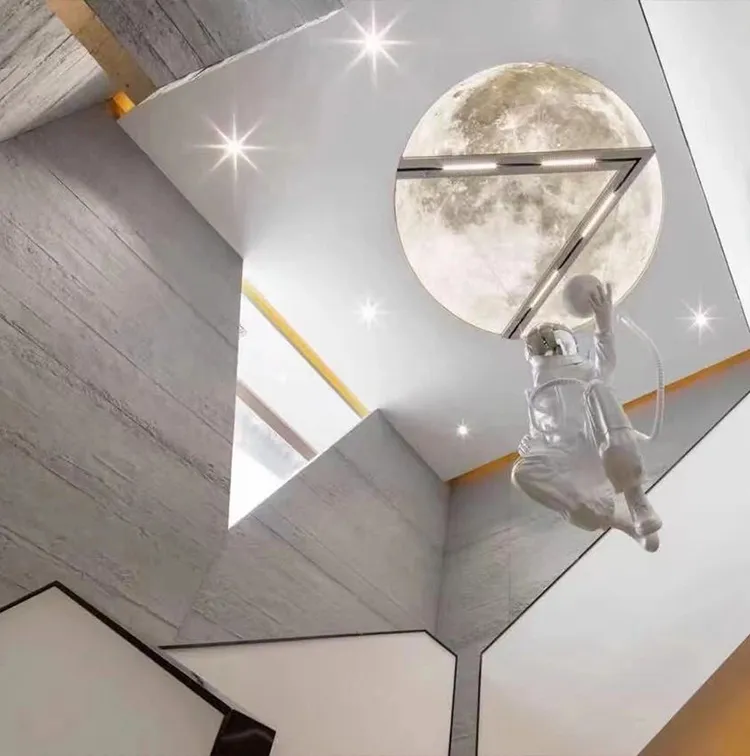
Walk into any thoughtfully designed space today—whether it's a sleek urban café, a cozy mountain home, or a striking museum—and you'll likely notice something: the walls, facades, and surfaces aren't just background noise. They tell a story. A-hewn texture might whisper of industrial heritage, a warm beige tone could evoke sunlit Mediterranean villages, and a seamless expanse of material might feel like a canvas stretched tight by modernity. These details don't happen by accident. Behind them is a quiet revolution in architectural design: cement board customization. No longer confined to generic gray slabs or one-size-fits-all finishes, today's cement boards are being transformed into personalized statements that bridge functionality, artistry, and the unique vision of designers. Let's dive into how this versatile material is redefining what our built environments can feel like—and why it matters.
The End of "One-Size-Fits-All" in Architecture
Not long ago, architectural materials were often chosen for one job: to perform. A wall was a wall, a facade was a barrier, and "character" was something you added later with paint or decor. But as our relationship with spaces deepened—we now work from home, host friends in our living rooms, and seek solace in public plazas—we started craving more. We want buildings that feel *intended* for us, not just assembled for function. This shift is why customization has moved from a luxury to a necessity. Homeowners want their living rooms to reflect their personalities, businesses aim to stand out in crowded markets, and cities strive to create landmarks that feel rooted in their identity. Generic materials just can't keep up. Enter cement board: durable enough for high-traffic areas, lightweight enough for creative installations, and adaptable enough to mimic everything from ancient stone to futuristic metals. It's the chameleon of the building world, and designers are finally unlocking its full potential.
Why Cement Board? The Unsung Hero of Custom Design
So, what makes cement board the go-to for customization? Let's start with the basics: it's tough. Made from a blend of cement, reinforcing fibers, and additives, it resists moisture, fire, and wear—qualities that make it ideal for both interiors and exteriors. But its real superpower is flexibility. Unlike solid stone (heavy, hard to shape) or traditional drywall (fragile, limited in texture), cement board can be cut, shaped, and finished in ways that let creativity lead. Want a wall that looks like it was carved from a single piece of travertine? Cement board can do that. Dream of a facade with the raw, unpolished charm of fair-faced concrete but with a softer edge? Done. Need a lightweight panel that bends around a curved staircase without cracking? Cement board rises to the challenge. It's not just a material; it's a collaborator. And when paired with innovations like mcm flexible stone —a lightweight, bendable composite that mimics natural stone—its possibilities expand even further, blending the best of durability and design freedom.
The Art of Customization: Texture, Color, and Storytelling
Customizing cement board isn't about slapping on a new coat of paint. It's about curating an experience. Let's break down the key elements that turn a plain board into a design statement:
Texture: The Language of Touch
Texture is the first thing we notice when we run a hand along a surface—or even when we look at it from across a room. It adds depth, warmth, and character. Take fair-faced concrete , for example. Its raw, unadorned finish—with subtle variations in texture, tiny air bubbles, and the faint imprint of formwork—feels honest and grounded. It's the material of warehouses and art galleries, where industrial edge meets creative expression. On the flip side, imagine a cement board treated to mimic the pitted, organic texture of travertine. Travertine, a natural stone formed by mineral-rich hot springs, has a surface that feels both ancient and alive—like it's been shaped by time. When replicated on cement board, that texture brings a sense of history to modern spaces, turning a kitchen backsplash or a bedroom accent wall into something that feels lived-in and meaningful.
Color: Setting the Mood
Color is emotion in visual form. A bold red might energize a space, a soft gray could calm it, and a warm beige? It might make a room feel like a hug. That's where options like travertine (beige) come in. Beige travertine isn't just a "safe" choice—it's a versatile one. Its earthy undertones (think sand dunes at dawn or weathered terracotta roofs) pair beautifully with both modern minimalism and rustic charm. Imagine a living room with cement board walls finished in travertine beige: sunlight filters through large windows, casting gentle shadows on the textured surface, and suddenly the space feels open, warm, and connected to nature. It's a color that doesn't shout, but it lingers—in the best way.
Size and Scale: Making a Statement
Sometimes, the biggest impact comes from how you arrange the pieces. Large-format cement boards, for instance, create seamless expanses that feel sleek and contemporary—perfect for a minimalist home or a high-end retail store where the focus is on the products, not the walls. Smaller, patterned tiles, on the other hand, can add rhythm and playfulness, like a mosaic of textures in a bathroom or a backsplash. And with the rise of mcm flexible stone , even curved surfaces or irregular shapes are fair game. Imagine a restaurant with a curved bar front clad in flexible stone panels, their edges softening the space and guiding the eye—all made possible by the adaptability of modern cement board systems.
| Customization Element | Examples | Best For | Feels Like... |
|---|---|---|---|
| Texture | Fair-faced concrete (raw, industrial); Travertine (pitted, organic) | Accent walls, restaurant facades, art studios | Running your hand over weathered stone or a well-loved workshop bench |
| Color | Travertine (beige), charcoal gray, terracotta red | Living rooms, bedrooms, boutique storefronts | A sunset, a cozy cabin, or a bustling Mediterranean street |
| Size/Layout | Large slabs (8ft x 4ft), small mosaic tiles, staggered patterns | Modern homes, hotel lobbies, outdoor patios | A vast desert horizon or a carefully arranged puzzle of textures |
| Material Blends | MCM flexible stone + cement board, wood-grain overlays | Curved surfaces, feature walls, outdoor kitchens | A bridge between old and new, nature and industry |
From Concept to Reality: Real Spaces, Real Stories
Custom cement board isn't just theoretical—it's transforming spaces around us. Let's look at a few examples that bring these ideas to life:
The Urban Café with a Rustic Soul: In downtown Portland, a small café wanted to stand out from the sleek, all-glass storefronts nearby. The designer chose cement boards finished to mimic travertine (beige) , with a slightly rough texture that feels like it was pulled from a Tuscan village. Paired with black metal accents and warm pendant lights, the facade now feels inviting and timeless—like a little piece of the countryside dropped into the city. Inside, the same travertine-beige boards line the walls, their neutral tone making the vibrant coffee cups and fresh pastries pop. Customers often comment on how "un-rushed" the space feels, a direct result of the material's warm, earthy vibe.
The Home Office That Inspires: A freelance designer in Colorado wanted her home office to be both functional (resistant to spills, easy to clean) and creatively stimulating. She opted for fair-faced concrete cement boards on one wall, leaving their raw, industrial texture exposed. "I love how it looks like a blank canvas," she says. "On days when I'm stuck, I'll run my hand over the surface and let the tiny imperfections spark ideas—it's like having a collaborator in the room." The contrast between the concrete wall and the opposite wall, clad in light wood, balances the space, making it feel both grounded and airy. It's a reminder that customization isn't just about aesthetics; it's about creating environments that support how we live and work.
The Museum with a Modern Edge: A new art museum in Chicago needed a facade that would complement the bold contemporary art inside while fitting into the city's historic district. The solution? Large-format cement boards treated with mcm flexible stone panels in a custom charcoal gray. The flexibility of the material allowed the designers to create subtle curves in the facade, softening the building's geometric lines and echoing the flow of the galleries inside. At night, LED lights embedded behind the panels make the stone glow, turning the museum into a beacon—proof that even functional materials can become part of the art.
Tech Meets Craft: How Innovation Is Expanding Possibilities
Customization doesn't happen in a vacuum—it's powered by a mix of old-world craftsmanship and new technology. Take mcm flexible stone , for example. This material is made by bonding thin layers of natural stone or mineral composites to a flexible backing, allowing it to be applied to curved surfaces, uneven walls, or even ceilings—places traditional stone would be too heavy or brittle to go. When paired with cement board, it's a match made in design heaven: the cement provides structural strength, while the flexible stone adds the beauty and texture of natural materials. It's like giving designers a new set of brushes—ones that can paint with stone, concrete, or metal, regardless of the surface's shape.
Digital tools are also playing a role. 3D modeling software lets designers experiment with textures and colors before a single board is cut, ensuring the final result matches their vision. Some manufacturers even offer custom color matching, so if a client falls in love with the hue of a specific Italian travertine or a weathered barn wood, the cement board can be tinted to match. It's precision meets personalization, and it's making once-impossible designs achievable.
Sustainability: The Quiet Benefit of Custom Cement Board
In a world increasingly focused on eco-friendly design, customization and sustainability often go hand in hand. Traditional materials like solid stone or marble require extensive mining and transportation, leaving a large carbon footprint. Cement board, by contrast, is often made with recycled materials, and its lightweight nature reduces fuel use during shipping and installation. When you customize it to mimic natural stone (like travertine (beige) ), you get the look of the real thing without depleting natural resources. Plus, cement board's durability means it lasts longer—reducing the need for frequent replacements and the waste that comes with them. It's a win-win: you get a space that feels uniquely yours, and the planet gets a break.
Why It All Matters: Spaces That Feel Like "Us"
At the end of the day, cement board customization is about more than walls and facades. It's about creating spaces that reflect who we are—our histories, our values, and our dreams. A home with travertine-beige walls might remind a family of summers spent in Greece. A restaurant with fair-faced concrete might honor a city's industrial past while embracing its creative future. These details don't just make spaces beautiful; they make them meaningful. They turn buildings into stories, and stories into connections.
The Future of Customization: Where Do We Go From Here?
As technology advances and designers push boundaries, the possibilities for cement board customization will only grow. We'll see more blends of materials (think cement boards with integrated plants or lighting), more hyper-specific textures (mimicking everything from ancient Roman ruins to moon dust), and more focus on personalization at every scale—from a single accent wall to an entire city block. But one thing will stay the same: the goal. It's not just to build spaces. It's to build spaces that feel *alive*—that respond to the people who use them, and in turn, shape how we live, work, and connect.
So the next time you step into a space that feels uniquely "right," take a closer look at the walls. Chances are, there's a customized cement board behind that feeling—quietly working to turn a building into something more: a reflection of us.










