
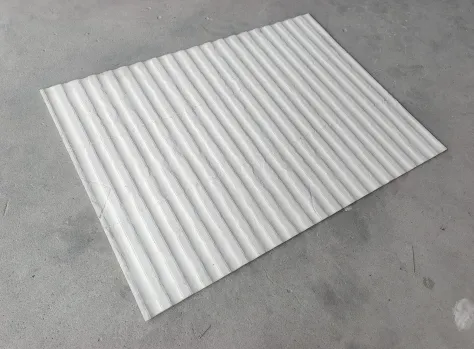
Architecture has always been a conversation between imagination and reality. For centuries, designers have dreamt of structures that curve, flow, and express unique identities, only to be constrained by the rigid realities of traditional materials. Today, that conversation is changing. We are entering an era where design freedom is not just a dream but a tangible reality, thanks to groundbreaking innovations.
For generations, the palette of architects was beautiful but limited. The grandeur of marble, the strength of granite, the warmth of wood—each carries with it a legacy of craft but also a heavy burden of cost, weight, and environmental impact. Carving intricate patterns from a block of stone is a subtractive process, generating immense waste and requiring painstaking labor. As our world pushes towards greater efficiency and sustainability, the building industry has been searching for a smarter way forward.
This is where COLORIA GROUP steps in. With decades of experience as a one-stop solution provider in the architectural materials sector, we've always been at the forefront of what's next. Our mission is to empower creators—architects, designers, and developers—with tools that are not only high-quality but also unlock new creative potential. It is this philosophy that led us to develop our flagship brand: Century Stone. More specifically, it's the technology behind the Century Stone 3D Printing Series that is truly setting a new standard for what's possible in creating custom architectural elements.
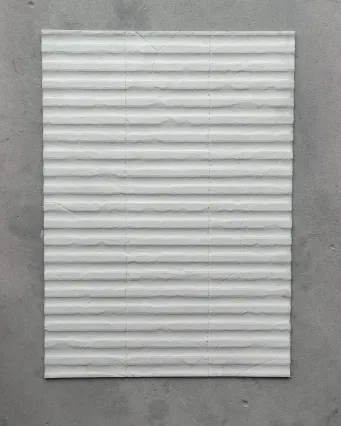
Before we dive into the fascinating world of 3D printing, it's essential to understand the revolutionary material at its core. So, what exactly is this "Century Stone" we're so excited about? At its heart, Century Stone is our branded application of an advanced composite known as MCM, or Modified Cementitious Material . But don't let the technical name intimidate you. Think of it as nature, perfected by science.
MCM is crafted from a base of natural, inorganic materials. We're talking about common elements from the earth: natural soil, sand, and stone powder. These raw components are then blended with a special water-based polymer that acts as a modifier. This is the secret sauce. Through a proprietary process of mixing, forming, and a low-temperature curing cycle, this blend transforms into a material with an extraordinary combination of properties. It's not quite clay, not quite stone, not quite concrete—it's something entirely new and far more versatile.
Even before we shape it with a 3D printer, the base material offers a stunning array of benefits that address the biggest pain points of traditional construction:
Now, let's take that incredible base material and pair it with one of the most transformative technologies of our time: 3D printing. This is where the Century Stone 3D Printing Series truly comes alive. It represents the ultimate fusion of material science and digital fabrication, turning architectural dreams into physical reality, layer by meticulous layer.
How does it work? The process is as elegant as it is powerful. It starts not on a construction site, but on a designer's computer. An architect creates a complex, three-dimensional model of a façade panel, a decorative screen, or a sculptural element. This digital file is then sent to our large-scale, specialized 3D printers. The printer is loaded with a precisely formulated paste of our Modified Cementitious Material. Guided by the digital blueprint, the printer's nozzle begins to extrude the material, building the object from the ground up, one layer at a time. The process is hypnotic to watch—a digital design literally materializing in the physical world. Once printed, the element undergoes our low-temperature curing process to gain its full strength and durability.
This technology shatters the old paradigm of standardization. For the first time, architects are liberated from the catalog. With MCM 3D Printing , the limitations are no longer dictated by the material, but only by the scope of one's imagination.
The theoretical benefits are clear, but where does the Century Stone 3D Printing Series make a tangible difference? The applications are as vast as the design possibilities, transforming projects from ordinary to extraordinary. As a one-stop solution provider with a global footprint, including dedicated operations in markets like Saudi Arabia, we've seen firsthand how this technology can be adapted to diverse climates and architectural styles.
Exterior Façade Cladding: This is perhaps the most dramatic application. Imagine a skyscraper that doesn't just stand there but seems to flow and breathe. We can create lightweight, weather-proof panels with integrated textures, reliefs, and patterns that turn a building's skin into a work of art. These are not just decorative; they can be functional, designed to channel rainwater, provide shading, or optimize airflow.
Interior Feature Walls and Art: Bring the "wow" factor inside. In a hotel lobby, corporate headquarters, or luxury residence, a 3D-printed feature wall can become the centerpiece of the design. This could be an abstract sculptural form, a company logo rendered in stunning 3D relief, or a massive, textured mural that plays with light and shadow throughout the day.
Historical Restoration: The ability to replicate intricate, historical ornamentation is a game-changer for heritage preservation. If a century-old building has lost its ornate gargoyles or decorative cornices, we can 3D scan the remaining fragments (or work from old photographs) and print perfect, lightweight, and durable replicas. This allows for faithful restoration that is faster and more cost-effective than trying to find artisans to re-carve them by hand.
Bespoke Landscape and Urban Elements: The technology extends beyond buildings. We can create unique public benches, futuristic planters, decorative screens for parks, and other pieces of urban furniture that are both beautiful and tough enough to withstand public use and harsh weather.
To put the advantages into perspective, let's see how the Century Stone 3D Printing Series stacks up against more conventional materials when creating complex designs.
| Feature | Century Stone 3D Printing | Traditional Stone (e.g., Marble, Granite) | GFRC (Glass Fiber Reinforced Concrete) |
|---|---|---|---|
| Design Complexity | Century Stone 3D Printing"> Virtually unlimited. Ideal for parametric, organic, and highly intricate shapes directly from a digital file. | Very limited and extremely expensive. Requires highly skilled subtractive carving, leading to significant waste. | Moderate. Complex shapes require complex and expensive custom molds. Mold repetition is key to cost-effectiveness. |
| Weight | Century Stone 3D Printing"> Very lightweight (approx. 8-15 kg/m²), reducing structural load and transport costs. | Extremely heavy (50-80 kg/m²), requiring significant structural reinforcement and heavy machinery for installation. | Medium weight (30-50 kg/m²). Lighter than stone but significantly heavier than MCM. |
| Installation | Century Stone 3D Printing"> Fast and easy due to lightweight panels. Can be installed with adhesive and simple mechanical fixings. Lower labor costs. | Slow, complex, and labor-intensive. Requires heavy-duty anchoring systems and specialized crews. | Moderately complex. Requires robust anchoring systems and cranes for larger panels. |
| Waste & Environmental Impact | Century Stone 3D Printing"> Minimal waste (additive process). Low-energy production. Uses natural/recycled materials. Excellent green credentials. | High waste from quarrying and carving. High energy consumption for extraction and transport. A finite resource. | Moderate waste from mold-making and over-pour. Cement production has a significant carbon footprint. |
| Speed for Customization | Century Stone 3D Printing"> Very fast. Can go from final design to printed object in days. Ideal for rapid prototyping and unique project timelines. | Extremely slow. Hand-carving or complex CNC milling can take weeks or months for a single intricate piece. | Slow. Mold creation is a significant bottleneck, often taking several weeks before the first piece can be cast. |
| Durability & Maintenance | Century Stone 3D Printing"> Excellent weather, fire, and water resistance. Flexible nature prevents cracking. Low maintenance. | Generally durable but can be brittle and prone to staining or cracking with thermal shock. Requires periodic sealing. | Good durability but can be prone to hairline cracks. Heavier weight can stress anchor points over time. |
The conversation around the Century Stone 3D Printing Series is incomplete without a deep dive into its most profound long-term benefit: sustainability. In an industry that is one of the world's largest consumers of energy and resources, making smarter material choices is no longer optional; it's an ethical and economic imperative. This is where our technology isn't just an aesthetic choice, but a responsible one.
The entire lifecycle of a 3D-printed architectural element is designed with the environment in mind. It begins with the additive manufacturing process itself. Unlike subtractive methods like CNC milling or stone carving, which start with a large block and cut away material to create a shape, 3D printing adds material only where it is needed. This fundamentally changes the waste equation, reducing material consumption by up to 90% for complex geometries.
Furthermore, the energy profile is radically different. The low-temperature curing of our Modified Cementitious Material consumes a mere fraction of the energy required to fire bricks or ceramics in kilns reaching over 1000°C, or the immense energy spent on quarrying, cutting, and polishing natural stone. This drastic reduction in embodied energy means a significantly lower carbon footprint for every square meter of material produced. By choosing these advanced green building materials , developers and architects are actively contributing to more sustainable construction practices and helping their projects achieve higher environmental certifications.
The benefits ripple outward. Because the final products are so lightweight, the carbon emissions associated with transportation are slashed. A single truck can carry a far greater surface area of façade cladding compared to stone or precast concrete. On-site, the need for heavy-duty cranes is minimized, and the reduced load on the building's structure translates to less concrete and steel in the foundations and frame—a saving in both cost and carbon.
The era of compromise is over. The Century Stone 3D Printing Series by COLORIA GROUP represents a paradigm shift in how we think about, design, and construct our built environment. It's more than just a new product; it's a comprehensive solution that combines the beauty of natural textures with the limitless freedom of digital fabrication.
We've delivered a material that is lightweight, incredibly durable, flexible, and sustainable. By pairing it with the precision of 3D printing, we are empowering creators to build the unbuildable, to design with emotion and intricacy, and to craft unique identities for their projects. From expressive, flowing façades to the faithful restoration of historic details, we are providing the tools to bring the most ambitious visions to life.
As a global partner in architectural innovation, COLORIA GROUP is committed to pushing the boundaries. The Century Stone 3D Printing Series is our invitation to architects, designers, and visionaries everywhere: stop designing around the limitations of your materials, and start creating with the freedom of your imagination. The future of architecture is personal, it is sustainable, and it is here now.
Recommend Products












