
Throughout human history, our greatest architectural achievements have been defined by the materials used to build them. From the marble of the Parthenon to the steel skeletons of modern skyscrapers, every era has its signature substance. We've always searched for the perfect blend: the beauty of nature, the strength to endure generations, and the practicality to be shaped by human vision. We look for a "Century Stone"—a material that not only builds our structures but defines our time.
In the 21st century, that search is more complex than ever. We still crave the timeless elegance of natural stone, the warmth of wood, and the rustic charm of brick. But we are now acutely aware of the costs associated with these traditional materials—not just financial, but environmental. The energy-intensive quarrying, the heavy carbon footprint of transportation, and the limitations of rigid, heavy slabs present significant challenges for today's architects and builders who are tasked with creating a sustainable future.
What if we could engineer a material that captures the aesthetic soul of these natural elements without their inherent drawbacks? What if we could create a new "Century Stone" that is not found, but made? A material born from a fusion of natural earth and modern science, offering unparalleled design freedom and a genuinely green footprint. This is no longer a hypothetical question. This is the reality of Modified Cementitious Material, or MCM, a revolutionary product category spearheaded by innovators like COLORIA GROUP. It's time to explore the unique composition of this material and understand why it's set to redefine the way we think about building surfaces.
The name—Modified Cementitious Material—might sound technical and complex, but the core concept is beautifully simple and elegant. At its heart, MCM is an ingenious composite material created from a base of natural, earthen ingredients. Think of the fundamental building blocks of our planet: soil, sand, and stone powder. These are the primary constituents. The magic, however, lies in the "Modified" part of its name. This isn't your standard concrete or mortar.
Through a proprietary technological process, these natural inorganic materials are blended with a small amount of water-based polymers and binders. This mixture is then subjected to a low-temperature curing and forming process. This is a critical distinction. Unlike ceramic tiles or traditional bricks, which are fired in kilns at temperatures exceeding 1200°C, MCM is formed at temperatures typically below 150°C. This photochemical reaction process, rather than a high-heat thermal reaction, drastically reduces energy consumption and carbon emissions, making it an inherently sustainable manufacturing method from the very beginning.
The result is a material that is both familiar and entirely new. It has the DNA of the earth, giving it a natural texture and appearance, but it's enhanced with properties that natural materials simply can't offer. The polymer modification creates a unique molecular structure that gives the final product incredible flexibility, durability, and a lightweight profile. In essence, COLORIA GROUP has mastered a process that mimics geological formation over millions of years but accomplishes it in a controlled, eco-friendly, and highly efficient manner. It's a process that takes the best of nature and elevates it through scientific innovation.
The true genius of MCM is revealed not just in its composition, but in its performance. It solves a multitude of problems that have plagued architects and builders for decades. Its unique combination of properties makes it more than just a surface covering; it's a high-performance building solution.
One of the most immediate and impactful advantages of MCM is its weight. A typical MCM panel is only 2-4mm thick and weighs less than 8 kg/m². Compare this to natural stone, which can easily weigh over 50 kg/m² for a standard 20mm slab. This dramatic weight reduction has profound implications across the entire construction lifecycle. Transportation costs are lowered, as more square meters can be shipped per load with a lower fuel consumption. On-site handling becomes faster and safer, often requiring only one or two workers instead of a full crew with heavy lifting equipment. Most importantly, the reduced dead load on the building's structure can lead to significant savings in foundational and structural engineering, especially in high-rise buildings or renovations of older structures with weight limitations.
This is where MCM truly defies convention. When you think of stone or cement-based products, you think of rigidity. MCM shatters that perception. It is pliable and can be bent to conform to curved walls, rounded columns, and complex architectural geometries without cracking or breaking. This single property unlocks a new realm of design possibilities. Architects are no longer constrained by flat planes and sharp angles. They can design fluid, organic forms and be confident that the cladding material can wrap them seamlessly. This is particularly evident in products like the renowned **MCM Flexible Stone**, which can be applied almost like a thick fabric, perfectly following the contours of any substrate. This eliminates the need for expensive, custom-cut curved stone panels and the difficult mitering of corners, saving both time and money while achieving a superior aesthetic result.
Despite its light and flexible nature, MCM is incredibly tough. It is engineered to withstand the elements. Its dense, non-porous surface is highly resistant to water penetration, making it an excellent choice for exterior facades and wet areas like bathrooms and kitchens. It boasts an A-class fire rating, ensuring the highest level of fire safety. Furthermore, it has been rigorously tested for freeze-thaw resistance, meaning it will not delaminate, crack, or fade even in climates with extreme temperature swings. Its color is integrated throughout the material, not just a surface coating, which, combined with its UV resistance, ensures that its appearance will not degrade over time, even under intense sun exposure. This makes it a reliable, low-maintenance solution for any environment, from the hot, arid climate of Saudi Arabia to the cold, wet winters of Northern Europe.
A healthy building is one that can "breathe." Trapped moisture within wall assemblies is a primary cause of mold, mildew, and structural degradation. While MCM is water-resistant on its surface, the material itself is vapor-permeable. This means it allows water vapor to pass through, preventing moisture from becoming trapped within the wall cavity. This contributes to better indoor air quality and enhances the long-term health and durability of the entire building envelope. In an age where wellness and occupant health are becoming central to building design, this is a significant, if often unseen, advantage.
In today's world, no material can be considered a "Century Stone" if it is not sustainable. MCM excels in this regard. Its eco-friendly credentials are not an afterthought; they are integral to its very nature.
Understanding the properties of MCM is one thing; seeing how they are translated into a versatile and inspiring product portfolio is another. COLORIA GROUP has leveraged the core technology of MCM to create a diverse range of product lines, each tailored to specific aesthetic and functional needs, empowering architects and designers to bring any vision to life.
Every great material collection needs a strong, versatile foundation, and this is it. For large-scale commercial and residential developments where performance, consistency, and budget are all critical factors, the **MCM Project Board Series** provides an unparalleled solution. This series offers a vast array of standard textures and colors, convincingly replicating popular finishes like travertine, sandstone, slate, brick, and even wood grain. It allows developers to achieve a high-end, natural look for facades, corridors, and public spaces without the exorbitant cost and logistical challenges of the real materials. Its ease and speed of installation translate directly into reduced labor costs and shorter project timelines, making it a smart financial choice that doesn't compromise on quality or aesthetics. Whether for a new office tower, a multi-family housing complex, or a large-scale renovation, this series is the go-to choice for professionals.
When a design calls for drama, elegance, and a sense of monolithic grandeur, the **MCM Big Slab Board Series** is the answer. These large-format panels, available in sizes that push the boundaries of manufacturing, are designed to minimize joints and create vast, seamless surfaces. Imagine a hotel lobby feature wall that appears to be carved from a single, massive piece of stone, or a sleek, modern facade with clean, uninterrupted lines. This is the effect this series achieves. It's the perfect choice for high-impact areas like reception desks, luxury retail interiors, and premium residential projects. The large slabs showcase the intricate details of the stone and wood patterns in their full glory, providing a level of sophistication and visual luxury that is simply breathtaking. It's a material that makes a statement before a single word is spoken.
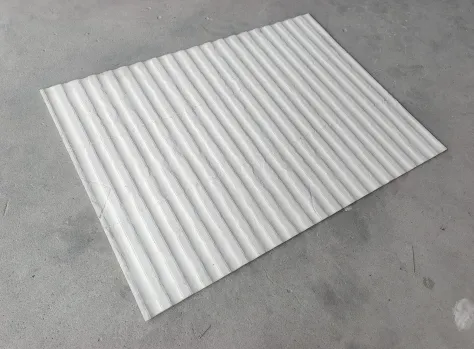
Perhaps the most iconic and revolutionary product in the lineup is **MCM Flexible Stone**. This is the material that most vividly demonstrates the unique pliable nature of MCM. It looks, feels, and weathers like real quarried stone, but it behaves like a heavy textile. It can be wrapped around cylindrical columns with a radius as tight as 300mm, applied to undulating feature walls, or used to clad complex, organic shapes that would be impossible with any traditional rigid material. It opens up a new world of three-dimensional design. Architects can now create fluid, wave-like facades or interior spaces that flow without interruption. The installation process is simplified to applying adhesive and rolling the material onto the surface, a far cry from the complex anchoring systems required for stone panels. It's a true game-changer, offering the beauty of stone with the design freedom of a completely new medium.
Pushing the boundaries of customization even further, COLORIA GROUP is at the forefront of integrating digital fabrication with material science. The **MCM 3D Printing Series** represents the pinnacle of this fusion. Using advanced 3D printing technology, it's possible to create completely bespoke textures, patterns, and bas-reliefs directly on the surface of the MCM panels. Architects and designers can submit their own digital files to create unique artistic murals, embed corporate logos into a wall, or develop a one-of-a-kind texture that is exclusive to their project. This moves beyond simply replicating nature; it's about creating something entirely new. It transforms a wall from a simple building element into a canvas for artistic expression. This series is for the visionary projects that demand a signature touch, a level of personalization that ensures the final result is truly unique in the world.
To fully appreciate the paradigm shift that MCM represents, it's helpful to see it placed in direct comparison with the traditional materials it often replaces. The following table provides a clear, at-a-glance summary of how MCM, as offered by COLORIA GROUP, stacks up against Natural Stone, Ceramic/Porcelain Tiles, and Aluminum Composite Panels (ACP).
| Feature | COLORIA GROUP MCM | Natural Stone (Granite/Marble) | Ceramic / Porcelain Tile | Aluminum Composite Panel (ACP) |
|---|---|---|---|---|
| Weight | Very Light (approx. 4-8 kg/m²) | Very Heavy (50-80 kg/m²) | Heavy (20-30 kg/m²) | Light (5-8 kg/m²) |
| Flexibility | Excellent; can wrap around curved surfaces and columns. | None; completely rigid and brittle. | None; completely rigid. | Limited; can be bent at fabricated angles, but not truly flexible. |
| Installation | Fast and easy; simple adhesive application, can be cut with a knife. Low labor cost. | Slow and complex; requires heavy machinery, mechanical anchoring, and specialized labor. High cost. | Moderately complex; requires wet cutting, grouting, and skilled tilers. | Complex; requires a sub-frame system and specialized installation. |
| Environmental Impact | Very Low; low-energy production, recycled content, lightweight transport, minimal waste. | Very High; destructive quarrying, high energy for cutting/polishing, heavy transport. | High; requires high-temperature firing (1200°C+), high energy consumption. | High; energy-intensive aluminum production, potential for delamination issues. |
| Customization | Excellent; vast range of textures, colors, and 3D printed custom patterns. | Limited to what is quarried; custom shapes are extremely expensive. | Limited to available prints and sizes; custom options are rare and costly. | Limited to a range of solid colors and printed finishes. |
| Safety | Excellent; Class A fire rating, lightweight (reduces falling hazard in seismic events). | Good fire resistance, but very heavy, posing a significant falling hazard. | Excellent fire resistance; can be brittle and create sharp edges if broken. | Variable; core material can be flammable (FR grades are better but more expensive). |
| Appearance | Highly realistic natural appearance, seamless options available. | Authentic, but with color/pattern variations and high cost. | Can look repetitive, grout lines are visually disruptive. | Often looks artificial, has a "panelized" appearance. |
As the comparison clearly illustrates, MCM is not just an alternative; it is an evolution. It takes the most desirable qualities from each of the other materials—the natural beauty of stone, the lightweight nature of ACP, and the durability of tile—and combines them into a single, superior product, while simultaneously eliminating their most significant weaknesses.
The quest for the perfect building material is a journey without end, but every so often, a true breakthrough occurs that fundamentally changes our direction. Modified Cementitious Material is one such breakthrough. It represents a new philosophy in construction, one where we no longer have to choose between beauty and performance, or between design freedom and sustainability. MCM proves that we can have it all.
Through the innovative product lines offered by COLORIA GROUP, this new "Century Stone" is not just a theoretical concept but a practical, accessible reality for projects around the globe. It is a material that respects our planet's resources, empowers the boldest creative visions of architects and designers, and delivers lasting performance and value. As we continue to build the cities and spaces of tomorrow, MCM stands ready to provide the skin for our structures—a skin that is beautiful, resilient, intelligent, and unequivocally of our time.
Recommend Products












