
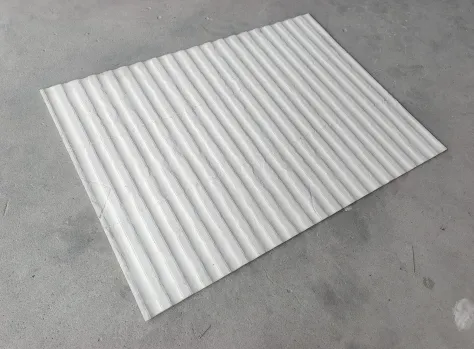
In the world of construction, every project manager, developer, and architect is engaged in a constant, delicate balancing act. It's the classic triangle of constraints: cost, time, and quality. Push on one, and the others are bound to shift. For decades, the primary focus has been on the upfront cost of materials, often leading to choices that seem economical on paper but reveal hidden expenses over the building's lifecycle. Today, a more holistic approach is taking center stage, one that considers not just the initial invoice but the total cost of ownership. This is where a revolutionary class of building materials, which we'll call Century Stone, is rewriting the rules of construction finance.
Offered by innovators like COLORIA GROUP, Century Stone is born from an advanced technology known as Modified Cementitious Material (MCM). It's not just another cladding option; it's a comprehensive system designed to attack the biggest cost centers in modern construction projects. From logistics and labor to structural engineering and long-term maintenance, its impact is felt across the board. This article serves as a deep-dive cost analysis, moving beyond the price-per-square-meter to reveal the substantial, long-term savings that make Century Stone a strategically brilliant investment for any forward-thinking construction project. We will explore how its unique properties translate into tangible financial benefits that accumulate over the entire life of a building.
Before we can crunch the numbers, it's essential to understand what Century Stone actually is and why it's so different from traditional materials like quarried stone, ceramic tiles, or concrete panels. The magic lies in the Modified Cementitious Material (MCM) process, a feat of material science that mimics nature's own methods but accelerates them.
At its core, MCM technology takes natural, inorganic raw materials—like common soil, mineral powders, and sand—and puts them through a process of spray-drying, modification, and low-temperature baking (typically between 100-120°C). Unlike traditional ceramics or cement products that require high-temperature kilns running at over 1200°C, the MCM process is incredibly energy-efficient. This low-carbon footprint is the first clue to its modern, sustainable DNA. The result is a material that is pliable during formation but becomes incredibly durable and resilient once cured. It can be molded into a vast array of textures and forms, from the rugged face of a mountain cliff to the smooth finish of polished marble.
COLORIA GROUP has mastered this technology to create a diverse portfolio of products, including the highly versatile MCM Flexible Stone and the grand, seamless MCM Big Slab Board Series . These products are not stone veneers or laminates; the color and texture are integral to the material itself, ensuring they won't delaminate, peel, or fade like a surface-level coating.
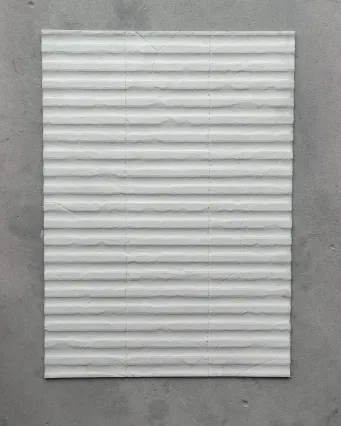
When evaluating building materials, a narrow focus on the per-unit purchase price is a common but costly mistake. A true cost analysis examines the entire ecosystem of expenses associated with getting a material from the factory to its final, installed position on the building. It is in these "hidden" costs that Century Stone demonstrates its profound economic advantages. Let's break it down.
Moving heavy materials is expensive. It requires more fuel, more robust vehicles, and more complex machinery for loading and unloading. Here, the lightweight nature of Century Stone is a game-changer. Consider a hypothetical scenario of cladding a 2,000 square meter facade.
| Metric | Traditional Granite (3cm thick) | Century Stone (MCM) | Financial Impact |
|---|---|---|---|
| Weight per m² (approx.) | 80 kg | 6 kg | Over 90% lighter |
| Total Weight for 2,000 m² | 160,000 kg (160 metric tons) | 12,000 kg (12 metric tons) | Drastic reduction in shipping class |
| Truckloads Required (20-ton capacity) | 8 truckloads | 1 truckload | ~87% reduction in freight vehicle costs |
| On-site Handling Equipment | Heavy-duty cranes, forklifts | Manual lifting, light-duty lifts | Significant reduction in equipment rental & operation costs |
| Fuel Consumption & Carbon Tax | High | Minimal | Lower direct costs and potential carbon credits |
As the table clearly illustrates, the savings on logistics alone are immense. Fewer truckloads mean lower fuel costs, reduced driver fees, and a smaller carbon footprint. The need for heavy-duty cranes is often eliminated entirely, saving thousands in daily rental and operator fees. For projects in dense urban areas with limited site access, or in remote locations, these logistical advantages are amplified even further.
This is a cost that is often buried deep within the engineering budget but is directly influenced by the choice of cladding. Buildings must be designed to support the "dead load" of their own materials. A heavy facade requires a stronger, more expensive superstructure to hold it up.
When you choose a heavy material like natural stone, you are paying not just for the stone itself, but for the extra steel and concrete in the columns, beams, and foundation required to support its immense weight. With Century Stone, this entire cascade of structural over-engineering is avoided. For new-build construction projects, this can translate to a reduction in the amount of steel rebar and concrete needed for the entire frame, leading to savings that can run into the hundreds of thousands of dollars on a large project.
The impact is even more dramatic in renovation or retrofitting projects. An older building may simply not have the structural capacity to handle the addition of a heavy stone facade. The alternative would be a massively expensive and disruptive process of structural reinforcement. Century Stone, being lightweight, can often be applied directly over existing substrates without requiring any structural upgrades, making it the ideal solution for modernizing aging buildings.
Time is money on a construction site. The speed and ease of installation have a direct correlation with the final cost. Here again, Century Stone excels.
| Installation Factor | Traditional Stone/Tile | Century Stone (MCM) | Financial Impact |
|---|---|---|---|
| Crew Size & Skill | Larger crew, highly skilled stonemasons | Smaller crew, general tilers/installers | Lower hourly labor costs |
| Installation Speed (approx.) | 5-8 m² per worker per day | 20-30 m² per worker per day | 3-5 times faster installation |
| Cutting & Shaping | Wet saws, grinders (dust, noise, water) | Utility knife or simple hand saw (for flexible types) | Faster, cleaner, safer on-site modifications |
| Fixing Method | Complex mechanical anchors, mortar beds | Simple proprietary adhesive | Reduced material cost and complexity |
| On-site Waste | High due to breakage and cutting errors | Minimal, off-cuts can often be reused | Lower waste disposal fees & material loss |
The speed of installation is a powerful financial lever. A facade that takes one month to install instead of three doesn't just save two months of labor costs. It means the entire project timeline is compressed, which has a ripple effect of savings across the entire venture, as we'll explore next.
The true genius of a wise material choice is revealed not on the day the construction is complete, but over the 20, 30, or 50 years that follow. The long-term performance and low maintenance requirements of Century Stone from COLORIA GROUP create a powerful stream of savings that make the initial investment look even more astute.
Building maintenance is a significant, ongoing operational expense. Facades, being exposed to the elements, are a primary area of concern.
As mentioned, installing Century Stone is significantly faster. This isn't just a labor saving; it's a strategic financial advantage. For a commercial developer, finishing a building three months early means three additional months of rental income. For a hotel, it's three months of room bookings. For a homeowner, it's three months less of paying rent while waiting to move in.
Furthermore, most large construction projects are financed by loans. The interest on these loans accrues daily. By shortening the construction period, you reduce the total amount of interest paid, a saving that can be substantial. Faster completion reduces the project's exposure to risks like weather delays, material price hikes, and shifting market conditions.
Today's property market places a premium on sustainability. Buildings with green credentials are more attractive to tenants and buyers, often commanding higher rents and resale values. The eco-friendly properties of Century Stone contribute directly to this.
The low-energy manufacturing process, use of recycled materials, and reduction in transportation-related emissions help projects qualify for points under green building certification systems like LEED or BREEAM. These certifications are not just plaques on a wall; they are powerful marketing tools and tangible assets that increase the property's long-term value. This makes the choice of a material like MCM a direct investment in the building's future marketability.
The theoretical benefits are clear, but let's look at how they play out in real-world scenarios. The versatility of the MCM portfolio, from the sleek MCM Big Slab Board Series to the adaptable MCM Flexible Stone , means it can be tailored to solve specific challenges in any number of building typologies.
The Challenge: Cladding a 40-story skyscraper with a premium, modern facade that looks like solid stone, but without incurring the massive structural and logistical costs.
The Century Stone Solution: The MCM Big Slab Board Series is perfect here. These large-format panels create a monolithic, seamless look with minimal grout lines, projecting an image of luxury and permanence. The primary savings come from the massive weight reduction. The structural engineer can design a lighter, more efficient steel frame. The panels are easily lifted to height and installed by smaller crews, dramatically speeding up the facade closure and allowing interior work to begin sooner. The long-term value is locked in with a facade that will resist urban pollution and require minimal cleaning for decades.
The Challenge: A 19th-century building needs its crumbling facade restored. The original sandstone is deteriorating, but the building's old structure cannot support the weight of new, thick stone blocks. The budget is tight, and there are curved bay windows that need to be clad.
The Century Stone Solution: This is a perfect job for MCM Flexible Stone . A product can be selected that perfectly replicates the color, texture, and character of the original sandstone. Because it's lightweight, it can be applied over a prepared substrate without adding any dangerous load to the old structure. For the curved bay windows, the flexible panels are simply bent and adhered into place, a task that would have been a master craftsman's expensive, time-consuming challenge with real stone. The result is a full restoration of the building's historic charm at a fraction of the cost and complexity of traditional methods.
The Challenge: An architect has designed a unique, modern home with sweeping curves, sharp angles, and a distinctive feature wall that is meant to be a work of art. The client wants a variety of natural looks—stone, wood, and concrete—but wants to maintain a cohesive feel and manage costs.
The Century Stone Solution: This project showcases MCM's incredible versatility. The MCM Project Board Series can be used for the main exterior walls, mimicking a sleek concrete finish. The MCM Flexible Stone wraps effortlessly around the curved elements of the design. For the interior feature wall, the MCM 3D Printing Series allows the architect's custom pattern to be realized with perfect precision. A warm, wood-grain MCM product could even be used for soffits or accent areas, providing the look of wood without the maintenance headaches. COLORIA GROUP acts as a one-stop-shop, providing all these different aesthetics from a single, reliable material technology, simplifying procurement and ensuring consistent quality.
The complete cost analysis of Century Stone, powered by COLORIA GROUP's advanced MCM technology, reveals a compelling truth: the most economical choice is rarely the one with the lowest initial price tag. True value is found in a holistic assessment that accounts for every stage of a building's life.
We've seen how this innovative material delivers cascading savings that begin with logistics and engineering, accelerate through a faster and less expensive installation process, and continue to accumulate for decades through drastically reduced maintenance. It slashes transportation costs, reduces the need for expensive structural over-engineering, empowers smaller crews to work faster, and liberates architects to design freely without the physical and financial constraints of heavy, rigid materials.
Ultimately, choosing Century Stone for your next construction project is more than a material specification; it is a strategic financial decision. It's an investment in efficiency, durability, and sustainability. It's a commitment to a final product that is not only beautiful and resilient but also fundamentally more profitable and valuable over its entire lifecycle. In an industry searching for smarter, faster, and more sustainable ways to build, Century Stone stands out not just as an alternative, but as the clear path forward.
Recommend Products












