
When we think about designing a beautiful building, our minds often jump to aesthetics—the elegant lines, the captivating textures, the perfect color palette. But what about the invisible shield that protects its occupants? In an era where building safety is more scrutinized than ever, the fire performance of construction materials has become a non-negotiable priority for architects, developers, and homeowners alike. A structure is only truly beautiful if it is fundamentally safe. This is where the conversation shifts from mere appearance to profound performance, and where innovative materials are changing the game.
For decades, the choice of facade and interior cladding materials often involved a compromise between design freedom, cost, and safety. Traditional options came with their own set of drawbacks, particularly concerning fire. Today, that compromise is no longer necessary. COLORIA GROUP, a global one-stop solution provider in the architectural materials space, is at the forefront of this evolution with its groundbreaking Century Stone product line. This article takes a deep dive into the fire rating of Century Stone, exploring how this Modified Cementitious Material (MCM) not only meets but often exceeds the world's most stringent international safety standards, offering unparalleled peace of mind.
Before we can appreciate the superior safety of a material like Century Stone, it's essential to understand what a "fire rating" actually means. It's not just a simple pass/fail grade; it's a comprehensive classification system that tells us exactly how a material behaves when exposed to fire.
A fire rating is a standardized measure of a material's resistance to fire and its tendency to contribute to the spread of flames. These ratings are determined through rigorous, controlled testing procedures defined by national and international bodies. The results classify materials based on several key criteria:
Because COLORIA GROUP operates on a global scale, its products must adhere to a variety of international standards. While specific terminologies may differ, the underlying principles of safety are universal. The two most widely recognized systems are the European standard (EN 13501-1) and the North American standard (ASTM E84).
The European "Euroclass" system is particularly comprehensive. It classifies materials from A1 (completely non-combustible) down to F (highly combustible). The highest ratings are:
The North American ASTM E84 standard, also known as the Steiner Tunnel Test, measures flame spread and smoke development, resulting in a classification from Class A (or Class 1) to Class C (or Class 3). Class A is the best rating, indicating the lowest flame spread and smoke development, and is required for most commercial and public buildings.
For any material intended for use in modern construction, achieving the highest possible rating—Euroclass A1 or ASTM Class A—is the gold standard of fire safety.
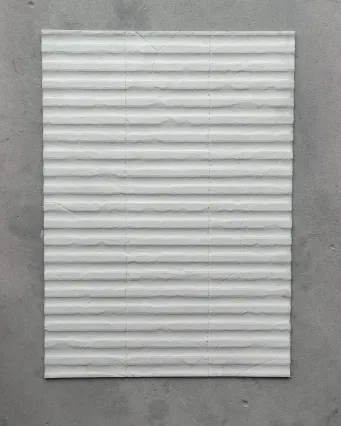
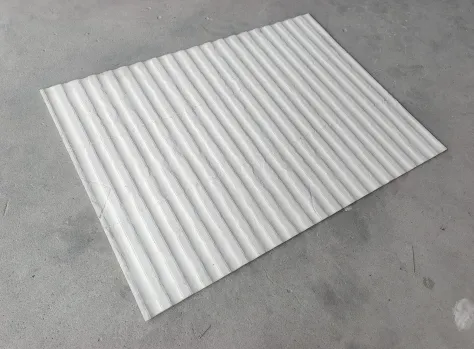
Century Stone is the flagship brand for COLORIA GROUP's innovative MCM (Modified Cementitious Material) product family. It's not just another cladding option; it represents a fundamental shift in how we think about surface materials. It combines the aesthetic richness of natural materials with the performance and safety of advanced engineering.
At its core, Century Stone is born from a simple yet brilliant idea: what if you could create a material with the DNA of stone and clay, but make it lightweight, flexible, and sustainable? MCM technology achieves just that. The process starts with natural, inorganic raw materials like common soil, mineral powders, and cement. These are mixed and put through a proprietary process of low-temperature modification and molecular shaping.
The result is a material that is predominantly mineral-based. Unlike plastics or resin-based composites, it contains no volatile organic compounds (VOCs) and is not dependent on petrochemicals. This inherent composition is the very foundation of its exceptional fire performance, which we will explore in detail. But beyond safety, this process yields a host of other benefits that make it a go-to choice for designers, including its use in creative exterior wall decoration .
From the grand and seamless look of the MCM Big Slab Board Series to the incredible versatility of the MCM Flexible Stone Series, Century Stone offers a solution for every design vision without compromising on safety or sustainability.
Now we arrive at the heart of the matter: how does Century Stone actually perform in a fire? The answer is simple and powerful: it achieves the highest possible fire safety rating.
Through extensive and repeated testing by certified international laboratories, COLORIA GROUP's Century Stone products have been awarded the Euroclass A1 fire rating . This is not just a "good" rating; it is the absolute pinnacle of fire safety classification.
An A1 classification means that Century Stone is officially non-combustible . It will not ignite, it will not support combustion, and it will not release any significant amount of heat when exposed to fire. In a real-world fire scenario, a wall clad with Century Stone acts as a barrier. It contains the fire, prevents it from spreading to other parts of the building, and protects the structural elements behind it. It doesn't add any fuel to the fire, giving occupants precious extra time to evacuate and firefighters a safer environment to work in.
The dangers of a fire go far beyond the flames themselves. Statistics from fire incidents worldwide consistently show that the majority of fatalities are caused by smoke inhalation and poisoning from toxic gases. This is where many building materials, even some with decent fire-retardant properties, fail catastrophically.
Plastic-based materials like PVC and vinyl siding, as well as certain composite panels with plastic cores, can release a deadly cocktail of chemicals when they burn, including hydrogen chloride, dioxins, and carbon monoxide. Century Stone, due to its inorganic mineral composition, behaves entirely differently.
To put Century Stone's performance into perspective, let's compare it directly with some common cladding materials in a clear, easy-to-understand format.
| Material | Typical Fire Rating | Behavior in Fire | Smoke & Toxicity Risk |
|---|---|---|---|
| Century Stone (MCM) | Euroclass A1 (Non-Combustible) | Does not burn, ignite, or melt. Acts as a fire barrier. Remains structurally stable at high temperatures. | Virtually zero smoke. No toxic fume emission. |
| Natural Wood Cladding (Untreated) | Euroclass D/E (Combustible) | Ignites easily, contributes significantly to fire load and flame spread. Burns away completely. | High smoke production. Releases carbon monoxide. |
| Vinyl (PVC) Siding | Euroclass C/D (Combustible) | Melts, drips, and shrinks away from heat, exposing the structure underneath. Can ignite and spread flames. | Extremely high production of thick, black smoke. Releases highly toxic hydrogen chloride and dioxins. |
| Aluminum Composite Panels (PE Core) | Euroclass D/E (Combustible) | The polyethylene core is highly flammable and can melt, dripping fire down the building facade and spreading it rapidly between floors. | High volume of toxic smoke. |
| Natural Stone (Granite, Marble) | Euroclass A1 (Non-Combustible) | Does not burn. However, can crack or spall (break apart explosively) under intense thermal shock. Extremely heavy. | No smoke or toxicity. The primary hazard is mechanical failure under extreme heat. |
An A1 fire rating is an impressive technical achievement, but its true value is realized in its practical application across all types of building projects. COLORIA GROUP's position as a one-stop solutions provider means they understand how Century Stone can be leveraged to enhance safety in diverse contexts.
In skyscrapers, hospitals, schools, and airports, the stakes for fire safety are at their highest. Evacuation is more complex, and the potential for rapid fire spread is a major concern. Using Century Stone for both interior and exterior walls provides a passive fire protection system that is always active. For facades, it prevents an external fire (such as from a nearby building or a car fire) from penetrating the building envelope. For interior corridors, lobbies, and stairwells, it ensures that escape routes are protected from fire, smoke, and toxic fumes, maximizing the time for safe egress. The lightweight nature of products like **MCM Flexible Stone** also reduces the structural load on tall buildings compared to traditional stone, a significant engineering advantage.
For a homeowner, the safety of their family is their number one priority. Choosing Century Stone for a home's exterior or for an interior feature wall is an investment in peace of mind. It provides the aesthetic warmth of brick, stone, or wood, but with a level of fire protection that these traditional materials simply cannot offer on their own. In areas prone to wildfires or in dense urban settings, a non-combustible exterior can be the single most important factor in whether a home survives a fire event.
One of the most powerful applications of Century Stone is in upgrading the safety of existing buildings. Many older structures were built with materials that are now considered unsafe. Because Century Stone products are thin, lightweight, and flexible, they can often be installed directly over existing facades. This makes retrofitting a building to meet modern fire codes a faster, more cost-effective, and less disruptive process. A building's tired, potentially unsafe exterior can be transformed into a modern, beautiful, and A1-rated non-combustible facade.
The development of Century Stone and its top-tier fire rating is not an isolated achievement. It is a direct reflection of COLORIA GROUP's core philosophy: to provide comprehensive, responsible, and forward-thinking solutions for the global construction industry. This commitment extends beyond a single product specification sheet.
With decades of industry experience and a strong presence in demanding markets like Saudi Arabia, COLORIA GROUP understands that a product must perform reliably in any climate and under any regulatory framework. The A1 fire rating of Century Stone is a testament to a product designed for the world stage, ready to meet the stringent requirements of building codes from Europe to the Middle East and beyond.
The "one-stop solution" approach means that clients are not just buying a material; they are partnering with a company that prioritizes safety and compliance as integral parts of the design and supply process. It's a promise that the beautiful finish you choose is backed by uncompromising, certified safety.
In the world of architecture and construction, choices matter. The materials we select have a lasting impact on a building's aesthetics, its environmental footprint, and, most critically, the safety of the people inside it. The conversation around fire safety has been rightly elevated, and the industry is demanding materials that offer absolute confidence.
COLORIA GROUP's Century Stone, with its certified Euroclass A1 non-combustible rating, answers that demand without equivocation. It doesn't just resist fire; it is fundamentally inert to it. It produces no dangerous smoke, releases no toxic gases, and does not contribute to the spread of flames. Whether it's the large-format elegance of an **MCM Big Slab Board** or the design flexibility of other MCM series, Century Stone proves that you no longer have to choose between your design vision and uncompromising safety.
By embracing the innovative science of Modified Cementitious Material, COLORIA GROUP has delivered a product that is not only beautiful, durable, and eco-friendly, but one that stands as a silent guardian, offering the highest level of fire protection available on the market today. For any project where safety is paramount, the choice is clear.
Recommend Products












