
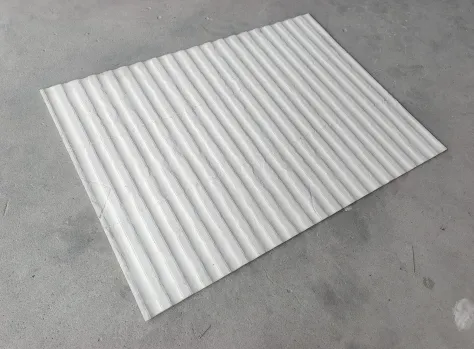
Walk through any modern city, and you'll see a rebellion against the straight line. Architects are increasingly dreaming up buildings with flowing, organic shapes, undulating facades, and majestic, sweeping curves. These designs are breathtaking, but they present a monumental challenge for builders. For centuries, our primary cladding materials—natural stone, brick, concrete—have been defined by their rigidity. How do you wrap a heavy, inflexible slab of granite around a curved column? The answer has traditionally involved painstaking, expensive, and wasteful processes: cutting materials into tiny, manageable pieces, creating complex and heavy support structures, and spending countless hours on labor-intensive installation. This approach not only inflates budgets and timelines but also clashes with the growing demand for sustainable construction. But what if the material itself could adapt? What if stone could bend? This is no longer a futuristic fantasy. A revolution is underway in the building materials industry, led by innovators like COLORIA GROUP, and it's centered on a remarkable product: Century Stone Flexible Stone. This article explores the world of bendable cladding and uncovers how this groundbreaking material is liberating architects and builders to realize their most ambitious designs for curved surfaces.
The allure of the curve in architecture is nothing new. From the Roman Colosseum's grand arches to the domed roofs of Byzantine cathedrals, humanity has long been fascinated with non-linear forms. However, achieving these shapes with traditional materials has always been a testament to human ingenuity overcoming material limitations. Natural stone, revered for its beauty and permanence, is notoriously difficult to work with on curved planes. Each piece must be quarried, cut with precision, and often shaped off-site, leading to significant waste. Transporting these heavy blocks is a logistical and environmental burden. On-site, installation requires specialized crews and heavy machinery. The sheer weight necessitates over-engineered structural supports within the building itself, adding further to the cost and complexity.
Ceramic and porcelain tiles offer a slightly more manageable alternative, but they too fall short. To conform to a curve, smaller tiles must be used, resulting in a grid of grout lines that can disrupt the intended seamless aesthetic of a flowing surface. Larger format tiles are simply out of the question for tight radii, and attempting to force them often leads to cracking and failure. Other solutions like Glass Fiber Reinforced Concrete (GFRC) or Aluminum Composite Panels (ACP) can be molded into curved shapes, but they come with their own set of trade-offs, including high production costs, potential for denting (in the case of ACP), and a look that can sometimes feel less authentic than natural materials. At the core of the problem is a fundamental mismatch: we have been trying to force square pegs into round holes, wrestling with materials that fight the very designs we seek to create. This struggle has stifled creativity, ballooned budgets, and posed significant challenges to creating more sustainable and efficient buildings.
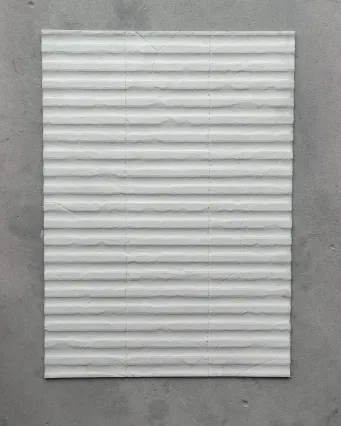
Enter COLORIA GROUP, a company that has built its reputation as a one-stop solution provider in the architectural materials space. With decades of industry experience and a global footprint that includes a strong presence in markets like Saudi Arabia, COLORIA GROUP understood this fundamental challenge. Their answer wasn't to find a better way to force old materials but to engineer a new one from the ground up. The result of this forward-thinking approach is their flagship MCM (Modified Cementitious Material) product line, and its most versatile star: Century Stone Flexible Stone.
So, what exactly is this material that sounds like an oxymoron? At its heart, Century Stone is born from the earth. Its primary components are natural minerals, sand, and other inorganic materials. The magic lies in the proprietary manufacturing process. Unlike natural stone, which is quarried, or ceramics, which are fired at extreme temperatures (often exceeding 1200°C), Century Stone is created through a low-temperature curing and shaping process. This groundbreaking MCM technology modifies the inherent properties of the cementitious materials, breaking down their molecular bonds and reorganizing them to impart an incredible, almost fabric-like flexibility.
Think of it like this: traditional stone is a solid, crystalline block. Century Stone, through its unique formulation, behaves more like a chain-link mesh at a microscopic level. It retains the strength, texture, and appearance of stone but gains the ability to bend and conform. This process is not only technologically advanced but also remarkably eco-friendly. The low-energy production significantly reduces the carbon footprint compared to traditional kilns, and the use of natural and often recycled components positions it firmly as one of the market's leading green building materials. It is, in essence, the soul of stone with the spirit of adaptability.
The true impact of Century Stone Flexible Stone is best understood by examining its cascading benefits, which touch every stage of a project from initial design to long-term maintenance. It's not just a new product; it's a new way of thinking about building envelopes and interior finishes.
This is the most immediate and exhilarating benefit. For architects, Century Stone is a key that unlocks a new level of creativity. Concave and convex walls, spiraling columns, rounded archways, and flowing interior feature walls are no longer design headaches. This bendable cladding can be wrapped around surfaces with a tight radius, creating a truly seamless and monolithic appearance that was previously unattainable with stone or large-format tiles. Imagine cladding a towering, circular lobby column in a single, continuous sheet of travertine-finish material, with no distracting grout lines. Or creating an undulating exterior facade that mimics the movement of waves. This is the freedom that Century Stone delivers, allowing the architectural vision to be realized without compromise.
One of the most significant practical advantages is its weight. Century Stone Flexible Stone is astonishingly light, weighing a fraction of traditional stone—often up to 80-90% less. A square meter of flexible stone might weigh only 4-6 kg, whereas a 2cm thick slab of natural stone could easily weigh over 50 kg. This dramatic weight reduction has profound implications:
The logistical nightmare of installing traditional stone on a curved surface is replaced by a refreshingly simple process. Century Stone can be cut to size on-site using nothing more than a standard utility knife. There's no need for wet saws, no dust clouds, and minimal waste. The application process is equally straightforward: a specially formulated adhesive is applied to the substrate, and the flexible stone sheet is simply pressed into place and smoothed out. An entire curved facade that would have taken weeks with traditional masonry can be completed in a matter of days. This acceleration of the construction schedule translates directly into significant savings on labor costs and allows for a faster return on investment for commercial projects.
It's natural to be skeptical. If a material is flexible and lightweight, can it possibly be durable? The answer is an emphatic yes. The MCM technology behind Century Stone imparts remarkable resilience. It is Class A fire-resistant, providing a high level of safety. Its composition makes it highly resistant to water penetration, ideal for both exterior facades and interior wet areas like bathrooms. It excels in freeze-thaw cycles, resisting the cracking and spalling that can plague other materials in harsh climates. Furthermore, the pigments are integrated throughout the material and are UV stable, ensuring that the colors will not fade over time even under intense sun exposure—a crucial feature for projects in demanding environments, from the heat of the Middle East to the cold of Northern Europe. It offers the delicate beauty of a custom finish with the toughness of an industrial-grade material.
In an era where environmental impact is a critical consideration, Century Stone stands out as a truly responsible choice. Its sustainability profile is a core part of its value proposition.
Choosing Century Stone is not just an aesthetic or financial decision; it is a commitment to building a greener, more sustainable future.
To truly appreciate the paradigm shift that Century Stone represents, it's helpful to see a direct comparison against the materials it is designed to replace. The following table breaks down the key attributes across different cladding options, highlighting why this bendable cladding is the superior choice for modern construction, especially for projects involving curved surfaces.
| Feature | Century Stone Flexible Stone | Natural Stone (e.g., Granite, Marble) | Ceramic/Porcelain Tile | Aluminum Composite Panel (ACP) |
|---|---|---|---|---|
| Flexibility & Curved Surfaces | Excellent. Bends easily to fit concave, convex, and complex curves for a seamless look. | Extremely poor. Requires cutting into small pieces, leading to many joints and high labor costs. | Poor to fair. Only small tiles can conform to curves, disrupting the aesthetic. Large formats will crack. | Fair. Can be pre-curved in a factory, but offers limited on-site flexibility and defined radii. |
| Weight | Extremely light (approx. 4-6 kg/m²). Reduces structural load and shipping costs. | Extremely heavy (50+ kg/m²). Requires significant structural reinforcement. | Moderately heavy (15-25 kg/m²). Can add significant weight to structures. | Light (approx. 5-8 kg/m²). Similar in weight, but with different properties. |
| Installation | Fast and easy. Cut with a utility knife, applied with adhesive. Minimal dust, waste, and labor. | Slow, complex, and costly. Requires heavy machinery, specialized labor, and mechanical fixing. | Moderately complex. Requires wet saws for cutting, grout, and skilled tilers. High potential for breakage. | Complex. Requires a sub-frame (railing system) for installation, which adds time and cost. |
| Durability & Resistance | High. Class A fire-rated, waterproof, freeze-thaw resistant, UV stable, and impact resistant. | Very high, but can be brittle and susceptible to staining if not properly sealed. | High surface hardness but brittle and prone to chipping/cracking on impact. Grout is a weak point. | Good, but the surface can be dented or scratched. Potential for delamination over time. |
| Aesthetic & Texture | Authentic, rich textures (stone, wood, brick, etc.). Can be customized. Monolithic appearance on curves. | Authentic and unique, but limited to what can be quarried. Joints interrupt the look on curves. | Wide variety of printed looks, but can appear artificial. Grout lines are unavoidable. | Modern, metallic, or flat color look. Lacks the natural texture and depth of stone. |
| Environmental Impact | Very Low . Low-energy production, recycled content, minimal waste, no quarrying. A leading green building material. | High. Energy-intensive quarrying and transport. High waste from cutting. | High. Fired at very high temperatures, consuming significant energy. | Moderate. Aluminum production is energy-intensive, though it is recyclable. |
While the ability to masterfully handle curved surfaces is Century Stone's most dramatic feature, its utility extends far beyond. This versatility is a hallmark of COLORIA GROUP's entire MCM portfolio. The same properties that make it perfect for arches and columns also make it an exceptional material for a vast range of other applications. In interiors, it can create stunning, textured feature walls, durable and waterproof kitchen backsplashes, or seamless, grout-free shower surrounds that are both beautiful and easy to clean.
For exteriors, it serves as a lightweight, durable, and weather-resistant full-building facade. In renovation, it's a miracle worker, capable of giving an old, tired building a complete facelift by cladding directly over the old surface, saving immense time and money. Furthermore, COLORIA GROUP's wider MCM product family, including the **MCM Big Slab Board Series** for large, flat expanses and the **MCM 3D Printing Series** for intricate, bespoke patterns, can be used in concert with Century Stone. This allows designers to maintain a consistent material palette across an entire project, using flexible stone for the curves, large slabs for the flat walls, and 3D printed elements for unique accents, all sourced from a single, reliable provider. This "one-stop solution" approach simplifies procurement, ensures quality and aesthetic consistency, and solidifies COLORIA GROUP's position as a true partner in architectural innovation.
The future of architecture is fluid, dynamic, and sustainable. The rigid constraints of the past are giving way to a new era of design possibilities, powered by material science innovation. Century Stone Flexible Stone from COLORIA GROUP is at the very forefront of this movement. It is more than just a piece of bendable cladding; it is an enabling technology that empowers architects to build the world they envision without compromise.
By offering unparalleled design freedom for curved surfaces, a featherlight composition, simple and swift installation, robust durability, and a powerful sustainability story, Century Stone addresses virtually every shortcoming of traditional materials. It represents a synthesis of beauty, performance, and responsibility. For builders, developers, and designers looking to push the boundaries of what's possible while simultaneously building faster, smarter, and greener, the choice is becoming clear. The rigid rules of construction have been bent, and the future of design is beautifully flexible.
Recommend Products












