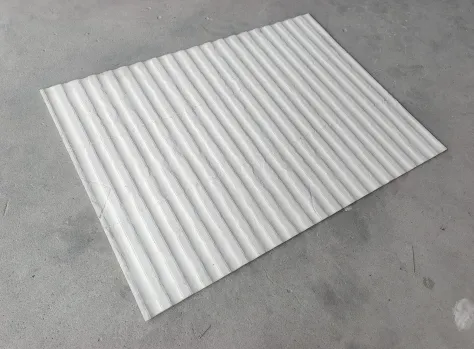
In the world of modern architecture and interior design, the desire for unique, flowing, and organic forms is constantly pushing the boundaries of traditional building materials. Gone are the days when flat, rigid surfaces were the only practical option. Today, architects, designers, and homeowners alike are seeking innovative solutions to bring their visions of curved walls, sculptural elements, and irregularly shaped features to life. This is where
MCM Flexible Stone
, particularly our premium Century Stone line from COLORIA GROUP, truly shines. As a leading
one-stop solution provider
in architectural materials, we understand the challenges and opportunities presented by complex geometries, and we're here to show you how our flexible stone makes installing beautiful, durable finishes on even the most challenging surfaces not just possible, but surprisingly straightforward.
Embracing Curves: The Challenge and the Solution
Imagine a majestic curved staircase, a gently undulating feature wall, or an intricate column that acts as a centerpiece in a grand lobby. These elements add immense character and sophistication to any space, but they also pose significant challenges for traditional cladding materials like natural stone or ceramic tiles. The rigidity, weight, and inherent fragility of these materials often lead to complex cutting, extensive waste, higher labor costs, and sometimes, simply an inability to conform to the desired shape without compromising aesthetics or structural integrity.
This is precisely why
MCM Flexible Stone
was developed. It's a revolutionary material that combines the aesthetic appeal of natural stone with unparalleled flexibility and lightweight properties. Our Century Stone range, in particular, offers an exquisite collection of designs that faithfully replicate the look and feel of various natural stones, bricks, and even wood, but with the added advantage of being able to bend and curve gracefully.
At its core,
MCM Flexible Stone
is a Modified Cementitious Material. This means it's made from a blend of natural mineral powders, plant fibers, and other polymer compounds, all treated and cured at low temperatures. The result is a material that is:
-
Extremely Flexible:
It can be bent, rolled, and applied to curves without cracking or breaking. This is its defining characteristic and the key to its success on irregular surfaces.
-
Lightweight:
Significantly lighter than traditional stone, reducing structural load and making transportation and installation easier and safer.
-
Thin:
Typically just a few millimeters thick, allowing for minimal buildup and seamless transitions.
-
Durable:
Highly resistant to UV, weather, fire, and impact, ensuring longevity for both
interior and exterior wall decoration
.
-
Green and Eco-Friendly:
Manufactured with sustainable practices, using natural, non-toxic components, and producing significantly less carbon emissions and waste compared to traditional stone quarrying and processing. This aligns perfectly with modern demands for sustainable building.
-
Aesthetically Versatile:
Available in a vast array of textures, colors, and patterns, allowing for incredible
customization
to match any design vision.
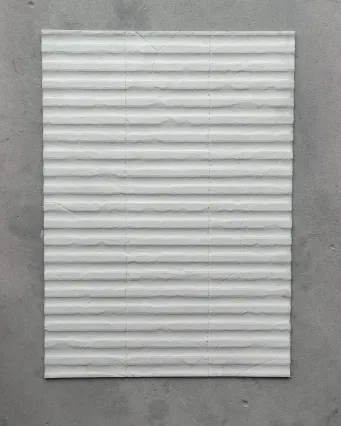
Preparing for Installation: The Foundation of Success
Even with an incredibly adaptable material like Century Stone Flexible Stone, proper preparation is paramount. A well-prepared substrate ensures optimal adhesion, a flawless finish, and maximum longevity. Think of it as laying the groundwork for a masterpiece; you wouldn't paint on a shaky canvas, would you?
1. Substrate Assessment and Preparation
Before anything else, thoroughly inspect the surface where the flexible stone will be applied. This includes walls, columns, arches, or any other irregular feature.
-
Cleanliness:
The surface must be clean, dry, and free of dust, grease, loose paint, and any other contaminants. Use a stiff brush, scraper, or appropriate cleaning agents if necessary.
-
Soundness:
The substrate must be structurally sound and free of cracks, crumbling plaster, or deteriorating mortar. Any damaged areas should be repaired with appropriate patching compounds and allowed to cure fully.
-
Smoothness (Relative):
While flexible stone can hide minor imperfections, significantly uneven surfaces should be leveled. For curved surfaces, ensure the curve is consistent and doesn't have sudden bumps or dips that could telegraph through the thin flexible stone. Use a leveling compound or skim coat if needed.
-
Porosity and Priming:
Depending on the substrate (e.g., highly porous concrete vs. painted drywall), priming might be necessary. A suitable primer improves adhesion and prevents the substrate from excessively absorbing moisture from the adhesive, which could lead to premature drying and a weaker bond. Always refer to the specific adhesive and flexible stone manufacturer's recommendations for priming.
-
Temperature and Humidity:
Ensure the ambient temperature and humidity levels are within the recommended range for both the adhesive and the flexible stone. Extreme conditions can affect curing times and adhesion. Typically, avoid installation in freezing temperatures or excessively hot, humid conditions.
2. Tools and Materials You'll Need
Having the right tools at hand makes the job much smoother and more efficient. For Century Stone Flexible Stone, you'll find that many of the tools are standard for tiling or wallpapering.
-
Century Stone Flexible Stone Tiles/Sheets:
Ensure you have enough material, including extra for cuts and potential mistakes (usually 10-15% overage).
-
Recommended Adhesive:
COLORIA GROUP will provide specific recommendations. This is crucial for optimal bond and durability.
-
Trowel:
A notched trowel for spreading adhesive. The notch size will depend on the flexible stone thickness and adhesive type.
-
Measuring Tape and Pencil/Marker:
For accurate measurements and markings.
-
Utility Knife or Scissors:
For cutting the flexible stone. Its flexibility makes it incredibly easy to cut compared to traditional stone.
-
Straightedge or Level:
For ensuring straight lines and plumb applications, especially when starting.
-
Roller or Rubber Mallet:
To ensure full contact and remove air bubbles after applying the flexible stone.
-
Sponges and Clean Water:
For cleaning up excess adhesive.
-
Grout (Optional):
If you're opting for a grouted look. COLORIA GROUP can advise on suitable grout types and colors for
MCM Flexible Stone
.
-
Safety Gear:
Gloves, safety glasses, and a dust mask are always recommended.
3. Layout Planning: Crucial for Curved Surfaces
On flat surfaces, layout is straightforward. On curves and irregular shapes, it requires more thought.
-
Dry Lay (if possible):
For smaller, more manageable areas, try a dry lay to visualize the pattern and placement. This helps identify complex cuts or transitions.
-
Starting Point:
For columns, start at an inconspicuous seam, like a corner or where two walls meet. For curved walls, consider starting from the most prominent central point and working outwards, or from a primary corner, depending on the desired visual flow.
-
Centering and Symmetry:
For symmetrical elements, try to center your pattern to avoid tiny slivers at the ends. This often means marking a central vertical or horizontal line.
-
Mock-ups:
For very complex or large-scale projects, creating a small mock-up section can be invaluable to test cutting techniques and application methods before committing to the full installation. This is particularly useful for
customization
projects.
Installation Techniques for Curved and Irregular Surfaces
Now for the exciting part – bringing those curves to life with Century Stone Flexible Stone! The flexibility of the material significantly simplifies the process compared to traditional methods.
1. Applying Adhesive
Adhesive application is a critical step for a strong bond.
-
Substrate or Back Buttering:
Depending on the adhesive and specific flexible stone product, you might apply the adhesive directly to the substrate using a notched trowel, or you might "back butter" the back of each flexible stone piece. For larger flexible stone sheets, applying to the substrate is usually more efficient. For smaller, individual pieces or highly intricate curves, back-buttering can offer more control.
-
Coverage:
Aim for even, consistent coverage, typically 80-100% of the flexible stone's back for optimal adhesion. The notched trowel creates ridges that collapse when the flexible stone is pressed, ensuring good contact.
-
Work in Small Sections:
Especially on large or complex curves, apply adhesive to a manageable area that you can cover with flexible stone within the adhesive's open time (the period before it starts to skin over). This prevents the adhesive from drying out before you apply the flexible stone.
This is where the material truly shines.
-
Start with Precision:
Begin your application from your chosen starting point, ensuring the first piece is perfectly aligned. Use a level or plumb line as a guide.
-
Gentle Pressure and Conformance:
Carefully place the flexible stone onto the adhesive. Its inherent flexibility allows it to conform naturally to the curve. Apply gentle, even pressure, working from the center of the flexible stone outwards to push out any trapped air bubbles and ensure full contact with the adhesive. A rubber roller is excellent for this, or even just your hands protected by gloves.
-
Butt Joints or Grout Lines:
Depending on the aesthetic you're going for, you can either butt joint the flexible stone pieces tightly together for a seamless look or leave a small gap for grouting. For
MCM Flexible Stone
designed to mimic natural stacked stone, a tight butt joint often looks most authentic. If you're going for a brick or larger block stone look, a consistent grout line is essential.
-
Cutting on Curves:
This is incredibly easy. For simple cuts, a sturdy utility knife is usually sufficient. Score the flexible stone lightly with a straight edge (or freehand for organic curves), then bend it to snap. For more complex shapes or intricate cutouts (e.g., around outlets or fixtures), scissors or even heavy-duty shears can be used. This ease of cutting dramatically reduces installation time and waste.
-
Wrapping Around Corners/Edges:
For external curves (like a column), you can often wrap a single piece of flexible stone around the curve if it's wide enough and the curve isn't too sharp. For internal curves or tighter external corners, you might need to cut and butt joint pieces. The thinness of the material allows for very clean, almost invisible seams when properly aligned.
3. Dealing with Irregular Shapes and Sculptural Elements
Beyond simple curves, Century Stone Flexible Stone excels on truly irregular forms.
-
Template Creation:
For highly irregular shapes (e.g., a wavy wall, a sculptural art piece), consider creating paper or cardboard templates of the sections you need to cover. Transfer these templates to the back of the flexible stone for precise cutting.
-
Small Pieces, Big Impact:
Don't be afraid to cut the flexible stone into smaller, more manageable pieces to navigate complex contours. The flexibility allows these smaller pieces to fit snugly, and when carefully blended, the seams can be virtually imperceptible, especially with textured flexible stone.
-
Overlapping and Trimming:
For certain organic looks, you might apply flexible stone pieces with slight overlaps and then trim them in place for a custom fit, especially if you're aiming for a seamless, grout-less finish on a highly irregular surface. This technique requires a steady hand and a sharp utility knife.
-
Sealing Edges:
For exposed edges on sculptural elements, ensure they are cleanly cut and firmly adhered. A fine bead of appropriate sealant can protect the edges and provide a finished look.
4. Grouting (If Applicable)
If your design calls for grout lines (e.g., a brick-look flexible stone), the process is similar to traditional tiling.
-
Wait for Cure:
Allow the adhesive to cure completely before grouting, typically 24-48 hours, depending on conditions and adhesive type.
-
Mix Grout:
Prepare the grout according to the manufacturer's instructions.
-
Apply Grout:
Use a rubber float to press the grout firmly into the joints, ensuring they are fully filled. Work in small sections.
-
Clean Excess:
As the grout begins to set, use a damp sponge to carefully wipe away excess grout from the flexible stone surface. Be gentle to avoid pulling grout out of the joints. Multiple passes with a clean sponge and fresh water might be necessary.
-
Haze Removal:
After the grout has fully cured, a slight haze might remain. This can usually be removed with a clean, dry cloth or a specialized grout haze remover.
5. Sealing and Finishing
While
MCM Flexible Stone
is inherently durable, applying a suitable sealer can enhance its longevity, protect against stains, and deepen its color, especially for
exterior wall decoration
or high-traffic interior areas.
-
Allow to Cure:
If you've grouted, wait for the grout to fully cure (usually several days) before sealing.
-
Choose the Right Sealer:
COLORIA GROUP can recommend a compatible sealer. There are various types, including penetrating sealers (which protect from within) and topical sealers (which form a protective layer on the surface).
-
Application:
Apply the sealer evenly according to the manufacturer's instructions, typically with a brush, roller, or sprayer. Avoid over-application, which can lead to a sticky residue.
-
Maintenance:
Once installed and sealed, Century Stone Flexible Stone requires minimal maintenance. Regular cleaning with mild soap and water is usually sufficient. Avoid harsh abrasive cleaners.
|
Feature
|
Century Stone Flexible Stone (MCM)
|
Traditional Natural Stone/Tiles
|
|
Flexibility on Curves
|
Excellent – easily bends and conforms to complex shapes.
|
Very Poor – rigid, requires extensive cutting, limited to angles.
|
|
Weight
|
Very Lightweight (approx. 3-6 kg/m²) – reduces structural load.
|
Heavy (approx. 20-50 kg/m²) – requires strong substrate, may need additional support.
|
|
Installation Time
|
Faster due to ease of cutting and flexibility.
|
Slower due to precise cutting, grinding, and handling.
|
|
Waste Generation
|
Minimal – easy to cut, less breakage.
Green and eco-friendly
.
|
Significant – breakage, off-cuts, dust.
|
|
Aesthetic Versatility
|
High – wide range of textures/colors, high
customization
potential.
|
High – but limited by natural patterns and quarry availability.
|
|
Environmental Impact
|
Low – low energy manufacturing, natural materials, recyclable.
|
Higher – quarrying, high energy processing, transport.
|
|
Application
|
Suitable for both
interior and exterior wall decoration
, floors (specific types), furniture.
|
Suitable for interior/exterior walls, floors, but with limitations on complex shapes.
|
*This table provides a general comparison. Specific product characteristics may vary.
Case Studies and Inspirational Applications
The beauty of Century Stone Flexible Stone isn't just in its technical capabilities, but in the incredible design possibilities it unlocks. As a
one-stop solution provider
, COLORIA GROUP has seen our products transform spaces in ways traditional materials simply couldn't.
"We were tasked with creating a truly unique and flowing entrance in a luxury hotel in the Middle East. The design featured large, sweeping curved walls that needed to be clad in a material that evoked natural stone but without the weight or installation nightmare. Century Stone Flexible Stone from COLORIA GROUP was the perfect answer. Its flexibility allowed us to achieve seamless curves, and the natural stone aesthetic was absolutely stunning. The project would have been infinitely more complex and expensive with traditional materials."
– A Senior Architect from a Riyadh-based firm.
-
Curved Feature Walls:
Create dramatic, undulating walls in residential living rooms, hotel lobbies, or retail spaces. The flexible stone wraps around these forms, giving the impression of a solid, carved mass.
-
Columns and Pillars:
Transform plain concrete or structural columns into elegant stone-clad features without adding significant weight or requiring complex fabrication.
-
Arches and Vaulted Ceilings:
Achieve the timeless beauty of stone arches and vaulted ceilings with ease, adding architectural grandeur to any space.
-
Furniture and Built-ins:
Beyond
interior and exterior wall decoration
, flexible stone can be used to clad custom furniture, reception desks, or integrated seating, providing a cohesive and sophisticated look. Its
customization
potential is huge here.
-
Outdoor Landscapes:
For exterior applications, imagine curved garden walls, elaborate planters, or water features that mimic natural rock formations. The material's weather resistance and
green and eco-friendly
properties make it an ideal choice for outdoor environments.
-
Renovations:
Because of its lightweight and thin profile,
MCM Flexible Stone
is perfect for renovating existing structures without needing extensive structural modifications. It can often be applied directly over existing finishes (after proper preparation), saving time and cost.
Why Partner with COLORIA GROUP for Your Next Project?
At COLORIA GROUP, we don't just sell products; we offer comprehensive solutions. Our decades of industry experience, particularly with innovative materials like
MCM Flexible Stone
, position us as a trusted partner for projects of any scale, from bespoke residential interiors to large-scale commercial developments. Our presence in global markets, including a dedicated agency in Saudi Arabia, ensures that we can provide localized support and expertise.
We pride ourselves on being a true
one-stop solution provider
. This means you get more than just materials:
-
Expert Consultation:
Our team can guide you in selecting the perfect Century Stone Flexible Stone for your project, considering aesthetic goals, functional requirements, and budget.
-
Customization Options:
We understand that every project is unique. Our extensive range of designs and finishes, coupled with our ability to tailor solutions, provides unparalleled
customization
. Whether you need a specific color, texture, or even a bespoke pattern, we work with you to achieve your vision.
-
Technical Support:
From initial planning to installation, we offer comprehensive technical support, including detailed installation guides and troubleshooting advice.
-
Sustainable Solutions:
Our commitment to
green and eco-friendly
practices is embedded in our product development and manufacturing processes. Choosing COLORIA GROUP means choosing materials that are good for your project and good for the planet.
-
Global Reach, Local Service:
Our global presence ensures that we can support projects anywhere, while our local agencies provide personalized service and fast response times.
Conclusion: The Future is Flexible, Beautiful, and Sustainable
The ability to seamlessly apply stunning stone finishes to curved and irregular surfaces is no longer a futuristic dream; it's a present-day reality, thanks to innovations like
MCM Flexible Stone
. Our Century Stone line offers architects, designers, and builders an extraordinary tool to achieve unprecedented design freedom, bringing fluidity and organic beauty to both
interior and exterior wall decoration
.
With its unparalleled flexibility, lightweight nature, ease of installation, and inherent
green and eco-friendly
benefits, Century Stone Flexible Stone is redefining what's possible in architectural finishes. As your dedicated
one-stop solution provider
, COLORIA GROUP is here to empower your creativity, offering not just materials, but a partnership built on expertise, innovation, and a shared commitment to excellence. Embrace the curve, embrace the future – with Century Stone Flexible Stone.