
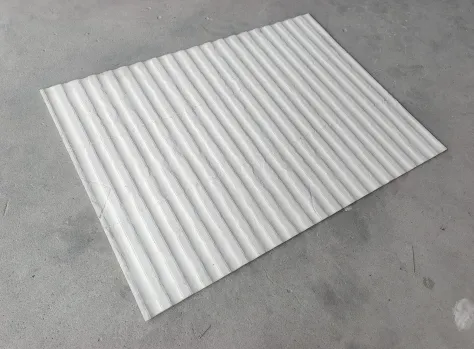
Skyscrapers are modern marvels, symbols of human ambition piercing the clouds. But building tall isn't just about going up; it's about staying up, safely and securely, for generations. When we gaze at a towering structure, we often admire its glass and steel skeleton, but the building's "skin" – its exterior cladding – plays an equally critical role. This facade is the building's first line of defense against the elements, and for a high-rise, the most relentless of these elements is the wind. The challenge has always been to find a material that is not only beautiful and durable but also light enough and strong enough to withstand the incredible forces at play hundreds of meters above the ground.
For decades, architects and developers have turned to traditional materials like natural stone for a premium, timeless look. Granite, marble, and limestone convey a sense of permanence and luxury. However, this permanence comes at a hefty price, and not just a financial one. These materials are incredibly heavy, difficult to quarry and transport, and present enormous logistical and engineering challenges during installation on a skyscraper. The sheer weight adds immense stress to the building's structure, requiring stronger, more expensive foundations and support frames. What if there was a better way? What if you could have the majestic beauty of stone without the punishing weight and inherent brittleness? This is where COLORIA GROUP's Century Stone enters the conversation, a revolutionary material designed to redefine the possibilities for high-rise cladding by directly addressing the critical issues of wind resistance and structural stability.
To truly appreciate the innovation of modern cladding materials, we first need to understand the brutal environment they operate in. A high-rise building is in a constant battle with nature, and its facade is on the front lines.
Wind at ground level is one thing; wind at 300 meters is a completely different beast. As wind flows around a tall building, it creates complex pressure zones. The side of the building facing the wind (the windward side) experiences immense positive pressure, pushing against the facade. Simultaneously, the sides and leeward (downwind) side experience negative pressure, or suction, which tries to pull the cladding panels away from the building. This "pulling" force is often more dangerous than the "pushing" force and is a primary cause of facade failure.
It gets even more complicated. The corners of a skyscraper are particularly vulnerable, as wind accelerates around them, creating intense vortices and suction zones. Furthermore, when wind is funneled between two tall buildings—a phenomenon known as the Venturi effect—its speed can increase dramatically, multiplying the forces on the facades. A cladding system must be engineered to withstand these constant, fluctuating, and sometimes extreme pressures without fatiguing, cracking, or, in the worst-case scenario, detaching from the structure. Every single panel, and every single fixing that holds it, must be up to the task.
Now, let's talk about gravity. Every component added to a building adds weight, and this weight, known as the "dead load," must be supported by the structure all the way down to the foundation. When you decide to clad a 50-story building in 3-centimeter-thick natural granite, you are essentially deciding to hang millions of kilograms of rock from its frame. A single square meter of this granite can weigh 80-90 kilograms. Multiply that by the vast surface area of a skyscraper, and the numbers become staggering.
This immense weight has a cascade of consequences. The building's steel or concrete superstructure must be beefed up to handle the load. The foundation must be deeper and more robust. All of this adds significant material costs, engineering complexity, and construction time. Moreover, it presents a logistical nightmare. Hoisting multi-hundred-kilogram stone panels to the 40th floor requires heavy-duty cranes, specialized rigging, and highly skilled labor, all of which increase project costs and safety risks. Replacing a damaged panel years later is an equally daunting and expensive task.
In many parts of the world, we also have to account for seismic activity. During an earthquake, a building is designed to sway and move to dissipate energy. Its facade must be able to move with it. A heavy, rigid cladding system can be a liability. The inertia of the heavy panels can create additional stress on the fixings and the structure. If the panels are too brittle, they can shatter and fall, posing a severe hazard to people below. A successful cladding system must therefore have a degree of flexibility and a secure anchoring system that allows for this inter-story drift without failing.
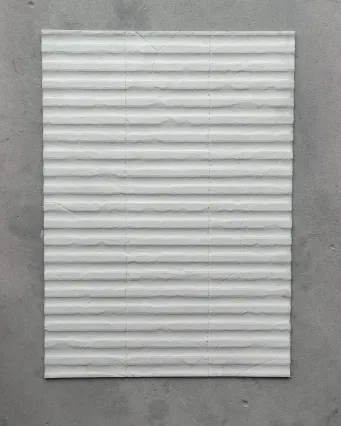
Faced with these immense challenges, the construction industry has been searching for a material that combines aesthetics, performance, and practicality. COLORIA GROUP's Century Stone is the answer to that search. It's not just another product; it's a paradigm shift in how we think about building facades. At its core, Century Stone is born from an advanced technology known as **Modified Cementitious Material** (MCM).
Forget everything you think you know about traditional cement. MCM is a sophisticated composite material created by combining natural inorganic materials (like soil, stone powder, and sand) with a small amount of water-based polymers and other modifying agents. Through a unique, low-temperature curing process, this mixture is transformed into a material that possesses remarkable properties. It's a technology that leverages natural components to create a product that is superior to its quarried counterparts in almost every functional aspect. It is the perfect blend of nature's beauty and scientific ingenuity. The result is a material that can be engineered to have specific characteristics of strength, flexibility, and appearance.
This is the foundation upon which Century Stone is built. By precisely controlling the composition and manufacturing process, COLORIA GROUP can create cladding panels that perfectly replicate the look and texture of natural stone, brick, wood, and a variety of other finishes, while leaving their inherent weaknesses behind. This is the essence of Century Stone: all the beauty, none of the burden.
So, what makes Century Stone the ideal choice for high-rise buildings? It boils down to a few game-changing properties:
Let's return to our primary challenge: the wind. How does Century Stone's unique profile translate into superior performance against the immense aerodynamic forces on a skyscraper? The answer lies in a combination of the material's properties and the intelligent systems used to install it.
The fundamental principle is simple physics. The amount of force exerted on each anchor point holding a cladding panel is a function of the panel's weight and the wind load it's subjected to. By drastically reducing the panel's weight, you drastically reduce the static load on the anchor. This means the anchor has a much greater capacity to deal with the dynamic, fluctuating loads from wind gusts and suction. The entire system is less stressed and has a higher factor of safety.
Modern high-rise facades are typically installed using a rainscreen system. This involves creating a cavity between the cladding panel and the building's weatherproofed wall. The panels are attached to a sub-frame (often aluminum) which is fixed to the structure. This system allows for ventilation and moisture drainage, but it also provides a robust platform for securing the cladding. When you combine this proven anchoring technology with a lightweight panel like Century Stone, you get a facade system with exceptional wind resistance . The risk of a panel being pulled off the building by negative pressure is dramatically minimized because the fixings are not already struggling under a heavy gravitational load.
Imagine a new, 60-story luxury residential tower being built in a coastal city known for seasonal typhoons. The architects want the grandeur of large-format stone.
Option A: Traditional Stone. The engineers must account for 90 kg/m² of cladding weight. This requires a heavier steel frame and a massive foundation. During a typhoon, the immense suction forces pull on these heavy panels. Each anchor point is under extreme stress, a combination of the panel's dead weight and the powerful wind load. A single fixing failure could lead to a cascading effect, a catastrophic failure.
Option B: Century Stone's MCM Big Slab Board Series. The architects can still achieve their vision of large, seamless stone panels. But now, the panels weigh only 8 kg/m². The structural frame and foundation can be designed more efficiently, saving millions in material costs. During the same typhoon, the suction forces are acting on a panel that is more than 10 times lighter. The stress on each anchor point is vastly reduced. The inherent flexibility of the **Modified Cementitious Material** helps dissipate some of the wind energy. The result is a facade that is vastly more secure. The **MCM Big Slab Board Series** is specifically designed for such applications, providing the aesthetic of massive stone blocks without the associated risk, making it an ideal solution for achieving both design intent and unparalleled safety.
This isn't just theory. Materials like Century Stone undergo rigorous testing in specialized labs. They are subjected to simulated hurricane-force winds and cyclic pressure tests that mimic the buffeting they will experience on a real-world skyscraper, ensuring they meet and exceed the most stringent international building codes for wind load performance.
The benefits of a lightweight facade extend deep into the building's very bones, profoundly impacting its overall structural stability and economic viability. The reduction in cladding weight is a gift that keeps on giving throughout the design and construction process.
As discussed, the most immediate impact is on the building's dead load. This isn't a minor tweak; it's a fundamental change in the engineering calculations. A lighter facade means less steel is required for the support columns and beams. Less concrete and steel are needed for the foundation. This reduction in raw material usage is not only cost-effective but also a significant win for sustainability. It can even influence the building's performance in other areas. For example, a lighter overall structure may behave more favorably during seismic events.
To put this in perspective, let's compare Century Stone with its traditional counterparts in a more structured way.
| Material Feature | Traditional Granite (3cm thick) | Traditional Marble (3cm thick) | COLORIA GROUP's Century Stone (MCM) |
|---|---|---|---|
| Approx. Weight per m² | 80-90 kg | 75-85 kg | 5-8 kg |
| Impact on Structural Dead Load | Very High | High | Extremely Low |
| Foundation Requirements | Significant Reinforcement Required | Significant Reinforcement Required | Standard / Reduced Requirements |
| Installation Complexity & Cost | High (Requires heavy cranes, large crews) | High (Requires heavy cranes, large crews) | Low (Often possible with manual lifts) |
| Seismic Performance | Poor (Heavy, brittle, risk of detachment) | Poor (Heavy, brittle, risk of detachment) | Excellent (Lightweight and flexible) |
| Design Freedom (e.g., Curves) | Very Limited and Expensive | Limited and Expensive | High (Easily conforms to curves with products like MCM Flexible Stone ) |
The benefits go beyond pure engineering and cost. By freeing architects from the constraints of heavy materials, Century Stone unlocks a new level of design freedom. Complex curves, dramatic cantilevers, and soaring, uninterrupted surfaces that would be prohibitively expensive or structurally impossible with natural stone become achievable. The **MCM Big Slab Board Series** allows for vast, monolithic surfaces with minimal joint lines, creating a sleek and modern aesthetic. For more organic and fluid designs, the **MCM Flexible Stone** series can be applied to virtually any shape, wrapping the building in a seamless skin that moves and flows with the architect's vision. This empowers designers to create landmark buildings that are not only safe and efficient but also truly iconic.
The evolution of our cities is a story of reaching for the sky. As we build taller and more ambitious structures, the materials we use must evolve as well. Cladding a high-rise building is a profound responsibility, demanding a solution that balances aesthetics, safety, and long-term performance.
COLORIA GROUP's Century Stone, powered by the innovative **Modified Cementitious Material** technology, represents the next logical step in this evolution. It is not merely an alternative to stone; it is an upgrade. By offering a solution that is orders of magnitude lighter, demonstrably more resilient, and infinitely more versatile, it directly confronts and solves the core challenges of high-rise facade design. Its superior wind resistance provides security against the elements, while its feather-light nature ensures the building's structural stability without compromising on design.
Choosing a facade material is no longer a compromise between beauty and performance. With Century Stone, architects, developers, and engineers can confidently specify a material that delivers on all fronts. It is a strategic engineering decision that pays dividends in safety, cost, and creative freedom, ensuring that today's architectural marvels will stand strong, stable, and beautiful for the century to come.
Recommend Products












