
Airports are more than just transit hubs; they are the grand gateways to cities, the first impression for international visitors, and sprawling micro-cities in their own right. Designing these spaces is a monumental task. Architects and planners must balance the need for breathtaking aesthetics with the harsh realities of managing millions of people, constant movement, and rigorous safety standards. The materials chosen for an airport's interiors don't just set the tone—they are on the front lines, facing a daily battle against wear and tear. This is where the concept of "Century Stone" comes into play: materials engineered not just to look good on opening day, but to endure for decades, gracefully handling the immense pressure of high-traffic public environments.
For generations, the go-to choice for a premium, durable finish has been natural stone. Marble, granite, and travertine have lined the halls of the world's most famous terminals, evoking a sense of luxury and permanence. But let's be honest, these traditional materials come with a hefty list of drawbacks. They are incredibly heavy, posing structural challenges; they are expensive to quarry, transport, and install; and their rigidity makes them prone to cracking and difficult to apply to modern, creative architectural forms. What if there was a better way? A solution that offers the timeless beauty of stone but with enhanced performance, design flexibility, and a lighter environmental footprint? This is the promise of modern material science, and it's a promise that companies like COLORIA GROUP are delivering on with their innovative cladding solutions.
Before we dive into the solution, it's crucial to understand the sheer scale of the challenges. An airport environment is unlike almost any other public space. The demands placed on its surfaces are relentless and multi-faceted.
Think about it. A major international airport can see over 100,000 passengers a day. That's hundreds of thousands of footsteps, rolling suitcases with hard plastic wheels, heavy luggage carts, and industrial-grade cleaning machines. The walls of corridors, check-in areas, and gate lounges are constantly being scraped, bumped, and scuffed. A material that looks pristine in a residential living room can look worn and tired in an airport in a matter of months. The cladding must possess exceptional surface hardness and abrasion resistance to maintain its appearance.
In a crowded public space, safety is paramount and non-negotiable. Materials used in airport construction must meet the strictest fire-resistance codes, typically requiring an A-class or equivalent rating, meaning they are non-combustible and do not contribute to the spread of flames. Furthermore, in the event of a fire, they must not release toxic fumes. Health is also a key consideration. Surfaces should be non-porous and easy to sanitize to prevent the growth of bacteria and viruses—a factor that has become even more critical in our post-pandemic world.
An airport is a city's business card. It needs to feel welcoming, modern, and impressive. The design can't be a fleeting trend; it needs to look relevant for decades to come. This requires materials that offer a sophisticated and timeless aesthetic. But modern architecture is also pushing boundaries with sweeping curves, soaring atriums, and complex geometries. Materials must not only be beautiful but also versatile enough to bring these ambitious visions to life. Rigidity is the enemy of creativity here.
Closing a section of an airport for repairs is a logistical nightmare. The ideal material is one that is incredibly easy to maintain. It should be resistant to staining from coffee spills, dirt, and grime, and be cleanable with simple, non-abrasive methods. The true cost of a material isn't just its initial purchase price; it's the total cost of ownership over its entire lifecycle, including installation, maintenance, repairs, and eventual replacement. A slightly more expensive material upfront that requires minimal maintenance can save an airport operator millions in the long run.
For decades, architects have worked with a familiar palette of materials. While each has its merits, their limitations become starkly apparent when measured against the demanding criteria of a modern airport.
Consider the sheer weight of natural stone. A single slab of granite can weigh hundreds of kilograms. This requires reinforced structural supports, specialized heavy-lifting equipment for installation, and significantly increases transportation costs and carbon emissions. It's a beautiful but brutish material, ill-suited for the nimble, cost-conscious, and eco-aware construction practices of today.
Natural marble, while stunning, is relatively soft and porous. It can be easily scratched by a passing luggage cart and is susceptible to staining. Its rigidity means it can't be used on curved surfaces without being cut into small, expensive tiles, resulting in a grid of grout lines that are difficult to keep clean. Granite is harder, but just as heavy and rigid. The cost and environmental impact of quarrying these finite resources are also growing concerns for developers and governments worldwide.
This is where material innovation changes the game. Enter **Modified Cementitious Material**, or MCM. This is not just an alternative to stone; it's a fundamental rethinking of what a cladding material can be. Developed through advanced technology, MCM is a composite material primarily made from natural components like unfired clay, sand, and mineral powders, bound together with a modifier and cured at low temperatures. The result is a material that captures the aesthetic essence of natural elements but with vastly superior physical properties.
COLORIA GROUP has been at the forefront of harnessing this technology, engineering a range of MCM products that directly address the challenges of high-traffic spaces. Let's break down why this technology is a perfect fit for airports.
Understanding the potential of MCM is one thing; seeing how it's applied is another. COLORIA GROUP offers a specialized portfolio of MCM products, each designed for specific applications within the complex airport ecosystem.
For the vast, soaring walls of a terminal's main hall or check-in area, nothing makes a statement like a seamless, monolithic surface. The **MCM Big Slab Board Series** is engineered for this very purpose. These large-format panels create an expansive, uninterrupted visual field that exudes luxury and grandeur. By minimizing grout lines, they not only enhance the aesthetic but also dramatically simplify cleaning and maintenance. Imagine a 50-meter-long wall clad in a material that looks exactly like Italian Calacatta marble but installed in a fraction of the time, at a fraction of the weight, and with superior durability. That is the power of this series.
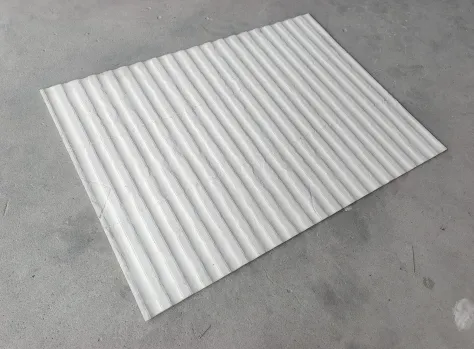
This is perhaps the most revolutionary product for creative airport design. The **MCM Flexible Stone** series is thin, lightweight, and pliable, allowing it to conform to almost any shape. It's the ideal solution for cladding the large, curved columns that punctuate modern atriums, turning them from structural necessities into sculptural features. It can be wrapped around circular information desks, wavy feature walls, and even complex ceiling structures. This flexibility eliminates the design compromises that architects have always had to make when working with rigid materials, empowering them to create truly fluid and dynamic spaces.
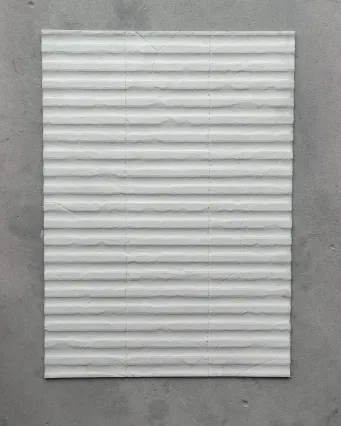
Airports are also about identity and branding. The MCM 3D Printing Series takes customization to the next level. This technology allows for the creation of textured, three-dimensional patterns, logos, and artistic murals directly on the wall panels. An airport could feature a wall with a subtle, 3D pattern of the city's skyline, an airline could brand its lounge with a tactile logo wall, or a large-scale artistic piece could become a memorable landmark within the terminal. It's a tool for creating unique, engaging, and unforgettable spaces.
| Feature | Traditional Natural Stone (e.g., Marble/Granite) | COLORIA GROUP's MCM Solutions |
|---|---|---|
| Weight | Extremely heavy (e.g., 50-80 kg/m²), requires reinforced structures. | Very lightweight (e.g., 4-8 kg/m²), reduces structural load. |
| Flexibility | Zero flexibility; completely rigid and brittle. | High flexibility (especially MCM Flexible Stone), can wrap around curves. |
| Installation | Slow, labor-intensive, requires heavy machinery and specialized skills. | Fast and simple, can be cut with a utility knife, installed with adhesive by a small team. |
| Impact Resistance | Brittle; can chip, crack, or shatter on impact. | Resilient; absorbs impact without cracking or chipping. |
| Design Options | Limited to what nature provides; colors and patterns are fixed. | Virtually unlimited colors, textures, patterns, and custom 3D designs. |
| Panel Size | Limited by quarrying and transport; large slabs are extremely expensive and risky. | Available in large formats (e.g., MCM Big Slab Board Series) for seamless looks. |
| Environmental Impact | High-impact quarrying, high-energy processing, heavy transportation footprint. | Low-energy, low-temperature production; lightweight transport; often uses recycled materials. |
| Safety | Naturally non-combustible. | A-class fire rated, non-combustible, and non-toxic. |
Let's walk through a hypothetical new terminal designed with these principles in mind. As you step out of your transport into the departures hall, you are greeted by an immense, light-filled atrium. The main walls, stretching 20 meters high, are clad in the **MCM Big Slab Board Series**, finished to look like a warm, inviting sandstone. The effect is grand and monolithic, yet the material's lightweight nature saved millions in structural steel costs.
The check-in counters are not boxy and linear. They are a series of elegant, sweeping curves, clad seamlessly in **MCM Flexible Stone** that mimics dark slate. The surface is tough enough to resist the daily onslaught of suitcases and bags, and there are no ugly grout lines to trap dirt. The massive columns supporting the roof are no longer awkward obstructions; they are now beautiful, tapered cylinders, also wrapped in flexible stone, turning them into artistic focal points.
As you move through security and into the main retail concourse, a stunning feature wall catches your eye. It's a 30-meter-long mural depicting an abstract map of the world's flight paths, created using the MCM 3D Printing Series. The lines are slightly raised, creating a tactile and dynamic effect that changes as the light hits it throughout the day. It's a piece of art, a wayfinding tool, and a brand statement all in one.
This isn't a futuristic fantasy. This is what's possible right now with advanced materials. It's about building smarter, not just bigger. It's about creating spaces that are not only visually spectacular but also operationally efficient, safe, sustainable, and built to last.
The design of an airport is a legacy project. The choices made today will define the travel experience for millions of people for generations to come. In an environment where durability is paramount, design freedom is coveted, and operational efficiency is a financial necessity, traditional materials are showing their age.
The advent of **Modified Cementitious Material** and the specialized product lines developed by innovators like COLORIA GROUP represents a true evolution in architectural cladding. By offering a solution that is lightweight, flexible, durable, sustainable, and endlessly customizable, MCM technology empowers architects to build the airports of the future. It is the embodiment of a "Century Stone"—a material designed not just for our time, but for the times to come, ensuring our gateways to the world are as resilient and inspiring as our aspirations.
Recommend Products












