


There's an undeniable romance to the coast. The endless horizon, the rhythmic crash of waves, the fresh, salty air—it's a dream for many to build a home or a business with an ocean view. But beneath this idyllic picture lies a harsh reality for architects, builders, and property owners. The very elements that create the coastal charm are relentlessly hostile to the buildings that stand there. The salty air that feels so invigorating is a corrosive agent, constantly searching for weaknesses in a building's armor.
For centuries, we've fought a losing battle, watching as beautiful facades of wood, stone, and concrete succumb to premature aging. They stain, they rust, they crack, and they crumble, demanding costly and continuous maintenance. It begs the question: What if we didn't have to fight nature, but could instead build with a material designed to thrive within it? What if there was a "Century Stone"—a material engineered to withstand the coastal assault not for years, but for decades, all while offering unparalleled beauty and design freedom? This isn't a futuristic fantasy. This is the new reality in architectural materials, a revolution that promises to redefine coastal construction. Let's explore the challenges and uncover the solution that is making beautiful, long-lasting coastal architecture possible today.
Chapter 1: The Coastal Conundrum - Why Traditional Materials Fail
To truly appreciate the need for innovation, we must first understand the enemy. The coastal environment is a complex system of destructive forces working in concert. It's not just one thing; it's a multi-pronged attack that compromises the integrity and aesthetics of building envelopes. Let's break down this relentless assault.
The Primary Aggressor: Saltwater Attack
Salt is the number one public enemy for coastal buildings. It's carried in the air as a fine mist—salt spray—and can travel for miles inland. When this salty moisture settles on building surfaces, the trouble begins.
- On Concrete and Masonry: Concrete seems tough, but it's porous. Tiny chloride ions from the salt easily penetrate its surface. Once inside, they migrate towards the steel rebar that gives concrete its tensile strength. This initiates a devastating electrochemical reaction: corrosion. As the rebar rusts, it expands up to seven times its original volume, creating immense internal pressure. This pressure causes the concrete to crack from within, leading to spalling (chunks of concrete breaking away), and eventually, catastrophic structural failure. It's a slow-motion demolition.
- On Natural Stone: Many types of natural stone, especially porous varieties like sandstone and certain limestones, are highly susceptible. Saltwater is absorbed into the stone's pores. As the water evaporates, it leaves behind salt crystals. These crystals grow, exerting pressure that slowly breaks down the stone's internal structure, a process called salt weathering. You see this as pitting, flaking, and a general "sugaring" of the surface. Furthermore, as moisture moves through the stone, it can carry minerals to the surface, causing efflorescence—those ugly, white, powdery stains that are nearly impossible to remove permanently.
- On Wood: Wood and saltwater are natural enemies. The constant moisture promotes rot and decay. The salt itself draws even more moisture from the air into the wood, keeping it perpetually damp and creating a perfect breeding ground for fungi and mold. This leads to softening, loss of structural integrity, and warping.
- On Metal Cladding: Unless it's a high-grade marine stainless steel or titanium, most metals will corrode. Galvanized steel, aluminum, and copper are all vulnerable. The saline environment accelerates the oxidation process, leading to rust, pitting, and discoloration, ruining the building's appearance and protective layer.
The Silent Saboteur: High Humidity and Moisture
Even without direct salt spray, the high ambient humidity of coastal zones is a persistent threat. Air saturated with water means surfaces rarely get a chance to dry out completely. This constant dampness is a paradise for biological growth. Green and black stains from mold, mildew, and algae are a common sight on coastal walls, especially on porous or textured surfaces. This isn't just a cosmetic problem. Mold can penetrate materials, causing degradation and releasing spores that lead to poor indoor air quality and health problems for occupants. The constant presence of moisture can also lead to paint peeling, finishes bubbling, and the slow decay of internal wall structures.
The Unrelenting Bleach: Intense UV Radiation
Coastal areas often experience more intense and prolonged sun exposure, amplified by reflections from the water's surface. This constant bombardment of ultraviolet (UV) radiation is like a bleach for building materials. Organic pigments used in paints, coatings, and plastics are broken down, causing vibrant colors to fade into washed-out, chalky versions of their former selves. Polymers and plastics can become brittle and crack. This UV degradation not only makes a building look old and tired but also weakens the protective outer layer of many materials, making them even more vulnerable to moisture and salt intrusion.
The Brute Force: High Winds and Storms
Finally, coastal regions are prone to high winds and severe weather. This puts immense physical stress on a building's exterior. Cladding systems must be robust enough to resist both positive and negative wind pressures that try to pull panels off the wall. More insidiously, wind-driven rain forces water at high pressure into every joint, seam, and microscopic crack. If the cladding system and its installation are not perfectly designed to manage this water, it will find its way into the wall assembly, triggering the cycle of rot, corrosion, and decay from within. Heavier cladding materials like thick stone slabs can also pose a significant risk during extreme weather events if their anchoring systems fail.
Chapter 2: The Quest for the Perfect Coastal Cladding
Given the relentless assault from the coastal environment, it's clear that simply choosing a material that "looks good" is a recipe for disaster. We need to think like engineers and demand more from our building materials. So, what would the ideal material for coastal construction look like? If we could create the perfect "Century Stone" from scratch, what properties would be on our non-negotiable checklist?
Let's build a profile of this champion material.
- Absolute Saltwater Resistance: This is the number one priority. The ideal material must be fundamentally inert to chlorides. This means having an extremely dense, non-porous structure that gives salt ions nowhere to go. It shouldn't just resist salt; it should be completely indifferent to it. True saltwater resistance means no corrosion, no efflorescence, and no internal degradation, ever.
- Extreme Durability and Flexibility: It needs to be tough enough to handle impacts and abrasion, but also flexible. Traditional materials are often brittle; they crack under the stress of building settlement or thermal expansion and contraction. The perfect material would have a degree of flex, allowing it to move with the building without failing. This resilience is key to long-term integrity.
- Unwavering UV Stability: The color you install should be the color you see ten, twenty, and thirty years later. The material must be formulated with inorganic, mineral-based pigments that are naturally immune to fading from UV radiation. It should not become brittle or degrade under constant sun exposure.
- Impermeable to Moisture and Mold: Low water absorption is critical. A material that doesn't absorb water won't support the growth of mold, mildew, or algae. It stays cleaner, looks better, and contributes to a healthier building envelope and indoor environment.
- Surprisingly Lightweight: Heavy materials like traditional stone and precast concrete require substantial, expensive structural support and heavy machinery for installation. A lightweight champion would be a game-changer, reducing the load on the building's foundation, simplifying installation, cutting labor costs, and making it feasible for retrofitting older buildings.
- Limitless Aesthetic Versatility: Durability shouldn't come at the cost of beauty. The ideal material should not force architects into a single look. It should be a chameleon, capable of authentically replicating the appearance and texture of any natural stone, wood, brick, or even futuristic 3D patterns. Customization should be at its core.
- Genuinely Sustainable: In today's world, performance must be paired with responsibility. The perfect material would be manufactured using a low-energy process, be made from common and recycled materials, be free of volatile organic compounds (VOCs), and contribute to a more sustainable built environment.
For a long time, this checklist seemed like a wish list. You could get some of these properties, but you'd always have to compromise on others. You could have the beauty of natural stone, but you'd have to accept its weight and porosity. You could have the lightness of a metal panel, but you'd risk corrosion and denting. This is the compromise that has defined coastal architecture for generations. But no longer.
Chapter 3: Introducing Century Stone - The COLORIA GROUP Solution
The search for the perfect coastal material is over. The "Century Stone" described in our checklist is not a hypothetical concept; it exists, and it is revolutionizing how we approach building design in challenging environments. The answer lies in an advanced, innovative category of building materials known as MCM—Modified Cementitious Material—and COLORIA GROUP stands at the forefront of this technology.
So, what exactly is MCM? In simple terms, it's a masterful blend of nature and science. We start with natural, raw ingredients like modified cement powders, quartz sands, and other mineral components. Through a proprietary, low-temperature forming and curing process, we transform these elements into a material that possesses the best qualities of stone, clay, and cement, but without their inherent weaknesses. It's a process of molecular modification that results in a material that is both incredibly resilient and beautifully versatile. Let's see how COLORIA GROUP's MCM products stack up against our ideal coastal cladding checklist.
Unmatched Saltwater Resistance
This is where MCM technology truly shines. The unique manufacturing process creates a material with an exceptionally dense, micro-particulate structure. Unlike porous concrete or natural stone, there are virtually no pathways for chloride ions to penetrate. The material is fundamentally inorganic and chemically stable, meaning it simply does not react with salt. Efflorescence is a thing of the past because there are no soluble salts within the material to migrate to the surface. Spalling due to rebar corrosion is irrelevant because it's a cladding material, not a structural one with internal steel. For a coastal building, this level of innate immunity to salt is the ultimate peace of mind. It's the very definition of superior saltwater resistance .
Incredible Durability and Flexibility: The Power of Flexible Stone
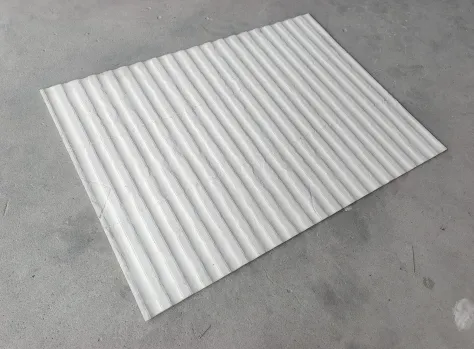
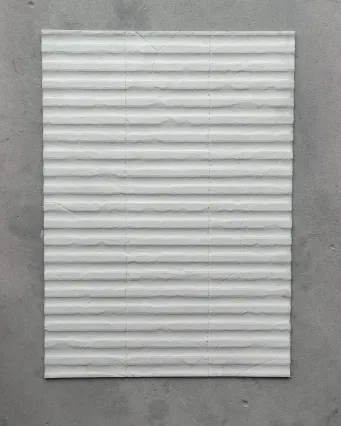
One of COLORIA GROUP's most groundbreaking product lines is the MCM Flexible Stone . This isn't stone as you know it. While it looks and feels like authentic quarried stone, it has a remarkable degree of flexibility. It can be bent around curved walls, columns, and arches without cracking, opening up a world of design possibilities that would be impossible or prohibitively expensive with traditional materials. This flexibility also gives it incredible resilience. Buildings are not static; they move, settle, and expand and contract with temperature changes. A rigid, brittle cladding will crack under these stresses, creating entry points for water. MCM Flexible Stone absorbs these movements, ensuring the building's protective skin remains seamless and intact for years. It's the perfect solution for creating durable cladding that lasts.
Aesthetics Without Compromise: Your Vision, Realized
With COLORIA GROUP's MCM series, architects are no longer limited by the constraints of natural materials.
- MCM Big Slab Board Series: For projects demanding a grand, monolithic appearance, these large-format panels create seamless facades with minimal joint lines. Imagine a towering hotel facade that appears to be carved from a single, massive block of travertine or granite, but without the immense weight and installation complexity.
- MCM Project Board Series: This is the workhorse line, offering a vast array of standard textures and colors—from classic brick and slate to contemporary concrete finishes—providing a high-performance solution for any type of exterior wall decoration .
- MCM 3D Printing Series: This is where true design freedom is unleashed. Using advanced technology, we can create custom textures, patterns, and bas-relief designs. If you can design it, we can likely produce it. This allows for truly unique, branded, and artistic building exteriors that make a lasting statement.
Crucially, the color is an integral part of the material, derived from inorganic mineral pigments. This means it is physically impossible for the color to fade from UV exposure. The vibrant red of a brick-style facade or the subtle veining of a marble finish will remain just as crisp and vivid in 20 years as it was on day one.
Lightweight Champion, Installation Hero
COLORIA GROUP's MCM products have an average weight of just 4-8 kg per square meter, depending on the thickness and texture. This is a staggering difference compared to natural stone, which can easily weigh 50-80 kg or more for the same area. The benefits are enormous. Transportation costs are slashed. Installation is faster, safer, and can be done by smaller crews without heavy lifting equipment. Most importantly, it dramatically reduces the dead load on the building structure, which can lead to significant savings in foundation and structural frame costs on new builds. For renovation projects, it means you can apply a beautiful, durable new stone facade directly over an old, tired one without needing to reinforce the entire building.
| Feature | COLORIA MCM Flexible Stone | Natural Stone (e.g., Marble, Sandstone) | Porcelain Tiles | Metal Panels (Aluminum) |
|---|---|---|---|---|
| Saltwater Resistance | Excellent (Inert, non-porous) | Poor to Fair (Porous, prone to efflorescence and weathering) | Good (Low porosity, but grout lines are weak points) | Fair to Good (Depends heavily on coating, prone to scratching and corrosion) |
| Weight | Excellent (Very Lightweight, ~4-8 kg/m²) | Poor (Very Heavy, >50 kg/m²) | Fair (Moderately Heavy, ~20-30 kg/m²) | Excellent (Very Lightweight) |
| Flexibility | Excellent (Can be bent around curves) | Poor (Brittle, cracks under stress) | Poor (Brittle, cracks easily) | Fair (Can be formed but will dent) |
| Installation | Excellent (Fast, easy, less labor, simple tools) | Poor (Slow, complex, heavy machinery required) | Fair (Labor-intensive, requires precise leveling) | Good (Fast, but requires specialized framing) |
| Customization | Excellent (Vast range of textures, colors, and 3D printing) | Poor (Limited by what is quarried) | Fair (Limited to printed patterns) | Good (Color options, but limited textures) |
| Maintenance | Excellent (Self-cleaning properties, highly resistant to staining and mold) | Poor (Requires regular sealing, cleaning, and repairs) | Fair (Grout lines can stain and grow mold) | Good (Requires cleaning, susceptible to dents) |
| Eco-Friendliness | Excellent (Low-energy production, recycled components, no VOCs) | Poor (High-energy quarrying and transport, resource depletion) | Poor (High-energy firing process) | Fair (High-energy production, but recyclable) |
Chapter 4: Real-World Applications and a New Vision
The technical superiority of COLORIA GROUP's MCM is clear, but its true impact is best understood by visualizing its application in the real world. This isn't just a new product; it's a tool that empowers architects and developers to build their coastal dreams without compromise.
Luxury Coastal Residences
Picture a stunning modern villa perched on a cliff overlooking the ocean. Its facade is clad in large panels that have the rich, warm look of Italian travertine, seamlessly wrapping around corners and expansive glass walls. The salt spray that mists the villa day and night has no effect. The intense sun doesn't fade its color. The walls of the infinity pool and the surrounding deck are finished with a non-slip, slate-like surface from the MCM series, cool to the touch and completely impervious to pool chemicals and saltwater. This is the promise of MCM for high-end residential projects: timeless beauty combined with near-zero maintenance. Homeowners can spend their time enjoying the view, not worrying about upkeep. The material provides the ultimate peace of mind, making it the premier choice for elegant and durable exterior wall decoration .
High-Rise Hotels and Commercial Resorts
Now, imagine a 30-story luxury hotel on a sandy beach. Cladding such a structure with natural stone would be an engineering and logistical nightmare due to the weight. But with the MCM Big Slab Board Series, it's not only feasible but practical. The lightweight panels drastically reduce the structural load, allowing for more efficient and cost-effective construction. The speed of installation means the hotel can open its doors to guests sooner. For the hotel operator, the long-term benefits are even more compelling. The facade is a core part of the brand's image. A facade that resists fading, staining, and corrosion means the property looks pristine for decades, protecting the brand's reputation and asset value. The lower long-term maintenance and repair costs directly impact the bottom line, making the choice of a durable cladding solution like MCM a shrewd financial investment.
Global Experience, Local Expertise
The effectiveness of these materials isn't just theoretical. With decades of industry experience and a global footprint, COLORIA GROUP has tested and proven its solutions in some of the most demanding climates on earth. Our presence in regions like Saudi Arabia, with its intense heat, UV radiation, and highly saline coastal environments, has provided an invaluable proving ground. This experience demonstrates that our MCM products are not just designed for a generic "coastal" environment, but are robust enough to handle the most extreme variations, giving clients worldwide the confidence to build boldly.
A New Vision for Coastal Architecture
The ultimate goal is to shift the paradigm of coastal design. For too long, architects have been forced to design "defensively," choosing materials based on what might survive, often sacrificing their creative vision in the process. COLORIA GROUP's MCM products flip that script. They encourage creativity. They enable architects to design with freedom, knowing that the material can realize their vision while also providing superior protection. It's a vision where coastal buildings are not just surviving the elements, but are an enduring, beautiful, and sustainable part of the landscape.
Conclusion: The Future is Now
The relentless battle between coastal buildings and the forces of nature has been a one-sided affair for centuries. Salt, water, and sun have always had the upper hand. But the tide is turning. The development of advanced materials like Modified Cementitious Material has finally given us a champion capable of withstanding the coastal assault.
COLORIA GROUP's MCM series—from the versatile MCM Flexible Stone to the grand Big Slab Boards and the custom 3D Printing series—is more than just another product. It is a comprehensive one-stop solution that addresses the fundamental challenges of coastal construction head-on. It offers the perfect synthesis of performance and aesthetics: the unwavering durability and saltwater resistance of an engineered material, combined with the timeless beauty and texture of natural stone, wood, and brick. It is lightweight, sustainable, and offers limitless design freedom.
The era of compromising on coastal design—of accepting fading, corrosion, and constant maintenance as inevitable—is over. The era of the Century Stone has begun, paving the way for a future where architecture in our most beautiful locations is also our most enduring.










